Shaping a Healthier Future Through Mental Health Awareness – Division of Registered Counsellors & Psychometrists

Shaping a Healthier Future Through Mental Health Awareness – Division of Registered Counsellors & Psychometrists

As we mark Mental Health Awareness Month and World Mental Health Day (10 October), we are reminded that mental health is not a privilege — it’s a right. This year’s theme, “Access to Services – Mental Health in Catastrophes and Emergencies,” highlights the urgent need for inclusive, accessible care, even in times of crisis.

In her article, Ntombikanina Mboniswa explores how crises — from floods and pandemics to conflict and displacement — magnify mental health challenges, and why building resilient systems that prioritise psychological support is essential.

Read the article below:

“Shaping a Healthier Future Through Mental Health Awareness”

Division of Registered Counsellors & Psychometrists (Written by: Ntombikanina Mboniswa)

Every year, World Mental Health Day (10 October) and Mental Health Awareness Month serve as vital reminders that mental health is as essential as physical health. These observances raise public awareness, fight stigma, promote early intervention, and  mobilise collective action.

Significance & Why It Matters:
Mental health conditions affect people across all ages, backgrounds, and walks of life. Without awareness, many suffer in silence. Observance days and months help bring conversations into the open, highlight structural gaps, and push for policy change and
resource allocation.

This Year’s Theme: Access to Services in Crises
For 2025, the World Federation for Mental Health has selected the theme “Access to services – mental health in catastrophes and emergencies.” This theme underscores that in moments of crisis — whether natural disasters, pandemics, conflict, displacement, or economic collapse — mental health often suffers dramatically, yet access to care is often cut or neglected. The message is that mental health support must be resilient and included in emergency response planning. In many communities, emergencies compound risk factors like trauma, loss, displacement, and isolation. Highlighting access means advocating for robust systems that remain functional when they’re needed most.

How the Public Can Engage:
Here are practical ways people can get involved:

  • Share awareness materials: Use toolkits, posters, social media graphics, and hashtags (e.g. from World Mental Health Day) to spark conversation.
  • Host or attend events: “Talk cafés,” listening circles, webinars, and panel discussions on mental health in emergency settings can create meaningful community engagement.
  • Get trained: Enrol in Mental Health First Aid or similar training so you can support someone in distress.
  • Advocacy: Engage with local or national government to push for policies that embed mental health into disaster-response frameworks.
  • Support organisations: Volunteer or donate to mental health NGOs, especially those active in crisis zones or frontline settings.

Useful Resources & Practical Tools:

  • The World Mental Health Day campaign toolkit (posters, messaging guides) is made publicly available.
  • SADAG’s Mental Health Awareness Month toolkit provides social media content and engagement ideas.
  • Many mental health organisations also host online screening tools, helplines, and peer support networks.

Division-Specific Insights / Contributions:

If you represent a department, branch, or division (e.g. a school, company, public health unit, NGO), consider these tailored ideas:

  • Internal awareness campaign: Use newsletters, posters and internal webinars to promote mental wellbeing and destigmatize seeking help.
  • Emergency planning: Ensure your division’s disaster response protocols include mental health support (e.g. crisis counselling, referral pathways).
  • Partnerships: Collaborate with local mental health services, Registered Counsellors, or NGOs to provide workshops or outreach services.
  • Monitoring & feedback: Use surveys or suggestion boxes to gauge mental health needs in your constituency or staff, to drive responsive programming.

“Your Mental Health Matters” – Division for Research and Methodology

“Your Mental Health Matters” – Division for Research and Methodology

“Your Mental Health Matters”

– Division for Research and Methodology (DRM)

This Mental Health Awareness Month, the Division for Research and Methodology (DRM) reminds us that caring for our mental health is not a sign of weakness — it’s an act of strength and self-awareness.

Their video, “Your Mental Health Matters,” calls on each of us to pause, reflect, and prioritise our well-being.

Prof Coetzee also shares valuable insights in her recent Cape Times article — “Schools Should Be the First Stop for Mental Health Prevention and Early Support.”

Her contribution highlights the vital role schools play in early identification, prevention, and intervention, ensuring that young people receive the support they need long before crises emerge.

Let’s continue to raise awareness, break the silence, and affirm that every person’s mental health truly matters.

Watch the full video below:

“Schools should be first stop for mental health prevention,
early support”

– Division for Research and Methodology (DRM) – Bronwyne Coetzee

As part of Mental Health Awareness Month, Dr Bronwyn [Surname] from PsySSA’s Division of Research and Methodology (DRM) shares valuable insights in her recent Cape Times article — “Schools Should Be the First Stop for Mental Health Prevention and Early Support.” Her contribution highlights the vital role schools play in early identification, prevention, and intervention, ensuring that young people receive the support they need long before crises emerge.

Read more in the full article below:

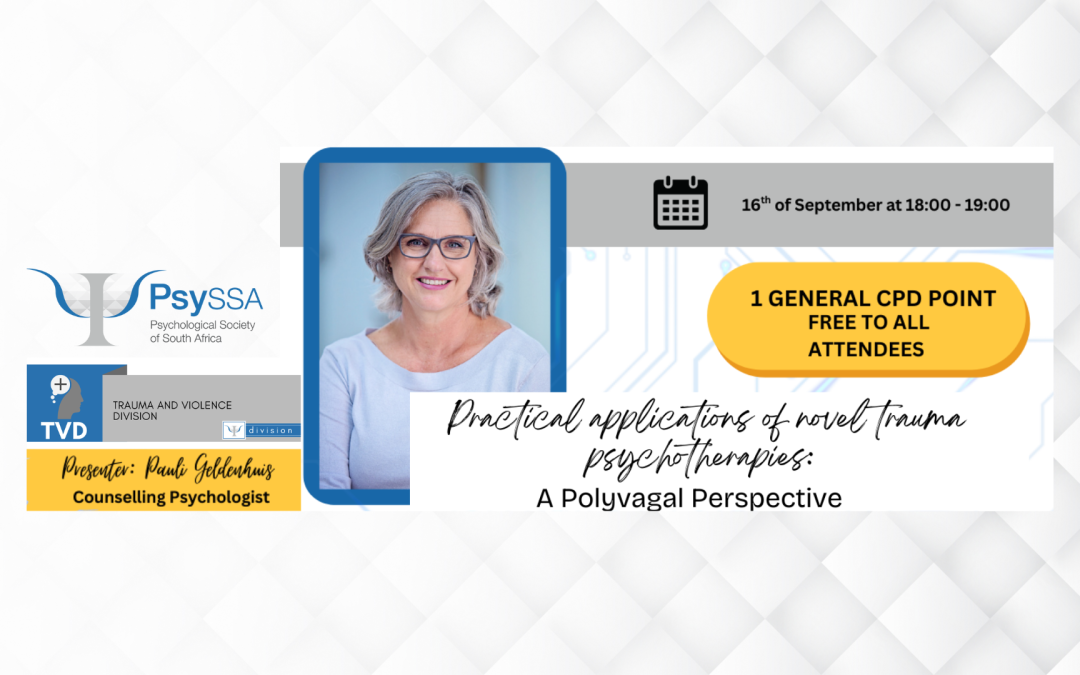
TVD Workshop: Practical applications of novel trauma psychotherapies

TVD Workshop: Practical applications of novel trauma psychotherapies

Pauli has 28 years’ experience as Counselling Psychologist in the academic and public sector as well as private practice. She is the founder and director of Paardevlei Therapy Centre and has dedicated her career to working with trauma as part of a multi-disciplinary team in private practice. Pauli has extensive international training both in the USA and Europe in the field of body-mind based psychotherapy. Her expertise includes Somatic Experiencing (SEP), Eye-Movement-Integration (EMI), Hypnotherapy, Trauma and Tension Release Exercises (TRE), Ketamine Assisted Psychotherapy (KAP), Solution Focused Therapy (SFT), Brain Working Recursive Therapy (BWRT) level 1,2 and 3 and Dialectical Behavior Therapy (DBT & CBT). Pauli has presented on body-based therapeutic approaches at various conferences of which the most recent was at the SANOFI conference for Psychiatry in July 2022.

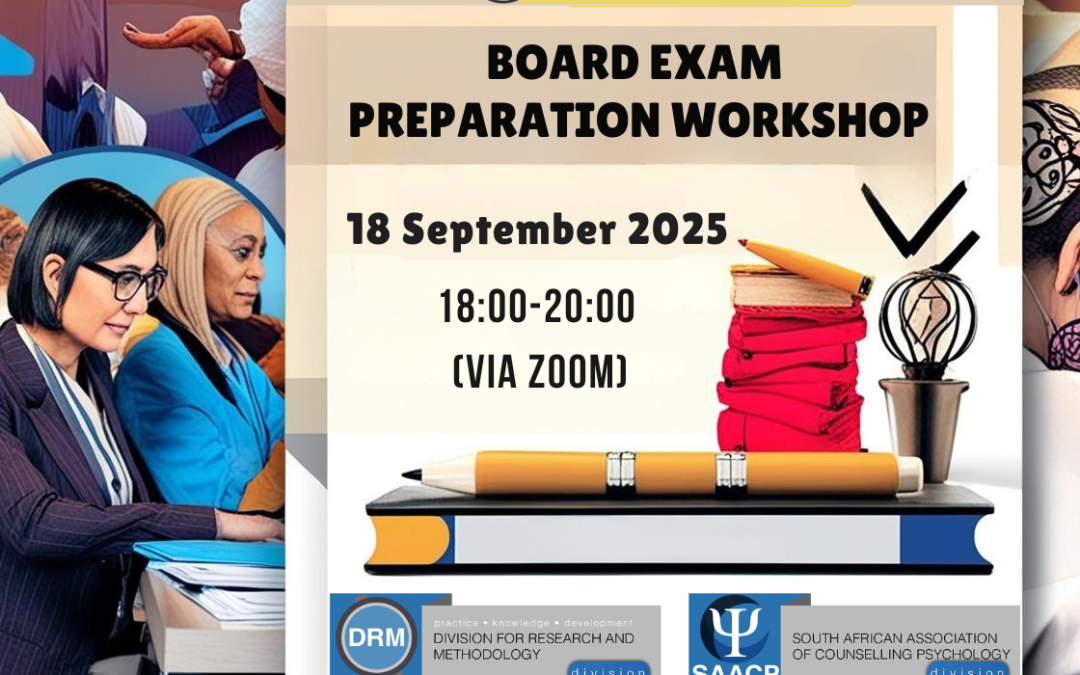
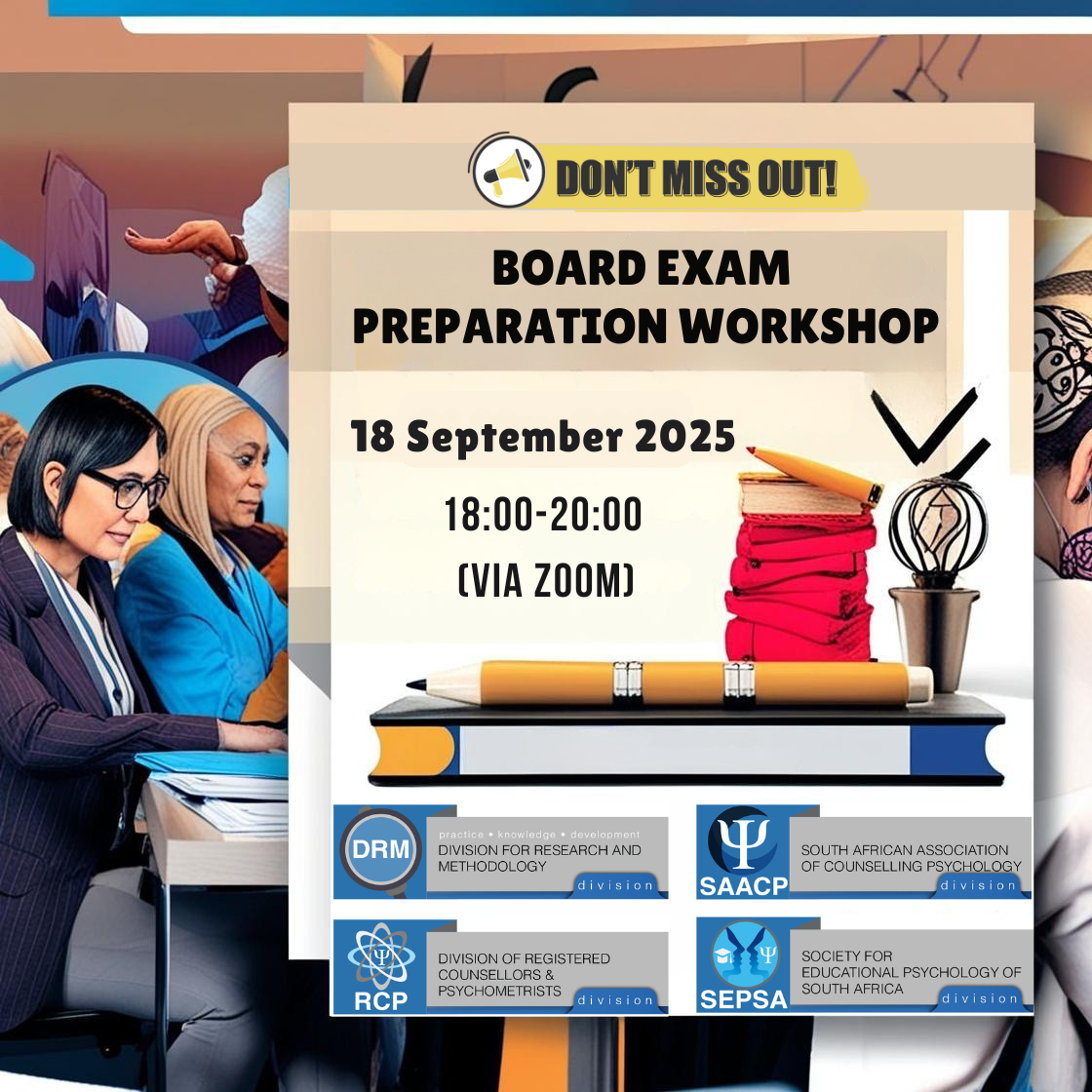
Board Exam Preparation Workshop – 18 September 2025

Board Exam Preparation Workshop – 18 September 2025

Board Exam Preparation Workshop – 18 September 2025

About this workshop

Join us on Zoom as we unpack the Board Exam!

The journey to becoming an HPCSA-registered psychologist entails navigating through rigorous academic training and practical experiences. However, one pivotal milestone stands between aspiring professionals and their goals: the HPCSA board exam. This exam serves as a comprehensive evaluation of theoretical knowledge, clinical skills, and ethical understanding essential for competent practice in the field. For those on the brink of undertaking this examination, the stakes are high, and the need for thorough preparation is paramount.

This underscores the necessity of a specialized board exam workshop tailored to the unique needs of prospective exam takers. Recognizing the complexities and challenges inherent in preparing for such a pivotal assessment, this workshop aims to provide invaluable clarity and guidance to participants.

The workshop will encompass multifaceted approaches to bolstering exam readiness for students in psychometry, counselling, research, educational and clinical psychology. Through interactive sessions, participants will delve into the intricacies of the exam format, content domains, and requisite competencies.

In essence, this workshop serves as a pivotal resource in equipping student and exam candidates with the tools, knowledge, and support necessary to navigate the challenges of the board exam successfully. By fostering clarity, confidence, and competence, the workshop endeavours to empower individuals to embark on their professional journeys with assurance and readiness to make meaningful contributions to the field of psychology.

Join the workshop at no cost!

Meet The Facilitators
Dr Pakeezah Rajab

Dr Pakeezah Rajab

Presenter

Bio

Dr Pakeezah Rajab is the Senior Researcher at JVR Psychometrics and a PsySSA 2024-25 Additional Executive Member. Her PhD topic was “Non-intellectual factors that influence mathematics performance in South Africa.” She has experience applying psychometric results to a variety of contexts, including schools, private practice, higher education, and corporate environments. Pakeezah has worked on numerous projects that developed, validated and/or standardised assessments for use by the South African population – including aptitude, personality, values, career guidance and emotional intelligence. Her research interests include cognitive functioning, student performance and assessment development.

Ms Genevieve Burrow

Ms Genevieve Burrow

Presenter

Bio

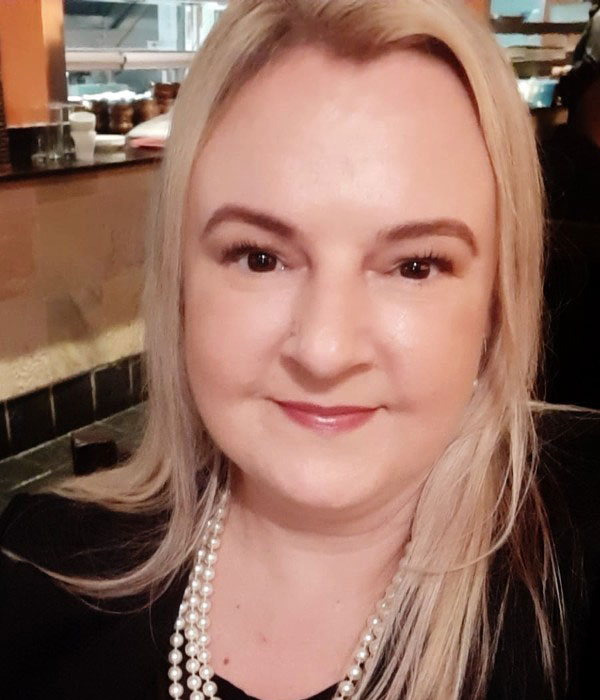
Genevieve Burrow is a registered counsellor and chairperson of the PsySSA Division of Registered Counsellors and Psychometrists. Genevieve is the manager of The Youth Hub, based at Groote Schuur Hospital Adolescent Centre of Excellence, where she counsels, and manages students and the counselling centre. She has hosted several board exam workshops previously, and enjoys working with students to enlighten them about the upcoming HPCSA board exam. Genevieve Burrow is committed to driving excellence and innovation in the practice of counselling, and promoting the visibility and importance of this field. Genevieve is passionate about youth upliftment and collaborates with a medically-informed multidisciplinary team to provide comprehensive and holistic care to adolescents facing diverse challenges in under-provided areas.

Dr Kemoneilwe Momi Metsing

Dr Kemoneilwe Momi Metsing

Presenter

Bio

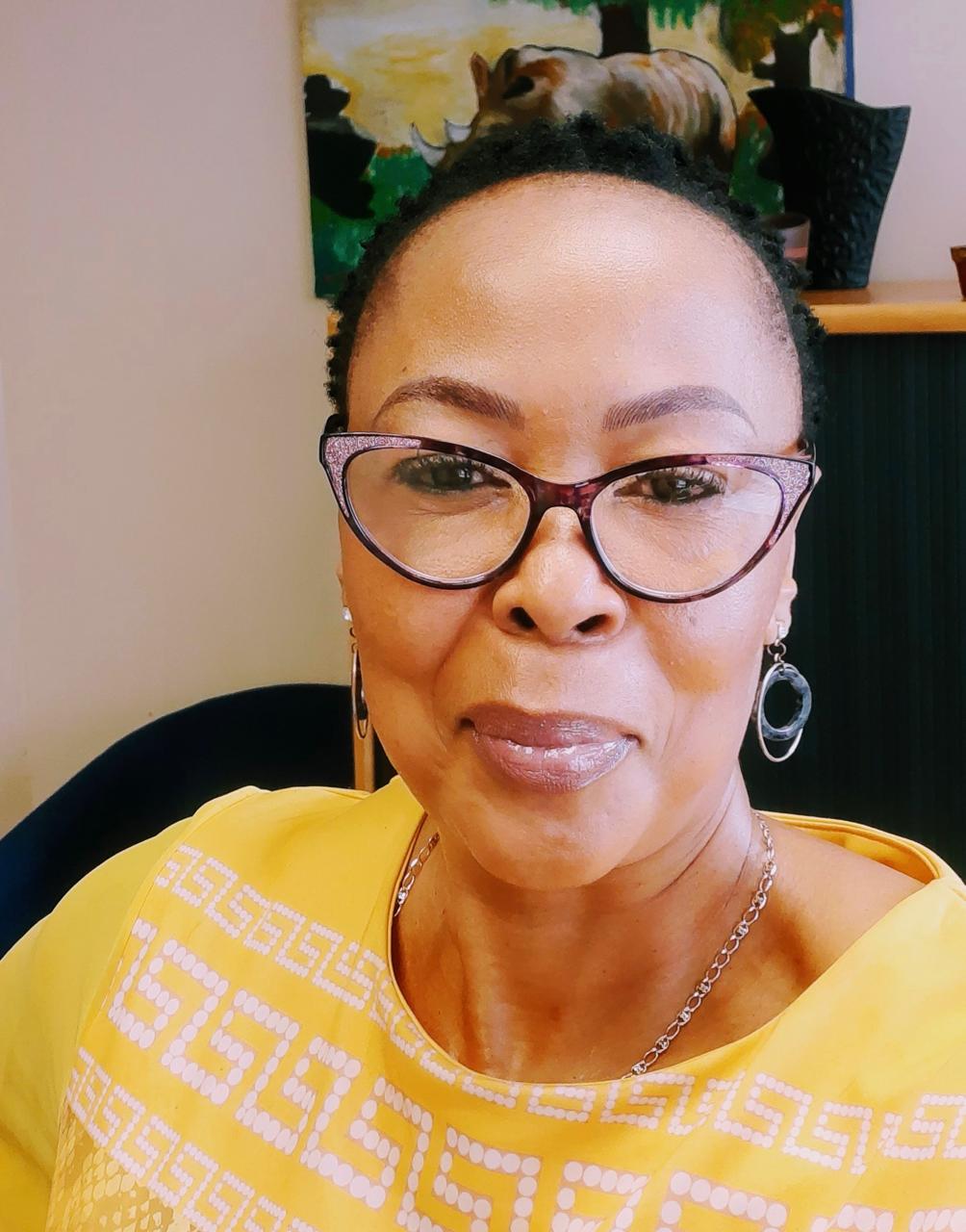
Dr. Kemoneilwe Momi Metsing is a registered Educational Psychologist with a PhD in Psychology. She is a Senior Lecturer in the Department of Psychology of Education at the University of South Africa (UNISA) and Chairperson of the Society for Educational Psychology of South Africa (SEPSA). Dr. Metsing has a private practice and consults for government and private companies on relational and organizational transformation. She is an expert witness and member of the South African Medico-Legal Association (SAMLA). Dr. Metsing has held various leadership positions, including Chief Education Specialist in the Department of Education and board member of the South African Professional Society on the Abuse of Children (SAPSAC). She is an External examiner and clinical supervisor for MEd Educational Psychology at UJ. She serves on the Executive Committee of Decolonising Psychology at the Psychological Society of South Africa (PsySSA) and is a Critical Reader for UNISA’s Department of Adult Community and Continuing Education. With expertise in developing community-based programs, Dr. Metsing has successfully brought together individuals and organizations to address social issues, fostering partnerships and sustainable solutions. She is committed to inspiring and educating the next generation of leaders and change-makers, and her appointment at UNISA marks an exciting new chapter in her journey.

Dr Matome Jack Mashiapata

Dr Matome Jack Mashiapata

Presenter

Bio

Dr Mashiapata is a registered Educational Psychologist with the Health Professions Council of SA with over three decades of experience as a lecturer college for teacher training, high school teacher, a school psychologist in the department of basic education, manager of services for students with disabilities as well as student counselling. Currently working as the Director for Counselling and Career Development at UNISA, he has presented papers and workshops locally and internationally in the areas of career counselling, pastoral counselling, mentorship, career development, ethics, students with disabilities, etc. He holds active membership and leadership roles the Psychological Society of SA (PSYSSA), Society for Education Psychology of SA (SEPSA), South African Federation of Student Affairs (SAFSAS), International Association of Student Affairs and Services (IASAS) serving as the Africa regional director, deputy chairperson of Council for Pastoral and Spiritual Counsellors (CPSC), and Higher and Further Education Disability Services Association (HEDSA). He is the past president of the Southern African Association of Counselling and Development in Higher Education (SAACDHE). Dr Mashiapata has authored a chapter on Trauma Debriefing in a book titled “Life skills – my journey, my destiny”. He presents accredited CPD workshops on ethics in counselling services.


Deneo Sekese

Deneo Sekese

Presenter

Bio

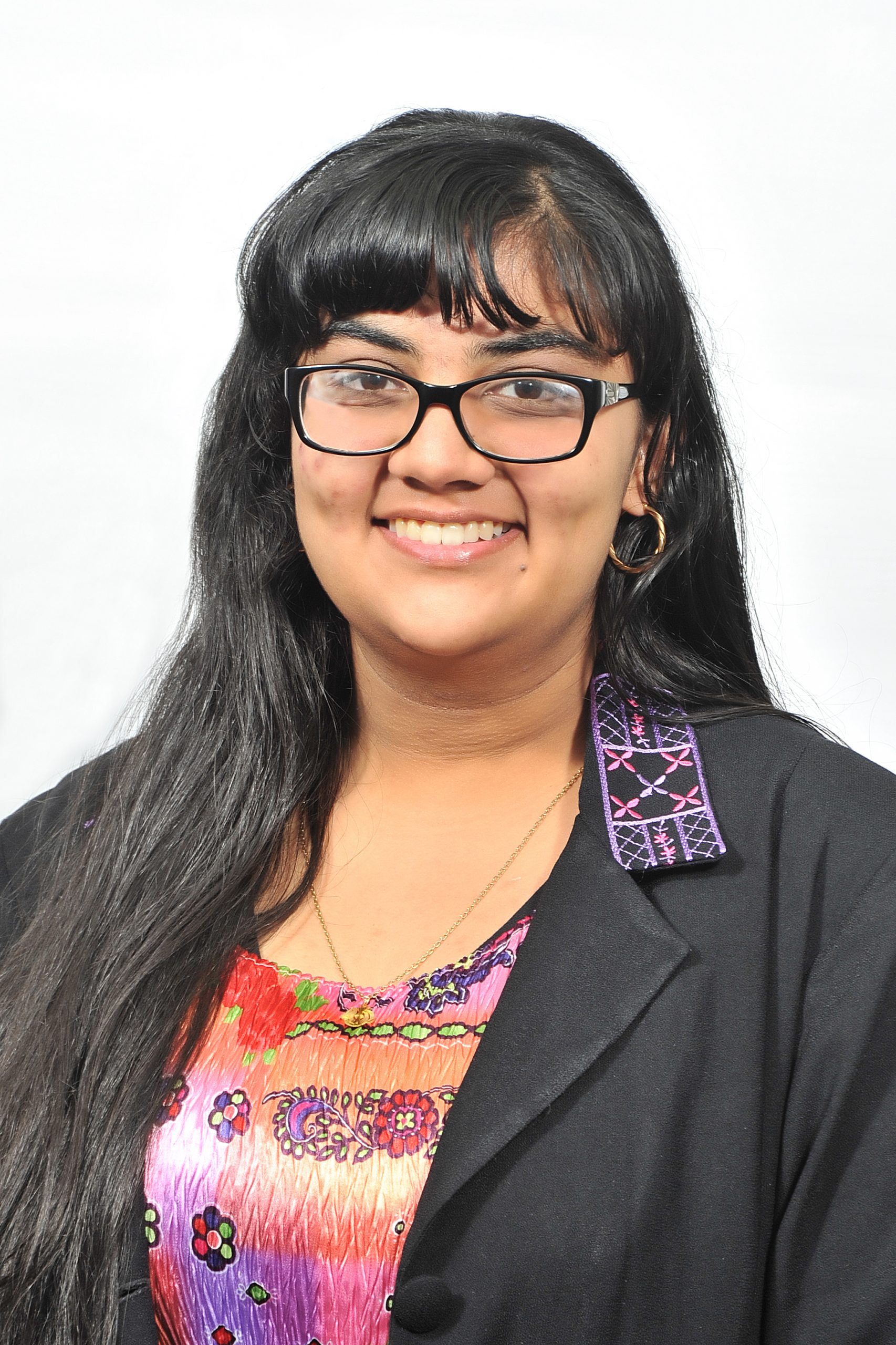
Deneo Sekese started her career in Human Resources specifically training and development and organisational development. Her passion for people and therapy led to a midlife career change into psychology. Deneo completed her masters in Counselling Psychology at Rhodes University and internship at the student counselling centre at the Durban University of Technology. She has had the privilege of presenting her masters research at the 27th Annual South African Psychology Congress. Deneo’s areas of interest are African Psychology, Wellbeing and Salutogenesis and Community psychology. She recently registered with the Board of Psychology HPCSA and is in the process of setting up a private practice.

Arianna Fadda

Arianna Fadda

Presenter

Bio

My name is Arianna Fadda. I hold a Bachelor of Arts and a Bachelor of Social Science Honours in Psychology both from the University of Pretoria as well as a professional master’s degree (by coursework and research report) in Social and Psychological Research from the University of the Witwatersrand. My research report focused on the perceptions of health professionals regarding an online depression screening tool adapted for South Africans. Following my master’s, I completed a year-long Research Psychology internship at the Africa Unit for Transdisciplinary Health Research (AUTHeR) at the North-West University, during which I worked on various qualitative and quantitative research projects. I subsequently wrote and passed the Research Psychology Board Examination with the Health Professions Council of South Africa earlier this year and I am now a registered Research Psychologist. I am currently working as a research assistant for AUTHeR and planning further studies towards a PhD.


Rekha Kangokar

Rekha Kangokar

Presenter

Bio

Mrs Rekha Kangokar Rama Rao is a Registered Counsellor and has completed Masters in Community-Based Counselling Psychology. Working with a person centered approach she is passionate about fostering mental well-being. She integrates evidence-based practices with a holistic approach to nurture growth and healing within both individuals and communities. She has been associated with various NGOs and has supported them closely, Rekha has served a Secretary and Treasurer before and currently serves as an additional member in the RCP division.

Zakiyah Hoosen

Zakiyah Hoosen

Presenter

Bio

Zakiyah Hoosen is a dynamic individual with a deep love for Psychology. She completed her undergraduate degree at the University of Pretoria majoring in Psychology and Languages; later obtaining her Honor’s degree from SACAP and went on to become a qualified registered counsellor. She is active in the field and works across multiple organizations, working within a trauma-informed focus to facilitate counselling and psychoeducation to children, adolescents, and adults. Zakiyah is currently advancing her knowledge and training on her journey of master’s in Clinical Psychology, and she aspires to foster psychosocial wellbeing across all spheres of life through meaningful and efficient psychological services for all.

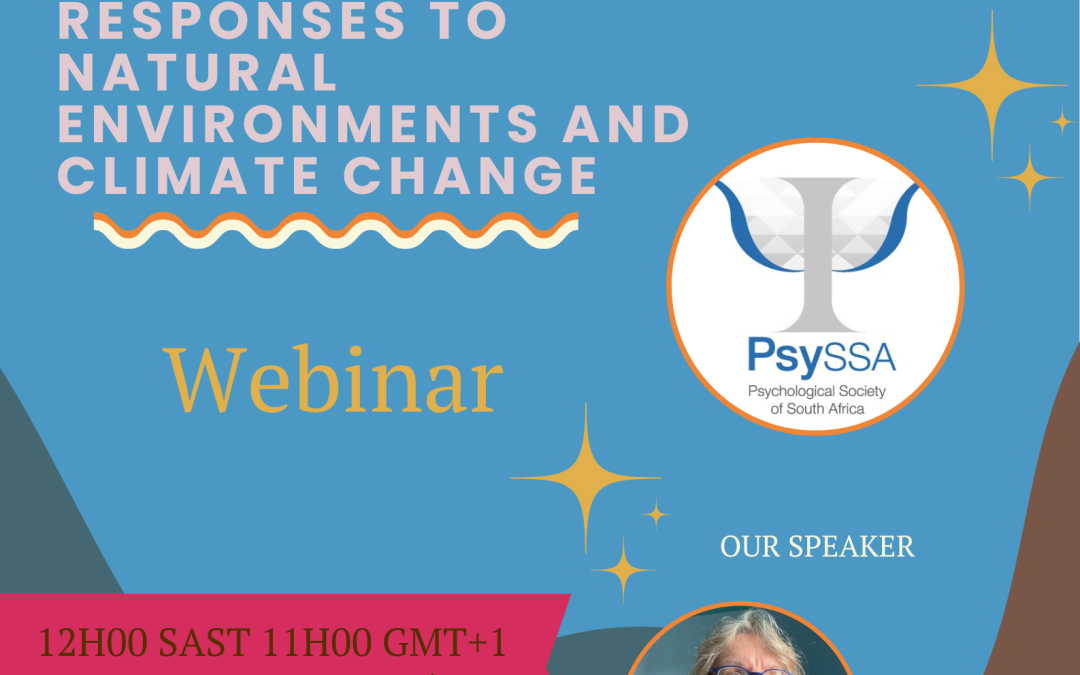
CEPD Webinar: Psychology and Global Climate Change

CEPD Webinar: Psychology and Global Climate Change

CEP Divisional Webinar: Psychology and Global Climate Change


About this Webinar

Date: 11 September 2025

Time:

  • SAST 18:00 – 19:00 

Platform: Teams

Climate change presents a serious and growing global challenge, and psychologists have a role to play in responding to it. This presentation will review psychological research to address three topics. First, what are the factors that make it difficult for people to understand the problem and recognize the risk? These factors include cognitive, emotional, and social barriers. Second, how does climate change affect mental health and well-being, and how do these impacts vary among different groups? The impacts of climate change-associated events such as major storms and flooding can be easily understood, but we also need to consider the impacts of gradual changes in the climate, indirect impacts from involuntary displacement or economic costs, and anxiety associated with awareness of climate change. Finally, how can psychological tools be used to promote resilience on both a personal and societal level? Existing strategies for dealing with depression, anxiety, and PTSD will be helpful, but additional approaches that address systemic change are needed. I will close with some recommendations for how psychology as a discipline can respond to the growing threat of climate change.

See the link below to join!


Meet Our Presenter

Susan Clayton is the Whitmore-Williams Professor of Psychology at the College of Wooster in Ohio. She received her PhD from Yale University, in social psychology. Dr. Clayton’s research examines people’s relationship with the natural environment, how it is socially constructed, and how climate change affects mental health and well-being. She is co-author of the widely-used Climate Change Anxiety Scale, as well as the Environmental Identity Scale, both of which have been used and validated in countries around the world. She is author or editor of six books, including Identity and the Natural Environment, Conservation Psychology, and Psychology and Climate Change, and is currently the editor of the Cambridge Elements series in Applied Social Psychology. A fellow of the American Psychological Association and the International Association of Applied Psychology, she is on the editorial boards for the Journal of Environmental Psychology, Environmental Research: Health, and OneEarth, and was a lead author on the Sixth Assessment Report of the Intergovernmental Panel on Climate Change. Her current research focuses on impacts of climate change on mental health as well as on future planning. She also hopes to promote a positive vision for the future that emphasizes the interdependence between humans and nature.