PsySSA Commemorates World Environment Day
PsySSA Commemorates World Environment Day
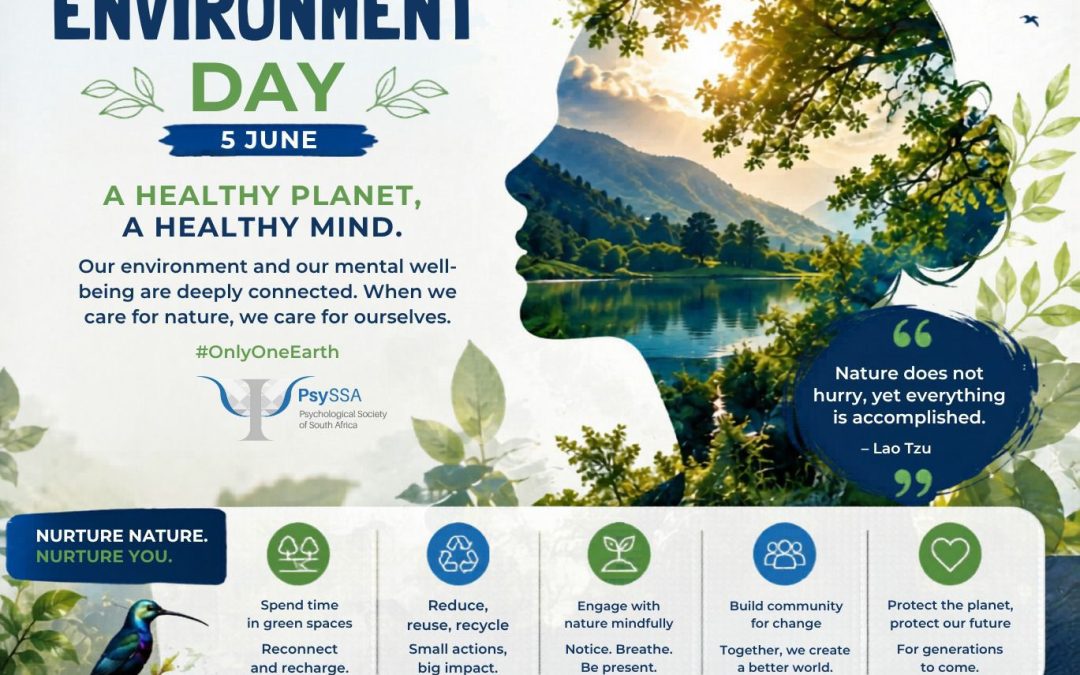
World Environment Day 2026 | Our Planet. Our Mind. Our Future. ????????
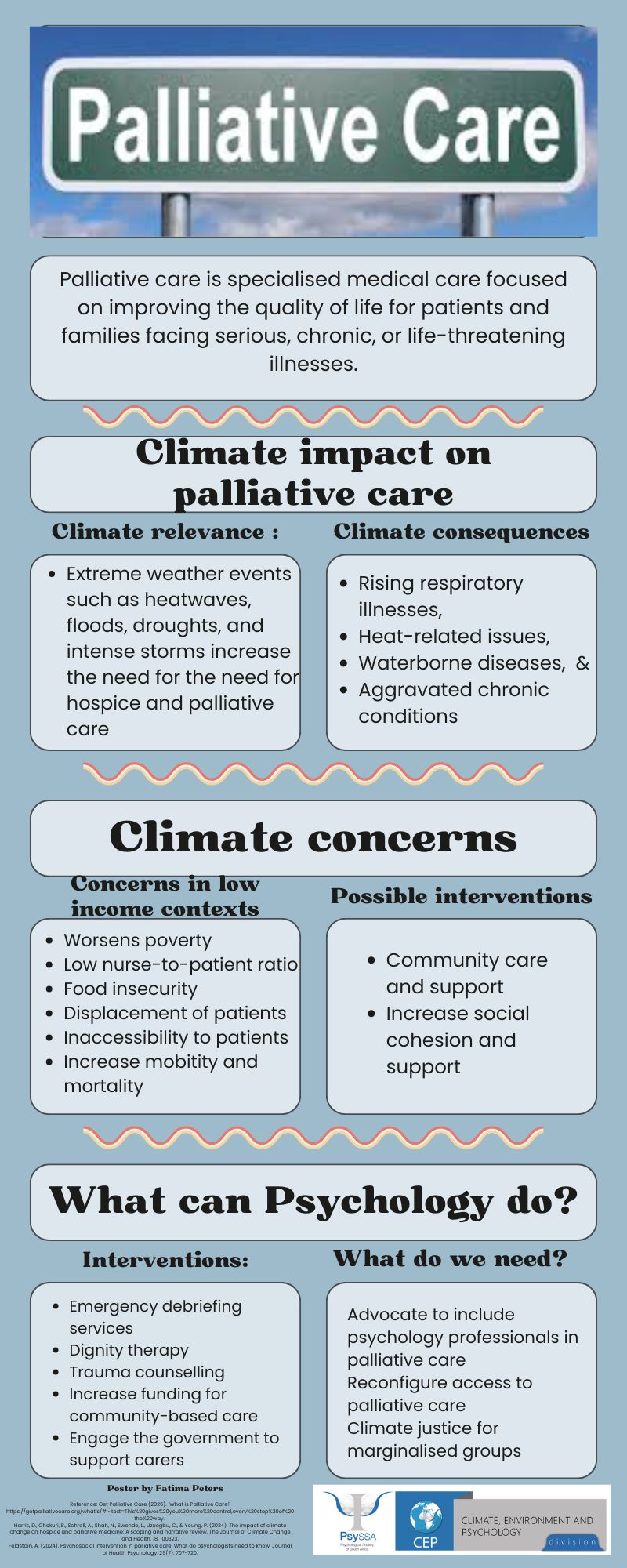
On World Environment Day, PsySSA reflects on the profound connections between environmental wellbeing, mental health, and human flourishing.
This year, contributions from the Climate, Environment and Psychology Division (CEPD) and the Student Division (SD) highlight how our relationship with the natural world shapes psychological wellbeing, resilience, community connectedness, and our collective future.
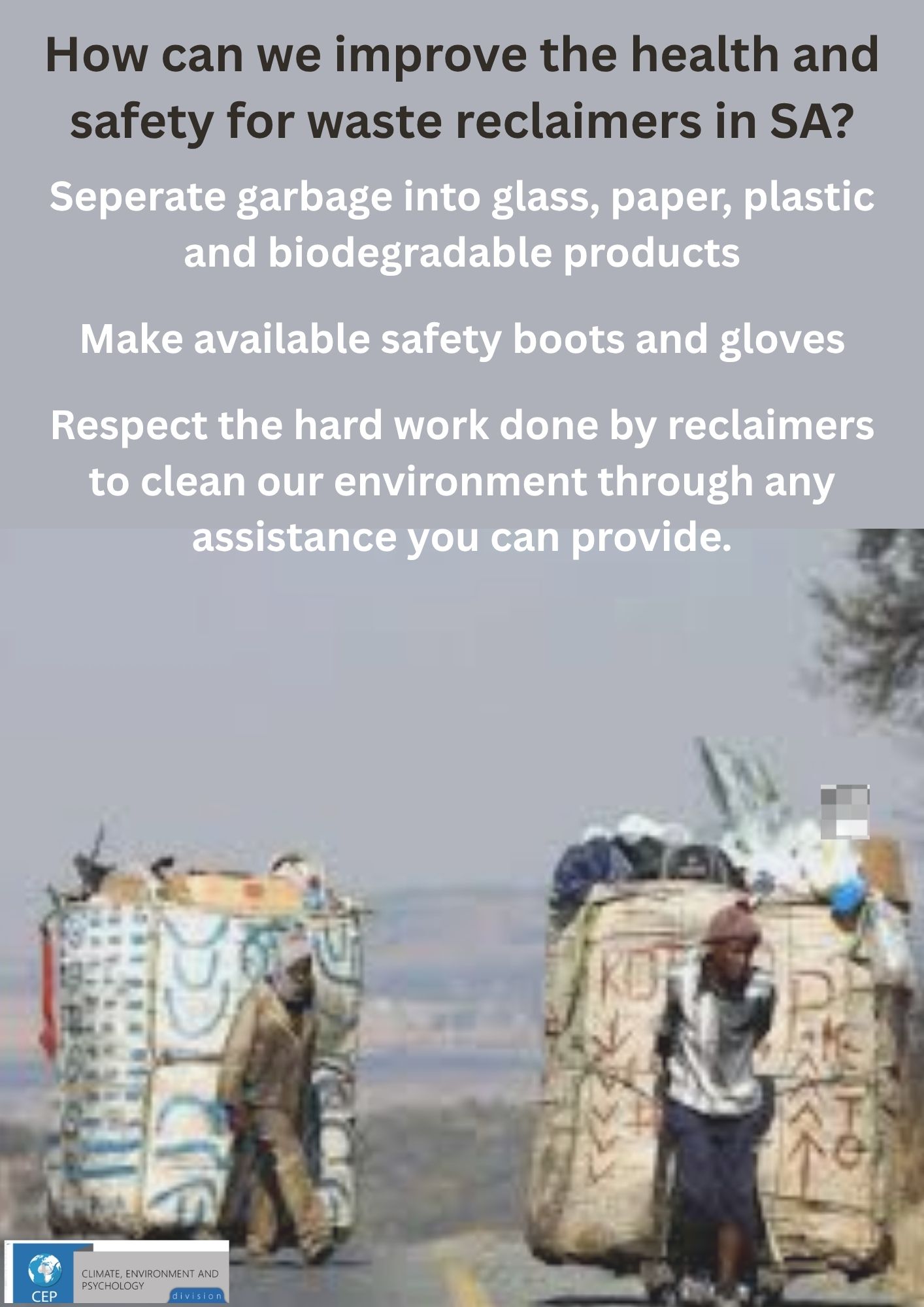
From the restorative benefits of nature and the importance of environmental justice, to the psychological impacts of climate change and eco-anxiety, these contributions remind us that caring for the environment is also an investment in mental health and social wellbeing. Access to healthy, safe, and restorative environments is not only an environmental concern—it is a matter of dignity, equity, and wellbeing.
The contributions also encourage us to reconnect with the natural world through mindful engagement, environmental stewardship, and collective action, recognising that small actions can strengthen both personal wellbeing and community resilience.
As we commemorate World Environment Day, let us reflect on the responsibility we share to protect the planet while fostering healthier, more sustainable futures for all.
Read the full contributions:

World Environment Day 2026: Looking Up, Looking Around, Looking After What Connects Us
By Prof Lynn Hendricks
Executive Committee Member, Climate and Environment Psychology Division, Psychological Society of South Africa (PsySSA)
World Environment Day invites us to reflect on something both simple and profound: our relationship with the world around us.
Many of us have experienced moments when nature seems to ask nothing of us. Standing at the shoreline listening to waves break against the sand. Feeling the warmth of sunlight on our skin. Watching clouds drift across an open sky. Looking up at a sky filled with stars and suddenly feeling both very small and deeply connected. These moments matter.
As psychologists, we know that human wellbeing does not emerge in isolation. We are shaped by our relationships with family, community, culture, and place. Increasingly, research shows that our relationship with the natural environment is also central to our mental health and wellbeing. Nature can help us slow down, restore our attention, reduce stress, and reconnect with a sense of meaning and belonging. But World Environment Day is not only about appreciating nature. It is also about asking who has access to it.
Environmental justice reminds us that the benefits of healthy environments are not shared equally. Access to safe parks, clean air, green spaces, healthy oceans, and dark night skies is often shaped by social and economic inequalities. In South Africa, the legacy of spatial injustice continues to influence who can easily access restorative natural environments and who cannot. Environmental justice is therefore not only an environmental issue. It is a human wellbeing issue. It is a psychological issue. It is a matter of dignity and belonging.
Every person deserves opportunities to experience the healing, restorative, and connecting qualities of nature.
One of the most remarkable findings emerging from our work is that these experiences do not always require vast wildernesses or expensive travel. Sometimes they begin with something as simple as paying attention. Through our Astronomy for Mental Health research at Stellenbosch University and the International Astronomical Union Office of Astronomy for Development, we have been exploring how experiences of the night sky influence mental health and wellbeing. Participants who spent time under the dark skies of Sutherland, observing Saturn’s rings, the Moon’s craters, and the Milky Way stretching across the Karoo, reported meaningful improvements in wellbeing and reductions in symptoms of anxiety and depression.
What makes stargazing so powerful?
Part of the answer lies in awe. Looking up at stars whose light has travelled hundreds, thousands, or even millions of years to reach us creates a shift in perspective. The worries we carry do not disappear, but they are placed within a much larger story. We are reminded that we are part of something far greater than ourselves. The night sky is one of the few places where every human being has always shared the same view. Long before cities, borders, or technologies existed, people looked upward and wondered. In many ways, we still do.
This World Environment Day, I encourage everyone to reclaim that experience.
If you can, spend some time outdoors after sunset. Turn off the lights. Look up. Notice the stars that are visible from where you are. If you are fortunate enough to see the Milky Way, take a moment to simply stand beneath it.
Equally, I encourage you to engage fully with the environments around you through all your senses. Visit the ocean if you can. Feel the sand beneath your feet. Listen to the rhythm of the waves. Notice the scent of salt carried by the wind. Watch the changing colours of the water and sky. Pay attention to the textures, sounds, temperatures, and movements around you.
Psychology often speaks about mindfulness, but nature has been inviting us into mindful awareness long before we gave it a name. The ocean, the stars, the trees, the birds, the wind, and the changing light all offer opportunities to become present. They remind us that wellbeing is not always found through doing more. Sometimes it emerges through noticing more.
As we celebrate World Environment Day, let us commit ourselves not only to protecting the environment but also to strengthening our relationship with it. Let us advocate for environmental justice so that everyone has access to healthy, restorative environments.
Let us create communities where children can see stars, where families can safely enjoy parks and beaches, and where future generations inherit a world rich in biodiversity, beauty, and possibility.
And tonight, wherever you are, take a moment to look up. The stars are still there. The ocean is still speaking. The Earth is still inviting us into relationship. All we have to do is pay attention