“Healing in Community” – Division of Registered Counsellors & Psychometrists

“Healing in Community” – Division of Registered Counsellors & Psychometrists

In South Africa, our communities hold the power to heal. Despite limited mental health resources, our shared strength lies in connection, empathy, and collective care.

This Mental Health Awareness Month, the Division of Registered Counsellors & Psychometrists (RCP) invites us to reflect on how community-led approaches and social support can transform mental health outcomes — especially where access to care is limited. By empowering communities to lead, we nurture resilience, reduce stigma, and create spaces where everyone belongs.

Together, we can turn our communities into places of healing.

Read more below:

“Healing in Community”

Division of Registered Counsellors & Psychometrists – Monique Cooper

Despite poor mental health resources, many South Africans have a strong sense of community. Can we leverage social support and community engagement to improve mental health outcomes in our diverse communities?

October is Mental Health Awareness Month, and one of the main priorities is to increase public education about mental illness in South Africa. Hugo et al. (2003) suggest that an improved understanding of mental disorders could decrease stigma and encourage the use of effective interventions. Increased knowledge can also lead to an improvement in community and social support for those suffering from mental illness. There is a good deal of evidence linking social connection to positive mental health outcomes, both in maintaining favourable mental health and assisting in recovery from moderate and severe mental health problems. On the other hand, loneliness is associated with poorer mental health (Holt-Lunstad, 2024). A sense of community is associated with reduced symptoms of depression, anxiety and stress (Park et al., 2023). Our communities can be a valuable source of support, and can help to leverage local knowledge, social networks and resources in areas where there is not adequate  access to mental health care. Mobilising local resources and existing social structures can help to meet mental health care needs where formal resources are scarce. (Chutiyami et al., 2025).

Studies show that programmes with high levels of community engagement demonstrated significant improvement in clinical mental health symptoms and recovery indicators such as improved social inclusion. While community-led programmes delivered the most culturally relevant and sustained impacts. (Chutiyami et al., 2025) A focus on engaging community members as active participants and collaborating with them on design, implementation and leadership of community projects can go a long way in  ensuring cultural acceptability and programme sustainability. (Chutiyami et al., 2025). A collaborative, community-led approach could help to increase the reach of mental health care services in underserved areas and encourage social cohesion and community resilience. Together we can work towards turning our communities into places of healing.

References:

Chutiyami, M., Cutler, N., Sangon, S., Thaweekoon, T., Nintachan, P., Napa, W., Kraithaworn, P., & River, J. (2025). Community-Engaged Mental Health and Wellbeing Initiatives in Under-Resourced Settings: A Scoping Review of Primary Studies. Journal of primary care & community health, 16, 21501319251332723. https://doi.org/10.1177/21501319251332723

Holt-Lunstad J. (2024). Social connection as a critical factor for mental and physical health: evidence, trends, challenges, and future implications. World psychiatry : official journal of the World Psychiatric Association (WPA), 23(3), 312–332. https://doi.org/10.1002/wps.21224

Hugo, C.J., Boshoff, D.E.L., Traut, A. et al. Community attitudes toward and knowledge of mental illness in South Africa. Soc Psychiatry Psychiatr Epidemiol 38, 715–719 (2003). https://doi.org/10.1007/s00127-003-0695-3

Park, E. Y., Oliver, T. R., Peppard, P. E., & Malecki, K. C. (2023). Sense of community and mental health: a cross-sectional analysis from a household survey in Wisconsin. Family medicine and community health, 11(2), e001971. https://doi.org/10.1136/fmch-2022-

“Healing in Community” – Division of Registered Counsellors & Psychometrists

“Cultivating Mental Health” The South African Association for Counselling Psychology (SAACP)

As part of Mental Health Awareness Month, The South African Association for Counselling Psychology (SAACP) invites us to pause, reflect, and intentionally cultivate our mental well-being.

In their contribution, “Honouring Mental Health: A Thought Piece with Resources,” SAACP reminds us that mental health is not a given — it requires ongoing care, investment, and compassion. From recognising the value of rest and boundaries, to integrating holistic approaches that include the physical, spiritual, and social dimensions of health, this reflection encourages both practitioners and the public to nurture resilience and balance.

To support continued growth, SAACP, with SACAP Global are offering a 50% discount on the “How to Have Critical Conversations” short course, valid for the October–December 2025 intake (voucher code: VOU_PSYSSA2025, expires 31 October 2025).

Read more about how we can honour mental health — for ourselves, our clients, and our communities below:

“Cultivating Mental Health”

The South African Association for Counselling Psychology (SAACP)

Honouring Mental Health: A Thought Piece with Resources

Mental health is a journey. Invest in it. Honour it. And remember, it belongs to us all.

Taking Mental Health for Granted

  • Similar to our physical health, we often overlook our mental health – until it is compromised. Only then do we realise how truly valuable it is. World Mental Health Day is a reminder to all of us, mental health professionals included, to honour ourselves by paying attention to our wellbeing.

The Wounded Healer and Shared Humanity

  • In my coaching practice, I hold space for clients as they alchemise their journey, remembering their connection, beauty, and power. Many mental health professionals -some resonating with the wounded healer archetype – know better than most that mental health is not a given.
  • There are times when we all feel fragile, overwhelmed, and unsure of ourselves. Mental health requires regular investment through practices unique to each of us – whether through rest, boundaries, exercise, or soul work.

Beyond the Mind: A Holistic View of Health

  • For centuries, health has been divided among specialists. While expertise has deepened, perspective has narrowed. Yet, mental health does not exist only in the mind:
    • Physical state: Exercise, sleep, and nutrition play a vital role.
    • Spiritual connection: Meaning, purpose, and listening to the heart sustain us.
    • Social environment: Systems we engage with often laced with prejudice or misogyny send powerful messages that shape our self-perception.

The real question is: how harmonised and integrated are we as practitioners and as people?

Supporting Clients in Their Becoming

  • Helping professionals work across a spectrum: from healing to empowerment. Along the way, we identify skills gaps together, whether learning assertiveness, building resilience, or coping with grief.
  • In my coaching practice, I’ve found that short courses accelerate development, offering practical tools that complement coaching.

Short Course 50% Discount:
Short courses can be a powerful ingredient in cultivating mental health.

  • Course: “How to Have Critical Conversations”
  • Discount: 50% off with voucher code VOU_PSYSSA2025
  • Valid for: Oct–Dec 2025 Class of 2025
  • Register at: SACAP Global
  • Voucher expires: 31 October 2025

Karolyne Williams is an ICF Professional Certified Coach and COMENSA Credentialed Practitioner. She has been developing leaders for the past fifteen years, helping them shape a future that embodies what they care about most. She is Head of Strategic Innovation at the South African College of Applied Psychology (SACAP) and leads the design and development of their coaching, human resource management and business management qualifications. Karolyne currently leads SACAP Global, their online short course division.

“Building Resilience in South Africa” – The South African Society for Clinical Psychology (SASCP)

“Building Resilience in South Africa” – The South African Society for Clinical Psychology (SASCP)

The South African Society for Clinical Psychology (SASCP) reminds us that mental health is not a luxury — it is the foundation for thriving individuals and communities. Let’s break the stigma, build resilience, and create a South Africa where psychological well-being is a shared priority. Read the full reflection from SASCP below:

“Building Resilience in South Africa”

The South African Society for Clinical Psychology (SASCP) – Barry Viljoen

Every year on 10 October, World Mental Health Day reminds us of the urgent need to prioritise psychological well-being. In South Africa, this call is especially critical. Our nation faces the intersecting burdens of poverty, trauma, violence, unemployment, and health inequities—factors that heighten vulnerability to mental health difficulties. Yet, amidst these risks, South Africans also display remarkable resilience and adaptability.

The SASCP recognises both the adversities and strengths that our citizens within our communities are faced with on a daily basis. Our members, based in hospitals, clinics and in private practise, in working daily with survivors of trauma, people living with the effects of brain injury, and living with various emotional and psychological conditions, to mentoring young professionals, recognise one truth that stands out: mental health is not a luxury. It is the foundation upon which individuals, families, and societies thrive.

Too often, however, stigma prevents people from seeking help. This is where awareness and education play a powerful role. By recognising early signs of distress—sleep disruption, fearfulness, withdrawal, or memory difficulties—and encouraging supportive interventions, we can prevent suffering from escalating into long-term impairment.

World Mental Health Day is not only about highlighting need; it is also about fostering hope. South Africa has the talent, knowledge, and compassion to strengthen systems of care. Schools, workplaces, and health institutions can all integrate practical, culturally relevant approaches that build resilience and promote recovery.

This year, let us commit to conversations that normalise mental health, to services that are accessible, and to policies that protect the vulnerable. Together, we can transform awareness into action and build a healthier, more resilient South Africa.

Word Trauma Day – A call to highlight Psychological First Aid following trauma

Word Trauma Day – A call to highlight Psychological First Aid following trauma

by Lynne Richards & Leonie Vorster, on behalf of the Trauma and Violence Division

World Trauma Day, commemorated on 17 October, seeks to emphasise the importance of creating contexts in which people can recover and thrive following an incident of trauma (South African Government, 2025). Traumatic events or ‘Big T’ traumas are incidents which leave individuals vulnerable to negative psychological effects and trauma-based diagnoses (Gilmoor et al., 2019). Findings from the South Africa Stress and Health Study indicate that most South Africans experience at least one traumatic event during their lives, with many experiencing multiple traumatic events (Williams et al., 2007). With the mental health treatment gap increasing following the COVID-19 pandemic, the need for low-level interventions provided by cadres at a grassroots level to assist survivors of trauma remains.

Historically, trauma debriefing was encouraged following traumatic events, with many professionals and lay counsellors trained in this practice. However, research has provided no evidence of reduced mental health and the practice may even worsen mental health (Arancibia et al., 2022; Rose et al., 2002). Increasingly, Psychological First Aid (PFA) has been promoted as a suitable method for lay health workers and frontline workers to mitigate the impact of crises (Wang et al., 2021). According to the World Health Organisation (2011), PFS is described as ‘human, supportive and practical help to fellow human beings suffering a serious crisis event’.

PFA focuses on immediate, non-intrusive support and stabilisation of individuals in the immediate period following a crisis. The key principles of PFA include providing practical care and support following an assessment of an individual’s immediate needs. At its core, it involves using a person-centred approach to listening to the other without expecting them to talk or share their experience. Further, it encourages connecting people to information, services, and social support to ensure they are protected from further harm (World Health Organisation, 2011). The World Health Organisation manual expands on the Look, Listen and Link model (World Health Organisation, 2011).

Professionals within the field of psychology can play a larger role than the provision of the above service. Various organisations, including the World Health Organisation, provide manualised training which can be provided by facilitators, such as psychological practitioners, to upskill lay individuals within communities. This presents an opportunity for mental health professionals to create opportunities for social engagement and integration within the communities in which they live and work. Let us not miss this opportunity!

References

Arancibia, M., Leyton, F., Moran, J., Muga, A., Rios, U., Sepulveda, E., Vallejo-Correa, V. (2022). Psychological debriefing in acute traumatic events. Evidence synthesis. Medwave, 22(1), 002538. https://doi.org/10.5867/medwave.2022.01.002538

Gilmoor, A. R., Adithy, A. & Regeer, B. (2019). The cross-cultural validity of post-traumatic stress disorder and post-traumatic stress symptoms in the Indian context: A systematic search and review. Frontiers in Psychiatry, 4(10)439. https://doi.org/10.3389/fpsyt.2019.00439

Rose, S., Bisson, J., Churchill, R., & Wessely, S. (2002). [Psychological debriefing for preventing post traumatic stress disorder (PTSD). Cochrane Database Systematic Review,2, CD000560  https://doi.org/10.1002/14651858.CD000560

South African Government (2025). World Trauma Day. https://www.gov.za/world-trauma-day-1

Wang, L., Norman, I., Xiao, T., Li, Y. & Leamy, M. (2021). Psychological first aid training: A scoping review of its application, outcomes, and implementation. International Journal of Environmental Research and Public Health, 18(9), 4594. https://doi.org/10.3390/ijerph18094594

Williams, S., Williams, D., Stein, D., Seedat, S., Jackson, P., & Moomal, H. (2007). Multiple traumatic events and psychological distress: The South African Stress and Health Study. Journal of Traumatic Stress, 20(5), 845-855. https://doi.org/10.1002/jts.20252

World Health Organisation (2011). Psychological first aid: Guide for field workers. https://www.who.int/publications/i/item/9789241548205

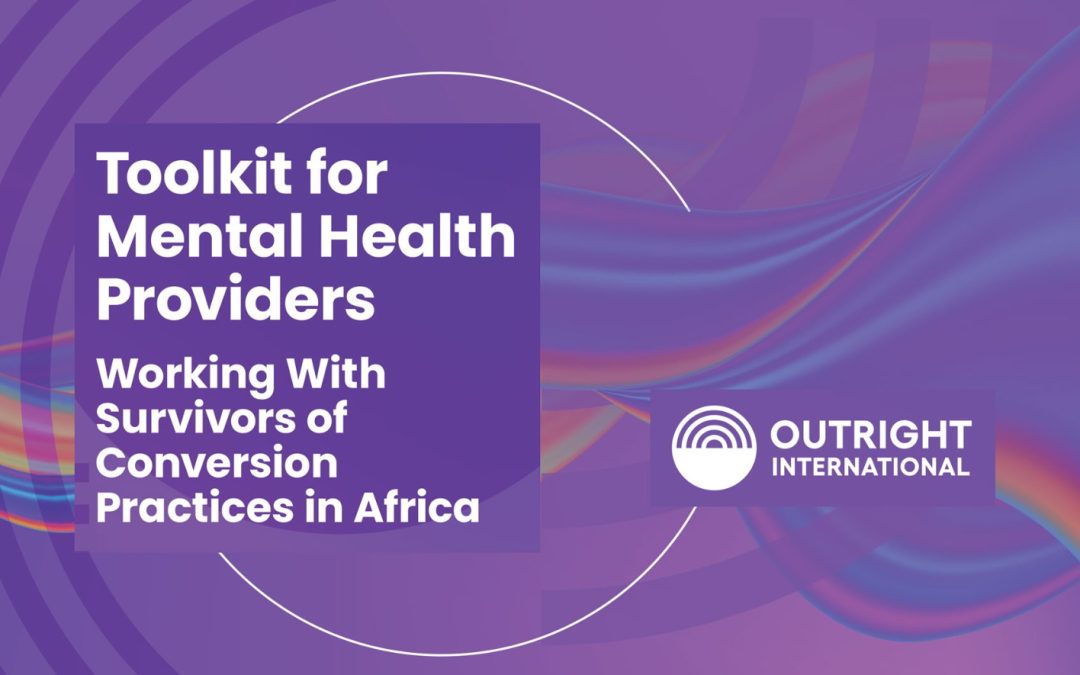
Toolkit for Mental Health Providers – Working with Survivors of Conversion Practices in Africa

Toolkit for Mental Health Providers – Working with Survivors of Conversion Practices in Africa

The Toolkit for Mental Health Providers Working with Survivors of Conversion Practices in Africa was produced by the Psychological Society of South Africa (PsySSA) through its Sexuality and Gender Division, with funding and support from Outright International . It offers practical, culturally-grounded guidance for supporting survivors of harmful “Conversion Practices.” Designed to promote trauma-informed, survivor-centred care, the Toolkit and its 16 Guidelines equip practitioners to address the psychological and social harm caused by attempts to change or suppress sexual orientation or gender identity.

Health Psychology & Mental Health Day – Health Psychology Division

Health Psychology & Mental Health Day – Health Psychology Division

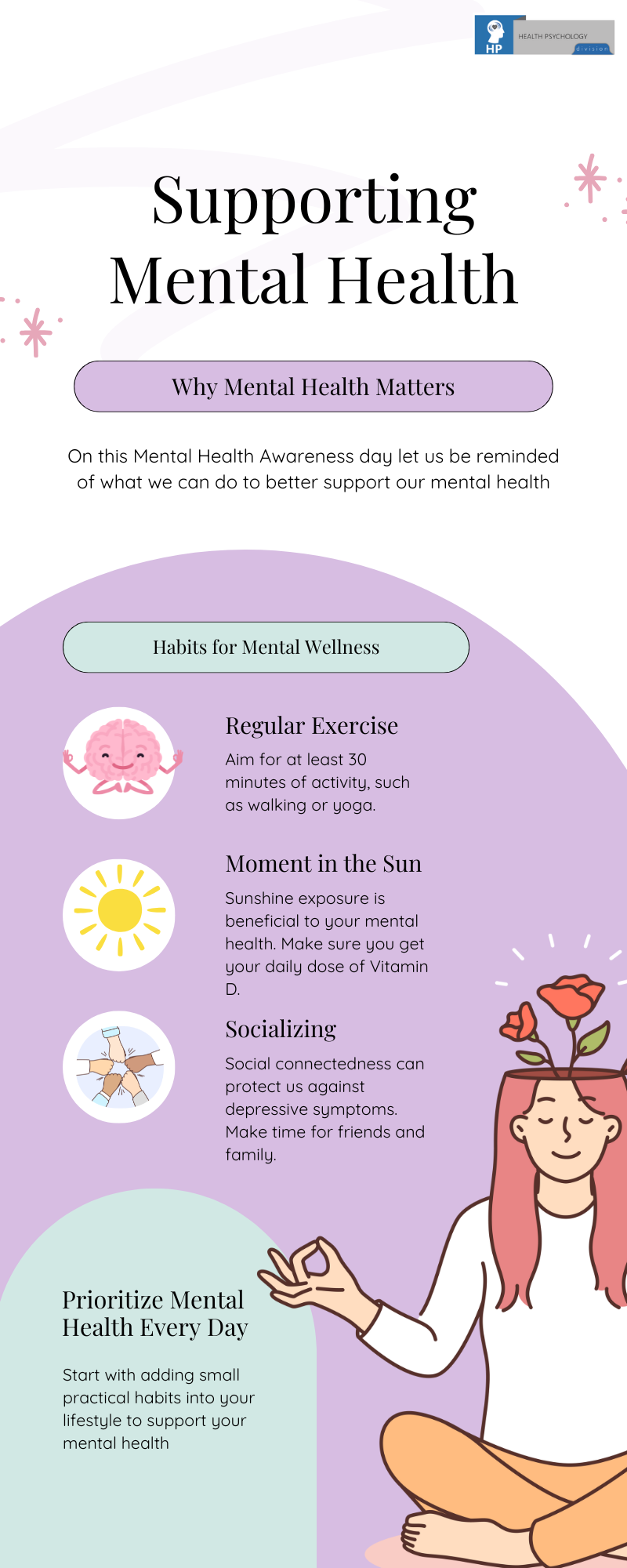
Health psychology and World Mental Health Day are closely linked through their shared focus on promoting psychological well-being and understanding the relationship between mental and physical health. Health psychology provides the scientific framework for examining how factors such as stress, behaviour, and social support influence both mental and physical health outcomes. Similarly, World Mental Health Day serves as a global platform to raise awareness, reduce stigma, and advocate for improved access to mental health care. Together, they highlight the importance of prevention, early intervention, and education in fostering resilience and healthier lifestyles. By translating health psychology’s research and insights into public awareness campaigns, World Mental Health Day bridges the gap between scientific knowledge and real-world impact, ensuring that mental health is recognized as an essential component of overall health.