TVD Workshop: Working with Boys and Men Through a Relational-Ethical Lens

TVD Workshop: Working with Boys and Men Through a Relational-Ethical Lens


TVD Workshop:


“Working with Boys and Men Through a Relational-Ethical Lens”


Are you looking to deepen your practice with men and boys? Join Dr. Shahieda Jansen for an essential two-part series that moves beyond symptom reduction into the historical, structural, and relational heart of masculinity in the South African context. This series is designed for psychologists and researchers who want to move past “problem-management” and toward a culturally grounded model of personhood that restores accountability and belonging.


Part 1: What Happened to Our Brothers

In this session, we shift our focus from individual behaviour to structural literacy. We will look at how colonial dispossession, migrant labour, and economic exclusion have disrupted traditional constructions of manhood and “severed kinship continuity”. Dr Jansen will introduce the Umoya personhood model, a relational-ethical framework that redefines healing as the restoration of relational vitality and dignity.

Part 1 Details:

Date: 24 March 2026

Time: 17:30 – 19:30

2 General CPD Points

Online | Free


Part 2: Masculinity Meets Humanity: An Adapted Model of Masculinised Psychotherapy

The second workshop translates theory into clinical application. We will discuss the principles of masculinised psychotherapy, including: Activity-based intimacy, male-specific distress and emotional competence.

Part 2 Details:

Date: 31 March 2026

Time: 17:30 – 19:30

2 General CPD Points

Online | Free

Dr Shahieda Jansen

Dr Shahieda Jansen

Presenter

Dr Shahieda Jansen is a clinical psychologist who serves as the Deputy Director: Academic & Technology Support at the Parow campus in the Western Cape region since 2016. Previously she headed the HPCSA accredited student counselling centre of the University of the Western Cape with oversight of counselling services and clinical supervision of master’s level national and international psychology interns. Shahieda’ s scholarly interest in relational humanity, and male-focused development was initiated by an accidental men’s group that she facilitated in 2009. Inserting the African multidimensional personhood (AMP) model between the personhood of the mental health practitioner and psychological practice is her recently published article by Taylor & Francis. Homo moyanus, not Homo neoliberalus: Socio-moral subjectivity for a transformed Higher Education is a book chapter that has been finalised for publication. Shahieda is the principal researcher of Unisa’s Community Engagement project: School Belonging for boys which adds another critical layer of research by highlighting the systemic influences on the academic performance of boys. Her longstanding commitment to prioritising humanity over gender is the subject of her book published by Unisa Press, Masculinity Meets Humanity: An Adapted Model of Masculinised Psychotherapy.

Trauma and Violence Division (TVD) – 16 Days of Activism Against Gender-Based Violence

Trauma and Violence Division (TVD) – 16 Days of Activism Against Gender-Based Violence

Digital violence is one of the fastest-growing forms of gender-based harm — from cyberstalking and doxxing to deepfakes, image-based abuse, hate speech, data theft, misinformation and online grooming. These acts leave deep psychological, social and economic consequences, and are part of a continuum that can escalate into offline violence, including femicide.

As part of the 2025 UNiTE campaign, the PsySSA Trauma and Violence Division highlights 16 key forms of digital violence and practical steps that individuals, communities, platforms and policymakers can take to keep women and girls safe online.

Across the next 16 days, we unpack the legal, technological and socio-educational actions needed to strengthen digital rights, hold perpetrators accountable, and build online spaces rooted in dignity, equality and justice.

Explore each day’s graphic and message below to learn how digital violence operates — and what we must do to end it.

Honouring Mental Health Awareness Month with the PsySSA Trauma and Violence Division (TVD)

Honouring Mental Health Awareness Month with the PsySSA Trauma and Violence Division (TVD)

Honouring Mental Health Awareness Month with the PsySSA Trauma and Violence Division (TVD)

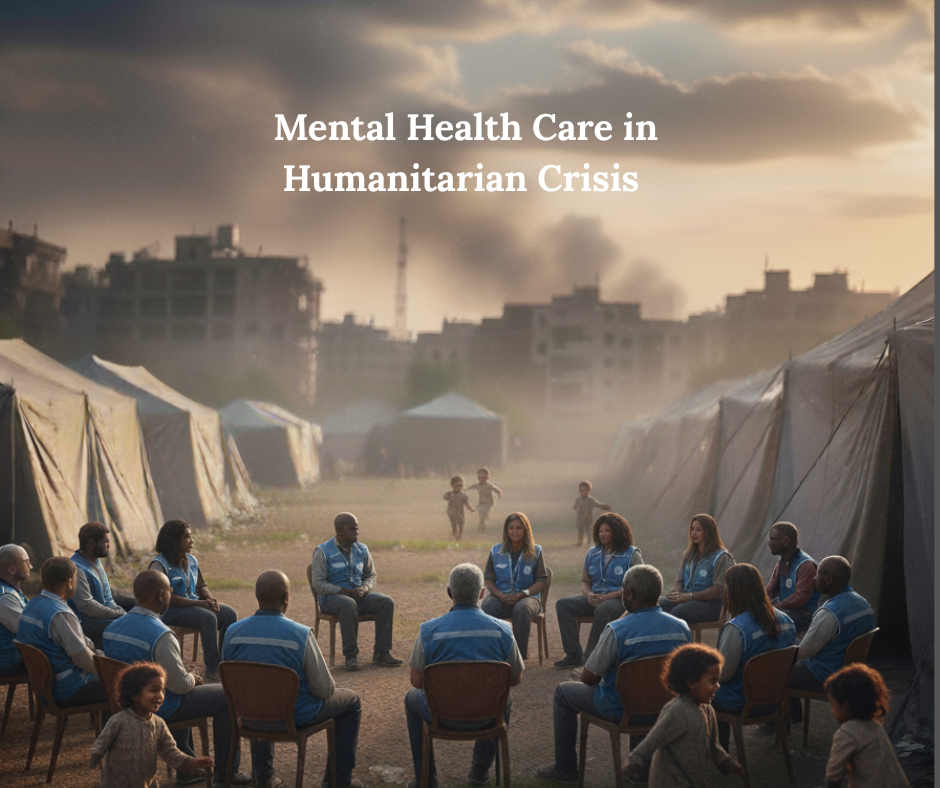
The year’s theme, Mental Health in Humanitarian Crisis, reminds us that mental health care must remain at the heart of how we respond to trauma — both globally and locally.

  1. Thinking Local and Global
    Lynne Richards highlights the Gift of the Givers Foundation — a beacon of hope integrating mental health support into humanitarian aid, ensuring care for both communities and volunteers on the front lines.
  2. World Trauma Day – A Call to Highlight Psychological First Aid (PFA)
    Lynne Richards and Leonie Vorster emphasise the growing importance of Psychological First Aid (PFA) — practical, compassionate support that helps individuals stabilise and recover following trauma.

Together, these contributions from the TVD Division remind us that psychological wellbeing, resilience, and community care must remain central to all humanitarian and recovery efforts. ????

Read more below:

“Thinking local and global – Gift of the Givers foundation at the forefront of mental health in humanitarian crisis”

The PsySSA Trauma and Violence Division (TVD) – Lynne Richards

Nationally, we celebrate Mental Health Awareness month each October, during which we highlight the need for public education and destigmatisation of mental illness. This year, the World Health Organisation’s theme for World Mental Health Day, celebrated on the 10th of October, was ‘ Mental Health in Humanitarian Crisis’. Within South Africa, there are numerous examples of organisations at the forefront of humanitarian aid; however, the Gift of the Givers Foundation is a beacon of hope for many. Lynne Richards, the chairperson of the Trauma and Violence Division, had the pleasure of interviewing Zohra Sooliman, Counseling Psychologist, Co-founder of the Gift of the Givers Foundation and Director of the Gift of the Givers Careline counselling services. Within this interview, Zohra discussed the integration of mental health services for their volunteers as well as within communities ravaged by disaster, natural or man-made.

The Gift of the Givers Foundation was founded in 1992 by Dr Imtiaz Sooliman and Zohra Sooliman. The organisation has intervened in various relief missions locally and globally. Zohra reported that she foresaw the impact of secondary traumatisation on the volunteer responders, including paramedics, medical doctors, and allied health workers. It was this knowledge that encouraged her to advocate for the addition of psychosocial support for their teams. This was the beginning of a commitment to ensuring mental health care and psychosocial support were a central pillar in disaster relief efforts. The organisation offers returning volunteers trauma debriefing, along with free counselling by a pool of volunteers. This ensures that their teams receive sustainable and ongoing support. Moreover, the organisation’s work extends to the provision of peer assistance and the upskilling of local professionals.

Through missions to Congo Brazzaville and Gaza in 2009, the organisation sought to collaborate with local psychologists and social workers and offered training to students in social work and psychology. The goal was to ensure that the community would be able to empower itself long after organisations retreated. This commitment ensures mental health support is sustainable. During local disasters, such as the floods and looting, the Foundation provided trauma debriefing and identified and provided free services to those in need.

In situations where circumstances prevent the deployment of relief teams, such as in the crisis in Gaza, the Foundation has sought innovative ways to provide support. Remote peer support is provided voluntarily by South African psychologists. This intervention aims to create meaningful connections. For example, psychological support was provided to Palestinian medical students who were hosted at South African Universities for the completion of their studies. Furthermore, the Foundation is collaborating with volunteers in Egypt to assist refugee committees with the aim of upskilling them in trauma-focused modalities such as Eye-Movement Desensitisation and Reprocessing (EMDR).
A key take-home message from the interview was highlighted: While basic needs such as clean water, nutrition, and medical services trump psychological services, it is essential to integrate psychosocial services into relief missions. Humanitarian crises call for novel approaches to mental health services, and the Gift of the Giver’s stands as an example of this.

“Word Trauma Day – A call to highlight Psychological First Aid following trauma”

The PsySSA Trauma and Violence Division (TVD) – Lynne Richards & Leonie Vorster

World Trauma Day, commemorated on 17 October, seeks to emphasise the importance of creating contexts in which people can recover and thrive following an incident of trauma (South African Government, 2025). Traumatic events or ‘Big T’ traumas are incidents which leave individuals vulnerable to negative psychological effects and trauma-based diagnoses (Gilmoor et al., 2019). Findings from the South Africa Stress and Health Study indicate that most South Africans experience at least one traumatic event during their lives, with many experiencing multiple traumatic events (Williams et al., 2007). With the mental health treatment gap increasing following the COVID-19 pandemic, the need for low-level interventions provided by cadres at a grassroots level to assist survivors of trauma remains.

Historically, trauma debriefing was encouraged following traumatic events, with many professionals and lay counsellors trained in this practice. However, research has provided no evidence of reduced mental health and the practice may even worsen mental health (Arancibia et al., 2022; Rose et al., 2002). Increasingly, Psychological First Aid (PFA) has been promoted as a suitable method for lay health workers and frontline workers to mitigate the impact of crises (Wang et al., 2021). According to the World Health Organisation (2011), PFS is described as ‘human, supportive and practical help to fellow human beings suffering a serious crisis event’.

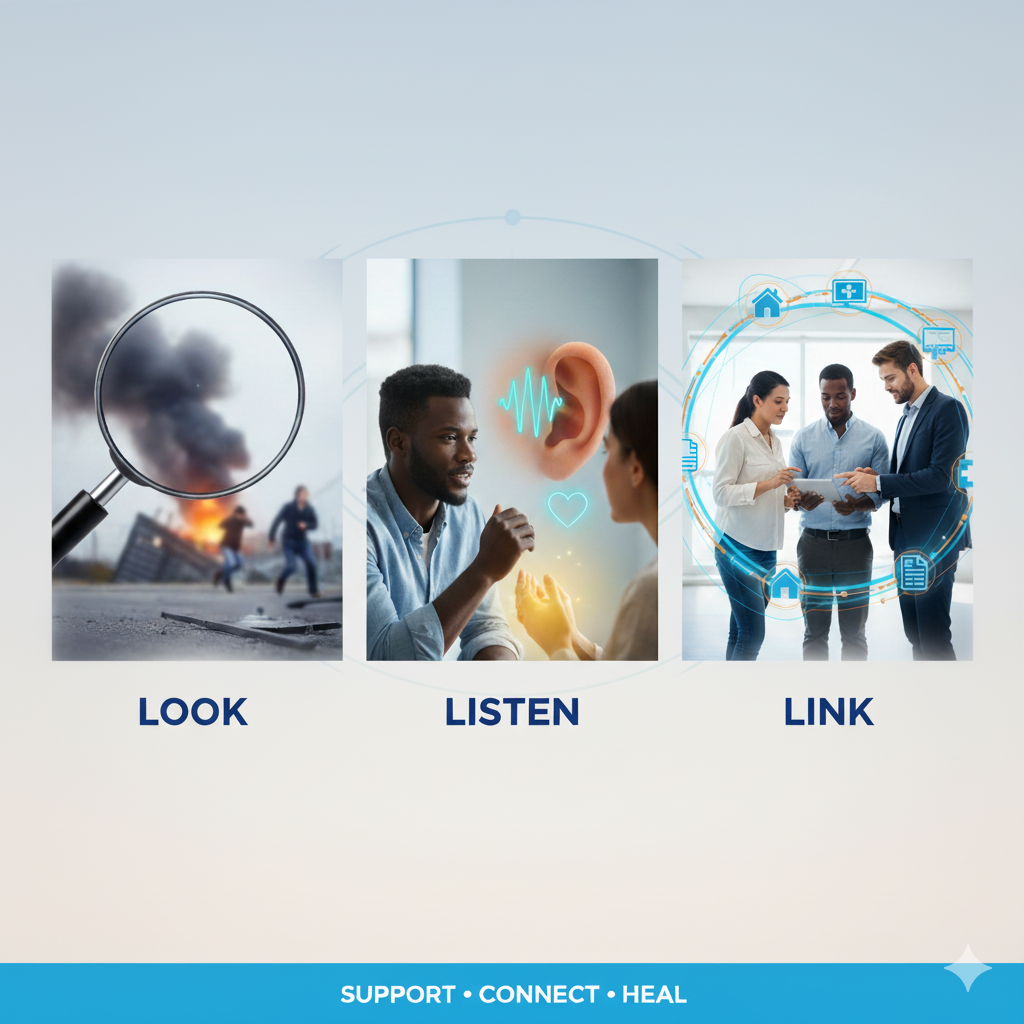
PFA focuses on immediate, non-intrusive support and stabilisation of individuals in the immediate period following a crisis. The key principles of PFA include providing practical care and support following an assessment of an individual’s immediate needs. At its core, it involves using a person-centred approach to listening to the other without expecting them to talk or share their experience. Further, it encourages connecting people to information, services, and social support to ensure they are protected from further harm (World Health Organisation, 2011). The World Health Organisation manual expands on the Look, Listen and Link model (World Health Organisation, 2011).

Professionals within the field of psychology can play a larger role than the provision of the above service. Various organisations, including the World Health Organisation, provide manualised training which can be provided by facilitators, such as psychological practitioners, to upskill lay individuals within communities. This presents an opportunity for mental health professionals to create opportunities for social engagement and integration within the communities in which they live and work. Let us not miss this opportunity!

References

Arancibia, M., Leyton, F., Moran, J., Muga, A., Rios, U., Sepulveda, E., Vallejo-Correa, V. (2022). Psychological debriefing in acute traumatic events. Evidence synthesis. Medwave, 22(1), 002538. https://doi.org/10.5867/medwave.2022.01.002538
Gilmoor, A. R., Adithy, A. & Regeer, B. (2019). The cross-cultural validity of post-traumatic stress disorder and post-traumatic stress symptoms in the Indian context: A systematic search and review. Frontiers in Psychiatry, 4(10)439. https://doi.org/10.3389/fpsyt.2019.00439
Rose, S., Bisson, J., Churchill, R., & Wessely, S. (2002). [Psychological debriefing for preventing post traumatic stress disorder (PTSD). Cochrane Database Systematic Review,2, CD000560 https://doi.org/10.1002/14651858.CD000560
South African Government (2025). World Trauma Day. https://www.gov.za/world-trauma-day-1
Wang, L., Norman, I., Xiao, T., Li, Y. & Leamy, M. (2021). Psychological first aid training: A scoping review of its application, outcomes, and implementation. International Journal of Environmental Research and Public Health, 18(9), 4594. https://doi.org/10.3390/ijerph18094594
Williams, S., Williams, D., Stein, D., Seedat, S., Jackson, P., & Moomal, H. (2007). Multiple traumatic events and psychological distress: The South African Stress and Health Study. Journal of Traumatic Stress, 20(5), 845-855. https://doi.org/10.1002/jts.20252
World Health Organisation (2011). Psychological first aid: Guide for field workers. https://www.who.int/publications/i/item/9789241548205


Lynne Richards

Lynne Richards

Lynne Richards is a South African clinical psychologist. She earned her Master of Social Science in Clinical Psychology from the University of Kwazulu-Natal in 2024. Her clinical experience includes an internship at King Edward VIII Hospital and King Dinuzulu Hospital Complex in Durban. Lynne completed her community service year in the Umgungundlovu District, working at Fort Napier Hospital, a specialist psychiatric facility, and Harry Gwala Regional Hospital, serving a diverse community. She also provided community-level services at East Boom Community Health Centre. This experience deepened her interest in helping trauma survivors, especially children and adolescents dealing with difficult circumstances. Her postgraduate research examined how neglect is represented in psychological literature, reflecting her focus on often-overlooked trauma types. Currently, Lynne is the Chairperson of the Trauma and Violence Division (TVD) of the Psychological Society of South Africa (PsySSA), serving her second term. She is also a Project Manager at the KwaZulu-Natal Mental Health Advocacy Group, contributing to advocacy efforts.

Leonie Vorster

Leonie Vorster

Leonie Vorster is dedicated to ensuring the effective and just use of ethically sourced, contextually relevant, and usable information. She actively promotes empowerment by seeking the furthest limits of the possible and imaginative to make a positive difference and inspiring others to do the same. Her core strengths include:

1) Generating and drawing on evidence-based insights to facilitate decision-making and to make organisations, products, and services work (or work better)
2) Finding the best secondary and primary information sources for co-creating usable insights
3) Writing about things that matter, editing information to ensure effective communication, and presenting information in a memorable way through effective design
4) Making strategic recommendations and advising regarding the integration of available information to ensure relevant, usable insights
5) Evaluating AI Large Language Model responses for the South African context

Leonie has successfully completed more than 400 research and research-based consulting assignments for government, semi-government, private, and not-for-profit clients based in more than 40 countries on five continents. Leonie’s commitment to professional excellence is legendary, and her passion for quality and ethical standards is unwavering.

She holds a BA Communication Science and BA Honours in Psychology from the University of Johannesburg, and a Masters in Research Psychology from Nelson Mandela University, and is registered at the Health Professions Council of South Africa as Research Psychologist.

Word Trauma Day – A call to highlight Psychological First Aid following trauma

Word Trauma Day – A call to highlight Psychological First Aid following trauma

by Lynne Richards & Leonie Vorster, on behalf of the Trauma and Violence Division

World Trauma Day, commemorated on 17 October, seeks to emphasise the importance of creating contexts in which people can recover and thrive following an incident of trauma (South African Government, 2025). Traumatic events or ‘Big T’ traumas are incidents which leave individuals vulnerable to negative psychological effects and trauma-based diagnoses (Gilmoor et al., 2019). Findings from the South Africa Stress and Health Study indicate that most South Africans experience at least one traumatic event during their lives, with many experiencing multiple traumatic events (Williams et al., 2007). With the mental health treatment gap increasing following the COVID-19 pandemic, the need for low-level interventions provided by cadres at a grassroots level to assist survivors of trauma remains.

Historically, trauma debriefing was encouraged following traumatic events, with many professionals and lay counsellors trained in this practice. However, research has provided no evidence of reduced mental health and the practice may even worsen mental health (Arancibia et al., 2022; Rose et al., 2002). Increasingly, Psychological First Aid (PFA) has been promoted as a suitable method for lay health workers and frontline workers to mitigate the impact of crises (Wang et al., 2021). According to the World Health Organisation (2011), PFS is described as ‘human, supportive and practical help to fellow human beings suffering a serious crisis event’.

PFA focuses on immediate, non-intrusive support and stabilisation of individuals in the immediate period following a crisis. The key principles of PFA include providing practical care and support following an assessment of an individual’s immediate needs. At its core, it involves using a person-centred approach to listening to the other without expecting them to talk or share their experience. Further, it encourages connecting people to information, services, and social support to ensure they are protected from further harm (World Health Organisation, 2011). The World Health Organisation manual expands on the Look, Listen and Link model (World Health Organisation, 2011).

Professionals within the field of psychology can play a larger role than the provision of the above service. Various organisations, including the World Health Organisation, provide manualised training which can be provided by facilitators, such as psychological practitioners, to upskill lay individuals within communities. This presents an opportunity for mental health professionals to create opportunities for social engagement and integration within the communities in which they live and work. Let us not miss this opportunity!

References

Arancibia, M., Leyton, F., Moran, J., Muga, A., Rios, U., Sepulveda, E., Vallejo-Correa, V. (2022). Psychological debriefing in acute traumatic events. Evidence synthesis. Medwave, 22(1), 002538. https://doi.org/10.5867/medwave.2022.01.002538

Gilmoor, A. R., Adithy, A. & Regeer, B. (2019). The cross-cultural validity of post-traumatic stress disorder and post-traumatic stress symptoms in the Indian context: A systematic search and review. Frontiers in Psychiatry, 4(10)439. https://doi.org/10.3389/fpsyt.2019.00439

Rose, S., Bisson, J., Churchill, R., & Wessely, S. (2002). [Psychological debriefing for preventing post traumatic stress disorder (PTSD). Cochrane Database Systematic Review,2, CD000560  https://doi.org/10.1002/14651858.CD000560

South African Government (2025). World Trauma Day. https://www.gov.za/world-trauma-day-1

Wang, L., Norman, I., Xiao, T., Li, Y. & Leamy, M. (2021). Psychological first aid training: A scoping review of its application, outcomes, and implementation. International Journal of Environmental Research and Public Health, 18(9), 4594. https://doi.org/10.3390/ijerph18094594

Williams, S., Williams, D., Stein, D., Seedat, S., Jackson, P., & Moomal, H. (2007). Multiple traumatic events and psychological distress: The South African Stress and Health Study. Journal of Traumatic Stress, 20(5), 845-855. https://doi.org/10.1002/jts.20252

World Health Organisation (2011). Psychological first aid: Guide for field workers. https://www.who.int/publications/i/item/9789241548205

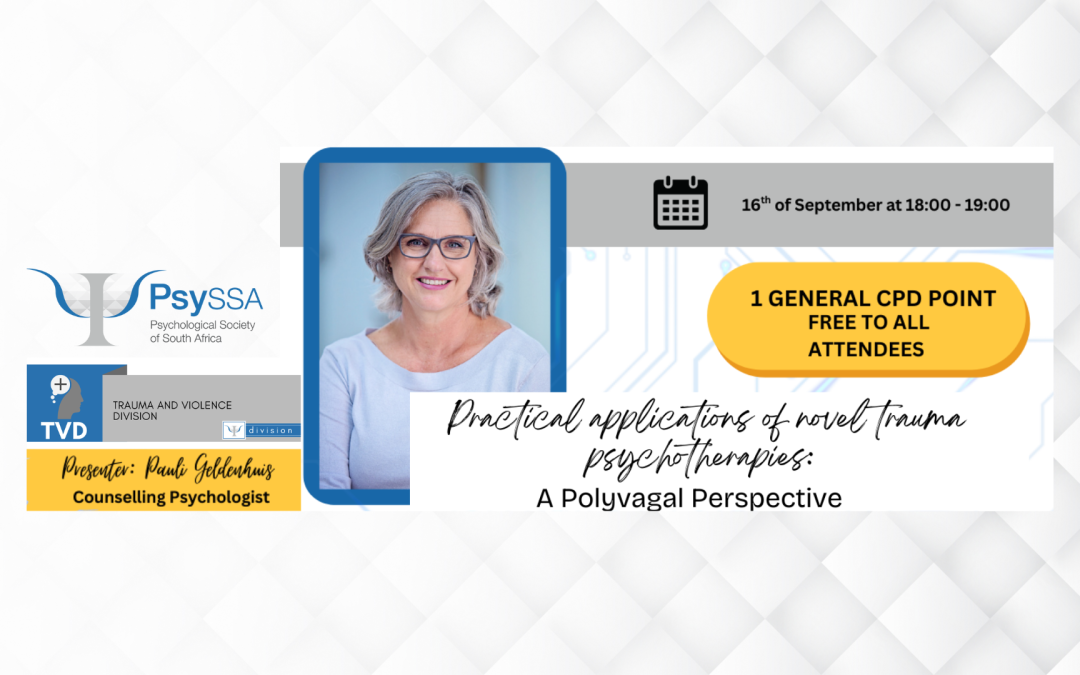
TVD Workshop: Practical applications of novel trauma psychotherapies

TVD Workshop: Practical applications of novel trauma psychotherapies

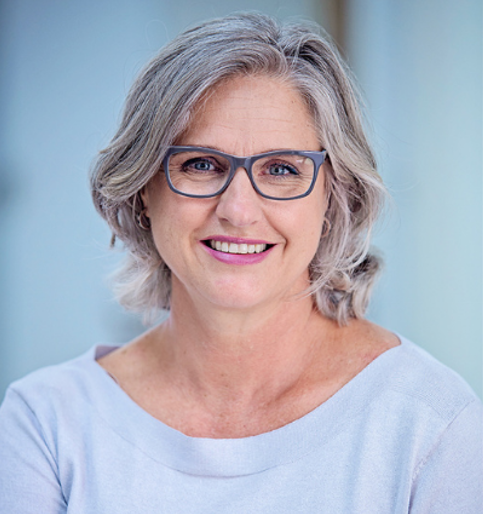
Pauli has 28 years’ experience as Counselling Psychologist in the academic and public sector as well as private practice. She is the founder and director of Paardevlei Therapy Centre and has dedicated her career to working with trauma as part of a multi-disciplinary team in private practice. Pauli has extensive international training both in the USA and Europe in the field of body-mind based psychotherapy. Her expertise includes Somatic Experiencing (SEP), Eye-Movement-Integration (EMI), Hypnotherapy, Trauma and Tension Release Exercises (TRE), Ketamine Assisted Psychotherapy (KAP), Solution Focused Therapy (SFT), Brain Working Recursive Therapy (BWRT) level 1,2 and 3 and Dialectical Behavior Therapy (DBT & CBT). Pauli has presented on body-based therapeutic approaches at various conferences of which the most recent was at the SANOFI conference for Psychiatry in July 2022.

PsySSA commemorates Child Protection Week (29 May – 5 June 2025) 

PsySSA commemorates Child Protection Week (29 May – 5 June 2025) 

PsySSA commemorates Child Protection Week (29 May – 5 June 2025) 

Every conversation matters

Role of Faith based leaders in the Protection of Women and Children

Author: Dr.Guru Kistnasamy

Historically the interpretation and misinterpretation of the scriptures of various Faiths together with its practice and implementation by Religious Leaders, resulted in the abuse or the protection of the vulnerable amongst us, women and children.

In ancient times women and children were considered dispensable and were even killed in the form of sacrifices in various parts of the world. In India, there was a time when widows were burnt to death after the death of their husbands. This conceptualization of the vulnerable coupled with a patriarchal attitude, served to keep women and children in servitude.

Today we find a similar attitude that results in the rape and sexual molestation of women and children by men. What is shocking today is that we find that these perpetrators are men entrusted with the protection of these victims.

A few recent examples of Faith Leaders accused of abusing their so called “sacred” positions include:

  • Timothy Omotoso accused of 32 counts of rape, human trafficking, and racketeering. He was acquitted by the Justice System. Now the Minister of Justice is asking for an enquiry.
  • A prominent Bishop accused of raping and sexually assaulting members of his congregation. The trial is continuing.
  • A Hindu priest accused of raping a 12 year old boy appeared in the Tongaat Court.
  • A Hindu priest accused of intimately touching a devotee appeared in Verulam Court.
  • 2 boys alleged a Moulana raped them in Germiston.

Prevalence of Gender Based Violence in South Africa.

An article published in the journal of Social and Development Sciences in 2024, revealed that 55.38% of respondents reported being victims of violence in places of worship.

A fact sheet on “Baseline Survey on Victimisation and Perpetration” issued by the HSRC in 2024 indicated the following:

Lifetime physical and/or sexual violence of women aged 18 years and over: 35.5%, translating into 7,847.438 women.

According to Statistics South Africa, we have the highest rate of femicide in the world. One out of four women have experienced GBV, and one out of three children have experienced physical violence and sexual violence before they turned 18. (Ref. “Gender-based violence as a destructive form of warfare against families, a practical theological response-2023”).

Psychological Aspects of Religious Abuse.

Psychological Abuse refers to psychological manipulation and harm inflicted on a person by using the teachings of  their religion. It is often directed to children and emotionally vulnerable adults. The abuse may result in mental health issues such as depression, phobias, dissociative disorders, paranoia, anxiety, and insomnia  The victim may not report the matter because of guilt, shame, fear of being ostracized or losing a privilege.

What is Spiritual Abuse

Spiritual abuse has been expressed as an exploitation of spiritual authority to manipulate, control, use or harm others through means such as shame, fear and indoctrination. Examples may include sexual abuse, extortion of money, suicidal attempts and even suicide. Spiritual abuse is said to support other forms of GBV.

What can Religious Leaders do to Protect the Vulnerable?

Concerns of the public were raised at government level about abuse in religious institutions and by their leaders. In 2017 Hearings were held in Parliament where submissions were made by 18 religious organisations on the recommendations and proposals of the Commission for the Promotion and Protection of the Rights of Cultural, Religious and Linguistic Communities.

This clearly indicated that there must be some form of regulation of religious institutions through mandatory registration, licensing, and monitoring.

Religious communities need to actively promote the equality and protection of genders. Places of worship are ideally suited for this discourse. Various sources of literature point us in the right direction in achieving this goal.

The Interfaith GBV Prevention and Mitigation Strategy 2024-2030 is the result of a national consultation process of scholars, activists and leaders. It was strengthened by the We Will Speak Out South Africa (WWSOSA). It includes partners from the following faiths: African Traditional, Baha’I, Brahma Kumaris, Buddhism, Christianity, Hinduism, Islam and Judaism. Their goal is to mobilize and equip the faith sector to address GBV more effectively.

The Interfaith GBV Prevention and Mitigation Strategy 2024-2030 was released in October 2024. The following is a summary of the commitments of the members of the faith sector in actively, intentionally and collaboratively supporting efforts to mitigate GBV by:

  • Including spiritual abuse as a type of GBV;
  • Being vocal and transparent about exposing GBV;
  • Dismantling the culture where victims are silenced;
  • Amplifying texts, traditions, rituals, ceremonies and symbols that promote dignity, gender equality and justice, and to change these where gender inequity or GBV is encouraged;
  • Becoming integrally involved in South Africa’s multi-sectoral efforts to prevent or respond to GBV;
  • Improving accountability measures and developing a joint policy to guide the sector’s work;


Conclusion.

It is important that leaders of all faiths subscribe to the principles of the Interfaith GBV Prevention and Mitigation Strategy 2024-2030 so as to address the problem of GBV as a united national front in South Africa.

Therefore it is equally important that there be a qualification, monitoring and regulating process for aspiring spiritual leaders to join the faith sector. This will minimize abuse of the vulnerable by leaders of faith.

25/04/2025.


A call for Psychologists to champion child rights during Child Protection Week, and beyond

The Trauma and Violence Division

National Child Protection week, commemorated between the 29th of May and the 5th of June, seeks to remind citizens of the rights of children enshrined in the Constitution of South Africa and the Children’s Act (Act No. 38 of 2005). On the 11th of May 2025 the Department of Social Development launched Child Protection Month with the theme ‘Working Together to End Violence Against Children.’ Child sexual abuse has been highlighted as the main focus (Department of Social Development, 2025).

Sexual assault cases for female children aged 17 and younger increased from a harrowing 82.7% in 2015/2016 to 87.6% in 2019/2020 in South Africa (Stats SA, 2024). Female children are more likely to experience statutory rape, sexual assault and rape than male children (Stats SA, 2024). However, challenges with the reporting of such crimes across all genders remain, leading to underreporting.

This Child Protection Week, the Department of Social Development has called on various healthcare sectors to become part of a multidisciplinary approach addressing this pandemic (Department of Social Development, 2025). In response to the call to action, psychologists can advocate for children’s rights and uphold their best interests beyond the confines of therapy rooms, lecture halls, and academic journals. Psychological professionals, including psychologists, registered counsellors and psychometrists should:

  • Report suspected child abuse and neglect to the relevant authorities as outlined in Section 110 the Children’s Act (Act No. 38 of 2005) and Section 54 of the Criminal Law (Sexual Offences and Related Matter) Amendment Act 32 of 2007. This is not discretionary but mandatory and is essential to safeguarding child clients. Ensuring that we fulfil this duty is key in us upholding children’s rights.
  • Maintain competency in working with child survivors of abuse. Guidelines and interventions for trauma work are continuously developing. Staying informed and continuously developing our professional skillset can assist us in ensuring that children do not experience secondary traumatisation, including within the therapy room (Van Niekerk & Coetzee, 2020).
  • Catalyse change at a systemic level through research and advocacy efforts, to ensure transformation beyond the therapy room (Schiller et al., 2023). Psychologists can advance and disseminate research in the area of child abuse and associated psychological sequalae to ultimately draw attention to the need for policy change.  Rather than duplicating effort, psychologists can use their expertise to assist non-governmental organisations and advocacy groups at the forefront of the fight against child abuse.

As a profession and association of professionals, we can lobby for the employment of mental health professionals within the government sector, to ensure the provision of quality, timeous services that promote preventative and ameliorative initiatives.

Systemic issues require systemic interventions but they need not be complicated. So, whether your advocacy is at an individual level within the therapy room, or at a macro-level with major stakeholders, consider how you can uphold children’s rights this Child Protection Month.


The South African Association for Counselling Psychology

Watch the SAACP’s contribution to Child Protection Week 2025 below!

Danielle Moosajie

Danielle Moosajie

Director: Arise

Danielle Moosajie is a qualified social worker with a Master’s degree in Social Policy and Management from the University of Cape Town. With over 14 years of experience, she has dedicated her career to working with children and families on the Cape Flats. Her professional background spans both the corporate sector – where she specialized in change management – and academia, having lectured and contributed to numerous community-based initiatives.

Danielle is also a wife and mother of three. Outside of her professional life, she enjoys exploring Cape Town’s natural beauty and sampling good food. She is passionate about ensuring every child feels loved and valued, and she is committed to encouraging South Africans to build meaningful connections beyond their usual boundaries.

Contact: danielle@arisefamily.org