Building a Unified, Relevant, and Responsive Psychology

Mental Health Awareness Month

“Mental Health: Racism and Psychosocial Well-Being in South Africa” – Decolonising Psychology Division (DPD)

“Mental Health: Racism and Psychosocial Well-Being in South Africa” – Decolonising Psychology Division (DPD)

The Decolonising Psychology Division (DPD) contributes a profound reflection on how racism, historical trauma, and structural inequality continue to shape the mental health landscape in South Africa.

Read more below:

“Mental Health: Racism and Psychosocial Well-Being in South Africa”

– Decolonising Psychology Division (DPD)


South Africa’s enduring legacy of slavery, colonialism, and apartheid continues to generate racialisation and associated psychosocial harms. Psychological distress, mental injury, wounding, and trauma are not only individual experiences but also collective outcomes of structural inequality and racial oppression that affect the majority of the population (Kaminer & Eagle, 2020; Kleintjes & Schneider, 2023; Manganyi, 2019; South African Federation for Mental Health, 2020; Williams et al., 2008). These historical injuries are compounded by deep economic inequality, unemployment, gender-based violence, corruption, and the inadequate provision of health, education, and other essential services. Each of these realities impacts society in racially patterned and distorted ways. The question is no longer whether South Africans face increasing psychosocial pressures, but whether psychology and its related professions are prepared to meet this urgent challenge.

In October 2021, the American Psychological Association formally acknowledged its complicity in, and failure to address, the mental injury caused by racism and racialisation (American Psychological Association, 2021). Globally—and in South Africa—racial trauma is increasingly recognised as a significant mental health issue, with terms such as race-based stress, racial wounding, and collective racial wounding and healing gaining prominence (Cénat, 2023; Chávez-Dueñas et al., 2019; Sibrava et al., 2019). Cénat (2023) proposes a framework for complex racial trauma (CoRT), emphasising that racial harm is repetitive, cumulative, vicarious, and unavoidable, affecting the mental, physical, material, and spiritual dimensions of people’s lives.

While these frameworks are valuable, there is a danger of over-pathologising, medicalising, or biologising phenomena that originate in social and structural spheres (Benoist, 2022; Rashid, 2024, 2025). Moreover, mainstream psychological healing—typically talk therapy between practitioner and client—may not provide a complete answer to collective well-being. This approach is individualised, resource-intensive, and grounded in Euro-American praxis that is often contextually inappropriate.

Racial trauma, as a collective wound, requires collective responses and awareness of the social systems that perpetuate injury. At the personal level, healing involves a movement from wounded and fragmented selves toward creativity, wholeness, and community well-being. At the systemic level, collective agency is required to expose, disrupt, and dismantle social and structural oppression. What is urgently required is a decolonial praxis for healing.

A decolonial psychology and praxis of healing offers a pathway forward. It does not reject clinical evidence nor deny the importance of care; rather, it rebalances the relationship between evidence, culture, and context. It asks who defines stress, wounding, and trauma, whose knowledge counts, and how services can be designed with—not merely for—communities most affected by oppression. Beyond individualistic approaches, a decolonial psychology and community-healing framework addresses epistemic justice, systemic racial injuries, and the transgenerational transfer of trauma (Kiounani, 2019; Mullan, 2023; Seedat, 2023; Stevens & Sonn, 2021). Its focus includes intersectional understandings of oppression, multidisciplinary collaboration, the development of critical consciousness, and a reconnection to community-centred, participatory meaning-making and agency (Chioneso et al., 2020; Clay, 2017; Kessi, Suffla, & Seedat, 2022; Malherbe & Ratele, 2022).

Indigenous knowledge, embodied healing, neurobiological understanding, and spirituality are recognised as valid and vital foundations for collective care (Benoist, 2022; Cénat, 2023; Kiounani, 2019; Rashid, 2024, 2025; Rundall, 2019). A decolonial praxis focuses not only on healing but also on growth, emancipation, and resistance. This includes community-embedded and participatory approaches such as storytelling, commemoration, restorative dialogue, ritual, arts-based practice, land- and place-based work, and the rebuilding of shared meaning and social bonds (Morkel, 2011).

For healing to gain traction, community-based programmes and knowledge creation—along with language-appropriate and culturally grounded practices—are essential. Such initiatives should involve collaboration among community practitioners, activists, traditional healers, faith leaders, and a broad referral network (Benoist, 2022; Kleintjes & Schneider, 2023; Rashid, 2024, 2025). Reflective practice is equally vital for frontline workers, enabling them to recognise and metabolise vicarious trauma, which in turn protects both practitioners and their efficacy in serving communities (Masson & Graham, 2022).

A decolonial healing approach to racial trauma in South Africa implies that psychosocial well-being cannot be separated from broader social determinants such as livelihood support, safety, education, and gender-based violence prevention. Psychosocial well-being in South Africa requires both an honest reckoning with history and decisive action to dismantle the conditions that reproduce distress. Psychology and allied professions have an ethical and social obligation to revitalise and reimagine collective, culturally rooted, and emancipatory practices of healing that decolonise existing mental health models.

Honouring Mental Health Awareness Month with the PsySSA Trauma and Violence Division (TVD)

Honouring Mental Health Awareness Month with the PsySSA Trauma and Violence Division (TVD)

Honouring Mental Health Awareness Month with the PsySSA Trauma and Violence Division (TVD)

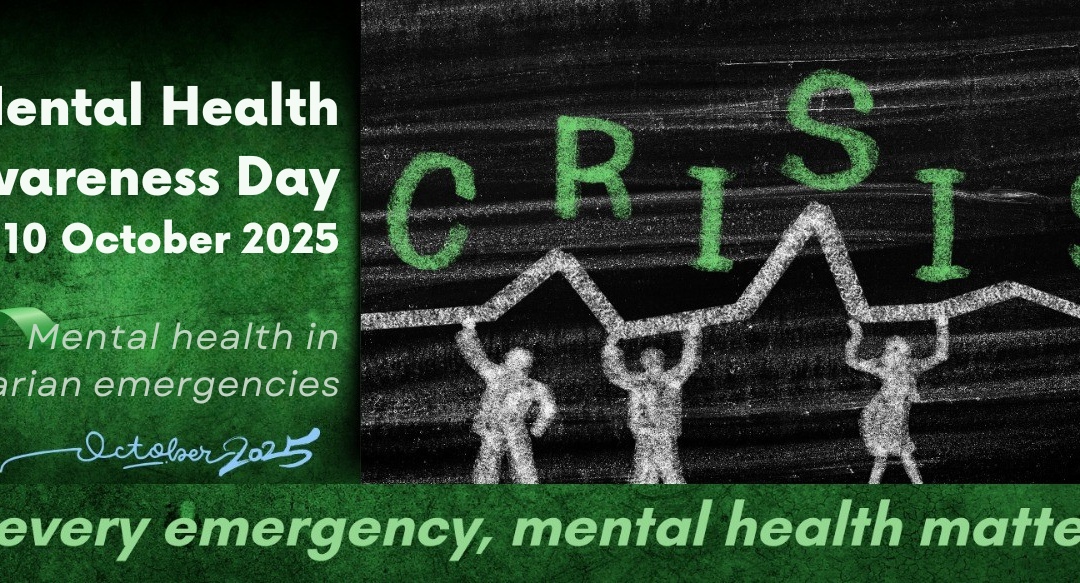
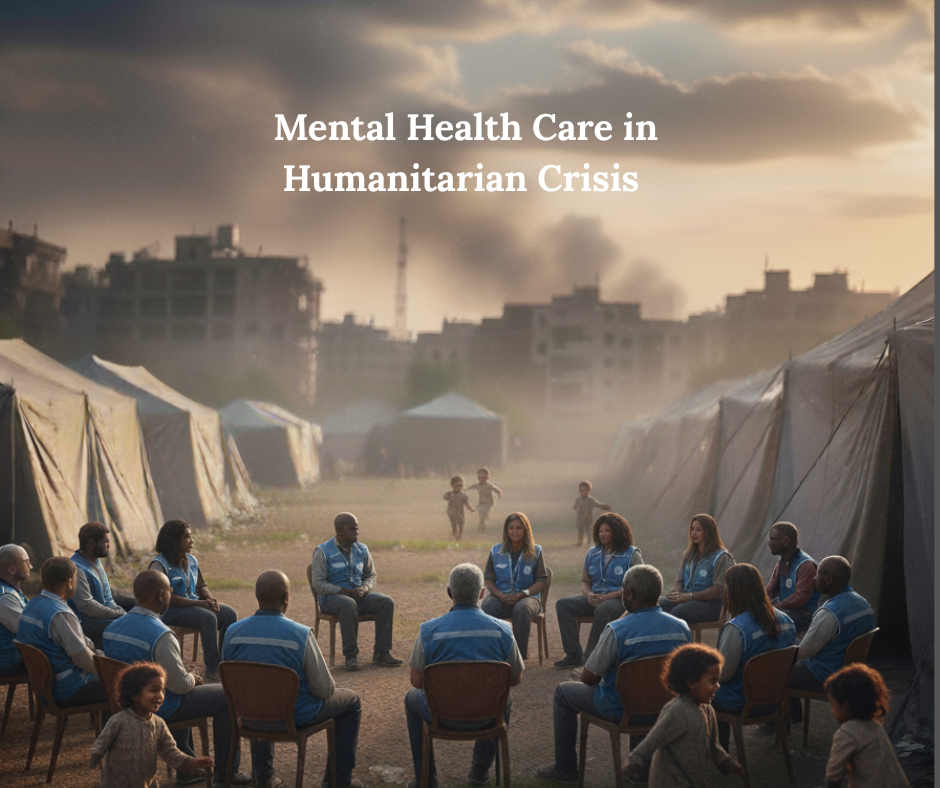
The year’s theme, Mental Health in Humanitarian Crisis, reminds us that mental health care must remain at the heart of how we respond to trauma — both globally and locally.

  1. Thinking Local and Global
    Lynne Richards highlights the Gift of the Givers Foundation — a beacon of hope integrating mental health support into humanitarian aid, ensuring care for both communities and volunteers on the front lines.
  2. World Trauma Day – A Call to Highlight Psychological First Aid (PFA)
    Lynne Richards and Leonie Vorster emphasise the growing importance of Psychological First Aid (PFA) — practical, compassionate support that helps individuals stabilise and recover following trauma.

Together, these contributions from the TVD Division remind us that psychological wellbeing, resilience, and community care must remain central to all humanitarian and recovery efforts. ????

Read more below:

“Thinking local and global – Gift of the Givers foundation at the forefront of mental health in humanitarian crisis”

The PsySSA Trauma and Violence Division (TVD) – Lynne Richards

Nationally, we celebrate Mental Health Awareness month each October, during which we highlight the need for public education and destigmatisation of mental illness. This year, the World Health Organisation’s theme for World Mental Health Day, celebrated on the 10th of October, was ‘ Mental Health in Humanitarian Crisis’. Within South Africa, there are numerous examples of organisations at the forefront of humanitarian aid; however, the Gift of the Givers Foundation is a beacon of hope for many. Lynne Richards, the chairperson of the Trauma and Violence Division, had the pleasure of interviewing Zohra Sooliman, Counseling Psychologist, Co-founder of the Gift of the Givers Foundation and Director of the Gift of the Givers Careline counselling services. Within this interview, Zohra discussed the integration of mental health services for their volunteers as well as within communities ravaged by disaster, natural or man-made.

The Gift of the Givers Foundation was founded in 1992 by Dr Imtiaz Sooliman and Zohra Sooliman. The organisation has intervened in various relief missions locally and globally. Zohra reported that she foresaw the impact of secondary traumatisation on the volunteer responders, including paramedics, medical doctors, and allied health workers. It was this knowledge that encouraged her to advocate for the addition of psychosocial support for their teams. This was the beginning of a commitment to ensuring mental health care and psychosocial support were a central pillar in disaster relief efforts. The organisation offers returning volunteers trauma debriefing, along with free counselling by a pool of volunteers. This ensures that their teams receive sustainable and ongoing support. Moreover, the organisation’s work extends to the provision of peer assistance and the upskilling of local professionals.

Through missions to Congo Brazzaville and Gaza in 2009, the organisation sought to collaborate with local psychologists and social workers and offered training to students in social work and psychology. The goal was to ensure that the community would be able to empower itself long after organisations retreated. This commitment ensures mental health support is sustainable. During local disasters, such as the floods and looting, the Foundation provided trauma debriefing and identified and provided free services to those in need.

In situations where circumstances prevent the deployment of relief teams, such as in the crisis in Gaza, the Foundation has sought innovative ways to provide support. Remote peer support is provided voluntarily by South African psychologists. This intervention aims to create meaningful connections. For example, psychological support was provided to Palestinian medical students who were hosted at South African Universities for the completion of their studies. Furthermore, the Foundation is collaborating with volunteers in Egypt to assist refugee committees with the aim of upskilling them in trauma-focused modalities such as Eye-Movement Desensitisation and Reprocessing (EMDR).
A key take-home message from the interview was highlighted: While basic needs such as clean water, nutrition, and medical services trump psychological services, it is essential to integrate psychosocial services into relief missions. Humanitarian crises call for novel approaches to mental health services, and the Gift of the Giver’s stands as an example of this.

“Word Trauma Day – A call to highlight Psychological First Aid following trauma”

The PsySSA Trauma and Violence Division (TVD) – Lynne Richards & Leonie Vorster

World Trauma Day, commemorated on 17 October, seeks to emphasise the importance of creating contexts in which people can recover and thrive following an incident of trauma (South African Government, 2025). Traumatic events or ‘Big T’ traumas are incidents which leave individuals vulnerable to negative psychological effects and trauma-based diagnoses (Gilmoor et al., 2019). Findings from the South Africa Stress and Health Study indicate that most South Africans experience at least one traumatic event during their lives, with many experiencing multiple traumatic events (Williams et al., 2007). With the mental health treatment gap increasing following the COVID-19 pandemic, the need for low-level interventions provided by cadres at a grassroots level to assist survivors of trauma remains.

Historically, trauma debriefing was encouraged following traumatic events, with many professionals and lay counsellors trained in this practice. However, research has provided no evidence of reduced mental health and the practice may even worsen mental health (Arancibia et al., 2022; Rose et al., 2002). Increasingly, Psychological First Aid (PFA) has been promoted as a suitable method for lay health workers and frontline workers to mitigate the impact of crises (Wang et al., 2021). According to the World Health Organisation (2011), PFS is described as ‘human, supportive and practical help to fellow human beings suffering a serious crisis event’.

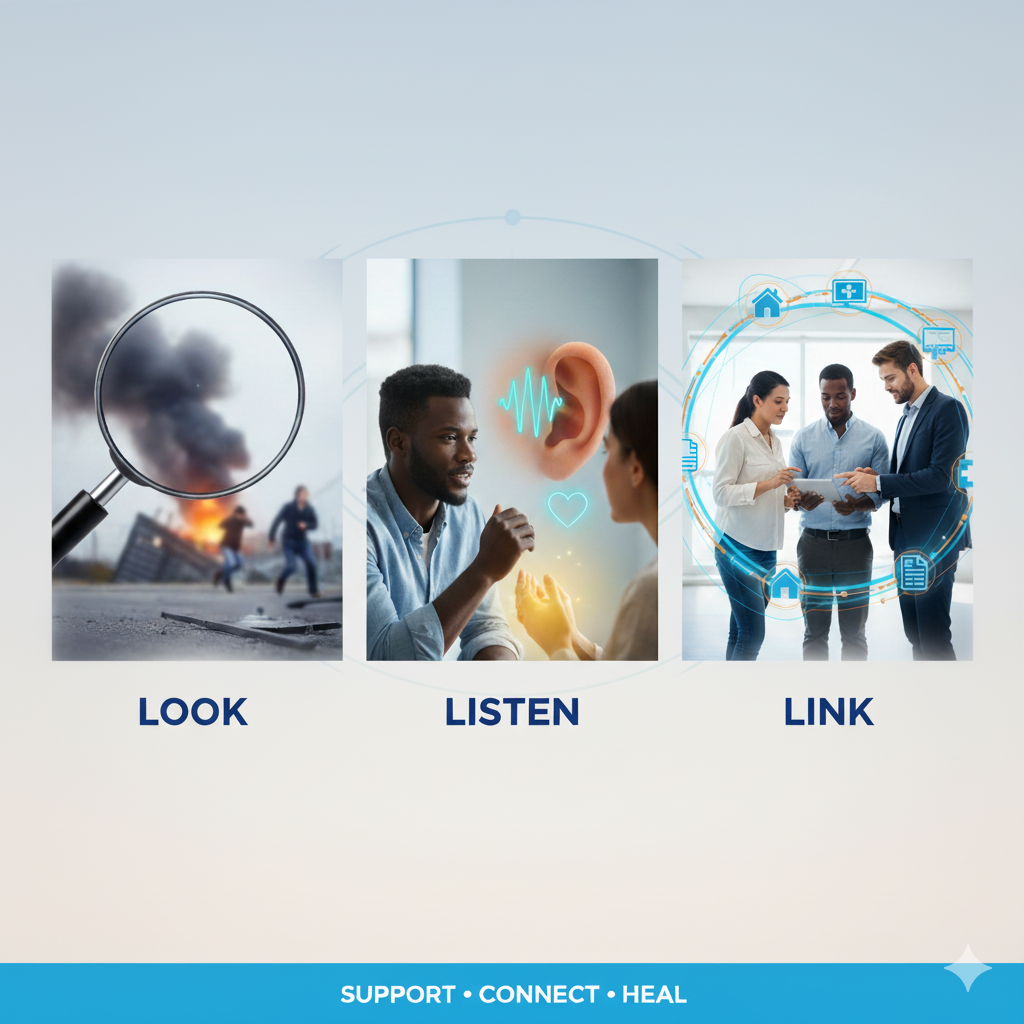
PFA focuses on immediate, non-intrusive support and stabilisation of individuals in the immediate period following a crisis. The key principles of PFA include providing practical care and support following an assessment of an individual’s immediate needs. At its core, it involves using a person-centred approach to listening to the other without expecting them to talk or share their experience. Further, it encourages connecting people to information, services, and social support to ensure they are protected from further harm (World Health Organisation, 2011). The World Health Organisation manual expands on the Look, Listen and Link model (World Health Organisation, 2011).

Professionals within the field of psychology can play a larger role than the provision of the above service. Various organisations, including the World Health Organisation, provide manualised training which can be provided by facilitators, such as psychological practitioners, to upskill lay individuals within communities. This presents an opportunity for mental health professionals to create opportunities for social engagement and integration within the communities in which they live and work. Let us not miss this opportunity!

References

Arancibia, M., Leyton, F., Moran, J., Muga, A., Rios, U., Sepulveda, E., Vallejo-Correa, V. (2022). Psychological debriefing in acute traumatic events. Evidence synthesis. Medwave, 22(1), 002538. https://doi.org/10.5867/medwave.2022.01.002538
Gilmoor, A. R., Adithy, A. & Regeer, B. (2019). The cross-cultural validity of post-traumatic stress disorder and post-traumatic stress symptoms in the Indian context: A systematic search and review. Frontiers in Psychiatry, 4(10)439. https://doi.org/10.3389/fpsyt.2019.00439
Rose, S., Bisson, J., Churchill, R., & Wessely, S. (2002). [Psychological debriefing for preventing post traumatic stress disorder (PTSD). Cochrane Database Systematic Review,2, CD000560 https://doi.org/10.1002/14651858.CD000560
South African Government (2025). World Trauma Day. https://www.gov.za/world-trauma-day-1
Wang, L., Norman, I., Xiao, T., Li, Y. & Leamy, M. (2021). Psychological first aid training: A scoping review of its application, outcomes, and implementation. International Journal of Environmental Research and Public Health, 18(9), 4594. https://doi.org/10.3390/ijerph18094594
Williams, S., Williams, D., Stein, D., Seedat, S., Jackson, P., & Moomal, H. (2007). Multiple traumatic events and psychological distress: The South African Stress and Health Study. Journal of Traumatic Stress, 20(5), 845-855. https://doi.org/10.1002/jts.20252
World Health Organisation (2011). Psychological first aid: Guide for field workers. https://www.who.int/publications/i/item/9789241548205


Lynne Richards

Lynne Richards

Lynne Richards is a South African clinical psychologist. She earned her Master of Social Science in Clinical Psychology from the University of Kwazulu-Natal in 2024. Her clinical experience includes an internship at King Edward VIII Hospital and King Dinuzulu Hospital Complex in Durban. Lynne completed her community service year in the Umgungundlovu District, working at Fort Napier Hospital, a specialist psychiatric facility, and Harry Gwala Regional Hospital, serving a diverse community. She also provided community-level services at East Boom Community Health Centre. This experience deepened her interest in helping trauma survivors, especially children and adolescents dealing with difficult circumstances. Her postgraduate research examined how neglect is represented in psychological literature, reflecting her focus on often-overlooked trauma types. Currently, Lynne is the Chairperson of the Trauma and Violence Division (TVD) of the Psychological Society of South Africa (PsySSA), serving her second term. She is also a Project Manager at the KwaZulu-Natal Mental Health Advocacy Group, contributing to advocacy efforts.

Leonie Vorster

Leonie Vorster

Leonie Vorster is dedicated to ensuring the effective and just use of ethically sourced, contextually relevant, and usable information. She actively promotes empowerment by seeking the furthest limits of the possible and imaginative to make a positive difference and inspiring others to do the same. Her core strengths include:

1) Generating and drawing on evidence-based insights to facilitate decision-making and to make organisations, products, and services work (or work better)
2) Finding the best secondary and primary information sources for co-creating usable insights
3) Writing about things that matter, editing information to ensure effective communication, and presenting information in a memorable way through effective design
4) Making strategic recommendations and advising regarding the integration of available information to ensure relevant, usable insights
5) Evaluating AI Large Language Model responses for the South African context

Leonie has successfully completed more than 400 research and research-based consulting assignments for government, semi-government, private, and not-for-profit clients based in more than 40 countries on five continents. Leonie’s commitment to professional excellence is legendary, and her passion for quality and ethical standards is unwavering.

She holds a BA Communication Science and BA Honours in Psychology from the University of Johannesburg, and a Masters in Research Psychology from Nelson Mandela University, and is registered at the Health Professions Council of South Africa as Research Psychologist.

Rooted in Connection: Honouring Mental Health Awareness Month – The South African Association for Counselling Psychology (SAACP)

Rooted in Connection: Honouring Mental Health Awareness Month – The South African Association for Counselling Psychology (SAACP)

In a world that moves faster than ever, it’s easy to forget one simple truth — we thrive when we are connected: to ourselves, to one another, and to the earth that sustains us.

This #MentalHealthAwarenessMonth, the South African Association for Counselling Psychology (SAACP) invites us to pause, breathe, and reconnect with the rituals that ground us in joy, gratitude, and belonging.

Because mental health is more than the absence of illness — it is the presence of connection and community.

Read more below:

“Rooted in Connection: Honouring Mental Health Awareness Month”

The South African Association for Counselling Psychology (SAACP)

The Disconnected World We Live In

In today’s always-on, information-saturated world, it is easy to forget what humanity has always known: we thrive when we are connected – to ourselves, to one another, and to the earth that sustains us

“Sometimes our comfort becomes our enemy — disconnecting us from the earth, the people who grow our food, and the rituals that once nourished us deeply.”

Why Connection Matters for Mental Health

Mental health is not only about the absence of illness. It is also about the presence of belonging. Across cultures and generations, humans have found healing and meaning through:

  • Storytelling
  • Shared rituals
  • Practices of gratitude and presence

Belonging is central to wellbeing – shaping how we sustain relationships with ourselves, with others, and with the world around us

Reclaiming Rituals of Wellbeing

This Mental Health Awareness Month, we are invited to:

  • Pause and become still
  • Slow down and breathe mindfully
  • Reconnect with rituals that ground us in joy and gratitude
  • Practice self-compassion, intimacy, and rest

These are not luxuries. They are practices that root us back into what is sustainable – for our health, our relationships, and our planet.

“We are asked to step away from an identity built on performance and rediscover joy in knowing we are worthy – simply by being human.”

A Question to Carry With You

What small ritual could you weave into today?

  • Gratitude for your food?
  • A moment of mindful breath?
  • A practice of self-kindness?

Sometimes, it is in these simple, repeated acts that we rebuild connection and belonging.

For more information and resources

 The Wellbeing in Higher Education Network (WHEN) is a coalition of richly diverse, leading higher education institutions and organizations that are committed to catalyzing a culture of inner wellbeing within the social change education field. We believe that a flourishing life arises from the integration of well-being, contemplation, and social innovation, and that it occurs via engagement within ourselves, in our relationships, and with the world. When successful, it has the power to positively change individuals, communities, and societies.

Ellenore de Bruin

Ellenore de Bruin

Ellenore de Bruin is an Educational Psychologist, lecturer, and PhD candidate at the University of Pretoria. Her research explores resilience, intentional play, and children’s wellbeing in challenged contexts. She is passionate about weaving together practice, teaching, and research to create spaces of belonging and growth.

“Mental Health in Humanitarian Emergencies.”  – Division of Registered Counsellors & Psychometrists

“Mental Health in Humanitarian Emergencies.” – Division of Registered Counsellors & Psychometrists

As we mark Mental Health Awareness Month, the PsySSA Division for Registered Counsellors and Psychometrists (RCP Division) reflects on the crucial role Registered Counsellors play in advancing mental health care in South Africa.

In two insightful contributions, the Division highlights both the impact of Registered Counsellors in humanitarian emergencies and the evolution of the profession from its inception to its growing significance today.

“Mental Health in Humanitarian Emergencies” explores how Registered Counsellors provide essential, community-based mental health support in times of crisis — from social unrest to poverty and trauma — ensuring no one faces these challenges alone.

“The Vital Role of Registered Counsellors in South Africa: Past, Present, and Future” traces the development of the profession and its continued commitment to accessible, preventative, and empowering mental health care.

Read more below:

The Vital Role of Registered Counsellors in South Africa: Past, Present, and Future

Division of Registered Counsellors & Psychometrists – Kendall Byne

October is Mental Health Awareness Month, with World Mental Health Day observed on 10 October 2025, reminding us of the ongoing global call to action for accessible, equitable, and humane mental health care. In South Africa, this call has particular resonance, given our history and the unique role of the Registered Counsellor (RC) in broadening access to psychosocial support.

The profession of Registered Counsellor was formally recognised in 2003, following the revision of the Health Professions Act, as a response to South Africa’s urgent need for accessible mental health services. With high rates of trauma, inequality, and limited access to specialised care, RCs were envisioned as frontline providers who could serve communities directly, especially in under-resourced areas where psychologists and psychiatrists remain scarce. This pioneering initiative placed South Africa among the first countries to establish a mid-level mental health profession dedicated to prevention, early intervention, and psychoeducation.

Over the past two decades, Registered Counsellors have become an indispensable part of South Africa’s mental health landscape. We have worked in schools, community-based organisations, NGOs, faith-based settings, and private practice, offering much-needed services that bridge the gap between community needs and specialised care. Our scope of practice emphasises wellness promotion, preventative interventions, and the destigmatisation of mental health, to help ordinary South Africans access support before reaching crisis point.

In 2025, our role is more important than ever. South Africa continues to face rising mental health needs which are exacerbated by socioeconomic challenges, the lingering effects of the pandemic, and an increasing awareness of psychological well-being. Registered Counsellors remain at the forefront of community mental health and empower individuals and families by advocating for resilience and making mental health care accessible in everyday settings.

As we observe World Mental Health Day under this year’s theme of “Access to Services – Mental Health in Catastrophes and Emergencies”, the work of RCs embodies this principle. We make certain that mental health services are not a privilege for the few, but a right for all. By addressing barriers of cost, culture, and accessibility, Registered Counsellors contribute to the broader transformation of South Africa’s health system and to PsySSA’s vision of advancing psychology as a force for social good.
This October, let us not only raise awareness but also celebrate the invaluable role of Registered Counsellors in shaping a healthier, more resilient nation – past, present, and into the future.


“Mental Health in Humanitarian Emergencies”

Division of Registered Counsellors & Psychometrists – Genevieve Burrow

“Mental Health in Humanitarian Emergencies.” This theme resonates deeply with our current South African context, where socio-economic challenges and the lingering effects of the COVID-19 pandemic have created an environment ripe for mental health crises. During World Mental Health Awareness Month and World Mental Health Day, we are reminded that mental health is a universal human right. In South Africa, this is not just a theme, but it is a call to action. Every day, we see how poverty, inequality, violence, and trauma significantly impact individuals, families, communities, and especially our youth.

Humanitarian emergencies can take many forms, from natural disasters to social unrest. In South Africa, we have witnessed a range of challenges that have critically impacted the mental well-being of individuals and communities. The stressors of unemployment, poverty, and violence can lead to increased rates of anxiety, depression, and trauma.

Registered Counsellors (RCs) are uniquely positioned to make a significant difference in these challenging times. Our training equips us to provide critical support, guidance, and counselling interventions to individuals and communities affected by past and current crises. RCs are on the ground, walking alongside communities, creating safe mental health spaces, and offering accessible, preventative care where it’s needed most. We are often the first to listen in a safe space, the first to respond, and the bridge to further support. Our contributions include engaging with communities to foster mental well-being through workshops and support groups that address pressing mental health issues. Additionally, we provide specialised trauma-informed care, assisting individuals in coping with the psychological aftermath of crises. By raising awareness about mental health needs, we also advocate for resources and policies that support mental well-being during emergencies.

As we commemorate World Mental Health Day, let us reaffirm our commitment to mental health advocacy and recognition. It is crucial that we work together to ensure that mental health resources are accessible to everyone, especially in times of crisis. You can contribute by raising awareness and sharing information about mental health resources within your communities. Encourage conversations about mental health to reduce stigma and shame and promote understanding. Lastly, connect with fellow professionals to share best practices and strategies for supporting those in need.

Together, we can create a supportive environment where mental health is prioritised, and individuals feel empowered to seek mental health assistance. Let’s ensure that no one faces these emergencies alone.

"Mental Health in Humanitarian Emergencies."

by Genevieve Burrow

“Mental Health in Humanitarian Emergencies.”  – Division of Registered Counsellors & Psychometrists

Mental Health Awareness Month – Society for Educational Psychology of South Africa (SEPSA)

In recognition of Mental Health Awareness Month, the Society for Educational Psychology of South Africa (SEPSA) highlights the devastating impact of untreated mental health disorders — especially among our youth — and calls for collective action to transform South Africa’s mental health systems and services.

Read SEPSA’s full reflection below, and join us in strengthening mental health awareness, advocacy, and care for all.

Mental Health Awareness Month

Society for Educational Psychology of South Africa – Dr Guru Kistnasamy

October is the time for us to reflect on Mental Health Awareness.

Untreated mental health disorders is destroying our people, especially our Youth, who make up the majority of our population and are our future. Suicide is said to be the second leading cause of death amongst our young people.

Mental Health refers to the emotional, psychological and mental well-being of an individul and how we cope when faced with mental health issues. Basically Mental Health is how we think, feel and behave. Mental Health Disorders include anxiety, depression, mood disorders, schizophrenia, panic disorders, phobias, obsessive compulsive disorders, post-traumatic stress disorders, and related mental illnesses. There are certain early signs that may alert us to mental illnesses. These include low energy levels, avoiding activities that we used to enjoy, withdrawal from people, sleeping excessively or too little, feeling of helplessness and hopelessness, difficulty in carrying out activities of daily living, delusions, thoughts of harming oneself or suicidal ideation.

Our Department of Health itself acknowledges its failure to adequately meet the health needs of our people and acknowledged that mental health services in South Africa needs “radical transformation”. There are many factors that contribute to the state of poor mental health in South Africa. These include:

  • Socioeconomic factors such as poverty, unemployment, lack of housing and and poor basic sanitation.
  • Crime and violence.
  • Limited mental health resources. The South African Human Rights Commission reports that we have only 0.28 psychiatrists and 0.32 psychologists per 100,000. These shortages are further excerbated by the fact that certain medical aid schemes(Polmed, GEMS,Profmed, Keyhealth,Medihelp) stopped funding Educational Psychologists.
  • Collusion and corruption amongst officials entrusted with the health of our citizens. The murder of whistle blower Mrs. Deokaran is a classic example of the extent to which these officials will go to eliminate detection so that they could continue their pillage.
  • Poor existing infrastructures such as clinics, hospitals, and rehabilitation centers.
  • Shortage of professional staff such as nurses, doctors, counsellors.
  • Poor management of mental health facilities, and under funding of mental health by government.

We need to make a concerted effort to address the issue of mental health as a country as we are losing so many to mental health disorders, unemployment and death.

Together we can all combine our strength, resources and expertise to make a difference in turning the tide against the rising incidence of mental health disorders.

“Mental Health: Racism and Psychosocial Well-Being in South Africa” – Decolonising Psychology Division (DPD)

“Healing in Community” – Division of Registered Counsellors & Psychometrists

In South Africa, our communities hold the power to heal. Despite limited mental health resources, our shared strength lies in connection, empathy, and collective care.

This Mental Health Awareness Month, the Division of Registered Counsellors & Psychometrists (RCP) invites us to reflect on how community-led approaches and social support can transform mental health outcomes — especially where access to care is limited. By empowering communities to lead, we nurture resilience, reduce stigma, and create spaces where everyone belongs.

Together, we can turn our communities into places of healing.

Read more below:

“Healing in Community”

Division of Registered Counsellors & Psychometrists – Monique Cooper

Despite poor mental health resources, many South Africans have a strong sense of community. Can we leverage social support and community engagement to improve mental health outcomes in our diverse communities?

October is Mental Health Awareness Month, and one of the main priorities is to increase public education about mental illness in South Africa. Hugo et al. (2003) suggest that an improved understanding of mental disorders could decrease stigma and encourage the use of effective interventions. Increased knowledge can also lead to an improvement in community and social support for those suffering from mental illness. There is a good deal of evidence linking social connection to positive mental health outcomes, both in maintaining favourable mental health and assisting in recovery from moderate and severe mental health problems. On the other hand, loneliness is associated with poorer mental health (Holt-Lunstad, 2024). A sense of community is associated with reduced symptoms of depression, anxiety and stress (Park et al., 2023). Our communities can be a valuable source of support, and can help to leverage local knowledge, social networks and resources in areas where there is not adequate  access to mental health care. Mobilising local resources and existing social structures can help to meet mental health care needs where formal resources are scarce. (Chutiyami et al., 2025).

Studies show that programmes with high levels of community engagement demonstrated significant improvement in clinical mental health symptoms and recovery indicators such as improved social inclusion. While community-led programmes delivered the most culturally relevant and sustained impacts. (Chutiyami et al., 2025) A focus on engaging community members as active participants and collaborating with them on design, implementation and leadership of community projects can go a long way in  ensuring cultural acceptability and programme sustainability. (Chutiyami et al., 2025). A collaborative, community-led approach could help to increase the reach of mental health care services in underserved areas and encourage social cohesion and community resilience. Together we can work towards turning our communities into places of healing.

References:

Chutiyami, M., Cutler, N., Sangon, S., Thaweekoon, T., Nintachan, P., Napa, W., Kraithaworn, P., & River, J. (2025). Community-Engaged Mental Health and Wellbeing Initiatives in Under-Resourced Settings: A Scoping Review of Primary Studies. Journal of primary care & community health, 16, 21501319251332723. https://doi.org/10.1177/21501319251332723

Holt-Lunstad J. (2024). Social connection as a critical factor for mental and physical health: evidence, trends, challenges, and future implications. World psychiatry : official journal of the World Psychiatric Association (WPA), 23(3), 312–332. https://doi.org/10.1002/wps.21224

Hugo, C.J., Boshoff, D.E.L., Traut, A. et al. Community attitudes toward and knowledge of mental illness in South Africa. Soc Psychiatry Psychiatr Epidemiol 38, 715–719 (2003). https://doi.org/10.1007/s00127-003-0695-3

Park, E. Y., Oliver, T. R., Peppard, P. E., & Malecki, K. C. (2023). Sense of community and mental health: a cross-sectional analysis from a household survey in Wisconsin. Family medicine and community health, 11(2), e001971. https://doi.org/10.1136/fmch-2022-