

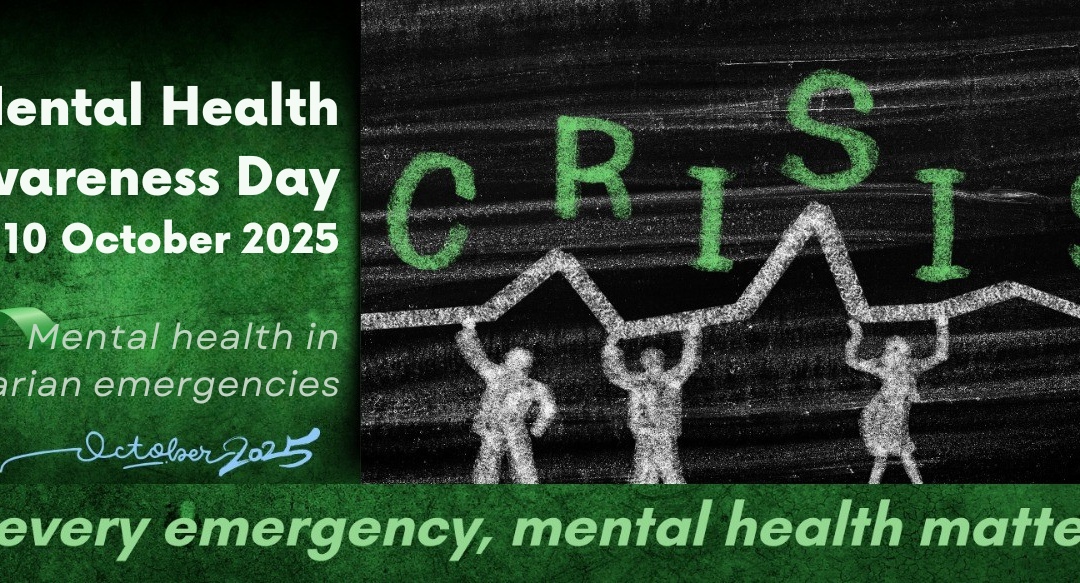
As we mark Mental Health Awareness Month, the PsySSA Division for Registered Counsellors and Psychometrists (RCP Division) reflects on the crucial role Registered Counsellors play in advancing mental health care in South Africa.
In two insightful contributions, the Division highlights both the impact of Registered Counsellors in humanitarian emergencies and the evolution of the profession from its inception to its growing significance today.
“Mental Health in Humanitarian Emergencies” explores how Registered Counsellors provide essential, community-based mental health support in times of crisis — from social unrest to poverty and trauma — ensuring no one faces these challenges alone.
“The Vital Role of Registered Counsellors in South Africa: Past, Present, and Future” traces the development of the profession and its continued commitment to accessible, preventative, and empowering mental health care.
Read more below:
The Vital Role of Registered Counsellors in South Africa: Past, Present, and Future
Division of Registered Counsellors & Psychometrists – Kendall Byne
October is Mental Health Awareness Month, with World Mental Health Day observed on 10 October 2025, reminding us of the ongoing global call to action for accessible, equitable, and humane mental health care. In South Africa, this call has particular resonance, given our history and the unique role of the Registered Counsellor (RC) in broadening access to psychosocial support.
The profession of Registered Counsellor was formally recognised in 2003, following the revision of the Health Professions Act, as a response to South Africa’s urgent need for accessible mental health services. With high rates of trauma, inequality, and limited access to specialised care, RCs were envisioned as frontline providers who could serve communities directly, especially in under-resourced areas where psychologists and psychiatrists remain scarce. This pioneering initiative placed South Africa among the first countries to establish a mid-level mental health profession dedicated to prevention, early intervention, and psychoeducation.
Over the past two decades, Registered Counsellors have become an indispensable part of South Africa’s mental health landscape. We have worked in schools, community-based organisations, NGOs, faith-based settings, and private practice, offering much-needed services that bridge the gap between community needs and specialised care. Our scope of practice emphasises wellness promotion, preventative interventions, and the destigmatisation of mental health, to help ordinary South Africans access support before reaching crisis point.
In 2025, our role is more important than ever. South Africa continues to face rising mental health needs which are exacerbated by socioeconomic challenges, the lingering effects of the pandemic, and an increasing awareness of psychological well-being. Registered Counsellors remain at the forefront of community mental health and empower individuals and families by advocating for resilience and making mental health care accessible in everyday settings.
As we observe World Mental Health Day under this year’s theme of “Access to Services – Mental Health in Catastrophes and Emergencies”, the work of RCs embodies this principle. We make certain that mental health services are not a privilege for the few, but a right for all. By addressing barriers of cost, culture, and accessibility, Registered Counsellors contribute to the broader transformation of South Africa’s health system and to PsySSA’s vision of advancing psychology as a force for social good.
This October, let us not only raise awareness but also celebrate the invaluable role of Registered Counsellors in shaping a healthier, more resilient nation – past, present, and into the future.
“Mental Health in Humanitarian Emergencies”
Division of Registered Counsellors & Psychometrists – Genevieve Burrow
“Mental Health in Humanitarian Emergencies.” This theme resonates deeply with our current South African context, where socio-economic challenges and the lingering effects of the COVID-19 pandemic have created an environment ripe for mental health crises. During World Mental Health Awareness Month and World Mental Health Day, we are reminded that mental health is a universal human right. In South Africa, this is not just a theme, but it is a call to action. Every day, we see how poverty, inequality, violence, and trauma significantly impact individuals, families, communities, and especially our youth.
Humanitarian emergencies can take many forms, from natural disasters to social unrest. In South Africa, we have witnessed a range of challenges that have critically impacted the mental well-being of individuals and communities. The stressors of unemployment, poverty, and violence can lead to increased rates of anxiety, depression, and trauma.
Registered Counsellors (RCs) are uniquely positioned to make a significant difference in these challenging times. Our training equips us to provide critical support, guidance, and counselling interventions to individuals and communities affected by past and current crises. RCs are on the ground, walking alongside communities, creating safe mental health spaces, and offering accessible, preventative care where it’s needed most. We are often the first to listen in a safe space, the first to respond, and the bridge to further support. Our contributions include engaging with communities to foster mental well-being through workshops and support groups that address pressing mental health issues. Additionally, we provide specialised trauma-informed care, assisting individuals in coping with the psychological aftermath of crises. By raising awareness about mental health needs, we also advocate for resources and policies that support mental well-being during emergencies.
As we commemorate World Mental Health Day, let us reaffirm our commitment to mental health advocacy and recognition. It is crucial that we work together to ensure that mental health resources are accessible to everyone, especially in times of crisis. You can contribute by raising awareness and sharing information about mental health resources within your communities. Encourage conversations about mental health to reduce stigma and shame and promote understanding. Lastly, connect with fellow professionals to share best practices and strategies for supporting those in need.
Together, we can create a supportive environment where mental health is prioritised, and individuals feel empowered to seek mental health assistance. Let’s ensure that no one faces these emergencies alone.