Children’s Mental Health Week – 09 February- 15 February 2026

Children’s Mental Health Week – 09 February- 15 February 2026

Children’s Mental Health Week

This Children’s Mental Health Week, PsySSA centres the voices of its Divisions to reflect on the realities facing children’s mental health in South Africa today.

Across the week, we will be sharing contributions from the DRM, SEPSA, and SD Divisions, offering diverse perspectives on the challenges, responsibilities, and possibilities for more responsive, ethical, and just care for children.

Together, these reflections invite us to pause, listen, and consider how psychology can meaningfully respond to the complex contexts shaping children’s lives.


CHILDREN’S MENTAL HEALTH CHALLENGES

“NO END IN SIGHT”


The Children’s Mental Health Week is an appropriate time to reflect on what extent we as collegial professionals have delivered on our previous mandate which we could have eloquently articulated around this time last year. In essence during the intervening period, how relevant and responsive have we been to current needs and circumstances?

Children’s Mental Health are impinged by a multiplicity of factors. This is borne out by Bronfenbrenner (1979). His Ecological Systems Theory is wide encompassing. Space does not allow an in-depth elaboration of his valuable theory. However, his emphasis on the environmental interaction between and among family, peers and school have great significance for Children’s Mental Health. Are intersections in the Microsystem amongst these three constructs contributory factors in respect of Children’s Mental Health?

The much-desired harmonious balance is at times shattered in the home. Ordinarily a safe haven for an intact family becomes the very place that disrupts the familial bond and turns it into chaos and instability. Hostile school circumstances further diffuse mental health difficulties. Negative peer pressure also plays a vital role in mental health reduction of children.

In the meantime, according to SAMRC (2025) Mental Health concerns are growing almost unchecked at an alarming rate:
• Depressive disorder (10.1%)
• Anxiety (6.7%)
• Post-traumatic stress disorder (17.6%)
• Suicide thoughts (10.1%)
• Substance abuse (33.17%)

This is by no means exhaustive. There is a myriad of other mental conditions. However, the above merely serves to highlight the scope of the problem. Let us briefly consider the impact on education and future opportunities.

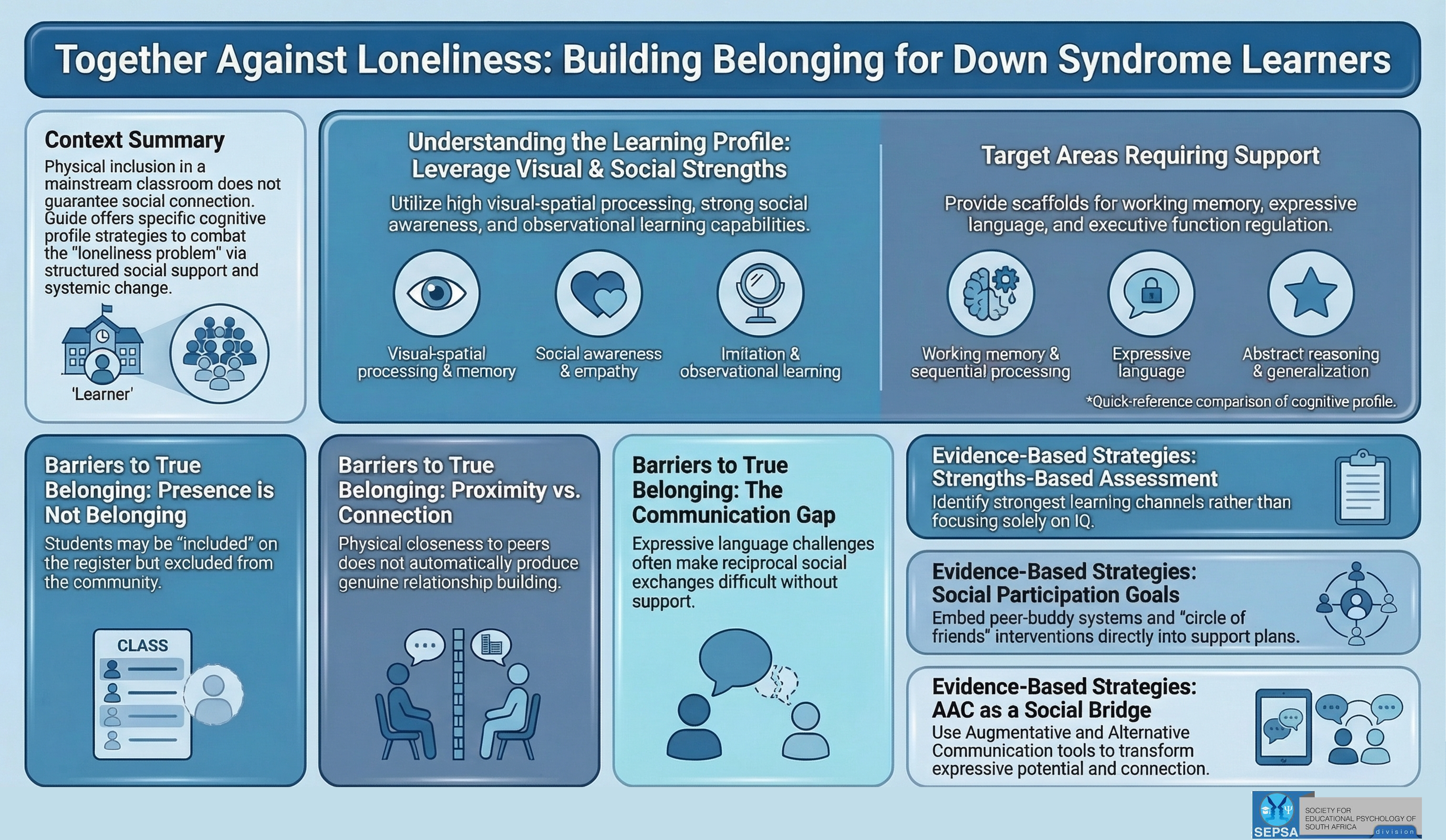
While the above are well-known, let’s posit how the school may be an indirect source of aggravating Mental Health challenges among learners. At present this is intuitive. It may possibly generate further research.

The psychological profession, no less Educational Psychologists, need to press pause and examine the inferences of TIMMS (2019) and PIRLS (2021) studies. In TIMMS (2019), South African grade five pupils ranked among the lowest. This is the group who will be writing the grade twelve examination at the end of the 2026 year. Watch this space.

In PIRLS (2021), grade four learners landed bottom of the pile. A dismal repeat performance of PIRLS (2016). Further, it was concluded that almost (80%) of the 2021 cohort were unable to comprehend the simple narrative text.

The educational repercussions and the mental health implications are far-reaching.

Back at the ranch. Department of Basic Education, 2025, records an (88%) pass rate for NSC learners. Unsuccessful learners comprised (12%) of this pool which equated to 110 520 students.

Is this something to be really proud about?

While the classrooms burn, the Officials go on ‘fiddling”.

Dr N Chetty- SEPSA- Executive Member

SPOTLIGHTING ORGANISATIONS FOR CHILDREN’S MENTAL HEALTH WEEK


PsySSA and the PsySSA Student Division stand united in support of Children’s Mental Health Week. We recognise the importance of supporting the emotional, psychological, and social wellbeing of children across South Africa, as it is both necessary and urgent. Children’s mental health does not exist in isolation, it is shaped by individual experiences, as well as the systems, communities, and forms of support that are available to them. In honour of this week, we are spotlighting some organisations that are doing vital work to support children and their psychosocial well-being. These organisations play a critical role in creating safe, supportive environments where children can thrive.

We call on students, practitioners, and community members to engage with these resources, share them, and support their work in a collaborative commitment to advance children’s mental health.

Nationwide:


Gauteng:


KwaZulu Natal:


Eastern Cape:


Western Cape:


Limpopo:

Children’s Mental Health Week


Children do not always have the words to say how they feel, but their behaviour often tells the story.

Children’s Mental Health Week reminds us that mental health matters from the very start of life. Emotional well-being shapes how children learn, relate to others, cope with stress, and see themselves in the world.

Supporting children’s mental health does not require perfect parenting or all the answers. It starts with simple, everyday actions. Listening without judgement. Making space for feelings, even the uncomfortable ones. Offering safety, consistency, and reassurance.

When children feel seen, heard, and supported, they are more likely to thrive, not just now, but throughout their lives.

This week, let us talk openly about children’s mental health. Let’s challenge stigma, encourage compassion, and remind every child that their feelings matter.

Because strong minds start with safe spaces.

#ChildrensMentalHealthWeek
#MentalHealthMatters
#EveryChildMatters
#SupportingYoungMinds


Children’s Mental Health Week provides an opportunity to raise awareness regarding the emotional and psychological well-being of children and young people.  The mental health of children is influenced by cognitive development, emotional regulation, academic and social functioning. Thus, mental health influences how children understand their emotions, cope with pressure, cope with learning, and building relationships.  Research show that early mental health promotion and prompt intervention can lower the likelihood of unfavourable consequences later in life (WHO, 2021).  

Current challenges affecting children’s mental health include but not limited to academic pressure, exposure to social media, socioeconomic equality, family dynamics, and community violence. According to UNICEF (2022), these factors are likely to increase vulnerability to depressive symptoms, anxiety, trauma related disorders, and difficulties in behavior, if not addressed in time.  Globally, one in every seven 10-19-year-olds experience a mental condition, accounting for 15% of the global burden of illness in this age group (WHO, 2025). Children’s Mental Health Week emphasises the significance of preventative measures, access to psychological and child-centred mental health services.    

In South Africa, the Teddy Bear Foundation plays an important role in the prevention of children’s mental health and offer forensic assessments, therapeutic counselling, court preparations, and advocacy services for children affected by abuse and neglect. The Teddy Bear Foundation underscores the importance of trauma-informed care by focusing on both psychological rehabilitation and child protection.

Schools, early child care centres, including families, carry shared responsibility towards the care of children in society. According to WHO (2021), safe and inclusive schooling environments, trauma-sensitive practices,  and supportive teacher-learner relations can help children feel secure and understood. 

Children’s Mental Health 2026 calls upon researchers, clinicians, educators, and policymakers to work collaboratively to strengthen child protection systems and expand access to mental health services within the communities.    

References

Department of Social Development. (2019). National child care and protection policy. Government of South Africa.

World Health Organisation. (2021). Guidelines on mental health promotive and preventive interventions for children and adolescents.

UNICEF. (2022). The state of the world’s children: On my mind-Promoting, protecting, and caring for children’s mental health.

World Health Organisation. (2025).

Compiled by: DRM Committee

Disclaimer: AI was used to research and source publications and references


Time To Talk Day – 06 February 2026

Time To Talk Day – 06 February 2026

PsySSA: It’s Time to Talk

Conversation is connection. Time to Talk Day reminds us that conversation can change lives. Today, PsySSA amplifies voices from our PIPS and AID divisions – because listening, speaking, and connecting are acts of care, courage, and social justice.

Read the PiPS and AID contributions below:


Time to Talk Day: Social Media, AI, and the Quality of Mental Health Conversations

By Rekha Kangokar Rama Rao and Athena Clayton (AI Division)


Time to Talk Day calls for open, stigma-free conversations about mental health. Yet in a digital era shaped by social media and artificial intelligence (AI), many of these conversations now take place in online spaces that are governed less by care and more by platform, e-design, algorithms and engagement incentives. While this shift has expanded access and visibility, it also introduces significant risks to how mental health distress is expressed, received, and responded to. Questions of depth, psychological safety, and ethical responsibility become particularly urgent when mental health conversations are shaped by systems that reward speed, exposure, and emotional intensity rather than understanding and containment. These concerns are especially pressing in unequal contexts such as South Africa, where overstretched services and structural inequality mean that online conversations may carry more weight, and more risk, than they were ever designed to hold.

Within this landscape, social media can offer connection, validation, and a first step toward acknowledging distress. Platforms enable people to share lived experiences, find peer support, and connect with others who share similar experiences. It also plays a growing role in promoting awareness and acceptance of mental health conditions by sharing accessible information, challenging stereotypes, and correcting common misconceptions. Research suggests that online self-disclosure can reduce feelings of isolation and encourage help-seeking, especially among young people and marginalised groups (Naslund et al., 2016). In South Africa, where public mental health services are overstretched and unevenly distributed, these digital spaces can offer connection where formal care is inaccessible. For many, posting or engaging online becomes the first step toward acknowledging distress an outcome aligned with the aims of ‘Time to Talk’.

For example, a university student might post: “I feel like I’m falling behind in everything and I’m stressing.” A meaningful response is rarely about having the perfect words, but about offering safety and recognition: “I’m really glad you said something. You don’t have to carry this alone. Do you want to talk, or would it help if we looked at support options together?” In moments like these, a comment section can become the first space where someone feels seen, and that can be enough to prompt help-seeking.

AI-driven mental health tools further extend this accessibility. Chatbots and mental health apps offer anonymity, immediacy, and consistency, which can be appealing in contexts where stigma or fear of judgment prevents open discussion. Evidence indicates that some AI-based conversational agents can reduce symptoms of depression and anxiety in the short term by delivering structured psychological strategies such as cognitive-behavioural techniques (Fitzpatrick et al., 2017). From this perspective, AI can help people start talking sooner and access support more easily.

For example, a person who is overwhelmed at 2 a.m. might not be able to call a friend or visit a counselling centre, but they may be willing to open an app. A chatbot might guide them through a grounding exercise (“Take a slow breath in. Name five things you can see.”) or help them challenge spiralling thoughts (“What is the thought you keep returning to? What evidence supports it?”). While this is not the same as human care, it can offer a moment of steadiness and structure when emotions feel unmanageable.

On the other hand, increased conversation does not automatically translate into meaningful or safe engagement. Social media platforms are shaped by algorithms that reward visibility and emotional intensity rather than care or accuracy. Studies link high levels of social media use to increased depressive symptoms, anxiety, and harmful social comparison, particularly among adolescents (Twenge et al., 2018). Public disclosures of distress may attract empathy, but they can also invite dismissive or unkind reactions, moral judgement, unsolicited advice, or misleading mental health content that is not evidence-based. In this sense, social media can blur the line between support and spectacle, where personal distress is shared widely but not always held with care.

For example, a person might share that they are depressed and receive responses like: “You’re just looking for attention,” “Other people have it worse,” or “Stop being dramatic.” Even when replies are not intentionally cruel, they may still be dismissive or simplistic: “Just be positive,” “Just pray,” or “Go for a run.” Instead of feeling supported, the person learns that disclosure comes with risk, and that vulnerability is tolerated only when it is neat, inspiring, or easy to consume.

AI tools introduce further ethical and clinical concerns. While chatbots can simulate empathy, they do not possess true understanding or moral responsibility. Researchers caution that AI systems may fail to respond appropriately to complex mental health crises, including suicidality or trauma, where nuanced human judgment is essential (Bickmore et al., 2018). Issues of data privacy, surveillance, and algorithmic bias are particularly salient in societies marked by inequality. If AI tools are trained on data that do not reflect local languages, cultural expressions of distress, or socio-economic realities, they risk excluding or misinterpreting those most in need.

For example, someone might type: “I can’t do this anymore. I’m tired of everything.” A human listener may recognise the seriousness behind such a message and respond with care, urgency, and appropriate referral. An AI tool, however, may not always interpret context reliably, particularly when language is ambiguous, culturally specific, or emotionally complex. This highlights why AI can be useful for everyday support, but should not be treated as a substitute for professional or relational care in moments of crisis.

The central question, then, is not whether social media and AI are good or bad for mental health conversations, but whether they improve the quality of those conversations. ‘Time to Talk’ reminds us that talking is not simply about expression, but about being heard, understood, and supported responsibly. Digital tools can open doors, normalise discussion, and provide interim support, but they should not become substitutes for human connection or systemic investment in mental health care.

Ultimately, social media and AI should be treated as entry points rather than endpoints. They can open the door to conversation, but they cannot replace deep, responsible support and connection. ‘Time to Talk’ challenges us to think critically: are we simply talking more, or are we creating conditions where talking leads to dignity, connection, and meaningful support?

Time to Talk: Creating the Conditions for Meaningful Mental Health Conversations

By Moshibudi Molepo and Barry Viljoen


Talking about mental health matters…but how we talk matters just as much.

In South Africa, many people live with emotional distress in silence. Stigma, limited access to care, cultural expectations, and daily survival pressures can make it hard to speak openly or seek support. For some, silence becomes a way of coping, not because help isn’t needed, but because talking doesn’t always feel safe, welcome, or useful.

Time to Talk invites us to look beyond words and ask a deeper question: What helps a conversation about mental health feel possible, respectful, and meaningful?

Before people can talk, certain conditions need to be in place. Emotional safety matters. Power dynamics need to be acknowledged. Shame, fear, and cultural taboos must be held with care. Timing matters too, conversations work best when they are invited, not forced.

When conversations do happen, listening becomes more important than fixing. This means resisting the urge to reassure too quickly, reflecting feelings rather than correcting facts, and allowing space for silence. Often, being present is more helpful than saying the “right” thing.

Open conversations can reduce isolation and strengthen connection but they should not happen in isolation from support. In South Africa, organisations such as SADAG and LifeLine provide accessible, 24-hour telephonic and WhatsApp support, helping bridge the gap between home, community, and care. Knowing where to turn makes it easier to talk, and easier to listen.

Time to Talk is not about having all the answers. It’s about creating spaces where people feel heard, respected, and supported. Where help is visible and within reach.

Sometimes, the most meaningful thing we can do is listen well — and help someone know they are not alone.

The Psychology Career Compass Series 2026

The Psychology Career Compass Series 2026

The Psychology Career Compass Series 2026


The Psychology Career Compass Series is a pioneering initiative by PsySSA aimed at guiding psychology graduates and early-career professionals through the often complex and evolving landscape of career development in the discipline. Recognising the need for accessible, practical, and contextually relevant guidance, this series serves as a trusted platform to support the professional growth of psychology students and graduates across South Africa.

Not sure where your psychology degree can take you?

PsySSA’s Career Compass 2026 is a three-part online workshop series designed to support psychology students in making informed, realistic decisions about their future in psychology.

Online | Live | Free

Gain clarity, hear real stories, and discover possibilities – wherever your psychology journey may lead.

Part 1: Your Next Move

Workshop Details

  • Date:12 February 2026
  • Time:18:00–20:00
  • Cost: Free
  • Online via Zoom

Workshop 1 offers direct insight from South African universities on postgraduate psychology programmes, application processes, and entry requirements across disciplines including Clinical, Counselling, Educational, Industrial, Neuropsychology, Research, Psychometry, and more.

Part 2: Straight From The Source

Workshop Details

  • Date: 26 March 2026
  • Time: 18:00–20:00
  • Cost: Free
  • Online via Zoom

Workshop 2: “Straight from the Source” features recent graduates and early-career professionals sharing honest reflections on postgraduate training, challenges, and lessons learned.

Part 3: Off the Beaten Path

Workshop Details

  • Date: 21 April 2026
  • Time: 18:00–20:00
  • Cost: Free
  • Online via Zoom

Workshop 3 explores alternative and non-traditional career pathways, highlighting the diverse and evolving ways psychology is applied beyond conventional routes.

Ad: Neurosync Academy 2026 – Nervous System Regulation for Mental Health Professionals

Ad: Neurosync Academy 2026 – Nervous System Regulation for Mental Health Professionals

Neurosync Academy 2026

Nervous System Regulation for Mental Health Professionals

Regulation first. Capacity second. Everything else follows.

NeuroSync Academy provides CPD-accredited nervous system education for mental health professionals seeking real, embodied change — personally and clinically.

Our 2026 offerings range from accessible daily resets to in-depth experiential journeys and advanced clinical application training, webinars and articles all grounded in neuroscience, polyvagal theory, coherence, breathwork, and embodied regulation.

For practitioners who want tools they can apply immediately — without bypassing the body or burning out the system that does the work.

20 CEU Points now available!

Please visit our website for more information on the courses and ethics self-study articles: https://neurosyncacademy.com/ or contact us at: neurosync.academy.andcpd@gmail.com

Advertisement Disclaimer:
 
This is a paid advertisement. The content, views, and claims expressed are those of the advertiser and do not reflect those of PsySSA. PsySSA remains an independent, non-partisan organisation committed to ethical standards, social justice, and professional integrity. Want to advertise with us? Email info@psyssa.com.
Register Now! Comprehensive DBT Training 2026

Register Now! Comprehensive DBT Training 2026

Comprehensive DBT Training 2026

In partnership with PsySSA

The Comprehensive Dialectical Behaviour Therapy (DBT) Training Programme for 2026 is now live, offering a structured, in-depth learning pathway for practitioners and teams seeking to strengthen their DBT knowledge, skills, and implementation.

This 9-month, fully online programme has been designed to accommodate the realities of busy professional practice, while maintaining clinical depth, rigour, and practical relevance. The training is delivered across three progressive levels, combining live workshops, on-demand learning, peer consultation, and implementation support. This advanced-level programme offers case-based supervision, structured implementation support, and opportunities for peer consultation. You’ll gain hands-on experience in applying DBT across complex presentations, with guidance on system integration, team dynamics, and sustainable service delivery.

Participants will gain access to:

  • over 100 CPD hours
  • live online workshops
  • a comprehensive training library
  • structured skills development
  • expert supervision and feedback
  • real-world application of DBT in your setting
  • tools to lead and grow DBT programmes
  • a community of practice for ongoing support

The programme covers DBT foundations, clinical application across presentations and populations, and advanced implementation, including programme development and therapy-interfering behaviours.

PsySSA members receive a 10% discount and group discounts are available. Flexible payment options are also offered to support accessibility.

Programme starts: 2 February 2026

Mr Werner Teichert

Mr Werner Teichert

Presenter

Werner Teichert is an international speaker and clinical psychologist based in Sydney, Australia. He was trained in ACT under Steve Hayes, Russ Harris, Robyn Walser, and Kirk Strosahl. Werner has trained healthcare professionals across South Africa, Namibia, New Zealand, Australia and the UK.

Training Overview

Level 1 

Level 2

Level 3

Celebrating PsySSA’s 32nd Birthday Anniversary

Celebrating PsySSA’s 32nd Birthday Anniversary

PsySSA 32nd Birthday Anniversary 

From the Leadership of the Psychological Society of South Africa (PsySSA)


On this significant occasion, we proudly commemorate the 32nd anniversary of the Psychological Society of South Africa (PsySSA), founded on 28 January 1994. As we mark this milestone, we reflect with deep appreciation on a journey that has firmly established PsySSA as the leading voice for psychology in South Africa.

Since its founding, PsySSA has been guided by a vision grounded in transformation, inclusivity, and the affirmation of human dignity. For over three decades, the Society has championed psychological science and practice that meaningfully engage with South Africa’s diverse realities and respond to the urgent needs of our society.

As we celebrate this anniversary, we honour the founders, leaders, members, divisions, and partners whose dedication and service have shaped PsySSA over the years. Their steadfast commitment has enabled the Society to grow into an organisation respected across the African continent and recognised globally for its leadership in ethical practice, human rights advocacy, and community-centred psychological work.

Our mandate remains as relevant and compelling today as it was in 1994:

  • To advance psychological knowledge that uplifts individuals, families, and communities;
  • To uphold human rights and social justice as foundational and non-negotiable principles;
  • To nurture and empower emerging psychologists who will shape the future of our discipline; and
  • To advocate for mental health as essential to the wellbeing of society.

As leaders, we are deeply honoured to serve at this pivotal moment in PsySSA’s history. The strength, passion, and vision of our members inspire confidence that the next chapter of our organisation will be marked by even greater impact and transformation.

Happy 32nd Anniversary, PsySSA!
Founded on 28 January — growing, leading, and transforming ever since.