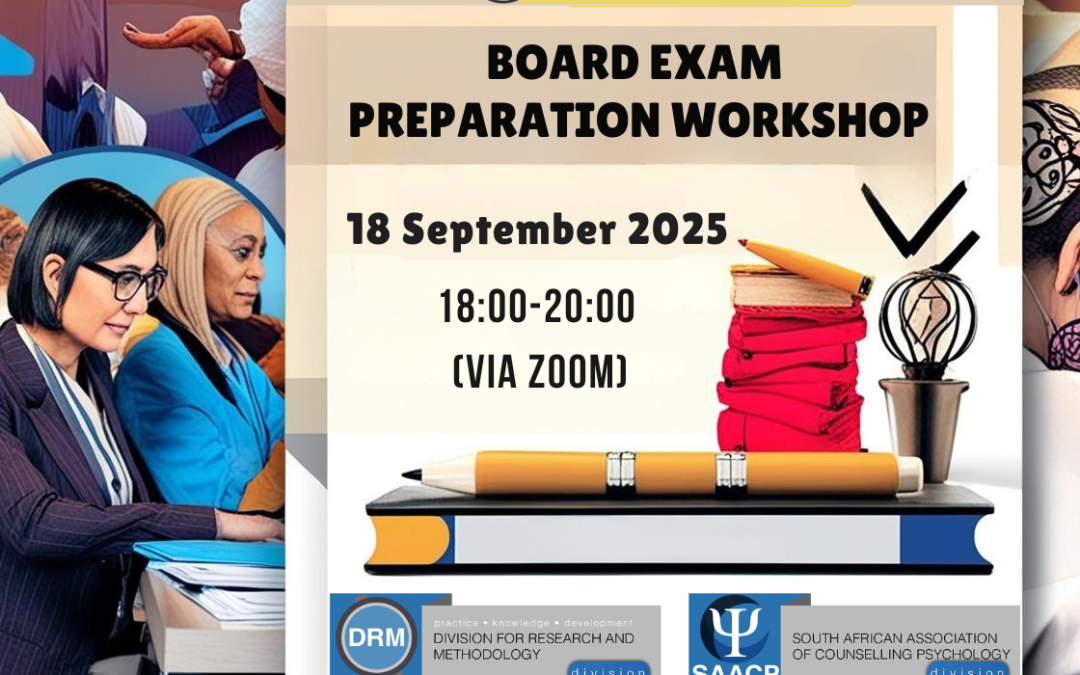
Board Exam Preparation Workshop – 18 September 2025

Board Exam Preparation Workshop – 18 September 2025
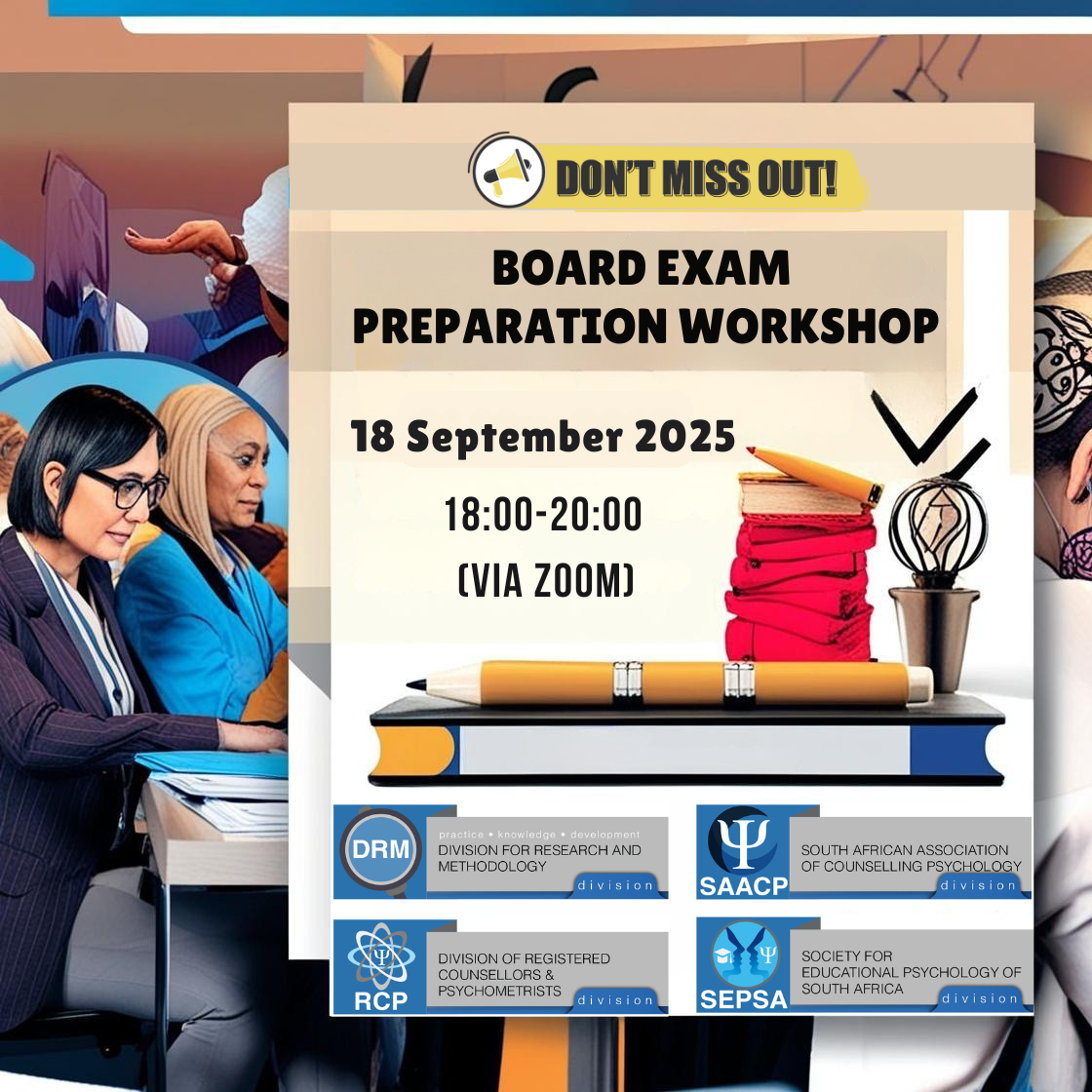
Board Exam Preparation Workshop – 18 September 2025

About this workshop

Join us on Zoom as we unpack the Board Exam!

The journey to becoming an HPCSA-registered psychologist entails navigating through rigorous academic training and practical experiences. However, one pivotal milestone stands between aspiring professionals and their goals: the HPCSA board exam. This exam serves as a comprehensive evaluation of theoretical knowledge, clinical skills, and ethical understanding essential for competent practice in the field. For those on the brink of undertaking this examination, the stakes are high, and the need for thorough preparation is paramount.

This underscores the necessity of a specialized board exam workshop tailored to the unique needs of prospective exam takers. Recognizing the complexities and challenges inherent in preparing for such a pivotal assessment, this workshop aims to provide invaluable clarity and guidance to participants.

The workshop will encompass multifaceted approaches to bolstering exam readiness for students in psychometry, counselling, research, educational and clinical psychology. Through interactive sessions, participants will delve into the intricacies of the exam format, content domains, and requisite competencies.

In essence, this workshop serves as a pivotal resource in equipping student and exam candidates with the tools, knowledge, and support necessary to navigate the challenges of the board exam successfully. By fostering clarity, confidence, and competence, the workshop endeavours to empower individuals to embark on their professional journeys with assurance and readiness to make meaningful contributions to the field of psychology.

Join the workshop at no cost!
Meet The Facilitators
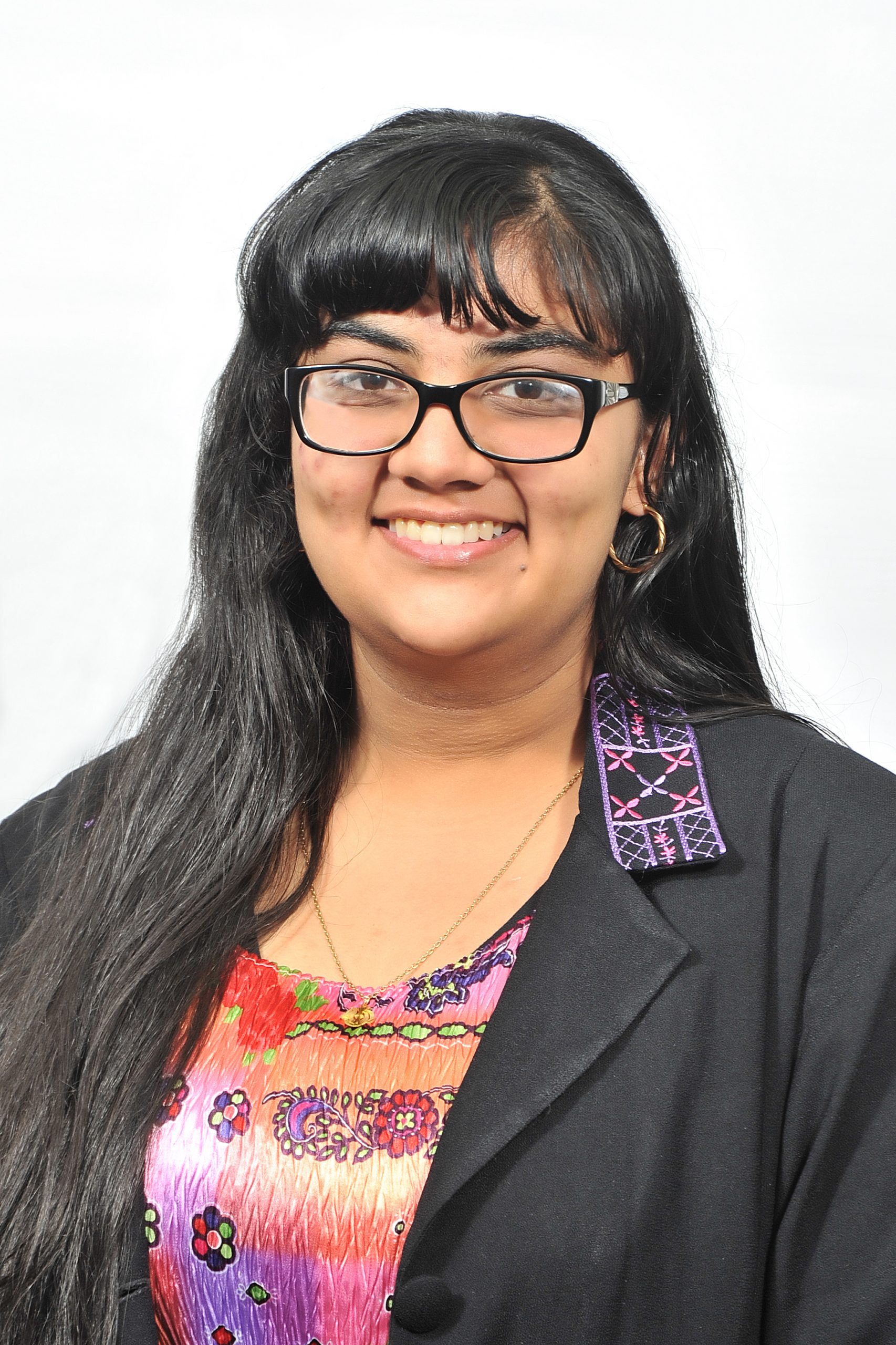
Dr Pakeezah Rajab

Dr Pakeezah Rajab

Presenter

Bio

Dr Pakeezah Rajab is the Senior Researcher at JVR Psychometrics and a PsySSA 2024-25 Additional Executive Member. Her PhD topic was “Non-intellectual factors that influence mathematics performance in South Africa.” She has experience applying psychometric results to a variety of contexts, including schools, private practice, higher education, and corporate environments. Pakeezah has worked on numerous projects that developed, validated and/or standardised assessments for use by the South African population – including aptitude, personality, values, career guidance and emotional intelligence. Her research interests include cognitive functioning, student performance and assessment development.
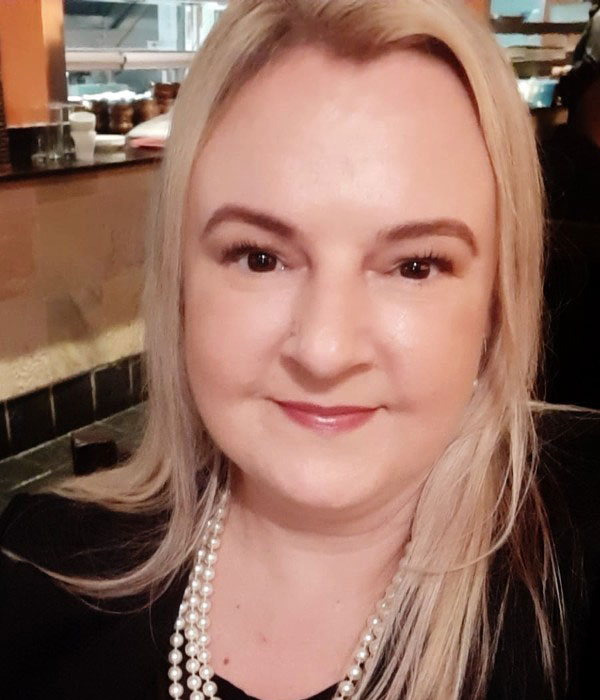
Ms Genevieve Burrow

Ms Genevieve Burrow

Presenter

Bio

Genevieve Burrow is a registered counsellor and chairperson of the PsySSA Division of Registered Counsellors and Psychometrists. Genevieve is the manager of The Youth Hub, based at Groote Schuur Hospital Adolescent Centre of Excellence, where she counsels, and manages students and the counselling centre. She has hosted several board exam workshops previously, and enjoys working with students to enlighten them about the upcoming HPCSA board exam. Genevieve Burrow is committed to driving excellence and innovation in the practice of counselling, and promoting the visibility and importance of this field. Genevieve is passionate about youth upliftment and collaborates with a medically-informed multidisciplinary team to provide comprehensive and holistic care to adolescents facing diverse challenges in under-provided areas.
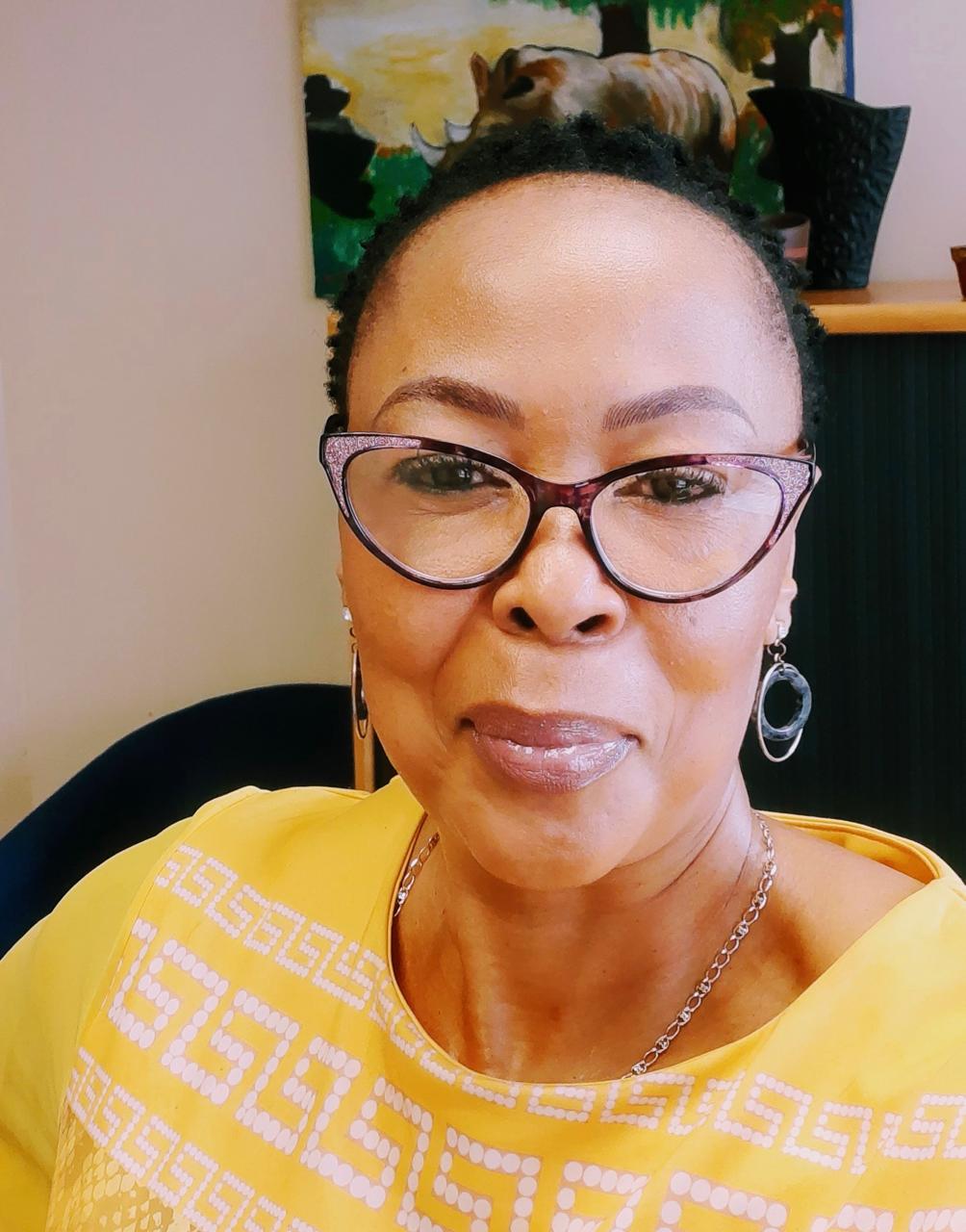
Dr Kemoneilwe Momi Metsing

Dr Kemoneilwe Momi Metsing

Presenter

Bio

Dr. Kemoneilwe Momi Metsing is a registered Educational Psychologist with a PhD in Psychology. She is a Senior Lecturer in the Department of Psychology of Education at the University of South Africa (UNISA) and Chairperson of the Society for Educational Psychology of South Africa (SEPSA). Dr. Metsing has a private practice and consults for government and private companies on relational and organizational transformation. She is an expert witness and member of the South African Medico-Legal Association (SAMLA). Dr. Metsing has held various leadership positions, including Chief Education Specialist in the Department of Education and board member of the South African Professional Society on the Abuse of Children (SAPSAC). She is an External examiner and clinical supervisor for MEd Educational Psychology at UJ. She serves on the Executive Committee of Decolonising Psychology at the Psychological Society of South Africa (PsySSA) and is a Critical Reader for UNISA’s Department of Adult Community and Continuing Education. With expertise in developing community-based programs, Dr. Metsing has successfully brought together individuals and organizations to address social issues, fostering partnerships and sustainable solutions. She is committed to inspiring and educating the next generation of leaders and change-makers, and her appointment at UNISA marks an exciting new chapter in her journey.

Dr Matome Jack Mashiapata

Dr Matome Jack Mashiapata

Presenter

Bio

Dr Mashiapata is a registered Educational Psychologist with the Health Professions Council of SA with over three decades of experience as a lecturer college for teacher training, high school teacher, a school psychologist in the department of basic education, manager of services for students with disabilities as well as student counselling. Currently working as the Director for Counselling and Career Development at UNISA, he has presented papers and workshops locally and internationally in the areas of career counselling, pastoral counselling, mentorship, career development, ethics, students with disabilities, etc. He holds active membership and leadership roles the Psychological Society of SA (PSYSSA), Society for Education Psychology of SA (SEPSA), South African Federation of Student Affairs (SAFSAS), International Association of Student Affairs and Services (IASAS) serving as the Africa regional director, deputy chairperson of Council for Pastoral and Spiritual Counsellors (CPSC), and Higher and Further Education Disability Services Association (HEDSA). He is the past president of the Southern African Association of Counselling and Development in Higher Education (SAACDHE). Dr Mashiapata has authored a chapter on Trauma Debriefing in a book titled “Life skills – my journey, my destiny”. He presents accredited CPD workshops on ethics in counselling services.
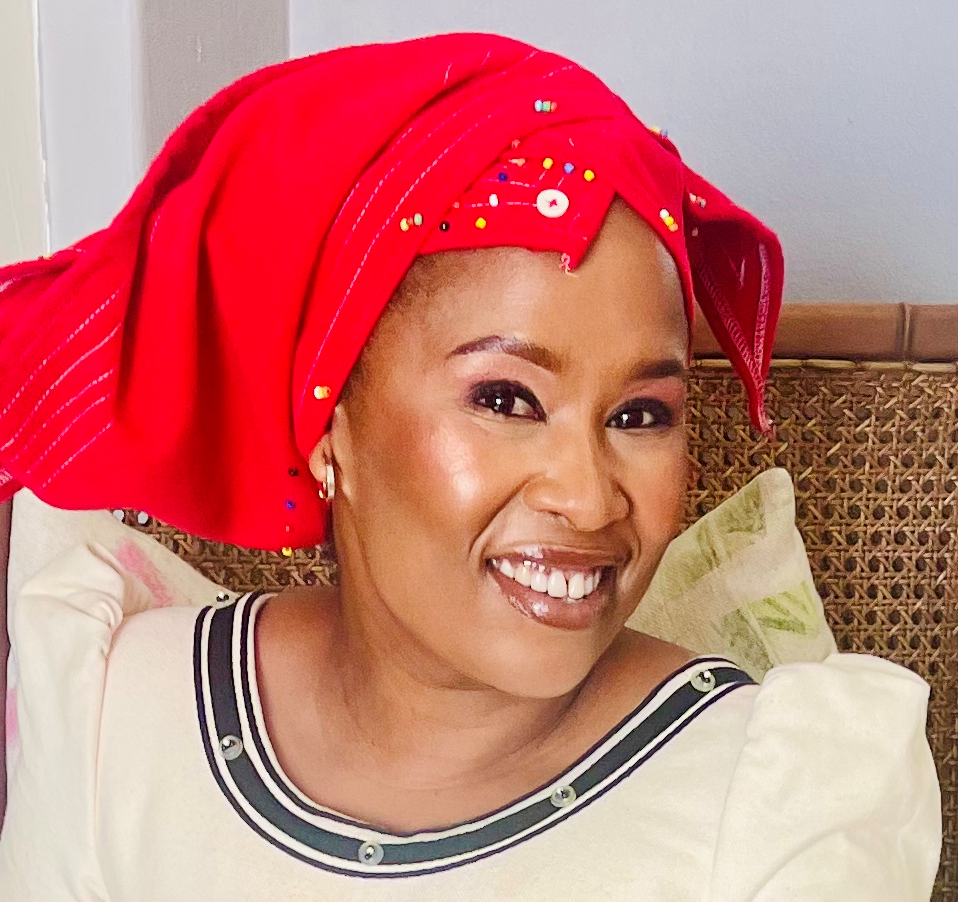
 

Deneo Sekese

Deneo Sekese

Presenter

Bio

Deneo Sekese started her career in Human Resources specifically training and development and organisational development. Her passion for people and therapy led to a midlife career change into psychology. Deneo completed her masters in Counselling Psychology at Rhodes University and internship at the student counselling centre at the Durban University of Technology. She has had the privilege of presenting her masters research at the 27th Annual South African Psychology Congress. Deneo’s areas of interest are African Psychology, Wellbeing and Salutogenesis and Community psychology. She recently registered with the Board of Psychology HPCSA and is in the process of setting up a private practice.
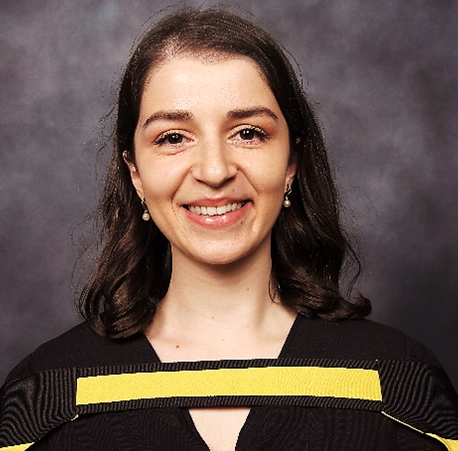
Arianna Fadda

Arianna Fadda

Presenter

Bio

My name is Arianna Fadda. I hold a Bachelor of Arts and a Bachelor of Social Science Honours in Psychology both from the University of Pretoria as well as a professional master’s degree (by coursework and research report) in Social and Psychological Research from the University of the Witwatersrand. My research report focused on the perceptions of health professionals regarding an online depression screening tool adapted for South Africans. Following my master’s, I completed a year-long Research Psychology internship at the Africa Unit for Transdisciplinary Health Research (AUTHeR) at the North-West University, during which I worked on various qualitative and quantitative research projects. I subsequently wrote and passed the Research Psychology Board Examination with the Health Professions Council of South Africa earlier this year and I am now a registered Research Psychologist. I am currently working as a research assistant for AUTHeR and planning further studies towards a PhD.
 

Rekha Kangokar

Rekha Kangokar

Presenter

Bio

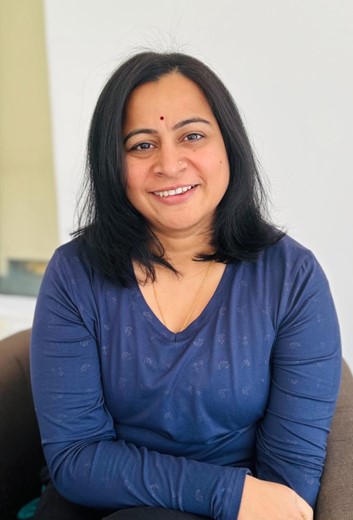
Mrs Rekha Kangokar Rama Rao is a Registered Counsellor and has completed Masters in Community-Based Counselling Psychology. Working with a person centered approach she is passionate about fostering mental well-being. She integrates evidence-based practices with a holistic approach to nurture growth and healing within both individuals and communities. She has been associated with various NGOs and has supported them closely, Rekha has served a Secretary and Treasurer before and currently serves as an additional member in the RCP division.

Zakiyah Hoosen

Zakiyah Hoosen

Presenter

Bio

Zakiyah Hoosen is a dynamic individual with a deep love for Psychology. She completed her undergraduate degree at the University of Pretoria majoring in Psychology and Languages; later obtaining her Honor’s degree from SACAP and went on to become a qualified registered counsellor. She is active in the field and works across multiple organizations, working within a trauma-informed focus to facilitate counselling and psychoeducation to children, adolescents, and adults. Zakiyah is currently advancing her knowledge and training on her journey of master’s in Clinical Psychology, and she aspires to foster psychosocial wellbeing across all spheres of life through meaningful and efficient psychological services for all.
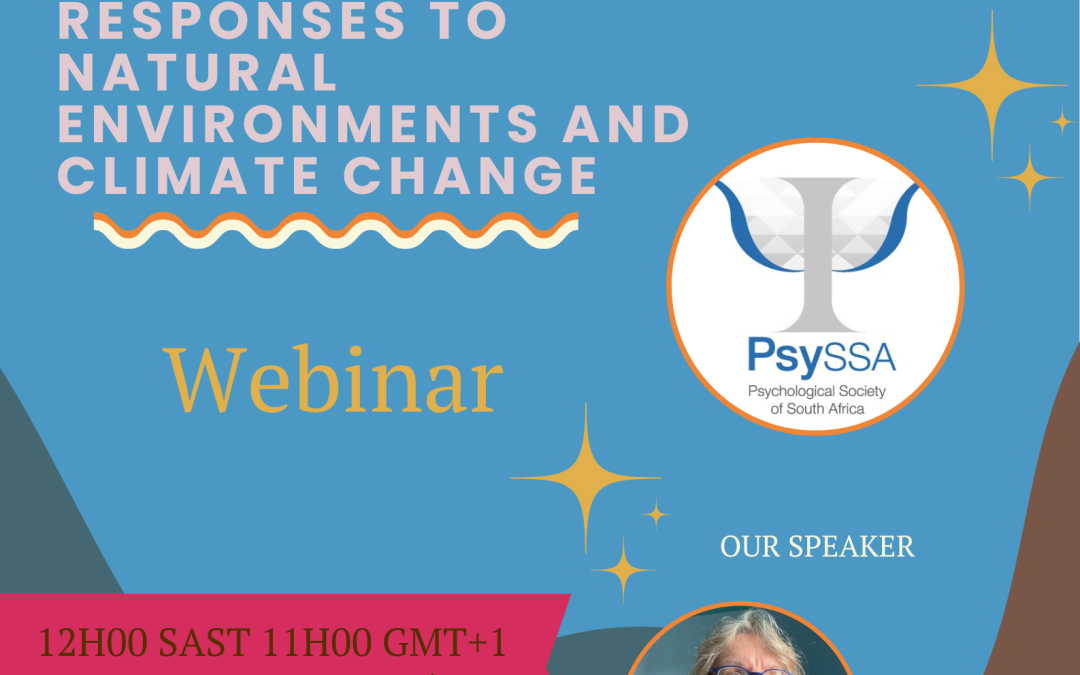
CEPD Webinar: Psychology and Global Climate Change

CEPD Webinar: Psychology and Global Climate Change

CEP Divisional Webinar: Psychology and Global Climate Change


About this Webinar

Date: 11 September 2025

Time:

  • SAST 18:00 – 19:00 

Platform: Teams

Climate change presents a serious and growing global challenge, and psychologists have a role to play in responding to it. This presentation will review psychological research to address three topics. First, what are the factors that make it difficult for people to understand the problem and recognize the risk? These factors include cognitive, emotional, and social barriers. Second, how does climate change affect mental health and well-being, and how do these impacts vary among different groups? The impacts of climate change-associated events such as major storms and flooding can be easily understood, but we also need to consider the impacts of gradual changes in the climate, indirect impacts from involuntary displacement or economic costs, and anxiety associated with awareness of climate change. Finally, how can psychological tools be used to promote resilience on both a personal and societal level? Existing strategies for dealing with depression, anxiety, and PTSD will be helpful, but additional approaches that address systemic change are needed. I will close with some recommendations for how psychology as a discipline can respond to the growing threat of climate change.

See the link below to join!


Meet Our Presenter

Susan Clayton is the Whitmore-Williams Professor of Psychology at the College of Wooster in Ohio. She received her PhD from Yale University, in social psychology. Dr. Clayton’s research examines people’s relationship with the natural environment, how it is socially constructed, and how climate change affects mental health and well-being. She is co-author of the widely-used Climate Change Anxiety Scale, as well as the Environmental Identity Scale, both of which have been used and validated in countries around the world. She is author or editor of six books, including Identity and the Natural Environment, Conservation Psychology, and Psychology and Climate Change, and is currently the editor of the Cambridge Elements series in Applied Social Psychology. A fellow of the American Psychological Association and the International Association of Applied Psychology, she is on the editorial boards for the Journal of Environmental Psychology, Environmental Research: Health, and OneEarth, and was a lead author on the Sixth Assessment Report of the Intergovernmental Panel on Climate Change. Her current research focuses on impacts of climate change on mental health as well as on future planning. She also hopes to promote a positive vision for the future that emphasizes the interdependence between humans and nature.

Trauma-Focused ACT Tour – Nov 2025

Trauma-Focused ACT Tour – Nov 2025

Trauma-Focused ACT Tour – Nov 2025

In partnership with PsySSA

Dates & Cities:

  • 29 Oct: ACT in Practice (Online)
  • 12–13 Nov: Durban North
  • 14–15 Nov: Cape Town
  • 17–18 Nov: Bloemfontein (NEW)
  • 20–21 Nov: Johannesburg

For mental health professionals: Learn practical, evidence-based skills to treat PTSD, complex trauma, grief, and moral injury.

What you get:

  • 1-day online ACT introduction
  • 2-day in-person Trauma-Focused ACT training
  • 6 months’ access to ACT for Depression & ACT for Anxiety on-demand
  • 40 CPD Points

Special Pricing:

  • Launch: R7000 (till 31 Aug)
  • Early Bird: R7500 (till 30 Sept)
  • Normal: R8000 (from 1 Oct)
  • PsySSA & Past ACT Delegates: R6000 (coupon: TF2025)

Payment Options:

  • R2400 x 3 (till 31 Aug)
  • R4000 x 2 (till 30 Sept)
  • PsySSA & Past ACT Delegates: R2000 x 3 (till 31 Aug)

Register Now

Email: assist@behavioural.health
Website: https://www.icbtcentral.com/form/tfact 

Scan the QR Code on the flyer to register directly.

Mr Werner Teichert

Mr Werner Teichert

Presenter

Werner Teichert is an international speaker and clinical psychologist based in Sydney, Australia. He was trained in ACT under Steve Hayes, Russ Harris, Robyn Walser, and Kirk Strosahl. Werner has trained healthcare professionals across South Africa, Namibia, New Zealand, Australia and the UK.

CEPD Webinar: Psychology and Global Climate Change

CEPD Webinar: Surface Echoes: A creative research methodology for art and health practice

CEP Divisional Webinar: Being flamingos and trees: creative methods as inclusive responses to natural environments and climate change


About this Webinar

Date: 4 September 2025

Time:

  • SAST 12:00 – 13:00 

Platform: Teams

Research about landscapes, climate change and environmental issues often largely excludes marginalised groups and creative expressions of what spaces mean to people. This presentation draws on research projects which encompassed artists and researchers working with a range of different groups, to explore their relationships with nature and other species. In the first project discussed, the use of artistic approaches opened up alternative means of engaging with local landscapes that many participants had never visited before, despite being near to where they lived. Artists facilitated expressive responses through multimodal and multisensory activities, and participants offered their own unique interpretations through making, playing and imagining.

Incorporating a multispecies approach in the projects challenged human dominance and encouraged a repositioning of perspectives to include animals and plants, and potentially rivers, rocks and so on, as having their own stake in the natural environment. Participants together decentred the human perspective by imagining ‘being’ other animals and plants; and embraced non-standard uses of language and literacy to codify and communicate affective responses.
This presentation also introduces a project in which schoolchildren have been partnered with children in other parts of the world, to explore their experiences and understandings of climate change. Children from South Pacific Islands, Norway, Pakistan and the UK have created stories and pictures to share with one another – and with you. The discussion will consider the potential for, and limitations of, such methods as inclusive and hopeful responses to environmental crises.

See the link below to join!


Meet Our Presenter

Professor Candice Satchwell is Professor of Literacies and Education at the University of Lancashire, UK, where she is Co-Director of the Institute of Creativity, Communities and Culture, and Co-Director of the Centre for Children and Young People’s Participation. Her research over several decades has included the uses of literacy in education and in everyday life amongst children, young people, homeless adults and marginalised communities. She regularly uses creative activities and stories as both methods and outputs in her research, and is committed to amplifying voices of children and young people, learning from their experiences, and understanding their concerns about climate change and environmental issues. Relevant publications include:

  • Satchwell, C. (2024). Being Flamingos and Trees: Marginalized Groups Respond to Landscapes Using Inclusive Multimodal Literacies and Arts. Qualitative Inquiry, 31(6), 562-573. https://doi.org/10.1177/10778004241254085 (Original work published 2025)
  • Satchwell, C., Walley, B., Dodding, J., Lagi, M.D. (2024). Conversations across international divides: children learning through empathy about climate change, Geographical Research, 1-15. https://doi.org/10.1111/1745-5871.12638
  • Satchwell, C., Mills, B., Parkinson, C., Herring, L., & Parathian, H. (2024). Creative approaches to landscape research: Using multisensory and multispecies research perspectives with marginalised groups. Landscape Research, 1–16. https://doi.org/10.1080/01426397.2024.2336544
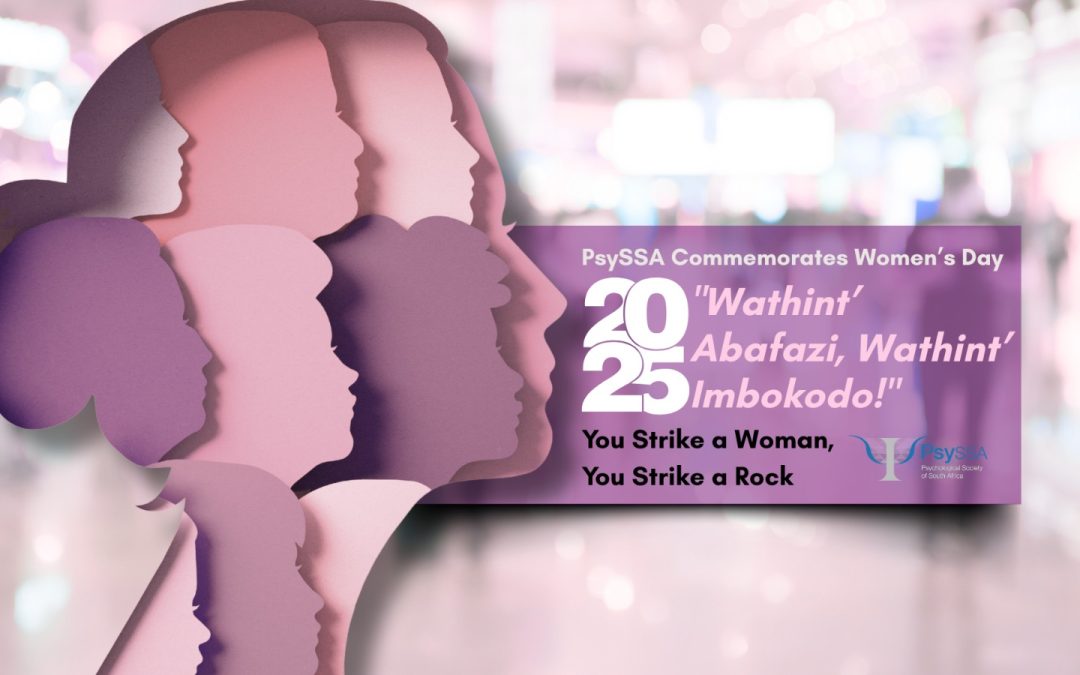
PsySSA Commemorates National Women’s Day 2025

PsySSA Commemorates National Women’s Day 2025

PsySSA Commemorates National Women’s Day 2025

09 August

A critical reflection on psychology’s role in advancing gender equity in South Africa

This opinion piece has been drafted by Angeline Stephens, PhD on behalf of the Sexuality and Gender Division (SGD) of PsySSA, with input from members of the SGD.

As we commemorate Women’s month in August and Women’s Day on the 9th August in South Africa, we reflect on psychology’s role in advancing gender equity and promoting socio-economic justice for women and gender diverse communities through inclusive psychological practice.

In marking this month and day, the South African government website begins by paying tribute to the women who marched to the Union Buildings on the 9th August, 1956, in protest against the Pass Laws (https://www.gov.za/WomensDay2025). Additionally and importantly, through remembering several “pioneer” women, we are reminded that women’s participation in the political transformation of our country and, specifically, in the fight for women’s rights, predates the significant 1956 march to the Union Buildings.

Accordingly, in reflecting on psychology’s role in advancing gender equity and promoting socio-economic justice for women in South Africa, we are compelled to situate psychology’s role within the broader political and socio-historical contexts of our beloved country; ravaged by the scars of the colonial rape[1] of the land and its people, apartheid violence and deep trauma.

Quijano’s (2007) concept of the coloniality of power in the “modern/colonial gender system” (Lugones, 2023) provides an appropriately relevant and critical point from which to reflect on the role that psychology plays, in the present moment, in addressing the gendered inequalities of the past, in ways that interrogate its intersections with race, class and sexuality.

To what extent has psychology shifted from being an instrument that supported an apartheid ideology and system of hierarchical racial categorisation and divisiveness to being one of inclusive practice that recognises the diversity of gendered, classed and raced identities?

Cognisant of this history that continues to permeate the lived reality of millions of women, whose lives are systematically devalued and dehumanised, in what ways does psychology advance gender equity and promote socio-economic justice for women and gender diverse communities through inclusive psychological practice?

It is appropriate to begin by considering the kind(s) of knowledge that is/are produced in academic and professional spaces through teaching, research, professional programmes and therapeutic work, as these enactments mark very tangible ways in which psychology, as a discipline and a practice, engages with (marginalised) communities and represents an instrument of power.

Psychology’s participation in teaching, research, training, therapy and community engagement offer powerful ways in which psychology can challenge and change normative, gendered ways of doing. But this requires constant critical reflexive practice of what we do.

It is pleasing to note that there is a shift towards including content that is more African-centred and produced in the global south in professional programmes. However, such content is often offered as an elective rather than one of the core modules. For a large part, western and eurocentric theoretical and therapeutic approaches continue to dominate professional programmes. The linkage between their inclusion and advancing gender equity becomes salient when we consider how psychology is done and enacted in work with women from marginalised communities in particular.

Access to resources and ownership of resources is highly gendered and raced in South Africa. The past apartheid system has meant that, for a long time, psychology has been dominated by white males from privileged socio-economic backgrounds. To what extent has this profile changed to represent a more inclusive and gender-diverse profession? And how has such change translated to empowering women from marginalised communities?

A quick survey of the selection of candidates for the professional Masters’ programmes in psychology across various HE institutions is likely to reveal a skew towards more women candidates. While this may be regarded as progressive, and a ‘good-fit’ given that more women than men tend to access psychological services, such changes may not be adequate in addressing gender equity if the programmes themselves remain primarily individualistic and westernised in their orientation.

Hence, it is pleasing to note the shift towards including more feminist, critical and decolonial perspectives in teaching, research and practice. The Hub for Decolonial Feminist Psychologies in Africa, housed at the Department of Psychology at the University of Cape Town, is a good example.

The Psychological Society of South Africa (PsySSA) itself has seen the emergence of additional Divisions based on membership interest, which, together with the more long-standing and established Divisions, reflect a shift towards more critical approaches to psychology and the communities it serves. More importantly, in terms of the gendered focus of this article, the PsySSA divisions offer practitioners a platform for more critical engagement with the changing landscape and its impact on gender and gender diversity.

The Sexuality and Gender, the Trauma and Violence, and, the Community and Social Psychology divisions, together with more recent additions such as the Decolonial Psychology and the Climate, Environment and Psychology divisions are good examples of how psychology can interrogate issues of gender and gender diversity from multiple, intersectional perspectives.

Being mindful of the power that psychology has, is important in how that power is acknowledged and shared in work with women and gender diverse people, especially people from marginalised communities, in ways that that recognise their power and agency through inclusive psychological practice. This means a move away from individualistic ways of doing, to ways that encourage collaboration and understanding in all areas of work, including community engagement and the therapeutic space.

The recent launch of the second edition of PsySSA’s Practice Guidelines for Psychology Professionals Working with Sexually and Gender-Diverse People marked a culmination of collaboration and dialogue between psychologists, academics and community-based advocates and NGOs working with sexually and gender-diverse people. It is an excellent example of how psychology, through collaboration and engagement with community stakeholders, has made a positive impact in advancing gender equity and the rights of sexually and gender-diverse people.

While this article does not specifically focus on the crisis of sexual and gender-based violence (SGBV), which is foregrounded in the 16 Days of Activism against Gender-Based Violence campaign in the months of November and December, SGBV remains a priority area that psychology has a role to play in working with women and other stakeholders to develop and implement interventions that seek to end violence.

Sexual and reproductive health rights (SRHR) marks another important priority area for women and sexually and gender-diverse people, especially from marginalised and impoverished communities. This priority area is one in which PsySSA and the Sexuality and Gender Division (SGD) have begun engaging in with the intention to make a meaningful contribution to addressing gender equity and socio-economic justice for women and sexually and gender-diverse people within a rights-based framework.

Increasingly, psychology in South Africa has opened up the spaces for the voices of (marginalised) women to be heard, valued and appreciated through ethical and collaborative research practices and engagements. Their stories of their lived experiences form an integral component in shared knowledge creation. Working with women who share their stories to advance gender equity represents a highly empowering and inclusive practice for women and psychology practitioners.

Psychology has played an important role in challenging attitudes, perceptions and behaviour that perpetuates gender oppression. However, gender cannot be regarded as a stand-alone social category. Psychology needs to adopt a more critical stance that recognises the intersections of gender with other social categories. For example, the inclusion of women with disabilities sadly remain a peripheral afterthought in many programmes and interventions that target women.

The intersections of gender with race and class remain critical when thinking about psychology’s role in promoting socio-economic justice for women and gender-diverse communities as their vulnerability is often heightened. The release and sharing of (psychology’s) power in such contexts is a necessary requirement for work that seeks to recognise agency, heal and build resilience.

The question of psychology’s role in advancing gender equity, promoting socio-economic justice for women and gender diverse communities through inclusive psychological practice, remains a critical question of relevance that we, as ethical practitioners, must engage with on an ongoing basis.

Ultimately, advancing gender equity and promoting socio-economic justice for women and gender diverse communities is about recognising women and gender diverse communities as human – and not “less than human” (Quijano, 2007). This should be a central and foundational principle that underpins psychology’s work with women.

And finally, it is worth pointing out that while we have spoken about ‘psychology’ as a discipline and a practice, psychology does not exist in a separate realm from us. We make up ‘psychology’. We all have a collective and ethical responsibility to work in ways that advance gender equity and promote socio-economic justice for women through collaborative work with women, communities, and other stakeholders such as educators and policy makers.

[1] We acknowledge that the word “rape” may be triggering for people who have experienced sexual violence, and its use in an article with a gendered focus may be viewed as being contentious. However, the word is used to convey the brutality and violence of coloniality, what it took without consent, and specifically, its continued trauma in the lives of the people, especially women, that it violated.

Commemorating Women, Honouring Culture and Embodying Decolonial Ethics of Care Through Women’s Dialogical Spaces

By: Imbumbe Yabafazi and PsySSA’s Decolonising Psychology Division

iGwijo or songs, such as Wathint’abafazi wathint’imbokodo (isiXhosa for “You strike the women, you strike a rock”) commemorate the mass of women who marched to the Union Buildings to protest against pass laws, through the leadership of Lillian Ngoyi, Helen Joseph, Rahima Moosa and Sophia Williams in 1956. This song has since remained an anthem in Black South African women’s spaces as it carries the sentiment of advocacy for freedom, inclusion and equality not only for the benefit of women, but ultimately for all.

Today, community outreach units like Imbumbe YaBafazi draw from the tradition of igwijo, alongside communal storytelling, affective exchange, praise and dancing, during their regular grassroots dialogues aimed at addressing contemporary societal issues that affect women. Reflecting on journeying with women over the past ten years, we highlight the value of history, culture, integrity, affirmations, and togetherness in these spaces – values which are essential to a decolonised psychology.

Citing the principle that “in the communities where we operate, we map issues affecting families, with a special focus on women” and guided by the belief that women are the cornerstone in sustaining peace, stability and kindness in communities, we aim to ensure that the lived realities and of women remain central to its work. This commitment underscores the importance of recognising both the structural violence and cultural nuances that shape women’s experiences, as well as adopting a participatory approach to problem-solving.

A recurring element in these spaces is the singing of igwijo – songs such as Wathint’abafazi wathint’imbokodo referred to prior, carry sentiment and memory into the spaces where women gather. Commonly sung at Black South African gatherings, including Imbumbe’s dialogue spaces, igwijo such as Eli lizwe nge lamakhosikazi (“This is the land of women / where women reign”) invite all present to reclaim their place in the world, to remember their worth, and to reaffirm their identity. Imbumbe’s founder notes that Africans sing – whether in celebration or in sorrow. iGwijo thus become oral testaments to struggle, triumph, and hope and serve not only as affective expressions, but also as living archives of indigenous modes of knowing, healing, and relating.

At the heart of Imbumbe’s commitment to creating and facilitating these spaces of reconnection lies the belief that well-supported women and youth are the foundation of strong communities. Drawing from the African proverb, ugotshwa usemanzi (isiZulu for “You have to bend the branch while it is still wet”), we prioritise intergenerational dialogue to ensure that futures are shaped before the challenges of life harden potential. This approach ensures communal participation in reshaping narratives which restore dignity, learning and unlearning perspectives, and the transfer of practical tools for both individual and community capacity-building. Ultimately, it encourages young women to take up space in a patriarchal society marked by hegemonic masculinity – one that works to minimise and marginalise them.

Beyond offering a safe space where women can authentically be, grassroots dialogue spaces cultivate shared humanity, transmit local and intergenerational knowledges, and provide cultural grounding. They become spaces of collective consciousness, solidarity-building and community well-being, nurtured through practices of remembrance, resistance, relational accountability, introspection, action, and collective healing in the pursuit of justice. These practices reveal what mainstream psychology, in its Euro-American form, so often misses: that healing is cultural, relational, and more impactful when approached collectively.

Offering a model of embodied collective healing, Imbumbe Yabafazi’s work examples a living praxis of decolonial mental health care and serves as an exemplar for decolonial ethics of care, which are critical to an African-centred decolonised psychology. The honouring of story, song, and ritual in women’s dialogue spaces should thus not be seen as merely performative; rather, these are methodologies of healing –psychosocial, political, cultural, and spiritual interventions – forms of praxis that psychology should engage with seriously in its own transformation, particularly in the African context.

A culturally rooted, community-based approach that values the recognition of historical trauma and the structural conditions shaping mental health, indigenous knowledge systems, and oral traditions, thus positions communal healing as a valid and vital form of psychological practice.  Embracing Ubuntu (a Nguni philosophy underpinned by the sentiment that “I am, because we are” or shared humanity) in this way shifts the therapeutic process from an individualised, expert-driven model to one that is collective, participatory, and culturally grounded. Such an approach would also enable local psychology professionals to forge deeper connection and critically engage with the situated experiences, knowledges, and practices that offer healing in communities – often without formal recognition.

ACT for Depression 2025

ACT for Depression 2025

Act For Depression

A 4-Part CPD Webinar Series for Mental Health Professionals

13, 20, 27 Aug & 3 Sept 2025

Dates: 13, 20, 27 August & 3 September 2025
Time: 08:00–09:30 (SAST)
CPD: 8 General CPD Points
Presenter: Werner Teichert
Hosted by: PsySSA & iCBT

Course Overview

This practical, skills-focused 4-part series will equip mental health professionals to confidently apply Acceptance and Commitment Therapy (ACT) in the treatment of depression.

Learn to help clients move beyond stuckness, hopelessness, and harsh self-judgment using evidence-based ACT strategies. The series blends theory with real-world examples, clinical demonstrations, and downloadable tools to support direct application in your practice.

What You’ll Learn

Week 1: Depression and ACT
Week 2: Values and Committed Action
Week 3: Acceptance and Defusion
Week 4: Flexibility in Action

Why Attend

  • Deepen your understanding of ACT processes relevant to depression

  • Address key treatment challenges like cognitive fusion, avoidance, and loss of motivation

  • Gain practical tools to improve outcomes in diverse clinical contexts

  • Access the sessions live or via recording

Registration & Fees

  • R2000 once-off

  • OR R1100 x 2 (monthly payments)

  • 15% Discount available for:

    • PsySSA Members

    • Registrants of 3 or more ACT courses

    • Use Coupon Code: ACT25

Register Now

Email: assist@behavioural.health
Website: https://www.icbtcentral.com/course/actfordepression

Scan the QR Code on the flyer to register directly.

Mr Werner Teichert

Mr Werner Teichert

Presenter

Werner Teichert is an international speaker and clinical psychologist based in Sydney, Australia. He was trained in DBT by Behavioral Tech and has trained over 2500 healthcare professionals across South Africa, Dubai, New Zealand, Australia and the UK.