Children’s Mental Health Week – Reflections on Self-Awareness as a Psychology Student
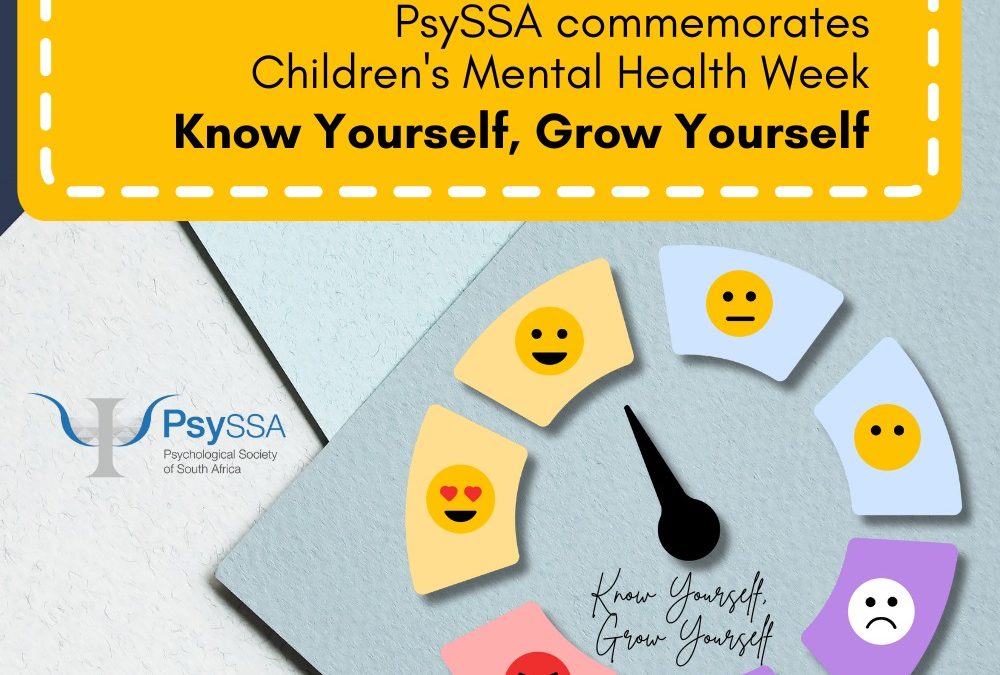
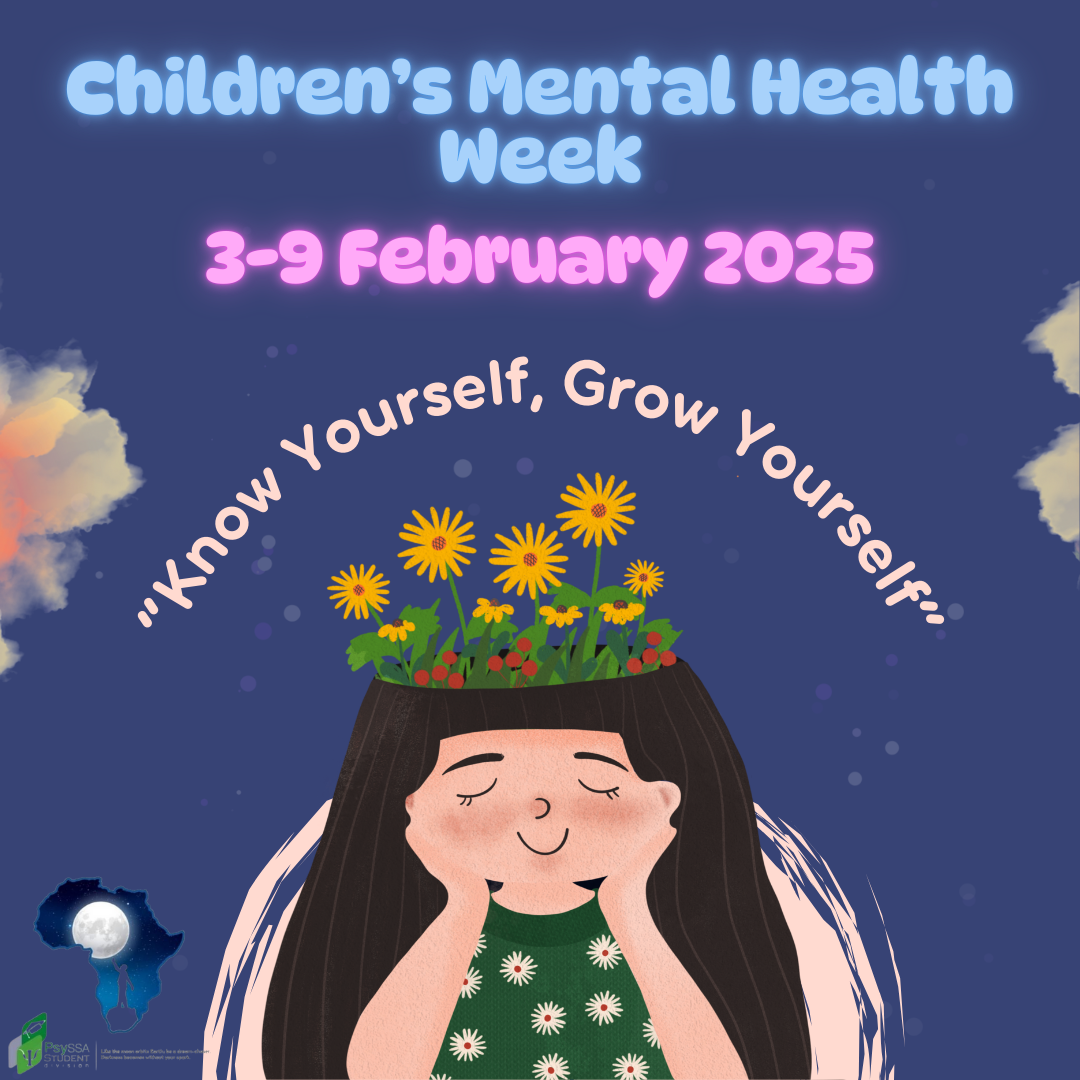
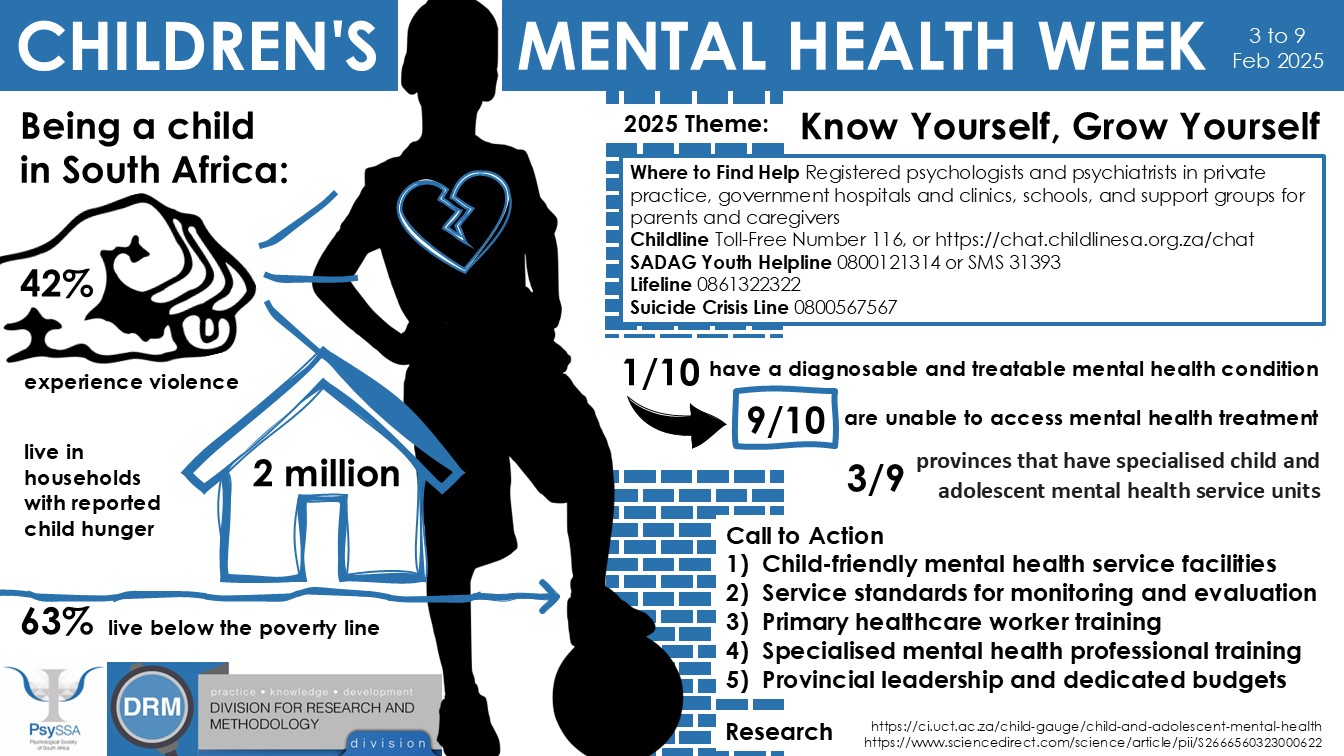
Children’s Mental Health Week, established in 2015, focuses on raising awareness of children’s mental health and emotional well-being. While this initiative originates in the UK, it aligns with local efforts such as Child Protection Week, Youth Month, and Mental Health Awareness Month, which highlight mental health challenges in childhood and beyond. This year’s theme, “Know Yourself, Grow Yourself,” provides an opportunity for psychology students to reflect on their own childhood mental health, exploring how their experiences have shaped their self-awareness and career paths.
Reflecting on childhood mental health often reveals how early challenges, trauma, or environmental factors influenced our mental well-being and led us to pursue psychology. Such reflections form the foundation of self-awareness, which is important for professional practice. Many psychologists embody the concept of the wounded healer, where their own struggles and healing journeys inspire their ability to empathise with others. Self-awareness allows individuals to recognise and work through biases, blind spots, and unresolved issues. For this reason, postgraduate applications, such as honours and master’s programmes, often include reflective exercises like autobiographical essays or interviews. These assessments evaluate not only academic readiness but also insight into one’s personal growth.
Self-awareness is not a one-time exercise but a lifelong process. As students, individuals continuously uncover values, insecurities, and unresolved emotions that shape how they engage with others. Discoveries like these follow practitioners into their careers, where self-reflection and professional counseling are essential for managing personal challenges and ensuring that mental health does not negatively impact those they serve. Early mental health struggles, such as emotional stressors or disorders, may persist in different forms, but when approached with self-awareness, they become tools for empathy and professional insight.
Across psychology’s diverse fields, self-awareness is critical in varying ways. Clinical and counselling psychologists rely on this quality to manage transference, countertransference, and emotional regulation, ensuring effective care without compassion fatigue or burnout. Educational psychologists use self-awareness to recognise how their own experiences and biases influence their work with children, families, and educators, enabling culturally sensitive interventions. Research psychologists depend on reflexivity to remain ethical and objective, particularly when working with vulnerable populations. In neuropsychology, awareness of one’s emotional responses helps practitioners manage the toll of working with life-changing diagnoses, balancing empathy with clarity. For organisational psychologists, self-awareness supports the management of workplace dynamics, promoting systemic well-being and addressing burnout.
Children’s Mental Health Week encourages us to reflect on our own mental health, using this theme as a starting point for cultivating self-awareness. This reflection reminds us that self-awareness is a lifelong journey, essential for both personal growth and professional competency. By engaging in self-awareness, we enhance our ability to empower the individuals and communities we serve.