PsySSA Commemorates Neurodiversity Celebration Week – 16-22 March 2026

PsySSA Commemorates Neurodiversity Celebration Week – 16-22 March 2026

Neurodiversity Celebration Week 

This week, PsySSA joins the global community in recognising Neurodiversity Celebration Week – a time to affirm the value, strengths, and diverse experiences of neurodivergent people.

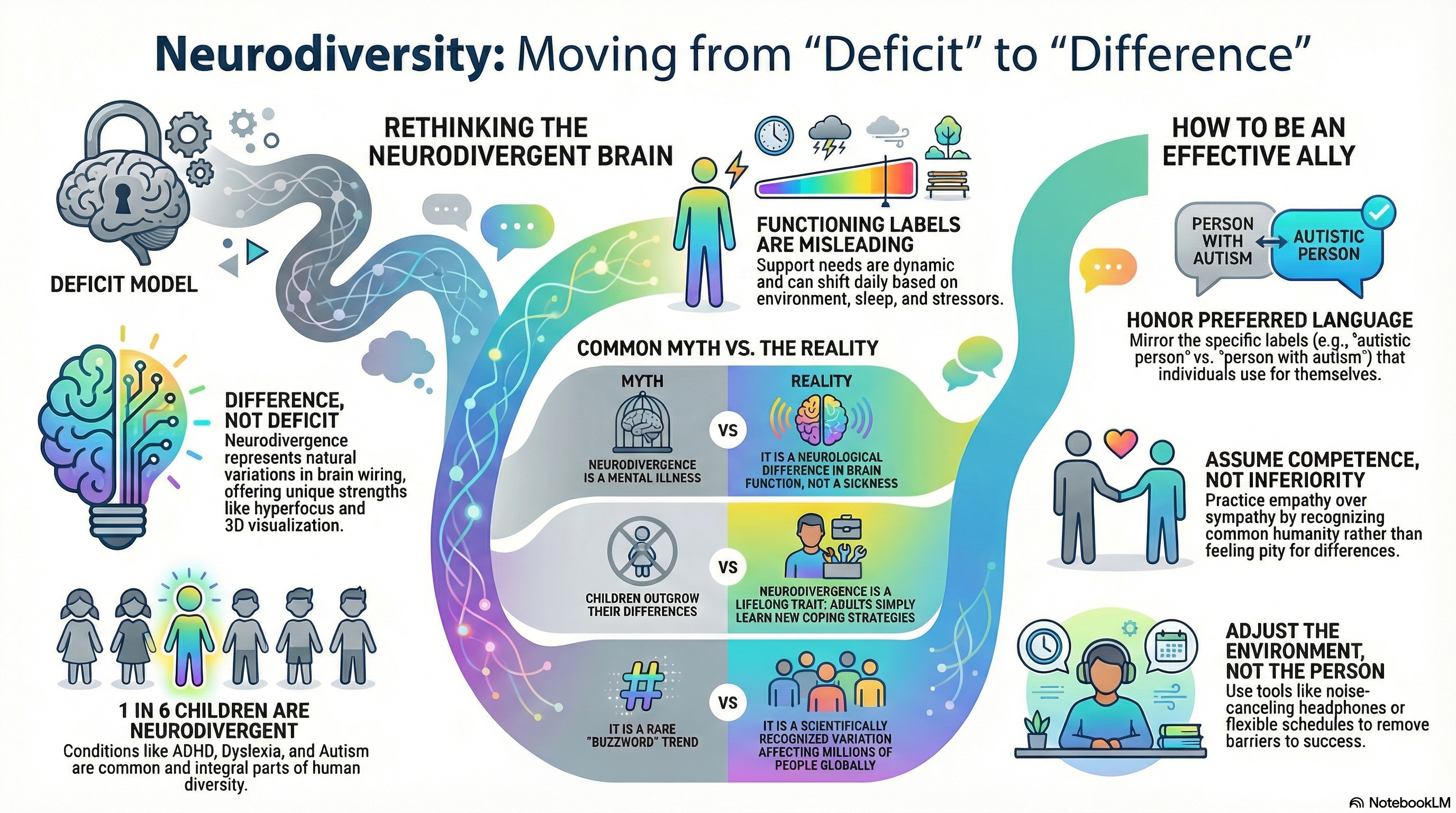
Neurodiversity reminds us that differences in how people think, learn, and experience the world are natural variations of the human mind. Promoting understanding, inclusion, and dignity is essential to creating environments where everyone can thrive.

Throughout the week, we will be sharing insights and reflections from PsySSA’s AI, RCP, and DNFP divisions. These contributions will highlight research, professional perspectives, and lived experiences that deepen our collective understanding of neurodiversity.

Join us as we celebrate diverse minds, challenge stigma, and continue working toward a more inclusive and supportive society.

 

Neurodiversity Celebration Week


Neurodiversity Theme: Inclusion, Ethics, and Psychological Practice in South Africa

Neurodiversity Week 2026 (16–22 March) offers South African psychologists an opportunity not only to raise awareness, but to deepen our ethical commitment to inclusion, dignity, culturally-sensitive, and scientifically grounded practice. As professionals registered with the Health Professions Council of South Africa (HPCSA), our celebration of neurodiversity must extend beyond recognition—it must shape how we assess, diagnose, formulate, and advocate.

Neurodiversity reminds us that differences in attention, communication, learning, sensory processing, executive functioning, and motor coordination reflect natural variation in human brain development. At the same time, diagnostic frameworks such as the Diagnostic and Statistical Manual of Mental Disorders (DSM-5-TR), published by the American Psychiatric
Association (2022), and the World Health Organization International Classification of Diseases (ICD-11) (2019) continue to identify neurodevelopmental conditions that may involve significant functional impairment requiring support. Holding both realities, difference and disability is the ethical task before us.

Neurodiversity: Different Wiring, Equal Worth

The concept of neurodiversity, introduced by Judy Singer (1999) and further articulated by Nick Walker (2021), reframes neurological differences as part of natural expected human diversity. Within this paradigm, individuals with autism spectrum disorder, ADHD, specific learning disorders (including dyslexia and dyscalculia), intellectual disability, developmental coordination disorder, tic disorders, and communication disorders are understood as having brain structural and organizational patterns that are “wired differently.”

There is emerging evidence suggesting that even within diagnostic categories, there is significant variation, for example autism is not a single condition with one root cause, but is an umbrella term for a cluster of conditions with similar, although not identical, features. There is likely to be further subgroups identified in future research, leading to more targeted interventions. There are also suggestions that there is a relative under-diagnosis of neurodivergent patterns in communities that lack financial resources, typically those from Black communities.

However, different neurological wiring must not be grounds for exclusion.

  • Exclusion arises not from neurological difference itself, but from social environments that are structured around narrow cognitive norms. When schools demand uniform learning styles, when workplaces privilege rigid executive functioning patterns, or when therapeutic spaces assume neurotypical communication styles, systemic barriers emerge.
  • As psychologists, our responsibility is to identify not only different patterns of neurological processing and impairment, but also environmental mismatch.

HPCSA Ethics and Inclusion

The HPCSA’s General Ethical Guidelines for the Health Care Professions and Scope of Practice for Psychologists provide a clear framework for Neurodiversity Week reflection. Core principles include:

  • Respect for persons and human dignity
  • Non-discrimination
  • Beneficence and non-maleficence
  • Professional competence

These are not abstract ideals. They are practical and professional obligations.

When we use stigmatizing language, overpathologising difference, conflate socioeconomic and language disadvantage with cognitive impairment, or recommend unnecessarily restrictive placements, we risk contravening these principles as set by HPCSA.

Conversely, when we provide balanced diagnostic feedback, advocate for reasonable accommodation in a workplace, and contextualize functional challenges, we actively uphold ethical practice. Celebrating Neurodiversity Week therefore means aligning our Clinical work with our ethical commitments.

Neuropsychologists: Balanced Interpretation Matters

Neuropsychological assessment carries significant consequences for educational access, occupational opportunity, and self-concept.
Contemporary research indicates that conditions such as ADHD and autism involve differences in neural connectivity and developmental timing rather than simple deficits. Reports that emphasize only weaknesses risk reinforcing low expectations. Reports that ignore impairment may limit access to support.

During Neurodiversity Week, Neuropsychologists are reminded that balanced profiling should document strengths alongside challenges, supporting inclusion while maintaining diagnostic rigor.

Workable Sound Commitments for Neurodiversity Week 2026

As we mark 16–22 March 2026, it is essential for psychologists to continuously reflect on the following commitments:

  • Update assessment practices to ensure cultural and linguistic appropriateness.
  • Review report language for unintended deficit framing.
  • Strengthen CPD in neurodevelopmental science.
  • Engage in conversations about inclusive policy within schools and organizations.
  • Validate neurodivergent identity while addressing functional challenges.

Small shifts in language formulation, recognize differences and practice inclusiveness could have a profound impacts on dignity and belonging.

Beyond Awareness: A Professional Responsibility

Neurodiversity Week is not simply a celebration of difference; it is a reminder of responsibility towards society. Diagnostic clarity remains essential. Functional impairments are real and require structured support. Yet neurological difference does not diminish worth, capacity, or the right to participation in all aspects of broader society

For all psychologists registered with HPCSA; inclusion is embedded within ethical practice. Our role is not to eliminate difference, nor to idealize it, but to ensure that difference does not lead to exclusion but to understanding and inclusion. As we celebrate Neurodiversity Week 2026, may we reaffirm that different brain wiring is part of human diversity and that ethical psychological practice demands understanding, accommodation, and inclusion in society.

The Role of Psychologists during Neurodiversity Week

During Neurodiversity Week and beyond; each category of psychologist registered with the Health Professions Council of South Africa (HPCSA) could play a meaningful role in promoting awareness, inclusion and support.

The brief reflections below highlight possible intersections between neurodiversity awareness and the various categories of psychological practice. These links are offered in a spirit of professional reflection and do not constitute determinations of scope or regulatory guidance, which remain the responsibility of the HPCSA:

  • Neuropsychologist: Neuropsychologists Specialized category focusing on neuropsychological assessment, diagnosis and rehabilitation related to brain-functioning disorders. Relevant to neurodiversity where neurological functioning impacts cognition and behavior.
    Link: https://www.hpcsa.co.za/board/psychology/regulations.
  • Clinical Psychologist: HPCSA Psychology Scope Regulations – Clinical Psychologists Section. Registered to assess, diagnose and treat psychological distress and psychopathology using evidence-based psychological interventions.
    https://www.gov.za/sites/default/files/gcis_document/201409/34581rg9582gon704.pdf
  • Counselling Psychologist: Link: HPCSA Psychology Scope Regulations of Counselling Psychologists Section. Relevant to neurodiversity when addressing adjustment, identity and related psychosocial issues.
    https://www.gov.za/sites/default/files/gcis_document/201409/34581rg9582gon704.pdf
  • Educational Psychologist: Assesses and intervenes to optimize learning, development and barriers to learning across the lifespan; includes profiles that relate to neurodiverse conditions. https://www.gov.za/sites/default/files/gcis_document/201409/34581rg9582gon704.pdf
  • Research Psychologist: Conducts psychological research often contributing to knowledge on neurodiversity, Link: HPCSA Psychology Scope Regulations Research Psychologists Section
    https://www.gov.za/sites/default/files/gcis_document/201409/34581rg9582gon704.pdf
  • Industrial Psychologist: less directly neurodiversity-focused, but may assess and advise on workplace adjustment and functioning HPCSA Psychology Scope Regulations – Industrial Psychologists Section
    https://www.gov.za/sites/default/files/gcis_document/201409/34581rg9582gon704.pdf
  • Registered Counsellor (Psychological), identify needs requiring advanced assessment (e.g., neurodevelopmental concerns), and refer appropriately. Link: HPCSA Psychology Scope Regulations – Registered Counsellors Section
    https://www.gov.za/sites/default/files/gcis_document/201409/34581rg9582gon704.pdf
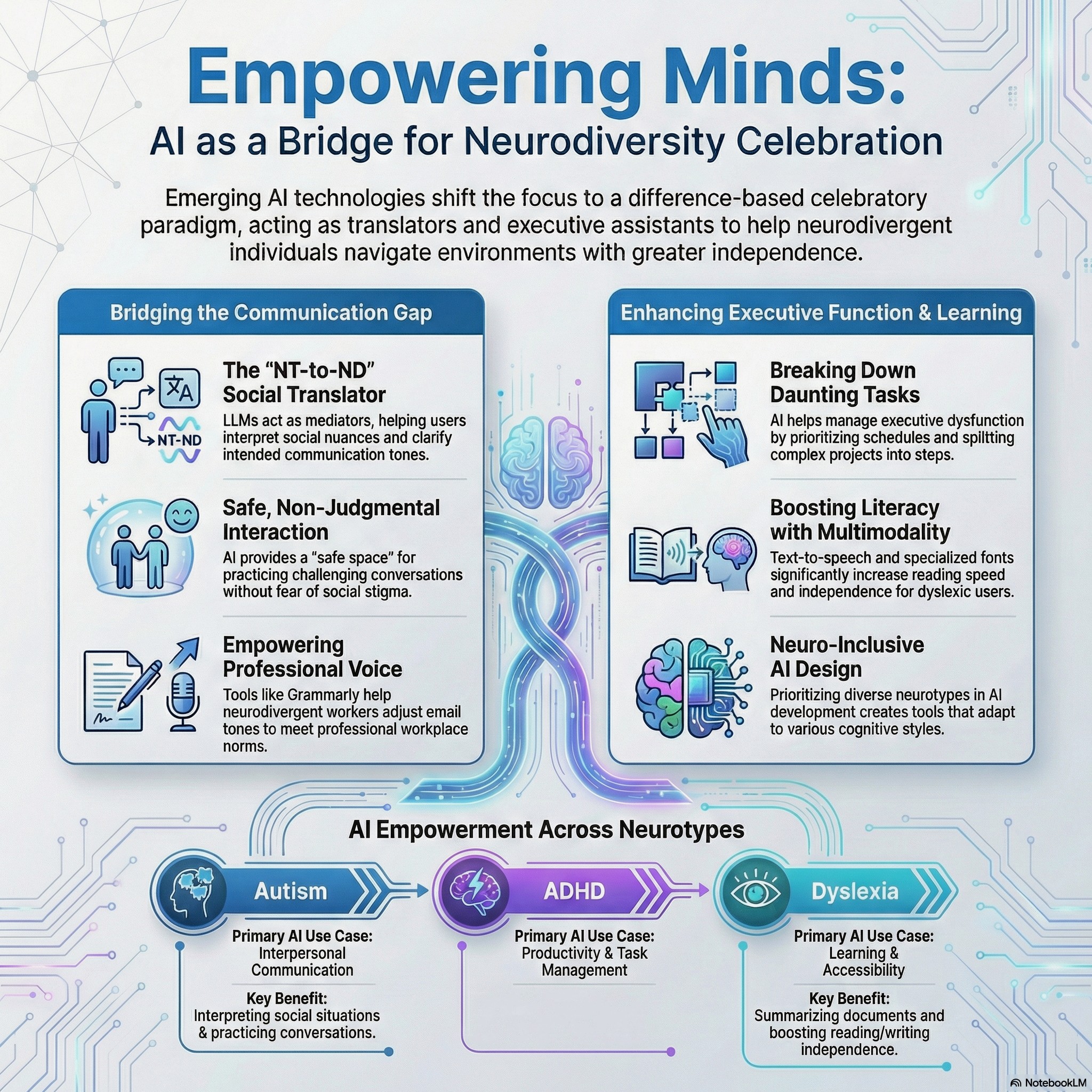
AI as a prostethic or cage - AI and Neurodiversity podcast

https://drive.google.com/file/d/1deGrYRLMjD970Fqt5VXgJV015Y9kMWtL/view

National Mentorship Programme (NMP) – Mentor and Mentee applications now open

National Mentorship Programme (NMP) – Mentor and Mentee applications now open


National Mentorship Programme (NMP) – Mentor and Mentee applications now open!


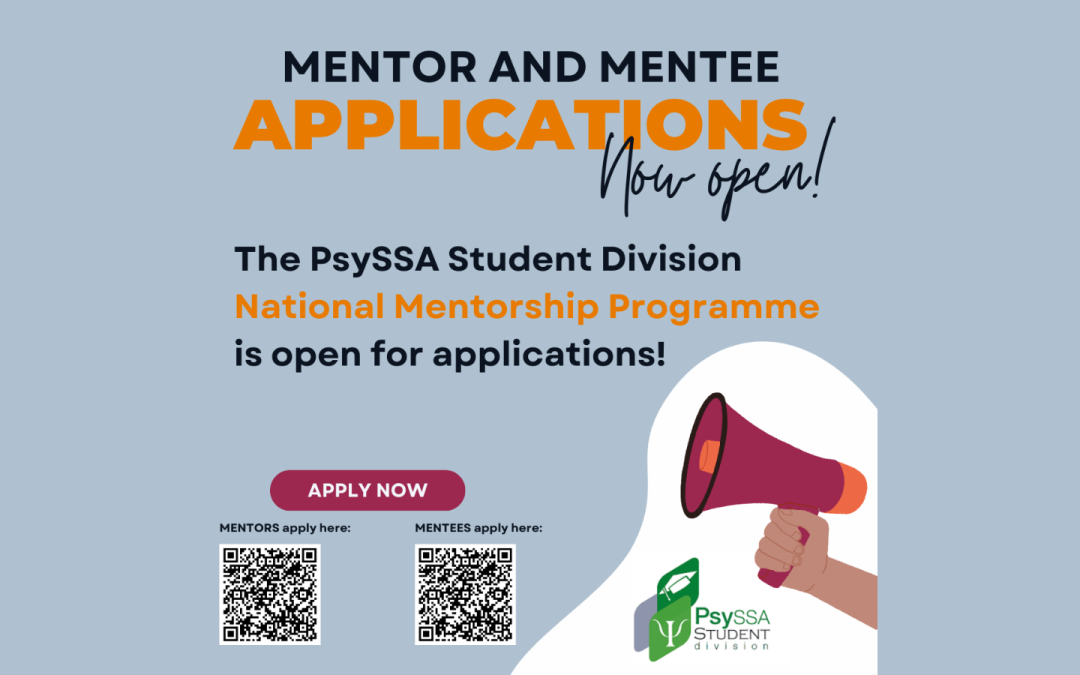
The PsySSA Student Division are excited to announce that applications for the PsySSA Student Division National Mentorship Programme (2026) are now open for both mentees and mentors! Whether you’re looking for guidance or ready to inspire others, we want you. Don’t miss out – apply by 25 March 2026 and be part of this transformative experience

The PsySSA Student Division (SD) National Mentorship Programme (NMP) is a flagship professional development initiative designed to support the academic, personal, and professional growth of psychology students and early-career professionals in South Africa.

The programme facilitates a structured mentorship relationship in which mentees are paired with experienced mentors who provide guidance, knowledge transfer, career insights, and psychosocial support throughout the duration of the programme. The programme embodies the Student Division’s broader mission of strengthening the psychology discipline by cultivating the next generation of ethical, competent, and socially conscious professionals.

Application Deadline: 25 March 2026

For any queries regarding the application process, please contact:  Zarike Gouws (psyssastudentsecretary@gmail.com)

SGD Commemorates: Zero Discrimination Day

SGD Commemorates: Zero Discrimination Day


SGD Commemorates:


“Zero Discrimination Day: A call for enacting the
Constitution in everyday life”


Written by: Angeline Stephens, PhD
Chair: PsySSA Sexuality and Gender Division 

Zero Discrimination Day was celebrated internationally on 1 March under the auspices of the United Nations (UN). The overarching aim of this day is to promote equality and social inclusion by dismantling all forms of discrimination. The 2026 theme, “People first”, is particularly poignant in the South African context, which is characterised by multiple forms of discrimination and oppression, despite the constitution’s legal protections for its citizens. The 2026 theme, promoted by the Joint United Nations Programme
on HIV and AIDS (UNAIDS), highlights “the persistent discrimination faced by people living with and at risk of HIV, discrimination that undermines access to health services, [and] violates rights” (https://www.unaids.org/en/2026-zerodiscrimination-day).

TVD Workshop: Working with Boys and Men Through a Relational-Ethical Lens

TVD Workshop: Working with Boys and Men Through a Relational-Ethical Lens


TVD Workshop:


“Working with Boys and Men Through a Relational-Ethical Lens”


Are you looking to deepen your practice with men and boys? Join Dr. Shahieda Jansen for an essential two-part series that moves beyond symptom reduction into the historical, structural, and relational heart of masculinity in the South African context. This series is designed for psychologists and researchers who want to move past “problem-management” and toward a culturally grounded model of personhood that restores accountability and belonging.


Part 1: What Happened to Our Brothers

In this session, we shift our focus from individual behaviour to structural literacy. We will look at how colonial dispossession, migrant labour, and economic exclusion have disrupted traditional constructions of manhood and “severed kinship continuity”. Dr Jansen will introduce the Umoya personhood model, a relational-ethical framework that redefines healing as the restoration of relational vitality and dignity.

Part 1 Details:

Date: 24 March 2026

Time: 17:30 – 19:30

2 General CPD Points

Online | Free


Part 2: Masculinity Meets Humanity: An Adapted Model of Masculinised Psychotherapy

The second workshop translates theory into clinical application. We will discuss the principles of masculinised psychotherapy, including: Activity-based intimacy, male-specific distress and emotional competence.

Part 2 Details:

Date: 31 March 2026

Time: 17:30 – 19:30

2 General CPD Points

Online | Free

Dr Shahieda Jansen

Dr Shahieda Jansen

Presenter

Dr Shahieda Jansen is a clinical psychologist who serves as the Deputy Director: Academic & Technology Support at the Parow campus in the Western Cape region since 2016. Previously she headed the HPCSA accredited student counselling centre of the University of the Western Cape with oversight of counselling services and clinical supervision of master’s level national and international psychology interns. Shahieda’ s scholarly interest in relational humanity, and male-focused development was initiated by an accidental men’s group that she facilitated in 2009. Inserting the African multidimensional personhood (AMP) model between the personhood of the mental health practitioner and psychological practice is her recently published article by Taylor & Francis. Homo moyanus, not Homo neoliberalus: Socio-moral subjectivity for a transformed Higher Education is a book chapter that has been finalised for publication. Shahieda is the principal researcher of Unisa’s Community Engagement project: School Belonging for boys which adds another critical layer of research by highlighting the systemic influences on the academic performance of boys. Her longstanding commitment to prioritising humanity over gender is the subject of her book published by Unisa Press, Masculinity Meets Humanity: An Adapted Model of Masculinised Psychotherapy.

HPD Webinar: Chronic Pain and Depression: Understanding the Connection

HPD Webinar: Chronic Pain and Depression: Understanding the Connection


HPD Webinar:


“Chronic Pain and Depression: Understanding the Connection”


About the webinar:

Chronic pain and depression are two of the most prevalent and disabling health conditions worldwide, often occurring together in a cycle that worsens both physical and mental well-being. This webinar will shine a light on the bidirectional relationship between pain and depression, showing how each condition amplifies the other and creates barriers to recovery, productivity, and quality of life.

Drawing on research with garment workers in Cape Town, as well as broader evidence from occupational health, we will explore practical strategies for rehabilitation, mental health promotion, and workplace interventions that address both conditions simultaneously. By combining clinical insights with lived realities, the webinar aims to make complex research accessible, while offering practical approaches for health professionals, employers and health advocates seeking to break the cycle of suffering.

Webinar Details:

Date: 12 March 2026

Time: 13:00 – 14:00

1 General CPD Point

Online | Free

 
Learning Outcomes:
  • Gain a deeper understanding of the mechanisms linking chronic pain and depression.
  • Explore the impact of co-occurring pain and depression in marginalised workforces.
  • Learn about workplace-based rehabilitation strategies that address both physical and psychological dimensions of health.
  • Reflect on how interdisciplinary approaches can foster resilience, dignity, and improved outcomes for workers living with pain and depression.
  • Consider practical examples of interventions that integrate mental health promotion with pain management in resource-constrained environments.
Munira Hoosain

Munira Hoosain

Presenter

Munira Hoosain is a senior lecturer in the Division of Occupational Therapy at Stellenbosch University. She specialises in workplace-based rehabilitation, with a focus on garment workers experiencing chronic pain and depression. Munira has developed workplace rehabilitation services in Cape Town’s clothing factories, optimising collaboration across disciplines to improve outcomes for marginalised workers. Her work blends rigorous research with narrative advocacy, making policy and health interventions accessible and emotionally resonant.

AI In Psychology Survey

AI In Psychology Survey

AI In Psychology Survey


Artificial Intelligence in Psychological Practice: Where Do We Stand?
Artificial intelligence is no longer peripheral to psychological work. For some practitioners, it is a quiet productivity tool helping structure reports, summarise research, or streamline administrative load. For others, it raises immediate questions about confidentiality, bias, regulatory clarity, and the integrity of the therapeutic relationship.

The reality is that AI is no longer a hypothetical future issue. It is a present professional consideration. What remains unclear now is how we are engaging with it, how we evaluate its risks, and what professional infrastructure is required to govern its integration responsibly.

To answer this responsibly, the PsySSA AI Division has launched a national survey to psychologists and practitioners in training, and we ask that you please complete it here: https://forms.gle/uwdG2qrGYhcdMbpr8

What Is Actually Happening in Practice?
Across clinical, counselling, educational, organisational and research contexts, we are seeing varied patterns of engagement:

  • Some are actively integrating AI tools into selected tasks.
  • Some are experimenting occasionally.
  • Some are intentionally avoiding use.
  • Many are observing developments while waiting for clearer guidance.

What we currently lack is empirical clarity:

  • How widespread is actual use?
  • In which domains is AI being applied?
  • What risks are most salient in practice?What support would meaningfully assist practitioners?

Without this data, discussions remain speculative.

What the Survey Findings Will Inform

The results will directly shape:

  • A formal PsySSA AID Position Statement
  • Practice guidelines aligned with HPCSA ethical principles
  • CPD offerings tailored to identified learning needs
  • Practical toolkits for safe and bounded AI use
  • Policy submissions and regulatory engagement
  • Research priorities within the South African context

In short, the findings will not sit in a report archive. They will inform governance, education, and professional standards. If the profession does not articulate its realities, external narratives will fill the gap.

Ethics and Regulations

AI intersects with core professional commitments:

  • Beneficence and non-maleficence
  • Autonomy
  • Justice
    • Confidentiality
  • Accountability

The question is no longer “AI: yes or no?”, but “Under what conditions, safeguards, and competencies can AI be responsibly integrated into South African psychological practice?

An Invitation

If you are a registered psychologist, intern, academic, or practitioner in training, your perspective is essential.

Whether you are actively using AI, cautiously observing it, or deliberately avoiding it, your position contributes to the evidence base that will shape future guidance.

If you are willing, we invite you to complete the survey and add your perspective to the conversation. Click here to complete the survey. The direction our profession takes will be influenced by who participates in defining it.