Building a Unified, Relevant, and Responsive Psychology

Society for Educational Psychology of South Africa (SEPSA)

Beyond the Results: Navigating Life After Matric

Beyond the Results: Navigating Life After Matric

If your matric results were not what you were hoping for, it is understandable if this moment feels confusing, disappointing, or overwhelming. But it may help to think of your career journey like a GPS navigation system. If you miss a specific turn, the GPS does not say the journey is over! It simply says “recalculating” and finds alternative routes. Some routes may take longer or look different, but they can still lead you where you want to go. In the same way, if your matric results aren’t quite what you were expecting, try reframing it as a detour, rather than your final destination.

As outlined by the Department of Basic Education and related guidance, there are multiple legitimate pathways forward for learners who wish to refine their results, pursue alternative education routes, or gain experience in the world of work. Progress after matric is often non-linear, and many meaningful careers are built through routes that look different from the original plan. Taking time to understand your options can help you move forward with greater confidence and less pressure.

Immediate academic adjustments

For learners who feel their marks do not accurately reflect their performance, or who narrowly missed a pass, there are short-term academic options available:

  • Remarking and re-checking
    Learners may apply to have their examination scripts re-marked or re-checked through their school or district office. This is particularly relevant where results are unexpectedly close to a pass threshold.
  • Supplementary examinations
    Supplementary exams are available to candidates who require a maximum of two subjects to obtain their National Senior Certificate (NSC), or who missed examinations due to medical reasons or family emergencies.

These options can provide reassurance that due process has been followed before moving on to longer-term decisions.

Upgrading and second chances

For learners who wish to strengthen their academic standing, several structured pathways exist:

  • Rewriting or upgrading subjects
    Learners may choose to rewrite specific subjects in order to improve their marks, deepen their understanding, or build stronger academic foundations.
  • Second Chance Matric Programme
    The Department of Basic Education’s Second Chance Matric Programme offers structured support through face-to-face tuition, radio and television broadcasts, and digital resources. The programme is designed to help learners meet the requirements for the NSC or Senior Certificate.
  • Re-enrolment options
    Learners under the age of 21 may re-enrol at a school to repeat Grade 12, while those over 21 can register as part-time candidates or enrol at Adult Education and Training (AET) centres.

Choosing to try again is not a step backwards. For many learners, it is a strategic pause that enables long-term success.

Alternative higher education routes

If a specific university degree path is temporarily blocked, this does not mean that higher education is no longer possible. Alternative routes can often lead to the same or similar outcomes:

  • TVET colleges
    Technical and Vocational Education and Training colleges offer practical, skills-based qualifications that are closely aligned with industry needs and employment opportunities.
  • Extended or foundation programmes
    Some higher education institutions offer extended degree or foundation programmes designed to support learners who need additional academic preparation before entering mainstream degree studies.
  • Diplomas and certificates
    Diplomas and certificates can serve as valuable qualifications in their own right and often allow for articulation into degree programmes at a later stage.

Vocational training and apprenticeships

For learners drawn to practical, hands-on careers, formal academic results may be less important than skills development and experience:

  • Apprenticeships
    Trades such as plumbing, building, electrical work, and carpentry offer apprenticeship opportunities, often from as early as Grade 10 completion.
  • On-the-job training
    Industries such as hospitality, retail, beauty therapy, and service sectors frequently offer entry-level positions where skills are developed through mentorship and experience.
  • Specialised short courses
    Fields such as photography, digital technology, performing arts, and creative industries may be accessed through short courses that do not always require a senior certificate.

Employment, gap years, and entrepreneurship

Entering the workforce or taking a structured gap year can provide valuable clarity and personal growth:

  • Work experience
    Entry-level employment can build confidence, independence, and practical skills, while also providing income to support future studies.
  • Driving licence
    Obtaining a driving licence significantly increases employability and access to opportunities in logistics, courier services, and transport-related fields.
  • Entrepreneurship and self-employment
    For learners with a product, service, or content idea, entrepreneurship — including online platforms — can be a viable, though demanding, pathway.
  • Structured gap years
    Volunteering, internships, or learnerships can help learners explore interests, develop networks, and make more informed career decisions.

When one path appears blocked, it is often only a single route that has closed — not the destination itself. Many people look back later and recognise that an unexpected result forced them to slow down, reflect, and choose more intentionally.

If your matric results differ from what you were expecting, it is important to pause and recognise this for what it is: a difficult moment, not a definition of your potential or your future. Many learners experience disappointment, anxiety, or uncertainty during this time of year. Please be gentle with yourself and recognise that these are all normal reactions when something you worked hard for does not turn out as planned. If you find that these feelings are becoming overwhelming, or that you are struggling to cope, reaching out for support can make a real difference. This might be a trusted adult, teacher, or caregiver. You can also contact the SADAG Destiny Helpline for Youth and Students on 0800 41 42 43 or South African Depression and Anxiety Group on 0800-12-13-14.

References

Department of Basic Education. (2025). Second Chance Programme: Giving you another chance at success! Retrieved from https://www.education.gov.za/Programmes/SecondChanceProgramme.aspx

Matric College. (2025). Matric advice for students who failed. Retrieved from https://www.matric.co.za/matric-advice-for-students-who-failed/

South African Government. (2026). Advice for learners who have not achieved a matric pass. Retrieved from https://www.gov.za/services/advice-learners-who-have-not-achieved-matric-pass
Board Exam Preparation Workshop – Save The Dates 2026

Board Exam Preparation Workshop – Save The Dates 2026

Board Exam Preparation Workshop – Save The Dates 2026

About this workshop

We’re excited to announce this year’s Board Exam Preparation Workshop series, designed to strengthen exam readiness for candidates across the psychology profession. Mark your calendars for our 2026 workshop dates:

15 January 2026 | 14 May 2026 | 10 September 2026

These sessions will offer a comprehensive, supportive, and engaging learning space for students and exam candidates in psychometry, counselling, research, educational, and – new this year – industrial psychology.

Through interactive and practice-oriented sessions, participants will unpack the structure of the board exam, explore core content domains, and strengthen the competencies required for success. The workshop also creates space for dialogue, clarity, and personalised guidance, helping each candidate cultivate the confidence needed to navigate the exam process with assurance.

We are proud to present this workshop as a collaborative initiative between our divisions:

  • The Division for Research and Methodology

  • The Society for Educational Psychology of South Africa

  • The Division of Registered Counsellors and Psychometrists

  • The South African Association of Counselling Psychology

This collective effort continues to affirm PsySSA’s commitment to advancing psychological science and practice in South Africa, upholding the highest standards of excellence, and empowering future professionals to contribute meaningfully to the well-being of our society.

More details will be shared soon – but for now, diarise the dates above to ensure you don’t miss out on this essential preparatory opportunity.

Mental Health Awareness Month – Society for Educational Psychology of South Africa (SEPSA)

Mental Health Awareness Month – Society for Educational Psychology of South Africa (SEPSA)

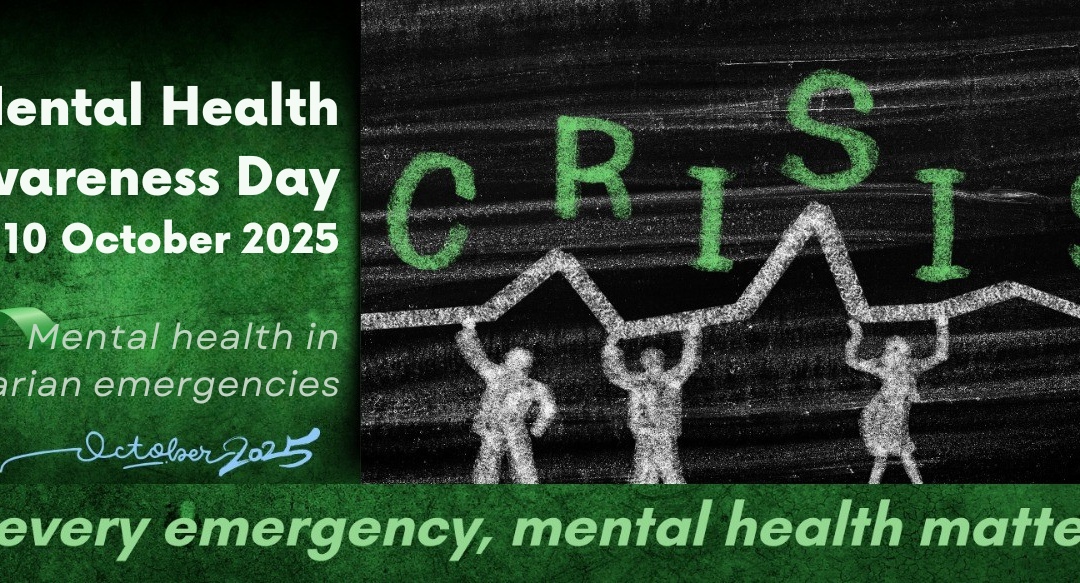
In recognition of Mental Health Awareness Month, the Society for Educational Psychology of South Africa (SEPSA) highlights the devastating impact of untreated mental health disorders — especially among our youth — and calls for collective action to transform South Africa’s mental health systems and services.

Read SEPSA’s full reflection below, and join us in strengthening mental health awareness, advocacy, and care for all.

Mental Health Awareness Month

Society for Educational Psychology of South Africa – Dr Guru Kistnasamy

October is the time for us to reflect on Mental Health Awareness.

Untreated mental health disorders is destroying our people, especially our Youth, who make up the majority of our population and are our future. Suicide is said to be the second leading cause of death amongst our young people.

Mental Health refers to the emotional, psychological and mental well-being of an individul and how we cope when faced with mental health issues. Basically Mental Health is how we think, feel and behave. Mental Health Disorders include anxiety, depression, mood disorders, schizophrenia, panic disorders, phobias, obsessive compulsive disorders, post-traumatic stress disorders, and related mental illnesses. There are certain early signs that may alert us to mental illnesses. These include low energy levels, avoiding activities that we used to enjoy, withdrawal from people, sleeping excessively or too little, feeling of helplessness and hopelessness, difficulty in carrying out activities of daily living, delusions, thoughts of harming oneself or suicidal ideation.

Our Department of Health itself acknowledges its failure to adequately meet the health needs of our people and acknowledged that mental health services in South Africa needs “radical transformation”. There are many factors that contribute to the state of poor mental health in South Africa. These include:

  • Socioeconomic factors such as poverty, unemployment, lack of housing and and poor basic sanitation.
  • Crime and violence.
  • Limited mental health resources. The South African Human Rights Commission reports that we have only 0.28 psychiatrists and 0.32 psychologists per 100,000. These shortages are further excerbated by the fact that certain medical aid schemes(Polmed, GEMS,Profmed, Keyhealth,Medihelp) stopped funding Educational Psychologists.
  • Collusion and corruption amongst officials entrusted with the health of our citizens. The murder of whistle blower Mrs. Deokaran is a classic example of the extent to which these officials will go to eliminate detection so that they could continue their pillage.
  • Poor existing infrastructures such as clinics, hospitals, and rehabilitation centers.
  • Shortage of professional staff such as nurses, doctors, counsellors.
  • Poor management of mental health facilities, and under funding of mental health by government.

We need to make a concerted effort to address the issue of mental health as a country as we are losing so many to mental health disorders, unemployment and death.

Together we can all combine our strength, resources and expertise to make a difference in turning the tide against the rising incidence of mental health disorders.

Board Exam Preparation Workshop – Save The Dates 2026

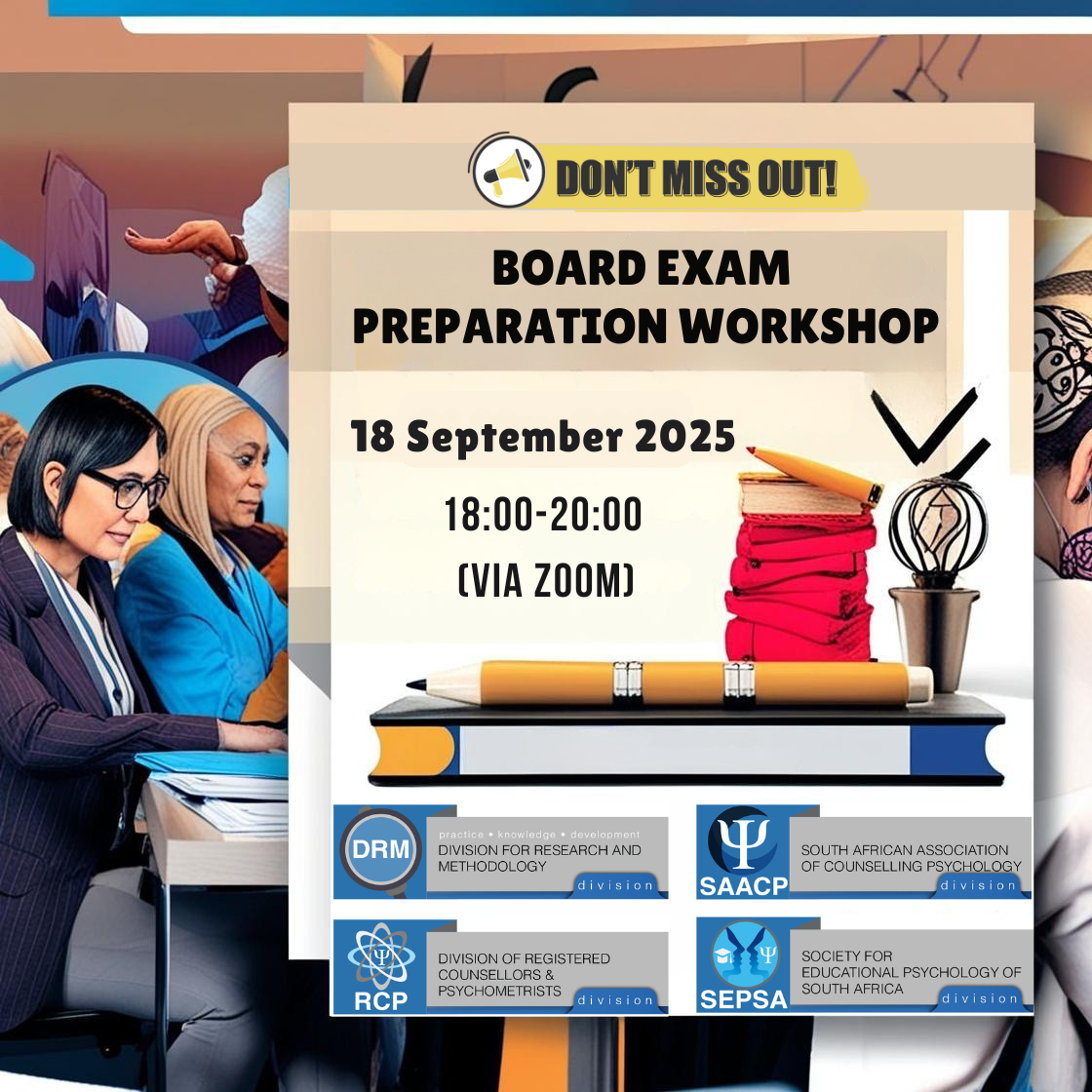
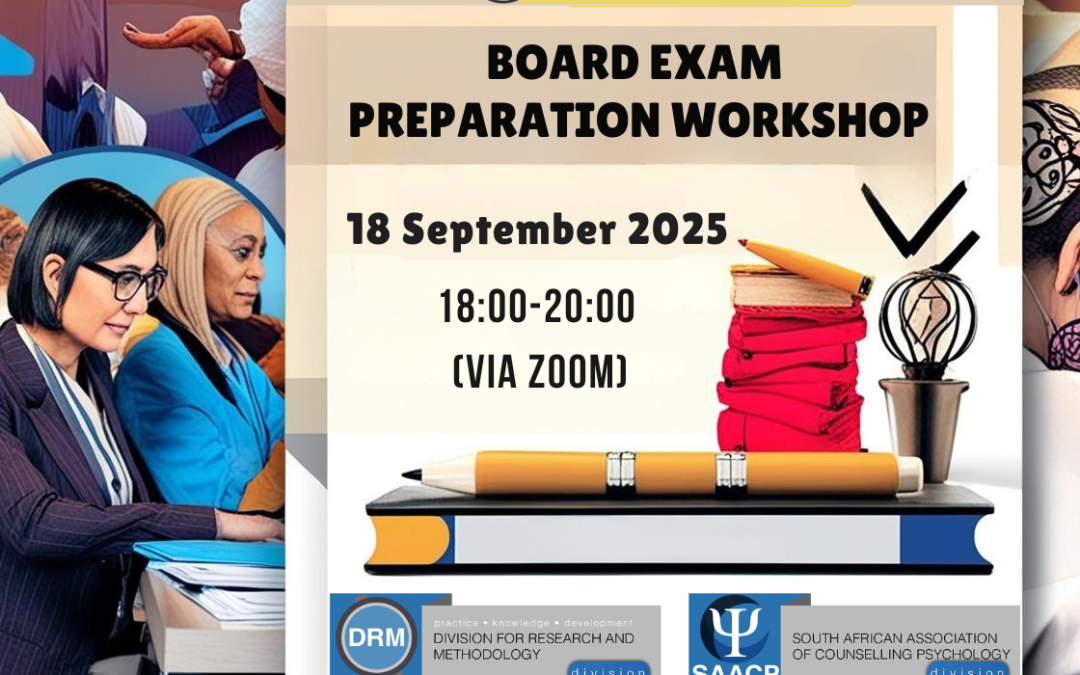
Board Exam Preparation Workshop – 18 September 2025

Board Exam Preparation Workshop – 18 September 2025

About this workshop

Join us on Zoom as we unpack the Board Exam!

The journey to becoming an HPCSA-registered psychologist entails navigating through rigorous academic training and practical experiences. However, one pivotal milestone stands between aspiring professionals and their goals: the HPCSA board exam. This exam serves as a comprehensive evaluation of theoretical knowledge, clinical skills, and ethical understanding essential for competent practice in the field. For those on the brink of undertaking this examination, the stakes are high, and the need for thorough preparation is paramount.

This underscores the necessity of a specialized board exam workshop tailored to the unique needs of prospective exam takers. Recognizing the complexities and challenges inherent in preparing for such a pivotal assessment, this workshop aims to provide invaluable clarity and guidance to participants.

The workshop will encompass multifaceted approaches to bolstering exam readiness for students in psychometry, counselling, research, educational and clinical psychology. Through interactive sessions, participants will delve into the intricacies of the exam format, content domains, and requisite competencies.

In essence, this workshop serves as a pivotal resource in equipping student and exam candidates with the tools, knowledge, and support necessary to navigate the challenges of the board exam successfully. By fostering clarity, confidence, and competence, the workshop endeavours to empower individuals to embark on their professional journeys with assurance and readiness to make meaningful contributions to the field of psychology.

Join the workshop at no cost!

Meet The Facilitators
Dr Pakeezah Rajab

Dr Pakeezah Rajab

Presenter

Bio

Dr Pakeezah Rajab is the Senior Researcher at JVR Psychometrics and a PsySSA 2024-25 Additional Executive Member. Her PhD topic was “Non-intellectual factors that influence mathematics performance in South Africa.” She has experience applying psychometric results to a variety of contexts, including schools, private practice, higher education, and corporate environments. Pakeezah has worked on numerous projects that developed, validated and/or standardised assessments for use by the South African population – including aptitude, personality, values, career guidance and emotional intelligence. Her research interests include cognitive functioning, student performance and assessment development.

Ms Genevieve Burrow

Ms Genevieve Burrow

Presenter

Bio

Genevieve Burrow is a registered counsellor and chairperson of the PsySSA Division of Registered Counsellors and Psychometrists. Genevieve is the manager of The Youth Hub, based at Groote Schuur Hospital Adolescent Centre of Excellence, where she counsels, and manages students and the counselling centre. She has hosted several board exam workshops previously, and enjoys working with students to enlighten them about the upcoming HPCSA board exam. Genevieve Burrow is committed to driving excellence and innovation in the practice of counselling, and promoting the visibility and importance of this field. Genevieve is passionate about youth upliftment and collaborates with a medically-informed multidisciplinary team to provide comprehensive and holistic care to adolescents facing diverse challenges in under-provided areas.

Dr Kemoneilwe Momi Metsing

Dr Kemoneilwe Momi Metsing

Presenter

Bio

Dr. Kemoneilwe Momi Metsing is a registered Educational Psychologist with a PhD in Psychology. She is a Senior Lecturer in the Department of Psychology of Education at the University of South Africa (UNISA) and Chairperson of the Society for Educational Psychology of South Africa (SEPSA). Dr. Metsing has a private practice and consults for government and private companies on relational and organizational transformation. She is an expert witness and member of the South African Medico-Legal Association (SAMLA). Dr. Metsing has held various leadership positions, including Chief Education Specialist in the Department of Education and board member of the South African Professional Society on the Abuse of Children (SAPSAC). She is an External examiner and clinical supervisor for MEd Educational Psychology at UJ. She serves on the Executive Committee of Decolonising Psychology at the Psychological Society of South Africa (PsySSA) and is a Critical Reader for UNISA’s Department of Adult Community and Continuing Education. With expertise in developing community-based programs, Dr. Metsing has successfully brought together individuals and organizations to address social issues, fostering partnerships and sustainable solutions. She is committed to inspiring and educating the next generation of leaders and change-makers, and her appointment at UNISA marks an exciting new chapter in her journey.

Dr Matome Jack Mashiapata

Dr Matome Jack Mashiapata

Presenter

Bio

Dr Mashiapata is a registered Educational Psychologist with the Health Professions Council of SA with over three decades of experience as a lecturer college for teacher training, high school teacher, a school psychologist in the department of basic education, manager of services for students with disabilities as well as student counselling. Currently working as the Director for Counselling and Career Development at UNISA, he has presented papers and workshops locally and internationally in the areas of career counselling, pastoral counselling, mentorship, career development, ethics, students with disabilities, etc. He holds active membership and leadership roles the Psychological Society of SA (PSYSSA), Society for Education Psychology of SA (SEPSA), South African Federation of Student Affairs (SAFSAS), International Association of Student Affairs and Services (IASAS) serving as the Africa regional director, deputy chairperson of Council for Pastoral and Spiritual Counsellors (CPSC), and Higher and Further Education Disability Services Association (HEDSA). He is the past president of the Southern African Association of Counselling and Development in Higher Education (SAACDHE). Dr Mashiapata has authored a chapter on Trauma Debriefing in a book titled “Life skills – my journey, my destiny”. He presents accredited CPD workshops on ethics in counselling services.


Deneo Sekese

Deneo Sekese

Presenter

Bio

Deneo Sekese started her career in Human Resources specifically training and development and organisational development. Her passion for people and therapy led to a midlife career change into psychology. Deneo completed her masters in Counselling Psychology at Rhodes University and internship at the student counselling centre at the Durban University of Technology. She has had the privilege of presenting her masters research at the 27th Annual South African Psychology Congress. Deneo’s areas of interest are African Psychology, Wellbeing and Salutogenesis and Community psychology. She recently registered with the Board of Psychology HPCSA and is in the process of setting up a private practice.

Arianna Fadda

Arianna Fadda

Presenter

Bio

My name is Arianna Fadda. I hold a Bachelor of Arts and a Bachelor of Social Science Honours in Psychology both from the University of Pretoria as well as a professional master’s degree (by coursework and research report) in Social and Psychological Research from the University of the Witwatersrand. My research report focused on the perceptions of health professionals regarding an online depression screening tool adapted for South Africans. Following my master’s, I completed a year-long Research Psychology internship at the Africa Unit for Transdisciplinary Health Research (AUTHeR) at the North-West University, during which I worked on various qualitative and quantitative research projects. I subsequently wrote and passed the Research Psychology Board Examination with the Health Professions Council of South Africa earlier this year and I am now a registered Research Psychologist. I am currently working as a research assistant for AUTHeR and planning further studies towards a PhD.


Rekha Kangokar

Rekha Kangokar

Presenter

Bio

Mrs Rekha Kangokar Rama Rao is a Registered Counsellor and has completed Masters in Community-Based Counselling Psychology. Working with a person centered approach she is passionate about fostering mental well-being. She integrates evidence-based practices with a holistic approach to nurture growth and healing within both individuals and communities. She has been associated with various NGOs and has supported them closely, Rekha has served a Secretary and Treasurer before and currently serves as an additional member in the RCP division.

Zakiyah Hoosen

Zakiyah Hoosen

Presenter

Bio

Zakiyah Hoosen is a dynamic individual with a deep love for Psychology. She completed her undergraduate degree at the University of Pretoria majoring in Psychology and Languages; later obtaining her Honor’s degree from SACAP and went on to become a qualified registered counsellor. She is active in the field and works across multiple organizations, working within a trauma-informed focus to facilitate counselling and psychoeducation to children, adolescents, and adults. Zakiyah is currently advancing her knowledge and training on her journey of master’s in Clinical Psychology, and she aspires to foster psychosocial wellbeing across all spheres of life through meaningful and efficient psychological services for all.

PsySSA commemorates Child Protection Week (29 May – 5 June 2025) 

PsySSA commemorates Child Protection Week (29 May – 5 June 2025) 

PsySSA commemorates Child Protection Week (29 May – 5 June 2025) 

Every conversation matters

Role of Faith based leaders in the Protection of Women and Children

Author: Dr.Guru Kistnasamy

Historically the interpretation and misinterpretation of the scriptures of various Faiths together with its practice and implementation by Religious Leaders, resulted in the abuse or the protection of the vulnerable amongst us, women and children.

In ancient times women and children were considered dispensable and were even killed in the form of sacrifices in various parts of the world. In India, there was a time when widows were burnt to death after the death of their husbands. This conceptualization of the vulnerable coupled with a patriarchal attitude, served to keep women and children in servitude.

Today we find a similar attitude that results in the rape and sexual molestation of women and children by men. What is shocking today is that we find that these perpetrators are men entrusted with the protection of these victims.

A few recent examples of Faith Leaders accused of abusing their so called “sacred” positions include:

  • Timothy Omotoso accused of 32 counts of rape, human trafficking, and racketeering. He was acquitted by the Justice System. Now the Minister of Justice is asking for an enquiry.
  • A prominent Bishop accused of raping and sexually assaulting members of his congregation. The trial is continuing.
  • A Hindu priest accused of raping a 12 year old boy appeared in the Tongaat Court.
  • A Hindu priest accused of intimately touching a devotee appeared in Verulam Court.
  • 2 boys alleged a Moulana raped them in Germiston.

Prevalence of Gender Based Violence in South Africa.

An article published in the journal of Social and Development Sciences in 2024, revealed that 55.38% of respondents reported being victims of violence in places of worship.

A fact sheet on “Baseline Survey on Victimisation and Perpetration” issued by the HSRC in 2024 indicated the following:

Lifetime physical and/or sexual violence of women aged 18 years and over: 35.5%, translating into 7,847.438 women.

According to Statistics South Africa, we have the highest rate of femicide in the world. One out of four women have experienced GBV, and one out of three children have experienced physical violence and sexual violence before they turned 18. (Ref. “Gender-based violence as a destructive form of warfare against families, a practical theological response-2023”).

Psychological Aspects of Religious Abuse.

Psychological Abuse refers to psychological manipulation and harm inflicted on a person by using the teachings of  their religion. It is often directed to children and emotionally vulnerable adults. The abuse may result in mental health issues such as depression, phobias, dissociative disorders, paranoia, anxiety, and insomnia  The victim may not report the matter because of guilt, shame, fear of being ostracized or losing a privilege.

What is Spiritual Abuse

Spiritual abuse has been expressed as an exploitation of spiritual authority to manipulate, control, use or harm others through means such as shame, fear and indoctrination. Examples may include sexual abuse, extortion of money, suicidal attempts and even suicide. Spiritual abuse is said to support other forms of GBV.

What can Religious Leaders do to Protect the Vulnerable?

Concerns of the public were raised at government level about abuse in religious institutions and by their leaders. In 2017 Hearings were held in Parliament where submissions were made by 18 religious organisations on the recommendations and proposals of the Commission for the Promotion and Protection of the Rights of Cultural, Religious and Linguistic Communities.

This clearly indicated that there must be some form of regulation of religious institutions through mandatory registration, licensing, and monitoring.

Religious communities need to actively promote the equality and protection of genders. Places of worship are ideally suited for this discourse. Various sources of literature point us in the right direction in achieving this goal.

The Interfaith GBV Prevention and Mitigation Strategy 2024-2030 is the result of a national consultation process of scholars, activists and leaders. It was strengthened by the We Will Speak Out South Africa (WWSOSA). It includes partners from the following faiths: African Traditional, Baha’I, Brahma Kumaris, Buddhism, Christianity, Hinduism, Islam and Judaism. Their goal is to mobilize and equip the faith sector to address GBV more effectively.

The Interfaith GBV Prevention and Mitigation Strategy 2024-2030 was released in October 2024. The following is a summary of the commitments of the members of the faith sector in actively, intentionally and collaboratively supporting efforts to mitigate GBV by:

  • Including spiritual abuse as a type of GBV;
  • Being vocal and transparent about exposing GBV;
  • Dismantling the culture where victims are silenced;
  • Amplifying texts, traditions, rituals, ceremonies and symbols that promote dignity, gender equality and justice, and to change these where gender inequity or GBV is encouraged;
  • Becoming integrally involved in South Africa’s multi-sectoral efforts to prevent or respond to GBV;
  • Improving accountability measures and developing a joint policy to guide the sector’s work;


Conclusion.

It is important that leaders of all faiths subscribe to the principles of the Interfaith GBV Prevention and Mitigation Strategy 2024-2030 so as to address the problem of GBV as a united national front in South Africa.

Therefore it is equally important that there be a qualification, monitoring and regulating process for aspiring spiritual leaders to join the faith sector. This will minimize abuse of the vulnerable by leaders of faith.

25/04/2025.


A call for Psychologists to champion child rights during Child Protection Week, and beyond

The Trauma and Violence Division

National Child Protection week, commemorated between the 29th of May and the 5th of June, seeks to remind citizens of the rights of children enshrined in the Constitution of South Africa and the Children’s Act (Act No. 38 of 2005). On the 11th of May 2025 the Department of Social Development launched Child Protection Month with the theme ‘Working Together to End Violence Against Children.’ Child sexual abuse has been highlighted as the main focus (Department of Social Development, 2025).

Sexual assault cases for female children aged 17 and younger increased from a harrowing 82.7% in 2015/2016 to 87.6% in 2019/2020 in South Africa (Stats SA, 2024). Female children are more likely to experience statutory rape, sexual assault and rape than male children (Stats SA, 2024). However, challenges with the reporting of such crimes across all genders remain, leading to underreporting.

This Child Protection Week, the Department of Social Development has called on various healthcare sectors to become part of a multidisciplinary approach addressing this pandemic (Department of Social Development, 2025). In response to the call to action, psychologists can advocate for children’s rights and uphold their best interests beyond the confines of therapy rooms, lecture halls, and academic journals. Psychological professionals, including psychologists, registered counsellors and psychometrists should:

  • Report suspected child abuse and neglect to the relevant authorities as outlined in Section 110 the Children’s Act (Act No. 38 of 2005) and Section 54 of the Criminal Law (Sexual Offences and Related Matter) Amendment Act 32 of 2007. This is not discretionary but mandatory and is essential to safeguarding child clients. Ensuring that we fulfil this duty is key in us upholding children’s rights.
  • Maintain competency in working with child survivors of abuse. Guidelines and interventions for trauma work are continuously developing. Staying informed and continuously developing our professional skillset can assist us in ensuring that children do not experience secondary traumatisation, including within the therapy room (Van Niekerk & Coetzee, 2020).
  • Catalyse change at a systemic level through research and advocacy efforts, to ensure transformation beyond the therapy room (Schiller et al., 2023). Psychologists can advance and disseminate research in the area of child abuse and associated psychological sequalae to ultimately draw attention to the need for policy change.  Rather than duplicating effort, psychologists can use their expertise to assist non-governmental organisations and advocacy groups at the forefront of the fight against child abuse.

As a profession and association of professionals, we can lobby for the employment of mental health professionals within the government sector, to ensure the provision of quality, timeous services that promote preventative and ameliorative initiatives.

Systemic issues require systemic interventions but they need not be complicated. So, whether your advocacy is at an individual level within the therapy room, or at a macro-level with major stakeholders, consider how you can uphold children’s rights this Child Protection Month.


The South African Association for Counselling Psychology

Watch the SAACP’s contribution to Child Protection Week 2025 below!

Danielle Moosajie

Danielle Moosajie

Director: Arise

Danielle Moosajie is a qualified social worker with a Master’s degree in Social Policy and Management from the University of Cape Town. With over 14 years of experience, she has dedicated her career to working with children and families on the Cape Flats. Her professional background spans both the corporate sector – where she specialized in change management – and academia, having lectured and contributed to numerous community-based initiatives.

Danielle is also a wife and mother of three. Outside of her professional life, she enjoys exploring Cape Town’s natural beauty and sampling good food. She is passionate about ensuring every child feels loved and valued, and she is committed to encouraging South Africans to build meaningful connections beyond their usual boundaries.

Contact: danielle@arisefamily.org 

Board Exam Preparation Workshop – 21 May 2025

Board Exam Preparation Workshop – 21 May 2025

Board Exam Preparation Workshop – 21 May 2025

About this workshop

Join us on Zoom as we unpack the Board Exam!

The journey to becoming an HPCSA-registered psychologist entails navigating through rigorous academic training and practical experiences. However, one pivotal milestone stands between aspiring professionals and their goals: the HPCSA board exam. This exam serves as a comprehensive evaluation of theoretical knowledge, clinical skills, and ethical understanding essential for competent practice in the field. For those on the brink of undertaking this examination, the stakes are high, and the need for thorough preparation is paramount.

This underscores the necessity of a specialized board exam workshop tailored to the unique needs of prospective exam takers. Recognizing the complexities and challenges inherent in preparing for such a pivotal assessment, this workshop aims to provide invaluable clarity and guidance to participants.

The workshop will encompass multifaceted approaches to bolstering exam readiness for students in psychometry, counselling, research, educational and clinical psychology. Through interactive sessions, participants will delve into the intricacies of the exam format, content domains, and requisite competencies.

In essence, this workshop serves as a pivotal resource in equipping student and exam candidates with the tools, knowledge, and support necessary to navigate the challenges of the board exam successfully. By fostering clarity, confidence, and competence, the workshop endeavours to empower individuals to embark on their professional journeys with assurance and readiness to make meaningful contributions to the field of psychology.

Join the workshop at no cost!

Meet The Facilitators
Dr Pakeezah Rajab

Dr Pakeezah Rajab

Presenter

Bio

Dr Pakeezah Rajab is the Senior Researcher at JVR Psychometrics and a PsySSA 2024-25 Additional Executive Member. Her PhD topic was “Non-intellectual factors that influence mathematics performance in South Africa.” She has experience applying psychometric results to a variety of contexts, including schools, private practice, higher education, and corporate environments. Pakeezah has worked on numerous projects that developed, validated and/or standardised assessments for use by the South African population – including aptitude, personality, values, career guidance and emotional intelligence. Her research interests include cognitive functioning, student performance and assessment development.

Ms Genevieve Burrow

Ms Genevieve Burrow

Presenter

Bio

Genevieve Burrow is a registered counsellor and chairperson of the PsySSA Division of Registered Counsellors and Psychometrists. Genevieve is the manager of The Youth Hub, based at Groote Schuur Hospital Adolescent Centre of Excellence, where she counsels, and manages students and the counselling centre. She has hosted several board exam workshops previously, and enjoys working with students to enlighten them about the upcoming HPCSA board exam. Genevieve Burrow is committed to driving excellence and innovation in the practice of counselling, and promoting the visibility and importance of this field. Genevieve is passionate about youth upliftment and collaborates with a medically-informed multidisciplinary team to provide comprehensive and holistic care to adolescents facing diverse challenges in under-provided areas.

Dr Kemoneilwe Momi Metsing

Dr Kemoneilwe Momi Metsing

Presenter

Bio

Dr. Kemoneilwe Momi Metsing is a registered Educational Psychologist with a PhD in Psychology. She is a Senior Lecturer in the Department of Psychology of Education at the University of South Africa (UNISA) and Chairperson of the Society for Educational Psychology of South Africa (SEPSA). Dr. Metsing has a private practice and consults for government and private companies on relational and organizational transformation. She is an expert witness and member of the South African Medico-Legal Association (SAMLA). Dr. Metsing has held various leadership positions, including Chief Education Specialist in the Department of Education and board member of the South African Professional Society on the Abuse of Children (SAPSAC). She is an External examiner and clinical supervisor for MEd Educational Psychology at UJ. She serves on the Executive Committee of Decolonising Psychology at the Psychological Society of South Africa (PsySSA) and is a Critical Reader for UNISA’s Department of Adult Community and Continuing Education. With expertise in developing community-based programs, Dr. Metsing has successfully brought together individuals and organizations to address social issues, fostering partnerships and sustainable solutions. She is committed to inspiring and educating the next generation of leaders and change-makers, and her appointment at UNISA marks an exciting new chapter in her journey.

Dr Matome Jack Mashiapata

Dr Matome Jack Mashiapata

Presenter

Bio

Dr Mashiapata is a registered Educational Psychologist with the Health Professions Council of SA with over three decades of experience as a lecturer college for teacher training, high school teacher, a school psychologist in the department of basic education, manager of services for students with disabilities as well as student counselling. Currently working as the Director for Counselling and Career Development at UNISA, he has presented papers and workshops locally and internationally in the areas of career counselling, pastoral counselling, mentorship, career development, ethics, students with disabilities, etc. He holds active membership and leadership roles the Psychological Society of SA (PSYSSA), Society for Education Psychology of SA (SEPSA), South African Federation of Student Affairs (SAFSAS), International Association of Student Affairs and Services (IASAS) serving as the Africa regional director, deputy chairperson of Council for Pastoral and Spiritual Counsellors (CPSC), and Higher and Further Education Disability Services Association (HEDSA). He is the past president of the Southern African Association of Counselling and Development in Higher Education (SAACDHE). Dr Mashiapata has authored a chapter on Trauma Debriefing in a book titled “Life skills – my journey, my destiny”. He presents accredited CPD workshops on ethics in counselling services.


Deneo Sekese

Deneo Sekese

Presenter

Bio

Deneo Sekese started her career in Human Resources specifically training and development and organisational development. Her passion for people and therapy led to a midlife career change into psychology. Deneo completed her masters in Counselling Psychology at Rhodes University and internship at the student counselling centre at the Durban University of Technology. She has had the privilege of presenting her masters research at the 27th Annual South African Psychology Congress. Deneo’s areas of interest are African Psychology, Wellbeing and Salutogenesis and Community psychology. She recently registered with the Board of Psychology HPCSA and is in the process of setting up a private practice.

Arianna Fadda

Arianna Fadda

Presenter

Bio

My name is Arianna Fadda. I hold a Bachelor of Arts and a Bachelor of Social Science Honours in Psychology both from the University of Pretoria as well as a professional master’s degree (by coursework and research report) in Social and Psychological Research from the University of the Witwatersrand. My research report focused on the perceptions of health professionals regarding an online depression screening tool adapted for South Africans. Following my master’s, I completed a year-long Research Psychology internship at the Africa Unit for Transdisciplinary Health Research (AUTHeR) at the North-West University, during which I worked on various qualitative and quantitative research projects. I subsequently wrote and passed the Research Psychology Board Examination with the Health Professions Council of South Africa earlier this year and I am now a registered Research Psychologist. I am currently working as a research assistant for AUTHeR and planning further studies towards a PhD.


Rekha Kangokar

Rekha Kangokar

Presenter

Bio

Mrs Rekha Kangokar Rama Rao is a Registered Counsellor and has completed Masters in Community-Based Counselling Psychology. Working with a person centered approach she is passionate about fostering mental well-being. She integrates evidence-based practices with a holistic approach to nurture growth and healing within both individuals and communities. She has been associated with various NGOs and has supported them closely, Rekha has served a Secretary and Treasurer before and currently serves as an additional member in the RCP division.

Zakiyah Hoosen

Zakiyah Hoosen

Presenter

Bio

Zakiyah Hoosen is a dynamic individual with a deep love for Psychology. She completed her undergraduate degree at the University of Pretoria majoring in Psychology and Languages; later obtaining her Honor’s degree from SACAP and went on to become a qualified registered counsellor. She is active in the field and works across multiple organizations, working within a trauma-informed focus to facilitate counselling and psychoeducation to children, adolescents, and adults. Zakiyah is currently advancing her knowledge and training on her journey of master’s in Clinical Psychology, and she aspires to foster psychosocial wellbeing across all spheres of life through meaningful and efficient psychological services for all.