HPD Workshop – Living positively with diabetes: The importance of mental health

HPD Workshop – Living positively with diabetes: The importance of mental health

HPD Workshop – Living Positively With Diabetes: The Importance of Mental Health

Hosted by the PsySSA Health Psychology Division (HPD)

Join the PsySSA Health Psychology Division (HPD) for a free CPD-accredited online workshop on Living Positively With Diabetes: The Importance of Mental Health.

Webinar Details:

  • Date: Friday, 14 November 2025
  • Time: 13:00 – 14:00
  • Platform: Online via Teams
  • 1 General CPD Point


About the Workshop:

Despite many advancements, diabetes remains one of the most challenging health conditions in the world today, impacting individuals, families, societies and economies. In this webinar, we want to shine the light on the mental health aspects of living with the condition, by giving an overview of the main mental health challenges those living with diabetes experience. Then, we hope to propose an alternative approach to managing mental health challenges in positive psychology interventions, including self-compassion, meaning making and managing perceptions of the condition. In the webinar, we hope to not only share the latest research, but also provide practical examples of interventions that could assist those living with diabetes.

Learning Outcomes:

  • Gain a better understanding of diabetes, it’s mechanisms, prevalence and challenges.
  • Explore the mental health challenges in managing diabetes.
  • Learn about positive psychology concepts, as well as research on effectiveness of positive psychology interventions.
  • Reflect on the development of positive psychology interventions on constructs such as self-compassion, meaning -making and illness perceptions to improve mental well-being of those living with diabetes.
Dr Sonja Mostert

Dr Sonja Mostert

Presenter

Dr Sonja Mostert is a registered Research Psychologist currently employed as a senior lecturer in the Department of Psychology at the University of Pretoria. She is passionate about the field of health psychology and her research is mainly focused on health literacy and improving the mental health of people living with diabetes. She is a member of the Health Psychology Division of PsySSA and teaches several undergraduate and postgraduate modules including health psychology to both undergraduate medical students and previously to honours psychology students. Her primary research areas include topics within health psychology, specifically health literacy; mental health and diabetes; health behaviour change; online health information use and the role of psychological factors in chronic conditions.

Prof Elmari Deacon

Prof Elmari Deacon

Presenter

Prof Elmarí Deacon is a registered Clinical Psychologist and currently employed at the NWU as full professor in Psychology and acting Director in the School of Psychosocial Health. In her career as academic, she has lectured several modules and supervised 27 master’s and four PhD students to completion. She is a C2 NRF rated researcher and has published 28 articles. She is also a member of the Health Psychology Division of PsySSA.

Prof Deacon is the principal investigator of the SMILE with diabetes project, investigating psychosocial variables in adjusting to diabetes management behaviours. Positive Psychology constructs are very prominent in her research and interventions development, as these have proven to assist those living with diabetes.

Health Psychology Division Networking Database

Health Psychology Division Networking Database

The Health Psychology Division has developed a networking database of practitioners and researchers working across health psychology and related fields. The database includes colleagues from universities, health professions, and independent practice who have consented to share their details for professional collaboration.

The database allows members to:

  • Connect for research collaboration and joint publications

  • Find examiners for thesis supervision and review

  • Build networks with psychologists and health professionals

  • Share and receive research outputs, email updates, and podcasts

  • Link with experts focusing on chronic conditions, communicable diseases, women’s health, men’s health, and child/adolescent health

The aim is to create a practical resource for strengthening professional ties, advancing health psychology research, and supporting knowledge exchange.

Members who wish to be added to the database or access the list can contact the Division directly.

Health Psychology & Mental Health Day – Health Psychology Division

Health Psychology & Mental Health Day – Health Psychology Division

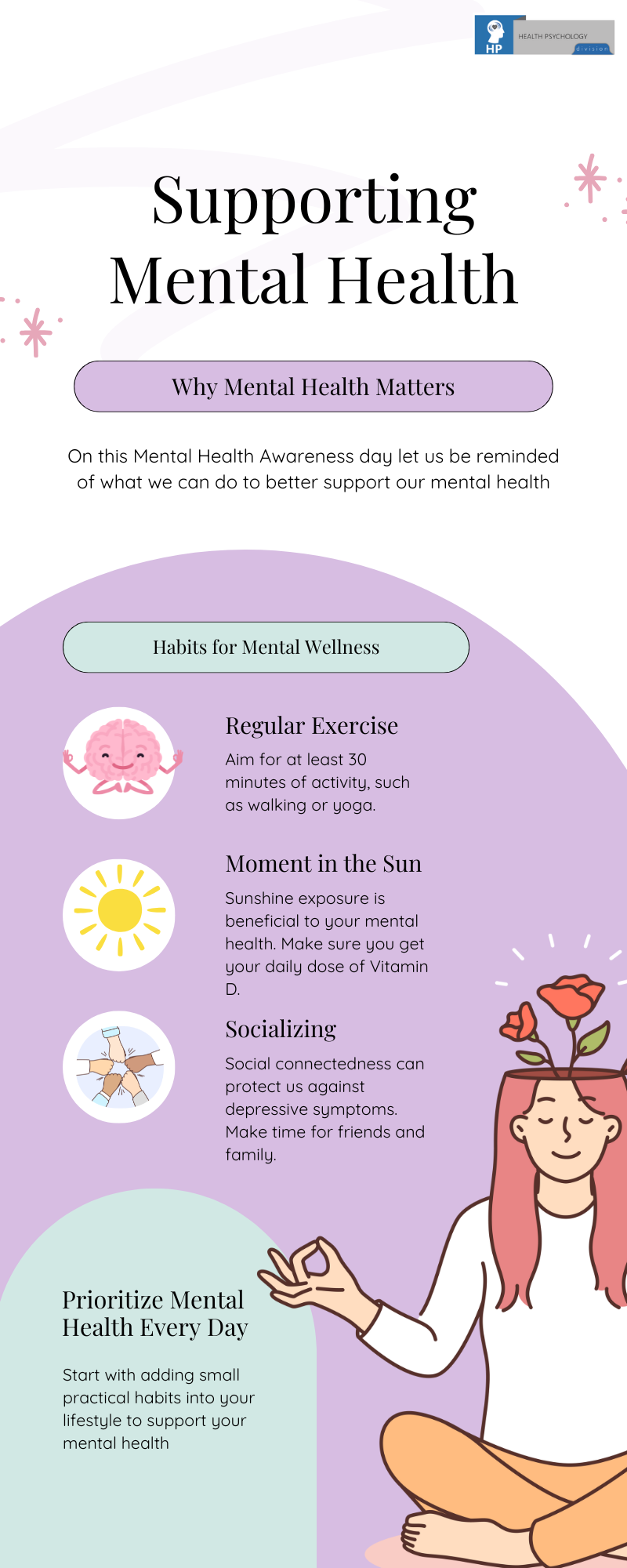
Health psychology and World Mental Health Day are closely linked through their shared focus on promoting psychological well-being and understanding the relationship between mental and physical health. Health psychology provides the scientific framework for examining how factors such as stress, behaviour, and social support influence both mental and physical health outcomes. Similarly, World Mental Health Day serves as a global platform to raise awareness, reduce stigma, and advocate for improved access to mental health care. Together, they highlight the importance of prevention, early intervention, and education in fostering resilience and healthier lifestyles. By translating health psychology’s research and insights into public awareness campaigns, World Mental Health Day bridges the gap between scientific knowledge and real-world impact, ensuring that mental health is recognized as an essential component of overall health.

HPD Webinar: The Importance Of Digital Health Literacy

HPD Webinar: The Importance Of Digital Health Literacy

Health Psychology Webinar

ABSTRACT
Health literacy (HL) relates to knowledge specific to health information and is defined as the ability to access, evaluate, understand and use health information to maintain health and inform health-decision making. It is a multidimensional construct including a range of social and cognitive skills to improve health and wellbeing. The World Health Organization (WHO) reported a significant increase in non-communicable diseases (NCDs): cardiovascular diseases, diabetes, respiratory diseases, and cancers. In South Africa, deaths due to major NCDs increased by 58,7% over 20 years. To combat the burden of noncommunicable diseases preventative strategies should be implemented and this requires HL skills. Insufficient levels of HL ultimately predict poor adherence, limited health enhancing behaviours and poor self-management. To improve HL, access to quality education and health resources are needed. People can access health information from many different sources, but the internet has become primary resource of health information. All information providers, including government and health services should enable access to trustworthy information in a form that is understandable and applicable for all people. In this regard digital health literacy or eHealth Literacy is paramount. By improving access to quality, credible health information and improving eHL skills, people can be empowered to manage and maintain their health helping to combat the burden of NCDs.

LEARNING OUTCOMES:

  • Gain a better understanding of health literacy and digital health literacy.
  • Learn about the importance of health literacy and the implications of poor health literacy
  • Explore the value of digital health literacy in the context of online health information use.
  • Reflect on health literacy within a South African context and initiatives to improve it

Presenter: Dr SN Mostert
Date: 24 September 2025
Time: 13:00


Dr Sonja Mostert

Dr Sonja Mostert

Dr Sonja Mostert is a registered Research Psychologist currently employed as a senior lecturer in the Department of Psychology at the University of Pretoria. She is passionate about the field of health psychology and her research is mainly focused on health literacy and improving the mental health of people living with diabetes. She is a member of the Health Psychology Division of PsySSA and teaches several undergraduate and postgraduate modules including health psychology to both undergraduate medical students and previously to honours psychology students. Her primary research areas include topics within health psychology, specifically health literacy; mental health and diabetes; health behaviour change; online health information use and the role of psychological factors in chronic conditions.