

PsySSA Commemorates Child Protection Month
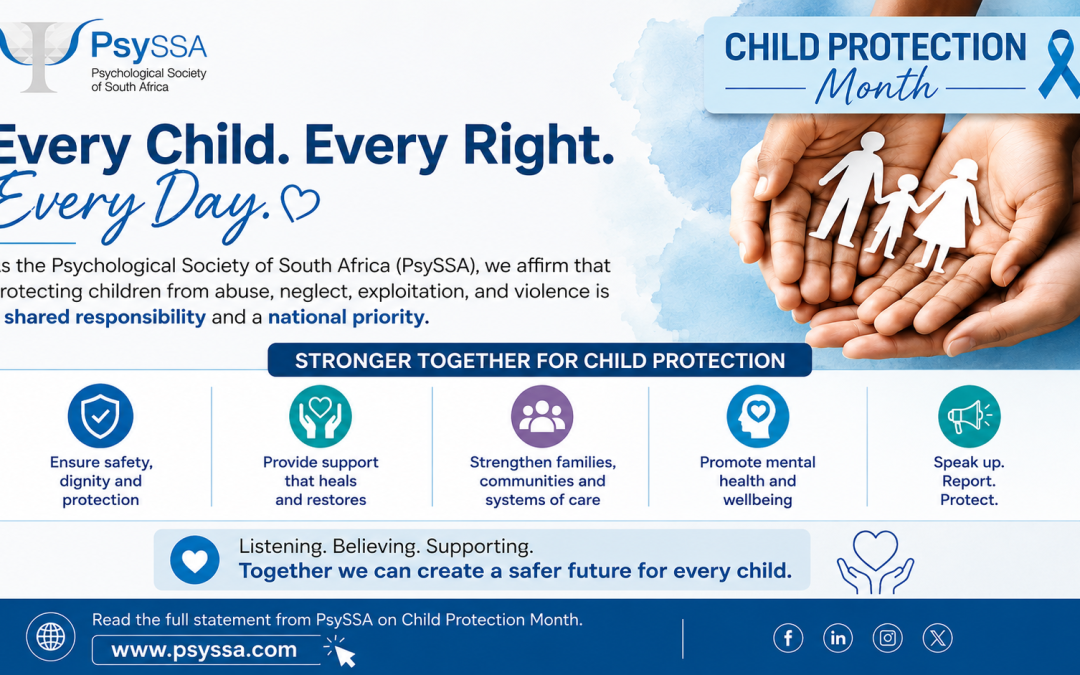
During Child Protection Month, PsySSA reaffirms that protecting children from abuse, neglect, exploitation, and violence is a shared responsibility and a national priority.
Across South Africa, many children continue to face significant risks linked to poverty, violence, family instability, substance misuse, and limited access to mental health and support services. These experiences can have lasting effects on emotional wellbeing, development, learning, relationships, and long-term mental health.
PsySSA’s statement highlights the critical role psychology plays in prevention, early intervention, trauma recovery, caregiver support, and strengthening systems of care for vulnerable children and families. It also calls for stronger collaboration across health, education, social development, justice, and community sectors to ensure children receive the protection and support they deserve.
Read the statement below:
PsySSA Statement for Child Protection Month
As the Psychological Society of South Africa (PsySSA), we affirm that protecting children from abuse, neglect, exploitation, and violence is a shared responsibility and a national priority.
Children in South Africa continue to face significant risks across homes, schools, communities, and online environments. Many are growing up in contexts marked by poverty, violence, substance misuse, family instability, and limited access to mental health and support services. These realities place children at increased risk for emotional harm, developmental difficulties, disrupted learning, and long-term psychological distress.
Child abuse and neglect, whether physical, emotional, sexual, or through chronic neglect, can have lasting effects on mental health and development. Exposure to violence, rejection, humiliation, or deprivation affects healthy brain development and may contribute to anxiety, depression, trauma-related difficulties, emotional dysregulation, behavioural challenges, learning difficulties, and problems with trust and relationships. Without timely support, these difficulties may continue into adolescence and adulthood, affecting education, wellbeing, relationships, and economic participation.
Children require safe, stable, and nurturing environments to develop and thrive. When protection systems fail, access to early psychological support becomes critical.
Psychology plays an important role in child protection through prevention, assessment, therapeutic intervention, caregiver support, trauma recovery, and systems strengthening. Psychologists work across schools, healthcare services, community organisations, private practice, higher education, and public sector settings to support vulnerable children, families, and communities. PsySSA reaffirms the profession’s commitment to ethical, evidence-based, culturally responsive, and accessible psychological services for children and caregivers.
Effective child protection requires coordinated action across multiple sectors. This includes:
• accessible mental health services for children and caregivers;
• early identification and referral through schools, clinics, and community structures;
• evidence-based psychological and therapeutic interventions;
• support for parents and caregivers to strengthen protective caregiving;
• improved collaboration across health, education, social development, justice, and community organisations;
• strengthening prevention and awareness programmes within communities and schools.
During Child Protection Month, PsySSA calls on government, professionals, communities, caregivers, and civil society organisations to strengthen prevention efforts, improve reporting and response pathways, and invest in child-centred mental health and protection services.
We encourage communities to listen to children, take concerns seriously, and act when there are signs of abuse, neglect, exploitation, or emotional distress. Early intervention matters. Healing and recovery are possible when children are believed, protected, and supported.
Every child deserves safety, dignity, protection, and the opportunity to develop to their fullest potential.