One Year of the Ongoing Genocide in Gaza

One Year of the Ongoing Genocide in Gaza

As we mark the first anniversary of the ongoing genocide in Gaza, we mourn the horrific loss of more than 41,000 lives, with the overwhelming majority being women and children – innocent civilians who posed no military threat. The deliberate targeting and murder of vulnerable populations, especially children, is a profound violation of human dignity and an affront to the very principles of humanity. The psychological trauma inflicted on survivors is one of multiple tragic and enduring consequences of the genocide.

We stand in solidarity with African and global rights-based movements in unequivocally condemning the ongoing atrocities in Gaza. We call for immediate and just solutions that end the cycle of violence and oppression, rejecting the systemic dehumanisation of one group by another – an injustice South Africa has experienced firsthand under apartheid.

We urgently appeal to the international community to not remain silent or passive in the face of these atrocities. Now, more than ever, the global community is called to demand accountability, pursue peace, and protect the dignity and lives of the Palestinian people.

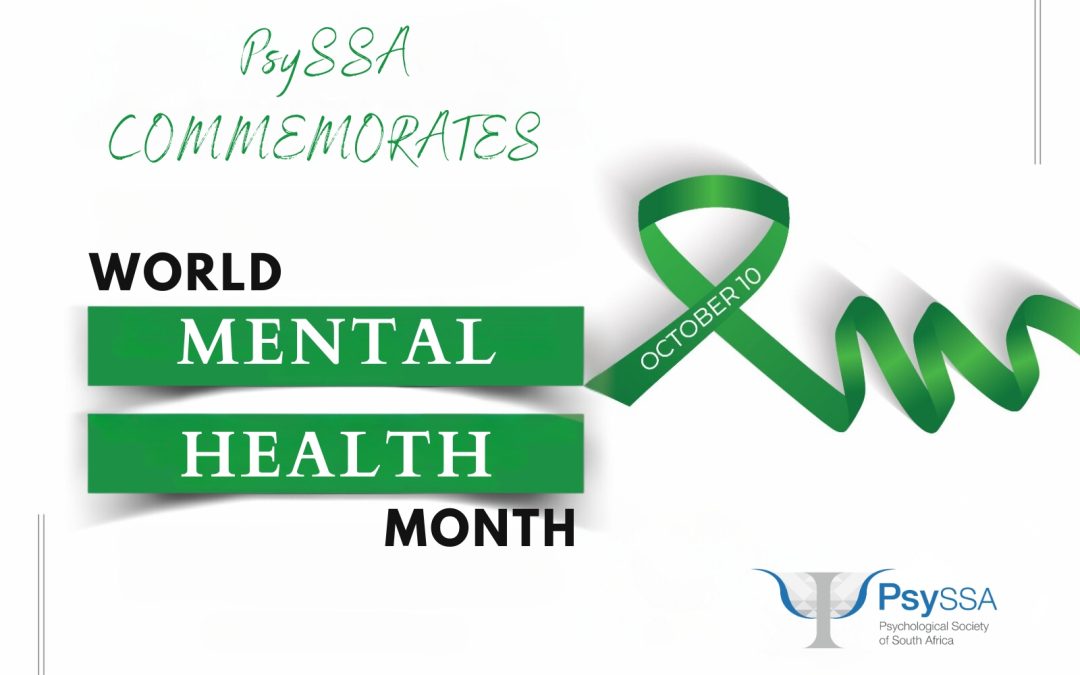
Mental Health Awareness Month – October 2024

Mental Health Awareness Month – October 2024

World Mental Health Day 2024

Brief history of World Mental Health Day

by Mr Sulaiyman Philander from the Division of Research and Methodology 

World Mental Health Day is a global initiative founded by the World Federation for Mental Health (2022). First celebrated on October 10, 1992, it aims to promote mental health advocacy and educate the public about mental health issues. Over the last three decades, it has become an annual observance encouraging individuals to reflect on their mental well-being and engage in conversations about mental health. This year, the focus is on mental health in the workplace, an area gaining attention due to the increasing pressures of modern work life. The 2024 theme, “It’s Time to Prioritize Mental Health in the Workplace,” highlights the need for a holistic approach, advocating for mental health awareness and practices that foster thriving work environments (Akiyama, 2024).

South Africa: A unique perspective

Work-related stress, long hours, and the blurring of work-life boundaries — particularly exacerbated by the COVID-19 pandemic and South Africa’s complex economic climate — have made it crucial for both employees and employers to take a proactive role in mental health care (Kotera et al., 2021; Van Der Vaart & De Beer, 2021). Employers should remain cognisant of the relationship between promoting positive mental health, a motivated work force and productivity. Creating supportive work environments, preventing burnout, and providing accessible mental health resources for employees align with both this year’s theme and existing literature.

In South Africa, the workplace poses unique challenges, especially for emerging adults (18-29 years) (Naudé & Esau, 2024; Olonisakin et al., 2024). Many workers face long hours, high stress, and job insecurity, leading to increased rates of burnout and mental health issues (Kotera et al., 2021; Van Der Vaart & De Beer, 2021). The contrast between high unemployment among emerging adults and the pressures on those employed creates a complex dynamic placing significant strain on an already overburdened mental healthcare system. Mental health care, both before joining and within the workplace, is not a luxury but an urgent necessity to ensure individuals remain productive, healthy, and engaged.

This October 10th: Take care of your mental health

World Mental Health Day 2024 reminds us to prioritise our mental health, especially in environments where stress and pressure are common. Whether you are employed or job-seeking, taking time to care for your mental well-being is vital. Mental health involves more than managing stress; it is about cultivating meaningful emotional experiences, nurturing supportive relationships, and maintaining a sense of purpose, regardless of employment status (Van Der Vaart & De Beer, 2021; Van Lill & Bakker, 2022). This year, let us collectively promote mental health by:

  • Being open about workplace struggles and encouraging open dialogue among colleagues.
  • Striving for meaningful and engaging lives, whether employed or unemployed (Thill et al., 2020; Van Der Vaart & De Beer, 2021).
  • Being kind to yourself and others while also utilising existing mental health resources (Kotera et al., 2021).
  • Striving for purpose, whether at work or in our communities (Van Lill & Bakker, 2022).

Mental health support resources:

* OpenAI’s (2024) ChatGPT was utilised to assist with editing and structuring the article.

References

Akiyama, T. (2024, April 17). “It is time to prioritize mental health in the workplace”. World Federation for Mental Health. https://wfmh.global/news/2024.24-04-17_wmhd2024-theme

Kotera, Y., Mayer, C.-H., & Vanderheiden, E. (2021). Cross-cultural comparison of mental health between German and South African employees: Shame, self-compassion, work engagement, and work motivation. Frontiers in Psychology, 12, 627851. https://doi.org/10.3389/fpsyg.2021.627851

Naudé, L., & Esau, M. (2024). The quest for a “soft life” and the transition into adulthood: Views from South African emerging adult students. Emerging Adulthood, 0(0), 1–15. https://doi.org/10.1177/21676968241273135

Olonisakin, T. T., Adedeji, A., & Idemudia, E. S. (2024). Examining psychological outcomes of social inequality for Black South Africans. Studies in Clinical Social Work: Transforming Practice, Education and Research, 94(1), 45–66. https://doi.org/10.1080/00377317.2023.2222171

OpenAI. (2024). ChatGPT (Sep 13 version) [Large multimodal model]. https://chat.openai.com/

Thill, S., Houssemand, C., & Pignault, A. (2020). Effects of meaning in life and of work on health in unemployment. Health Psychology Open, 7(2), 1–11. https://doi.org/10.1177/2055102920967258

Van Der Vaart, L., & De Beer, L. T. (2021). Engaged but exhausted: Work-related wellbeing profiles of South African employees. International Journal of Wellbeing, 11(4), 88–105. https://doi.org/10.5502/ijw.v11i4.1823

Van Lill, R., & Bakker, T. M. (2022). Significance as component of meaning in career narratives of unemployed graduates. South African Journal of Psychology, 52(3), 301–312. https://doi.org/10.1177/00812463211059280

World Federation for Mental Health. (2022, August 22). About the World Mental Health Day. https://wmhdofficial.com/about-the-world-mental-health-day/

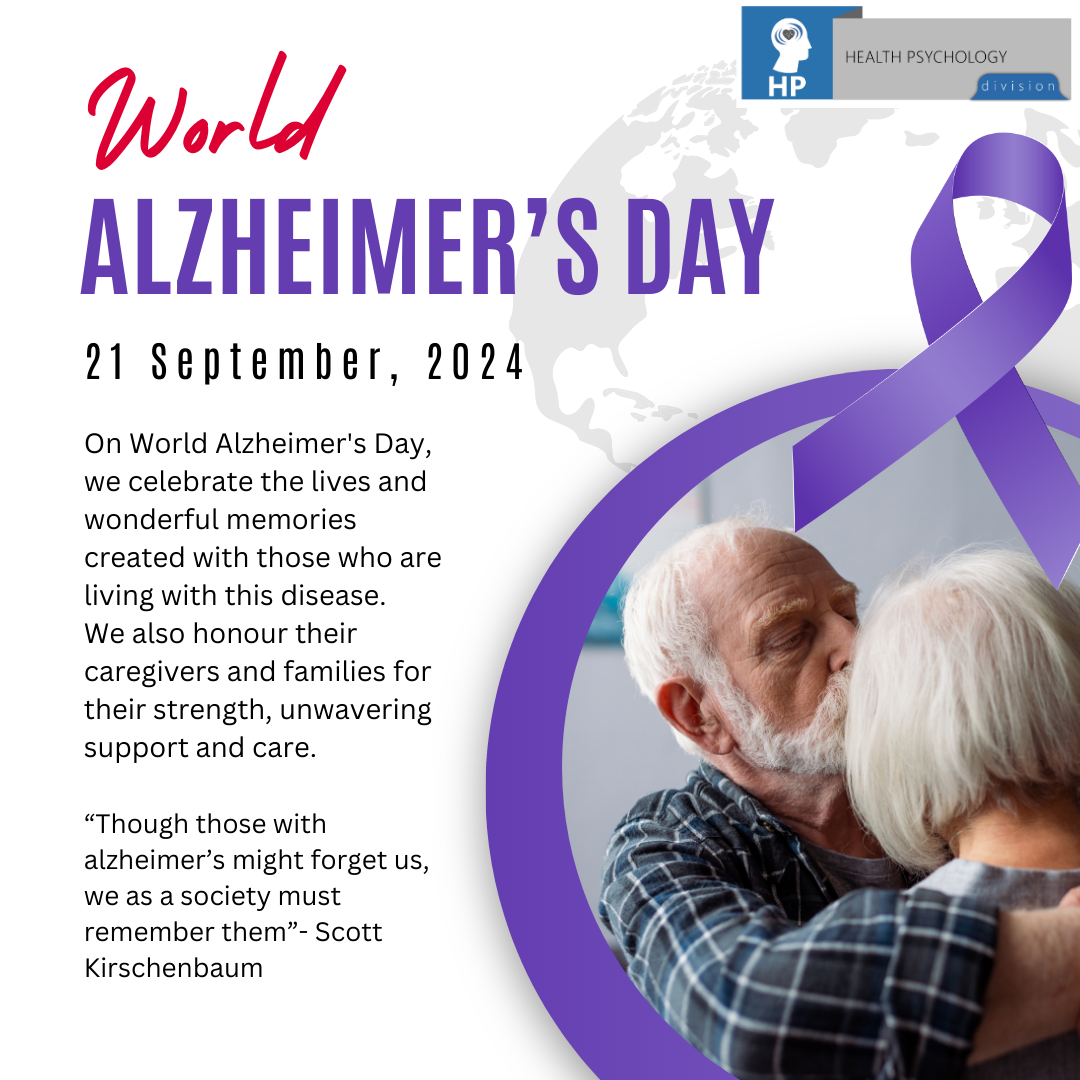
World Alzheimer’s Day – 21 September 2024

World Alzheimer’s Day – 21 September 2024

World Alzheimer’s Day 

There is no antidote for aging. As we are born, so we are guaranteed that until we reach the full stop of our lives, we are going to age. The question is how to prepare for it. We all hope to travel life’s journeys with as few stumbling blocks as possible. Inevitably and often unavoidably things happen along the way. The wisdom of knowledge is the invaluable tool that we can arm ourselves with in the event of various occurrences.

Due to various factors, life expectancy today is a lot longer than in previous decade. This can be attributed to better health care and a general awareness of living a better lifestyle, thus incorporating good nutrition, exercise and the management of stress.  We all know that our lives are composed of various aspects, namely, physical, emotional, financial, cognitive and mental health. We all yearn towards searching for the panacea to provide us with a holistic quality of health.

Without education and awareness we fail ourselves and society at large in believing the myth that failing memory and cognitive skills are a result of old age. There is little further from the truth! Dementia is by no means a normal part of the ageing process.

Age is certainly undeniably an important risk factor, but it is imperative that it be known that it is not the only one. There are a number of other medical conditions which are treatable and that can also result in memory impairment. It is thus essential to have memory difficulties carefully checked out especially if one’s daily life is being affected and resulting in anxiety.

Statistics show that Dementia affects one is 20 people over the age of 65 and one in 5 people over the age of 80. This means that 20% of people over the age of 80 develop Dementia which by implication means that 80% do not. There are however diagnosed and documented cases of early –onset dementia before the age of 65.

Because it has been reported that a new case of Dementia arises every seven seconds in the developed world it is estimated that by 2040 the amount of sufferers will have risen from 24, 3 million people who are currently affected to 81, 1 million. Are these not staggering statistics!

It is thus clearly evident that the need for community-based services, welfare and support for people with Dementia as well as their carers is exceedingly large. This will no doubt place pressure upon governments globally to dramatically increase such services.

The message is crystal clear that we need to be prepared. The climate for change needs to be hastily created in terms of awareness and education to policymakers, governments, medical aids, health care professionals, home based carers and society at large.  We need to encourage the change of social conscience by including the aged and more specifically, those with Dementia.

Well, what exactly is Dementia? Too often it is a term that is bandied about without a clear understanding and thus it has developed a stigma that needs to be repudiated.

Dementia is a disease that affects the brain. It affects memory, thinking and actions – sometimes simultaneously. It is a progressive disease which affects the person with dementia gradually and increasingly. There are many kinds of Dementia, the most common being Alzheimer’s disease (about 50-60%) as well as Vascular Dementia.

Alzheimer’s disease damages individual brain cells one by one so that the brain can no longer continue to function as it has been used to.

With Vascular Dementia, there are problems with blood supply to the brain cells. The most common type of Vascular Dementia is Multi-Infarct Dementia. Tiny strokes (infarcts) damage small areas of the brain resulting in a probable change as to how the person is coping and functioning. Sometimes the effect causes the sufferer to feel unwell and temporarily more confused. Sometimes the person does not notice the effect.

There is not a specific test that can show whether someone has a particular type of Dementia. A diagnosis is made by talking to the person and a close relative or friend to gain insight and a thorough understanding of the person’s history. All possible causes of the symptoms need to be carefully examined.

The Mini Mental State Examination (MMSE) or the MoCA (Montreal Cognitive Assessment) are the most commonly used tests to evaluate memory and cognitive loss. It is used when the diagnosis of Dementia is to be considered.

If you are worried about your memory or have reason to believe that someone you know may be struggling with daily activities (personal hygiene, confusion, misplacing of things etc.) it is thus important to be checked out by a doctor or a specialist (Neurologist, Psychiatrist or Geriatrician).

Every person is unique and affected differently by the disease.

The 10 most common early symptoms of Dementia include:

  1. Memory Loss
  2. Difficulty in performing familiar tasks
  3. Problems with language
  4. Disorientation of time and place
  5. Impaired Judgement
  6. Problems keeping track of things
  7. Misplacing things
  8. Changes in mood or behaviour
  9. Personality changes
  10. Loss of Initiative

How Dementia can impact upon family life

Upon confirmed diagnosis of Dementia, the challenge of coming to terms with the expected changes needs to be faced, dealt with and understood. Being prepared assists in being able to equip oneself with a plan in order to be able to cope. It is comforting to know that there is help and support at hand and that the changes will occur gradually. However one does need time to adjust one’s lifestyle with any difficult challenge at hand.

What the family and friends can expect 

There are various traits that may become apparent to people who spend time with the person who has been diagnosed. In order to know what to expect one needs to have the insight and understanding by being informed.

The natural progression of the disease follows the pattern of initially having trouble in remembering words, finishing thoughts, following directions or remembering names or information. Often irritability, frustration and confusion are noticeable. Changes in personality and behaviour become apparent. As time goes on problems will increasingly manifest with thinking and remembering, reading and writing will also become more difficult. It will also become harder for the person to make decisions and take in new information.

Later, everyday mundane activities will become really difficult, for example, remembering to keep appointments, shopping lists, coping with money, cooking and general caring for themselves.  This then leads to the person needing assistance with basic activities such as washing, dressing and eating.

These changes are very gradual and the person may stay the same for months or even years. Each person with Dementia is different and thus it is difficult to predict when changes will occur and at what pace. Although it may become difficult to continue some of their usual activities, people with Dementia may discover other activities to enjoy, for example, sorting out family photographs, gardening or listening to music.

The all important factor not to lose sight of, is to maintain respect and dignity for the person with the disease.

Karen Borochowitz: Dementia SA

WEBSITE : www.dementiasa.org

NATIONAL HELPLINE : 0860 636 679  /  0860 MEMORY

Or 021 21 0077/8

Email: info@dementiasa.org

Invitation to Participate in a Career Expo Event for Psychology Students/Graduates

Invitation to Participate in a Career Expo Event for Psychology Students/Graduates

We are excited to invite organisations from various sectors within psychology and related fields to exhibit at the Grads2Work Career Expo 2024, hosted by the PsySSA Student Division. This event provides exhibitors with the opportunity to engage with psychology students and recent graduates eager to explore diverse career opportunities. There is no fee to participate, and our aim is to showcase a wide range of opportunities for students to connect with potential employers, service providers, and industry leaders.

National ADHD Day – 14 September 2024

National ADHD Day – 14 September 2024

A Lifetime with ADHD: Beyond the Diagnosis to Understanding the Ongoing Impact

by the Division for Research and Methodology 

To commemorate National ADHD Day (14 September), the PsySSA Division for Research and Methodology sought to summarise the different manifestations of Attention-Deficit/Hyperactivity Disorder and its’ implications on behaviour across the lifespan.

What is ADHD: Attention-Deficit/Hyperactivity Disorder (ADHD) is a chronic neurodevelopmental condition characterised by persistent patterns of inattention, hyperactivity, and impulsivity that interfere with general functioning or development. An ADHD diagnosis is based on criteria outlined in the DSM-5-TR, which includes symptoms being present for at least six months and causing significant impairment.

While ADHD is commonly identified by primary symptoms of inattention, distractibility, and poor executive functioning, the American Psychological Association (APA) differentiates between three specific types of ADHD. Recently, specialists have also recognised additional common comorbidities that accompany an ADHD diagnoses, and recommend three more subtypes. Each type presents with different brain function issues, which cause different symptoms, and require specialised treatment protocols. Our infographic summarises these types and their presenting symptomology.

The impact of ADHD: Insights into the South African prevalence rates are limited, but estimated to be between 2-16% in children (Boshomane, Pillay, & Meyer, 2020; Botha & Schoeman, 2023). Adult estimates are somewhat lower, at 2.5-4.2% prevalence (Schoeman & Leibenberg, 2017), although it has been noted that 60 – 70% of children diagnosed with ADHD continue to have symptoms in adulthood (Belanger et al., 2018).

Possible causes for this larger estimated range in children include overdiagnosis in younger populations (and underdiagnosis in older groups), varying methodologies and assessment practices employed to make diagnoses, and limited expertise from practitioners (Schellack & Meyer, 2016). Given the life-changing impact of an ADHD diagnosis on an individual and their families, it should not be a diagnosis that is made in haste. Rather, practitioners should be careful in ensuring that they’re obtaining as holistic a view of their client as possible, before assigning the “ADHD label”.

Having untreated ADHD affects nearly every aspect of a person’s life and has been associated with school underachievement, family conflict, drug abuse, legal difficulties and poor work performance. Additionally, even though ADHD does not cause other psychological problems, it is common that other disorders (such as mood, anxiety, substance abuse, and learning disorders) occur alongside it, making diagnosis and treatment more challenging. Stimulant medications, such as Ritalin or Adderall, are often prescribed to manage ADHD symptoms in both children and adults. However, before medicating a client, it is important to identify their specific ADHD presentation type, as stimulants can make some forms of ADHD worse, as indicated above as well. Sometimes medicinal reactions can be extreme, causing hallucinations, violent outbursts, volatile temperaments, psychosis and suicidal behaviour. Alternatively, engaging in some form of sport or art form (for example, music) has been shown to improve or reduce the frequency of ADHD symptoms.

PLEASE do not use this article as a diagnostic resource; it is meant for informative purposes only. The South African Depression and Anxiety Group (SADAG) has a toll-free ADHD helpline (0800 55 44 33), please reach out to them if you are concerned that you or a loved one may have undiagnosed or misdiagnosed ADHD.

PsySSA Presents South African Tour: Acceptance and Commitment Therapy (ACT) For Anxiety and Depression

PsySSA is proud to present a series of Acceptance and Commitment Therapy (ACT) workshops taking place throughout South Africa! Get ready for an immersive experience of ACT where you’ll learn tools that will transform the lives of your clients.


Cape Town: 25 - 26 October 2024
Pretoria: 31 October - 1 November 2024
Durban: 28 - 29 October 2024
Johannesburg: 2 - 3 November 2024
About the Presenter

Werner Teichert

Werner Teichert is an internationhal speaker and clinical psychologist based in Sydney, Australia. He was trained in ACT under Russ Harris, Robyn Waiser, Steve Hayes and Kirk Strosahl. Werner has trained over 2500 healthcare professionals across South Africa, Namibia, Australia and the UK.

Click the button below to register!