Indigenous Healing and Psychotherapy Workshop

Indigenous Healing and Psychotherapy Workshop

Indigenous Healing and Psychotherapy

Date: Friday, 14 Jun 2024 at 09:00

Cost: R550.00

4 CPD HPCSA Clinical points

This presentation is based on an understanding of indigenous healing and also understanding the western perspective of how the two merge and also on how they can also be so different. In understanding indigenous healing we also get to understand our black patients and how they navigate their lifestyle and well being. While working with the self in psychotherapy we also need to learn on what healing entails for our black patients. The purpose of the workshop is to assist psychotherapists to develop a deeper understanding of Indigenous African people’s world view and how that might have a bearing on how they deal with life events including death, dying and grief.

Virtual reality workshop. Email ticket to: Nompumelelo.kay@gmail.com for the link

World Environment Day – 5 June

World Environment Day – 5 June

World Environment Day – 5 June 

If the Earth Could Speak: In Solidarity with the Environment

PsySSA Decolonising Psychology Division


On the 5th of June each year, since the early 1970s, the world celebrates World Environment Day. This year’s theme is Land restoration, desertification and drought resilience. But what does it mean for the world to observe this day, especially at such unprecedented times when we continue to bear witness to environmental destruction and the social suffering of individuals and communities in different parts of the world?

For many, World Environment Day serves as a flagship moment to reflect on humanity’s relationship with the environment and to raise awareness of various perilous environmental issues, such as land degradation, desertification, water insecurity, drought, global warming, pollution, overpopulation, and sustainable development. Given the global crises of recent times, such as the devastating wildfires in Australia, California and the Amazon, the unprecedented melting of polar ice caps, the severe droughts and water crises affecting regions like Sub-Saharan Africa and the Middle East, the widespread impact of the COVID-19 pandemic on global health and economies, the escalating climate- and war-induced migration and displacement, as well as the significant environmental destruction and loss of biodiversity in Gaza due to the current genocide, this year’s World Environment Day is also a pressing reminder for the world to reflect more critically on what it means to co-exist with the environment and to act to address the intersecting and escalating challenges related to environmental justice, social justice, human rights, and sustainable development.

On this day, all eyes should be on the ongoing suffering and widespread destruction of the environment, alongside human life, in places like Palestine, Congo, Sudan, as well as other regions worldwide that continue to experience severe environmental degradation as a result of human actions often directly related to colonisation, imperialism and capitalism. The reminder on this World Environment Day is then for us all, in our individual and collective endeavours for social liberation, to support the protection and sustainability of the environment.

The environment is a source of life for all that lives; being one with it is fundamental to our existence. As such, there is an imperative need for a comprehensive and holistic strategy that integrates environmental health with human well-being, acknowledging that human suffering and environmental degradation are deeply intertwined. By nurturing the environment and fostering a more compassionate, equitable and sustainable connection with our planet, not only do we honour World Environment Day but we also pave the way for a more liberated and harmonious world.

Moreover, this pivotal moment in our planetary epoch urges us to reassess our individual and collective impact on the environment and Earth, and to adopt more sustainable practices. This period, which is referred to as the Anthropocene, underscores human influence as a primary force shaping the planet’s future (see Oladejo et al., 2024). This era demands a critical shift in our behaviour, placing ecological well-being at the forefront. Thus, observing World Environment Day offers us a platform to collectively raise and unite our voices in calling for immediate and continuing transformative actions aimed at healing and safeguarding our environment and planet, ensuring its vitality for future generations.

Here are some proactive steps we can take to contribute to environmental protection. By incorporating these actions into our lives, we can collectively contribute to a healthier, more just, and more sustainable planet for current and future generations.

  • Engage in initiatives advocating for the sustainability of natural environments.
  • Support policies that safeguard vulnerable ecosystems and communities.
  • Raise awareness about the importance of environmental conservation.
  • Stand in solidarity with communities facing threats to their lands, habitats, and livelihoods, particularly those affected by environmental and social injustice.
  • Recycle waste materials such as plastic, paper, glass, and more.
  • Plant a tree that is indigenous to your environment.
  • Support renewable energy initiatives and transition to cleaner energy sources.
  • Reduce your carbon footprint by minimising energy consumption and adopting eco-friendly practices in daily life.
  • Practice sustainable agriculture and support local farmers who prioritise environmentally friendly farming methods.
  • Advocate for sustainable transportation options such as public transportation, biking, or carpooling.
  • Get involved in community clean-up efforts to help preserve natural habitats and reduce pollution.
  • Educate yourself and others about the importance of biodiversity conservation and ecosystem restoration.

 References

Oladejo, A. O., Malherbe, N., & van Niekerk, A. (2024). Climate justice, capitalism, and the political role of the psychological professions. Review of General Psychology, 28(1), 3–16.


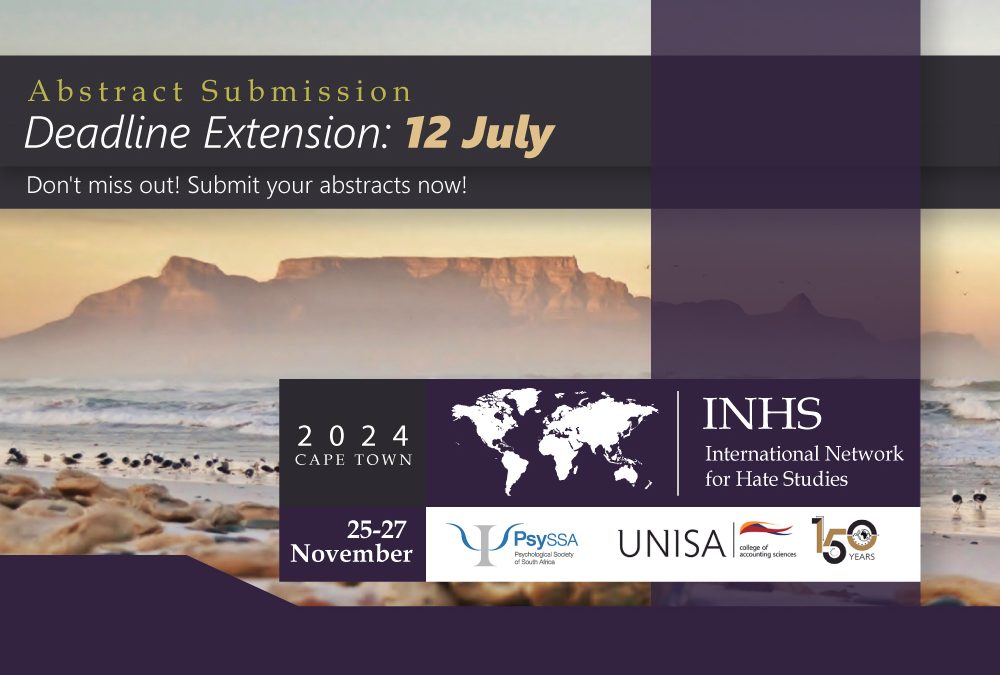
INHS CONFERENCE 2024 – Abstract Submission Extension!

INHS CONFERENCE 2024 – Abstract Submission Extension!

Abstract Submission Extension!

Deadline Extension! The abstract submission deadline for the INHS Conference has been extended to 12 July 2024!

Don’t miss this chance to share your research and insights at this prestigious event. Submit your abstracts now!

Take advantage of discounted rates by registering for Early-Bird Booking. Register now and save.

Deadline for Early-Bird Booking is 8 July 2024.

Men’s Health Month – June 2024

Men’s Health Month – June 2024

Men’s Health Month – June 2024

Men’s Health Month – A Contribution from the CaSP Division

“The objective of Men’s Health Month is to heighten awareness of preventable health problems and encourage early detection and treatment of disease among men and boys. This month allows healthcare providers, public policymakers, the media, and individuals to encourage men and boys to seek regular medical advice and prompt treatment for disease and injury. The response has been overwhelming with thousands of awareness activities around the globe.”

Breaking the binds of a broken man- Men and Mental Health
By Christo Muller

I want to preface this article with a story. This is not a story of triumph or even a love story. This story starts with a young boy. Not much after his 10th birthday in fact. He met a wise man who used to be a very powerful warrior. He used to regale the children of his village with heroic stories of battle and facing many monsters that he encountered along the way. All the other children wanted to be like this great man, except this boy. The man was intrigued by this boy as he never marveled at the battles with the sea monsters or the trolls in the mountain but rather he showed interest in why the man chose to face these challenges. One day the boy saw the aged warrior sitting under a tree overlooking the valley. Cautiously the boy approached him, “Sir, do you mind if I join you?” He asked. “Certainly my boy!” He replied enthusiastically, as if his loneliness spoke on his behalf. The boy sat down in silence next to the retired warrior.

After a short while the man asks “Do you want to hear some of my stories? The great battles? The powerful monsters?”. “Yes sir, but I don’t want to hear the stories you tell the other children in the village.” Responded the boy while picking little blades of grass. “No? Which stories do you want to hear?” The man asked surprisingly. “I want to hear the story of why you went on these adventures. Why do you never tell us about the failures or the friends you had? I know all of the stories of what you had done but you never told us what scared you or anything other than what you think we want to see when we think of you.” the boy said in a very kind manner. The old warrior was silent, clearly taken aback by this. “What do you mean boy? My stories are the ones that will carry my name into history and songs, like all the warriors before me. That is the way of the great warriors.” He retorted almost gleefully.

“That is the thing that I do not understand sir, you want to be remembered for all your great deeds and heroic labours to inspire others to be like you, but you don’t want others to know who you were as a person.” The boy countered. “Who I am does not matter as much as what I accomplished to those who seek to be like me, little boy, the person I am may just break down the legacy I am meant to leave behind.” The old man says honestly. “Oh, can I ask you a question? To you, not to the warrior you are meant to be.” The boy says while taking the time away from his meticulous grass picking. The old man nodded. “What is the hardest thing you have ever done?” The boy asked. “Admitting to my fellow warriors that I am scared of facing the monster that we are sent to slay.” The old man said. “What scares you the most?” The boy asked while moving closer to the old man. As a tear ran down his war battered cheek the old man said: “Asking for help”…

The purpose of this story is not to take away from those who seem to have conquered all but rather to share the idea of how society has influenced the stigma of men’s mental health. You never know what those around you may be going through. From the automated responses of “Im fine” to the isolated patterns of emotional acting. The newest war that the world is facing is the mental health war. Traditional masculinity which is supposedly influenced by the Stoic philosophy has created a battlefield the requires the hiding of wounds in fear of appearing weak. The reluctance to seek help, the fear of societal judgement and rejection has resulted in men falling into the abyss of addiction and suicidality.

Treatment of physical illness or injury is not frowned upon as to live a key requirement is to have a healthy body. When it comes to mental illness, so many of today’s men are bound by the painfully heavy bonds of masculinity. Emotions are for the weak. Everyone has issues and this is my burden to carry. Those who love me would rather see me die on the battlefield than see me fall off my horse. If Stoicism has taught us anything, reality needs to be accepted for what it is, not what we wish it to be. Acceptance is not approval but rather acknowledgement of fact.

Ask your male friends how they are doing. Check in on them and be honest with them how you are doing. Don’t fear not being fine. The actions, attitudes and thoughts you hang on to can be of value to you and others or they can be the whip that inflicts pain onto you.

Sometimes the bravest thing anyone can do is ask for help.

Mental Health Help Resources

https://www.groundup.org.za/article/how-accesspublic-mental-health-services

https://www.globalcitizen.org/en/content/ways-southafricans-take-care-of-mental-health/J

Start or join a support group / support group: www.sadag.org.


Men’s Health Month – A Contribution from the DRM Division
by Mr Omphile Rammopo

Men’s Health Month in June focuses on raising awareness about the health challenges confronting men and advocating for early detection and treatment of diseases. In South Africa, this initiative holds significant relevance due to the distinctive health issues men encounter. These include high rates of HIV/AIDS, tuberculosis (TB), and the escalating burden of non-communicable diseases (NCDs) like hypertension and diabetes, making men’s health a pressing public health concern demanding urgent attention (van Heerden et al., 2017).

A foremost concern in South Africa is the heightened prevalence of HIV/AIDS among men. Men exhibit lower rates of HIV testing and tend to seek healthcare only at advanced disease stages (Sileo  et al., 2018). This delay not only compromises their health outcomes but also elevates the risk of transmission to others, necessitating concerted efforts to promote regular HIV testing and early treatment.

Mental health emerges as another critical area necessitating attention. South African men often grapple with societal expectations to suppress emotions and avoid discussing mental health issues, potentially leading to adverse outcomes such as elevated suicide rates (Rammopo, 2021). Moreover, suppressed emotions may serve as a risk factor for functional neurological disorder, predisposing men to various physical health complications, including hypertension, diabetes, cerebrovascular accidents, and seizures. Facilitating open dialogues about mental health and ensuring accessibility to mental health services are crucial steps in addressing this issue effectively.

Additionally, substance abuse, particularly alcohol consumption, represents a significant concern among South African men (Lawana & Booysen, 2018; Mohale & Mokwena, 2020). This behaviour is associated with diverse health ramifications, including liver disease, cardiovascular complications, cerebrovascular disease, diabetes, and hypertension (Parry et al., 2011), and heightened risks of accidents and violence. Hence, public health campaigns aimed at curtailing alcohol consumption and advocating healthier lifestyles play a pivotal role in mitigating this issue.

Addressing lifestyle factors such as poor dietary habits, sedentary lifestyles, and smoking is also crucial in mitigating men’s health conditions in South Africa and globally. Encouraging regular health check-ups, promoting healthier dietary practices, and advocating for increased physical activity can play a significant role in alleviating the burden of NCDs among men.

Men’s Health Month serves as a poignant reminder of the imperative to address the unique health challenges confronting men in South Africa. Through concerted efforts encompassing awareness-raising, early detection and treatment initiatives, and promotion of healthy behaviours, tangible strides can be made toward enhancing health outcomes and reducing the burden of preventable diseases among men.

Reference List

Lawana, N., & Booysen, F. (2018). Decomposing socioeconomic inequalities in alcohol use by men living in South African urban informal settlements. BMC Public Health18, 1-9.

Mohale, D., & Mokwena, K. E. (2020). Substance use amongst high school learners in the south of Johannesburg: Is this the new norm?. South African Family Practice62(4), , e1–e6. https://doi.org/10.4102/safp.v62i1.5122

Parry, C. D., Patra, J., & Rehm, J. (2011). Alcohol consumption and non‐communicable diseases: epidemiology and policy implications. Addiction106(10), 1718-1724.

Rammopo, O. (2021). Constructions of Depression from Black Men Residing in Mabopane [Master’s thesis, University of Johannesburg]. UJ Content. https://hdl.handle.net/10210/501592

Sileo, K. M., Fielding-Miller, R., Dworkin, S. L., & Fleming, P. J. (2018). What role do masculine norms play in men’s HIV testing in sub-Saharan Africa?: a scoping review. AIDS and Behavior22, 2468-2479. https://doi.org/10.1007/s10461-018-2160-z

van Heerden, A., Barnabas, R. V., Norris, S. A., Micklesfield, L. K., van Rooyen, H., & Celum, C. (2017). High prevalence of HIV and non‐communicable disease (NCD) risk factors in rural KwaZulu‐Natal, South Africa. African Journal of Reproduction and Gynaecological Endoscopy20(2), e25012. https://doi.org/10.1002/jia2.25012.

Men’s Health Month – A Contribution from the PiPS Division

The South African National Integrated Men’s Health Strategy 2020-2025 (the Strategy) is a framework for action to work towards the goal that Every South African man and boy is supported to live a long and healthy life. South African men generally have poor healthseeking behaviours and are less likely than women to engage health services across the care cascade, resulting in adverse clinical outcomes for many preventable illnesses. In addition, the health system misses key opportunities to engage with men who do seek services by not offering comprehensive and integrated services to those men who access services for specific conditions.

The Strategy aims to deliver a comprehensive and integrated package of care for men and boys across the life course. The overarching aim of the Strategy is to improve the overall health and wellbeing of South African men and boys. At the heart of the Strategy are four core objectives and associated actions that are designed to drive meaningful progress towards the Strategy’s overarching goal. These include a clear commitment to:

  • Empower and support men and boys to optimise their own and each other’s health and wellbeing.
  • Strengthen the capacity of the health system to provide quality appropriate preventative care for men and boys.
  • Ensure that men and boys receive treatment, care and support services for chronic conditions, as needed.
  • Build the evidence base for improving men’s health.

The Strategy advocates for a life-course approach in tailoring interventions to engage and support South Africa’s diverse men and boys across all stages of their lives, with a focus on adolescents (10-19 years); young adults (20-35 years); older men (above the ages of 35); and aging men (above the age of 50) as well as high risk men and boys.

Health is influenced by a complex range of factors, or health determinants. Targeted actions are identified to meet the Strategy’s goal and objectives – actions that require the engagement and collaboration of a wide range of stakeholders from across South Africa. They include all levels of government, the health sector, other sectors, with non-government organisations (NGOs), community-based organisations (CBOs) and faith-based organisations (FBOs), researchers and experts, and, of course, with men and boys themselves.

Critical to the success of this Strategy is a clear commitment to implementation planning and to taking an active approach to evaluating, monitoring and communicating progress over time. By providing a framework for gender-focused health, this Strategy highlights South Africa’s commitment to taking collective action to create a healthier future for men and boys.

The Strategy identifies seven key priority health issues which have been identified as key causes of morbidity and mortality for all South African men:

  1. Mental health
  2. HIV and AIDS
  3. TB
  4. Sexual Health
  5. Chronic conditions (diabetes, hypertension, high cholesterol)
  6. Cardiovascular disease
  7. Prostate and testicular cancers

The following platforms are available for men, or those close to men who need mental health support:
Department of Social Development Substance Abuse Helpline: 0800 12 13 14, SMS to 32312

South African Depression and Anxiety Group (SADAG): 011 234 4837 or  0800 21 22 23 or 0800 12 13 14 (24Hrs) SMS to 31393, http://www.sadag.org

Suicide Crisis Helpline: 0800 567 567

References:

Welcome Ngwenya, M., & Olivia Sumbane, G. (2023). The Urgency of Access to Men-Centered Mental Healthcare Services to Address Men’s Sensitive Issues in the Communities of South Africa. IntechOpen. doi: 10.5772/intechopen.108493 (https://www.intechopen.com/chapters/84694)

The South African National Integrated Men’s Health Strategy 2020-2025 (https://knowledgehub.health.gov.za/system/files/elibdownloads/2023-04/Men%2526%2523039%253Bs%2520Health%2520Strategy.pdf)

HPSIG Podcast: What exactly is Health Psychology, and why does it matter in South Africa?

HPSIG Podcast: What exactly is Health Psychology, and why does it matter in South Africa?

EPISODE 24

HPSIG Podcasts


I

HPSIG Podcast: What exactly is Health Psychology, and why does it matter in South Africa?

by Dr. Bronwyne Coetzee

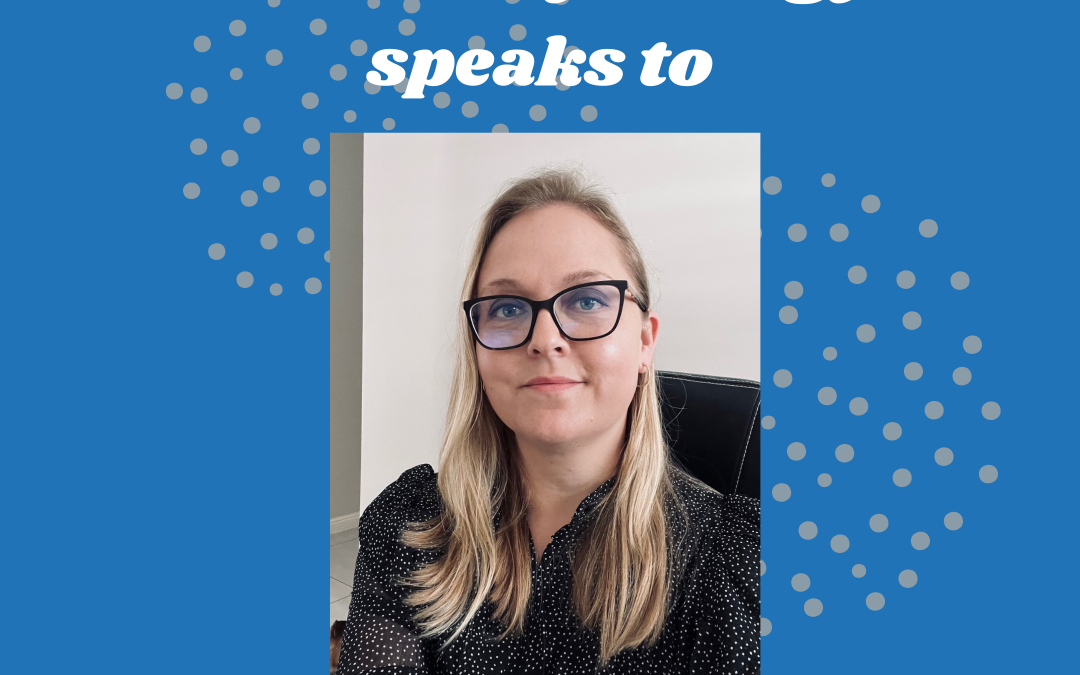
In this episode, we speak to Dr Bronwyne Coetzee, a psychology researcher and senior lecturer at Stellenbosch University, who provides a clear overview of health psychology. In this podcast, Dr Coetzee argues for its critical importance within a context of rising non-communicable diseases, syndemics, and substantial structural barriers to health. In addition, she explains the field’s current status as a formally unrecognised sub-discipline within the country, and discusses the next steps required to establish it as a professional registration and subject of university programs.