Notice from the HPCSA: Temporary Hold on Developmental Pathways Programme

Notice from the HPCSA: Temporary Hold on Developmental Pathways Programme

Notice from the HPCSA: Temporary Hold on Developmental Pathways Programme

The Professional Board for Psychology has announced a temporary hold on the implementation of the Developmental Pathways Programme. This pause will allow for further consultation with key stakeholders, including the National Department of Health, to ensure the programme is responsive to the needs of both practitioners and the broader healthcare system.

Please see the below official communication from the HPCSA dated 1 April 2025 for full details.

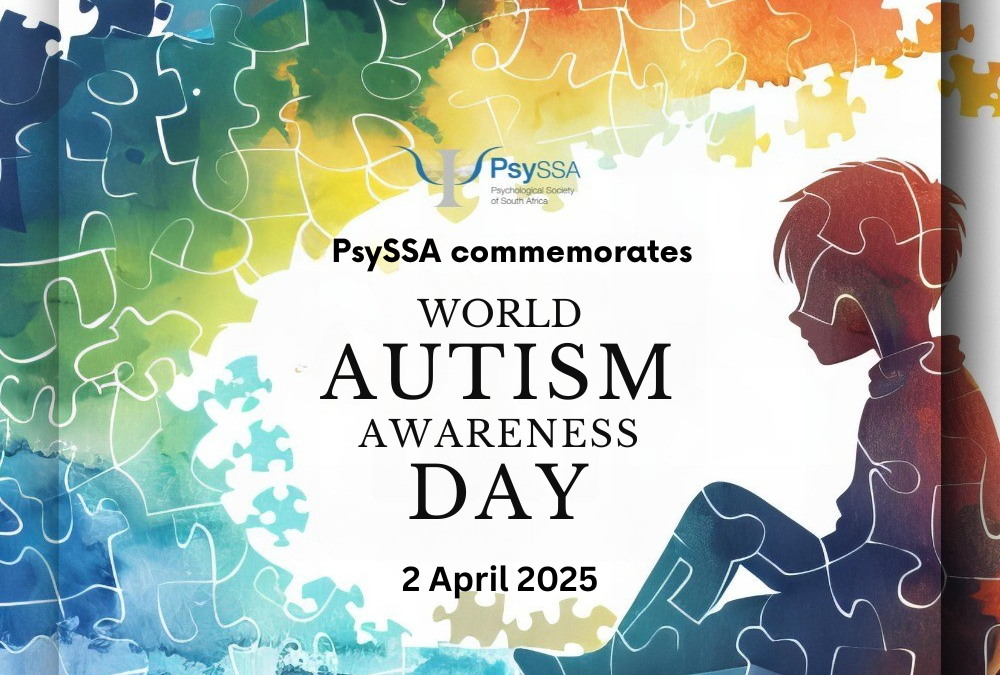
World Autism Awareness Day – 2 April 2025

World Autism Awareness Day – 2 April 2025

PsySSA Commemorates World Autism Awareness Day

2 April 2025

Beyond awareness: Fostering true acceptance of autistic individuals

By: PsySSA’s Division for Research and Methodology

On 2 April, World Autism Awareness Day serves as a global reminder to foster a deeper understanding of autism (World Autism Awareness Day | Autism Speaks, n.d.). However, awareness alone is not enough. Autistic individuals continue to face systemic barriers in education, employment, and healthcare – barriers that persist because society has been slow to move from awareness to genuine acceptance and meaningful inclusion.

The weight of masking and fitting in

For many autistic people, navigating daily life requires masking: they suppress or alter their natural ways of being to conform to neurotypical or non-autistic expectations (Pearson & Rose, 2021). Seers and Hogg (2023) discussed how masking is used as a strategy for social survival rather than mere conformity. One participant in the Seers and Hogg (2023) study describes the relentless strain of masking as follows:

When I think about the mask, I don’t know which bit is the mask, which bit is myself, and which parts of the mask have fused to myself and become indistinguishable from it. It is only in the privacy of my own mind that I allow myself to express what might be the real me. (p. 31)

This highlights the emotional toll of constantly performing neurotypical behaviours simply to be accepted. People with autism often describe masking as physically and emotionally exhausting, leading to burnout, anxiety, and depression (Beck et al., 2024; Lupindo et al., 2023; Seers & Hogg, 2023).

Challenges in healthcare settings

While autistic people experience difficulties navigating educational (Goodall, 2018; Karrit & Coetzee, 2025) and work (Lupindo et al., 2023) spaces, healthcare settings present another significant challenge. Beck et al. (2024) and Øverland et al. (2024) found that participants with autism frequently report feeling misunderstood or dismissed in healthcare settings. Participants in their research articulated a deep need for health care services that validate their experiences rather than pathologise them (Beck et al., 2024).

Moving forward: A call for meaningful change

True acceptance requires more than symbolic gestures: it demands systemic change. Inclusion should not be framed as a favour or accommodation but as a fundamental right that ensures autistic individuals can participate in society without compromising their authenticity (Beck et al., 2024). As expressed by a research participant in Beck et al. (2024), “You’re hurt and people don’t try to understand things from your perspective. It’s like you’re expected to understand things from their perspective, but there’s no effort on the other person’s part.” This lack of reciprocal understanding underscores the urgent need for spaces where autistic individuals are not only heard but actively supported.

Imagine feeling completely alone in a room full of people, constantly suppressing who you are to avoid rejection. For many autistic individuals, this is not an occasional experience but a daily reality. By fostering empathy, embracing neurodiversity, and creating inclusive spaces, we can ensure that autistic people are not just acknowledged but truly accepted and valued.

This World Autism Awareness Day, let’s commit to understanding. Let’s move beyond awareness to create a society where autistic individuals can thrive – not by changing who they are, but by changing how the world sees them.

World Autism Awareness Day

By: PsySSA’s Division of Neuro and Forensic Psychology

Autism Spectrum Disorder (ASD) is defined by the DSM 5-TR as a neurodevelopmental condition characterised by persistent deficits in social communication and social interaction across multiple contexts, alongside restricted, repetitive patterns of behaviour, interests, or activities. While these symptoms are present from early childhood, diagnosis can occur depending on knowledge and access to care at various points in life. These symptoms cause significant impairment in social, occupational, or other important areas of functioning.

Considering the diagnosis occurs along a spectrum, no two individuals are alike. The severity of the disorder is determined based on the level of support needed, ranging from requiring minimal support to substantial support. The presentation of ASD can vary greatly between individuals, some may have challenges with communication, social interaction, or sensory processing, while others may have remarkable talents and abilities in areas such as art, music, technology, and more. Some may have intellectual disabilities or language delays, while others may have average or above-average intelligence and advanced language skills.

It is through understanding and acceptance that we can truly appreciate these differences and create inclusive environments where all individuals have the opportunity to reach their full potential. On World Autism Day, we come together to honour and celebrate the unique perspectives, abilities, and strengths of individuals on the autism spectrum. This day serves as an important reminder that autism is not a barrier, but rather a different way of experiencing and interacting with the world. It is an opportunity to recognise the richness of diversity in human experiences, and to break down the stereotypes and misconceptions that often surround autism.

South African organisations like Autism South Africa and Autism Western Cape, along with others work tirelessly to support those with the diagnosis as well as their families, while educating society and breaking down stigma. The Autism Parenting Magazine is also a fantastic resource for parents unsure of where to go next or how to overcome challenges which they are grappling with. Worth noted as well were the professional group discussion videos made by the SASCP division.

As we reflect on this day, let us commit to fostering compassion, respect, and inclusion for all individuals on the autism spectrum. Let us build a world where neurodiversity is celebrated, where people are empowered to be their authentic selves, and where communities come together to support each individual’s journey. By creating spaces of belonging, we enable individuals with autism to thrive, contribute, and lead fulfilling lives.

Together, we can make a world that recognises and values the talents, perspectives, and humanity of every person, regardless of their neurological makeup.

Are you a South African Psychologist thinking of relocating to Australia?

Are you a South African Psychologist thinking of relocating to Australia?

Are you a South African Psychologist thinking of relocating to Australia?


The College of Professional Psychology, based in Australia, is now accepting enquiries and applications from eligible overseas qualified applicants who want to become registered psychologists in Australia.

We understand that it can be frustrating to have trained and developed years of experience as a psychologist, and then have to go through a complicated assessment process to have your qualifications recognised when migrating overseas! Luckily, we have over 30 years of experience helping professionals who want to practice as psychologists in Australia.

All Registered Psychologists in Australia must have the necessary skills to practice safely, ethically and effectively with diverse groups in the Australian context. As a South African psychologist, your qualifications will be assessed for equivalence with Australian standards. You will need to complete either a 3-month Transitional Program, or a 12-month Internship program, to ensure you have sound knowledge of ethics, legal, professional and cultural issues relevant to working in Australia. Both programs require that you participate in professional supervision. Finally, you will need to pass the National Psychology Exam to become generally registered to practice in Australia.

Established in 1993, the College of Professional Psychology is the leading provider of comprehensive and structured psychologist registration programs in Australia. We offer both 3 month Transition Programs and 12 month Internship Programs, with eligibility based on the assessment of your South African qualifications by the Australian Health Practitioner Regulation Agency (AHPRA).

Our programs meet all AHPRA requirements, including professional development and clinical supervision focused on helping you to achieve your eight areas of competence. We have a network of Board-approved Supervisors around Australia, with significant experience as practicing psychologists in a wide variety of fields. We offer support with paperwork and finding jobs in the field. Our programs also include exclusive access to our online preparation training for the National Psychology Exam.
If you are looking to make the move Down Under, contact the College of Professional Psychology to find out how we can help you expand your career as a psychologist in Australia! Enquiries and online applications are welcome.

Apply online today.

Contact us on +61 2 8425 8600, email info@copp.edu.au or visit copp.edu.au

Notice from the HPCSA: Temporary Hold on Developmental Pathways Programme

HPCSA Important Update on CPD Compliance

HPCSA Important Update on CPD Compliance

We wanted to bring to your attention an important update concerning CPD (Continuing Professional Development) compliance that was addressed by the HPCSA (Health Professions Council of South Africa) on 31 March 2025.

The Health Professions Council of South Africa (HPCSA) has expressed appreciation to all practitioners who have fulfilled the necessary requirements to ensure CPD compliance.

Practitioners who are currently not compliant still have an opportunity to update their CPD status. The professional boards have granted a three-month extension—from 1 April to 30 June 2025—during which non-compliant practitioners are encouraged to rectify their CPD status.

We urge all PsySSA members to take note of this extension and use the opportunity to meet the compliance requirements.

World Bipolar Day – 30 March 2025

World Bipolar Day – 30 March 2025

World Bipolar Day: Understanding Bipolar Disorder and Reintegration into Community in South Africa

By Barry Viljoen and Samke Ngcobo
 
Bipolar is a mood disorder which is characterised by clear and distinct periods of mood found on alternative poles of the mood spectrum. This means that there will be periods when a clear and visible depressed mood is present and that there will be periods of an elevated mood either being a manic or hypomanic episode. While these periods can vary in intensity, it can result in significant disruptions in daily life. 
The World Health Organisation currently estimates that 1 in 150 adults live with this disorder, equalling to approximate 40 million people. While within South Africa it is estimated that 3-4% of the population experience this disorder, with it equally affecting men and women. 
 
On this day we attempt to raise awareness about the importance of a greater understanding of bipolar, so that earlier diagnosis and treatment can be accessed by all South Africans. People living with bipolar are discouragingly being subjected to societal challenges, such as exclusion and discrimination. However, the hope is that with public education and awareness campaigns, that the tide will turn. Which will in turn allow for access to adequate treatment and support systems. So that they are able to reclaim their place within society and our communities, through the living of meaningful and fulfilling lives and making meaningful contributions to society. 
Bipolar cuts across race, class and other demographic divides. As such it is only through the embrace of a more inclusive mindset, that we can create an environment that fosters, healing, connection and opportunity for all. Steps towards achieving this goal are being paved by brave and outspoken activists, and in this specific piece the personal activist, Dr. Samke Ngcobo, that we as South Africans can challenge the stigma related to and foster open dialogues about mental health. 
I am Dr Samke Ngcobo, a medical doctor who has been navigating bipolar disorder type 1 since the early age of 14. 2025 marks 24 years of me living with this disorder and I can safely say that I am not suffering from this condition but I am thriving despite it. I have often sensed an unspoken and subtle conditioning that comes with the role of being a doctor that prohibits vulnerability and struggles. Part of my purpose of founding www.vocalmentality.com was to amplify the voice of the lived experience narrative and also to share practical insights from a professional perspective as someone who has worked in mental healthcare services. My dual perspective is my secret weapon because I choose to use it as my source of empowerment. As a doctor who has had professional exposure to interventions which provide support to mental healthcare users who live with bipolar disorder, I have been cognisant to apply the recommendations that are applicable to managing this illness. As an individual with lived experience with bipolar disorder, I believe that psycho-education has dissipated my denial and lack of insight. This happened when I finally encountered a psychiatrist and psychologist who enabled me to understand my illness comprehensively through psycho-education as their patient while embracing me as someone who is critical to the multidisciplinary team. They were and remain empathetic and are very patient with me even when I feel that I have failed myself through a relapse or the consequences thereof. 
◦Psychological support in the form of psychotherapy is part of the bedrock for my sustained mental wellbeing. My weekly Tuesday appointments with my psychologist are sacred to me. They serve as a mirror for me to face myself. At times I look forward to seeing my reflection and other times I dread it. I cannot adequately articulate how critical this intervention has been with my life. This year marks my eighth year with the same therapist who provides psychoanalytic psychotherapy. The term sounds complicated but simply put, this form of therapy has halted the vicious cycle of recurrent relapses related to my bipolar diagnosis. The intoxicating quality of being manic is no longer attractive and its consequences are not worth the short-term appeal of escapism.
 
◦Stigma comes in various forms and is motivated by various beliefs but I believe that the most difficult form stigma to process is self-stigma because of the shame attached to it, that follows like a dark cloud. I learned very early on in my illness that my condition is something that should exist in hushed conditions of secrecy and was to be hidden at all costs. This was due to the comments by people who did not know that I was diagnosed with the condition. The stereotypes of how people living with the condition look and present felt foreign to me and so I went through a painful path of denial due to lack of insight. 
◦When I overcame the self-stigma, the other types of stigma ceased to matter. Many people wonder how I overcame the self-stigma and my reasons are layered and multifaceted. Sadly, my main source of emancipation was birthed five years ago after I experienced a public bipolar episode that led to reputation damage and humiliation that left me bare in my vulnerability. 
◦A tangible reminder of the possible debilitating consequences of my illness, was the resultant cognitive impairment that was caused by the severity of my relapse. This led to 6 months of incapacity leave and an extensive rehabilitation programme with my occupational therapist which was complimented by my regular follow ups with my psychiatrist and psychologist.
◦The repercussions of an episode are undermining and the related trauma is underestimated 
◦The financial cost of maintaining sustained mental health needs to be addressed because the financial burden of it can led to impaired management of the illness. The pharmacological interventions are expensive with limited support from medical aids. The impact of the side effects needs to be considered as this may potentially lead to non-adherence if communication with the healthcare provider is poor. I recently changed my treatment regimen but unfortunately there are unwanted side effects. I know better than earlier on in my illness that I am not my own doctor but I should consult my psychiatrist to adjust my treatment.
◦My secret weapons: early intervention improves prognosis, psycho-education is critical, my mental health toolkit, disability is preventable and possible to recover from if the right support is in place.
◦Feeling like a I play an integral role in the management of my illness holds me accountable and helps me to feel empowered as opposed to being a victim.
◦We have a long way to go in breaking the stigma related to bipolar disorder but confronting it through psycho-education from people who are thriving with lived experience with the condition is a powerful tool of mental health advocacy.
 
It is through lived accounts that we humanise conditions seeing them not as definitive and defining but rather people living with a condition. As we mark this day, let us remember that mental health is just as important as physical health. Understanding and compassion are essential for the reintegration and well-being of those living with bipolar disorder, allowing them to thrive within their communities.

World Bipolar Day

Health Psychology Division

Today, on World Bipolar Day, we recognise and acknowledge the strength and resilience of people living with bipolar disorder. The experience of bipolar disorder can significantly affect a person’s sense of reality, sense of self, and can impact their relationships, employment, self-esteem, and physical health. For some, navigating life with bipolar disorder can be a strenuous and isolating journey, highlighting the need for recognition, support, and understanding.

Bipolar disorder is a chronic condition, however, with the correct treatment, people can become aware of their symptoms, manage them, and experience a fulfilling life. People living with bipolar disorder must learn about their triggers, as these can, in turn, initiate mood episodes. Some of the most common triggers include (but are not limited to) stress, conflict with others, lack of sleep, significant loss, seasonal changes, and substance use. The treatment for bipolar disorder includes medication, psychotherapy and lifestyle changes and can aid in fostering a sense of agency and control. Empowering people living with bipolar disorder to take control of their condition may enhance both treatment adherence and a sense of self-efficacy, ultimately contributing to improved well-being.

Nevertheless, it is important to recognize that, despite empowerment efforts, people with bipolar disorder may encounter stigma from their families, communities, healthcare systems, and society. This stigma can lead to barriers in accessing appropriate healthcare and receiving the necessary support. In addition, media representations of bipolar disorder contribute to misconceptions, influencing how people treat and interact with those affected by the condition. The lack of education and understanding about bipolar disorder can negatively affect the empathy and care shown towards those living with the condition. Addressing these misconceptions is important to encourage support and understanding for people living with bipolar disorder.

Equally important is adherence to treatment, which is essential for effective management. There are several strategies beneficial for individuals living with bipolar disorder, including the following:

  • Following the prescribed treatment regimen
  • Adhering to medical and psychotherapy appointments
  • Engaging in psychoeducation about the bipolar diagnosis and the symptoms
  • Creating a consistent and healthy sleep schedule
  • Learning relaxation and emotion-regulation techniques with the help of a psychologist
  • Identifying and limiting exposure to stressful situations
  • Avoiding alcohol and illicit substances and limiting (or avoiding) caffeine
  • Consulting a healthcare professional about any prescription or over the counter medication before taking them in conjunction with treatment for bipolar disorder
  • Establishing a healthy lifestyle by exercising and eating healthy
  • Monitoring symptoms by creating a journal that keeps track of mood, and symptoms
  • Informing a healthcare professional when changes occur in relation to mood and behavioural patterns.
  • Asking for support from family, friends or persons who feel trustworthy
  • Spending time with loved ones or joining a support group

To the people living with bipolar disorder

We stand in solidarity with you. While navigating life with bipolar disorder can present many challenges, always remember that your diagnosis does not define your identity. You are valued and your experiences matter.