Introducing The Psychology Career Compass Series

Introducing The Psychology Career Compass Series

Introducing The Psychology Career Compass Series


The Psychology Career Compass Series is a new and pioneering initiative by PsySSA aimed at guiding psychology graduates and early-career professionals through the often complex and evolving landscape of career development in the discipline. Recognising the need for accessible, practical, and contextually relevant guidance, this series serves as a trusted platform to support the professional growth of psychology students and graduates across South Africa.

Launched with two foundational workshops—Post-Honours/Masters Pathways and Alternative Career Paths—the series offers in-depth insight into both HPCSA-accredited registration routes and innovative, non-traditional career opportunities where psychological expertise is highly valued. The sessions feature experienced professionals and academics sharing their trajectories, practical advice, and key considerations for those looking to take their next steps with confidence.

As the series unfolds, additional workshops will continue to explore diverse themes, providing long-term value for those invested in shaping meaningful and sustainable careers in psychology. The Psychology Career Compass Series marks a significant milestone in PsySSA’s ongoing commitment to professional development, transformation, and the empowerment of future psychologists.

Part 1:

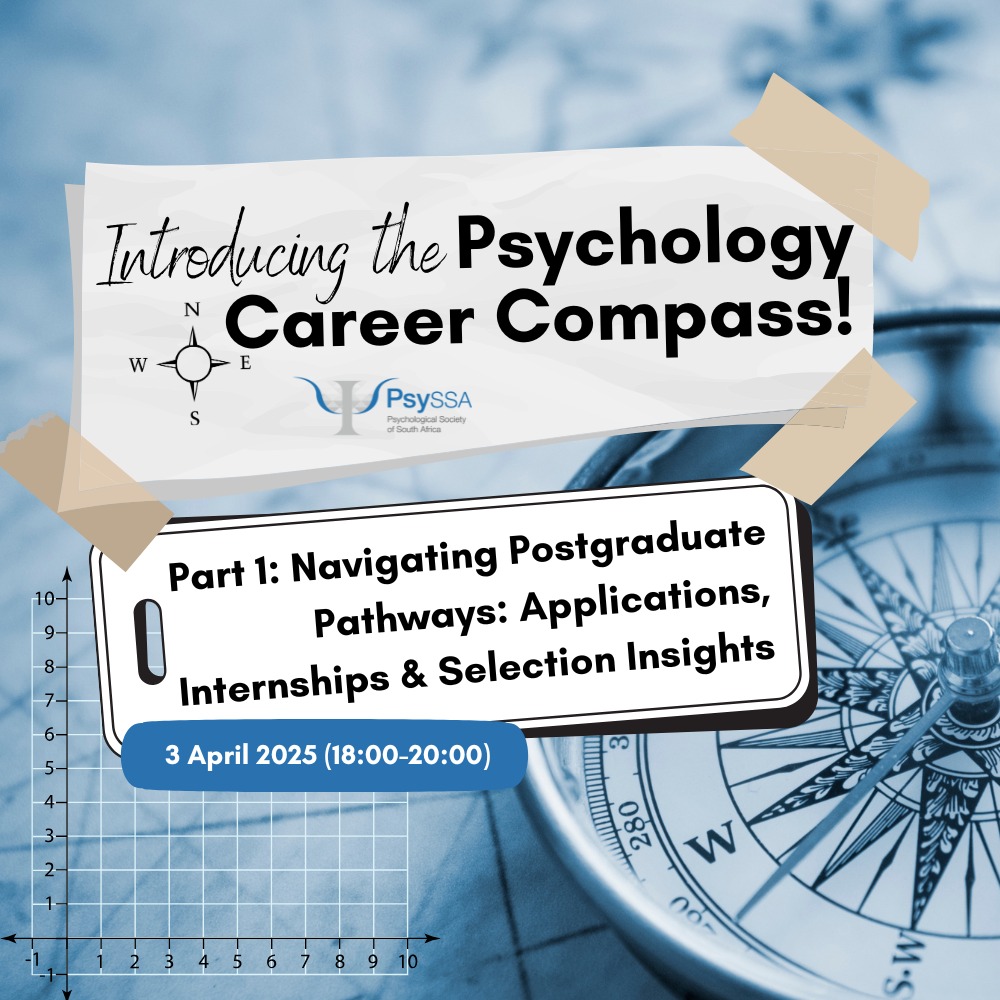
Navigating Postgraduate Pathways: Applications, Internships & Selection Insights (3 April 2025)
Workshop Details

  • Date: 3 April 2025
  • Time: 18:00 – 20:00
  • Cost: Free
  • Online via Zoom

Deciding what comes next after your Psychology Honours or undergraduate studies can be overwhelming—but you don’t have to navigate it alone. This interactive workshop brings together experienced psychologists and academic representatives to guide you through the diverse professional pathways available in South Africa.

Participants will gain critical insights into academic programmes such as Clinical, Counselling, Educational Psychology, Research Psychology, and Psychometry, including their minimum requirements and selection processes. Presenters will share firsthand experiences from their registration categories, highlight typical caseloads, clarify common misconceptions, and offer candid advice about challenges such as medical aid navigation or entering private practice.

Attendees will also hear about internship opportunities, accredited institutions, and receive practical tips on building a strong application. Whether you’re planning your next academic move or still exploring options, this session is designed to empower you with knowledge and motivation to pursue your career with clarity and confidence.

Meet the Presenters
Prof Ronelle Carolissen

Prof Ronelle Carolissen

PsySSA President

Dr Pakeezah Rajab
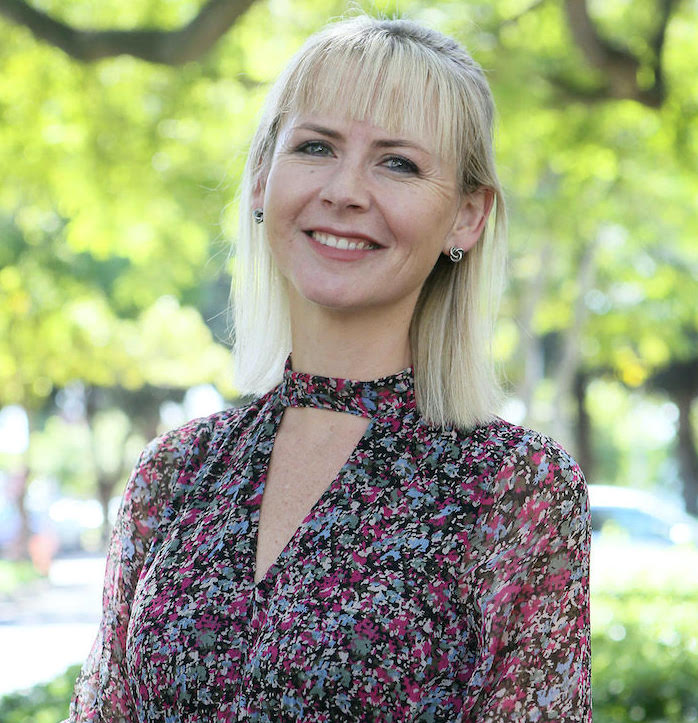
Dr Pakeezah Rajab

Dr Leigh Adams Tucker

Dr Leigh Adams Tucker

Dr Guru Kistnasamy

Dr Guru Kistnasamy

Chantel Retter

Chantel Retter

Lynne Richards

Lynne Richards

Rekha Kangokar Rama Rao

Rekha Kangokar Rama Rao

Michelle Fourie

Michelle Fourie

Part 2:

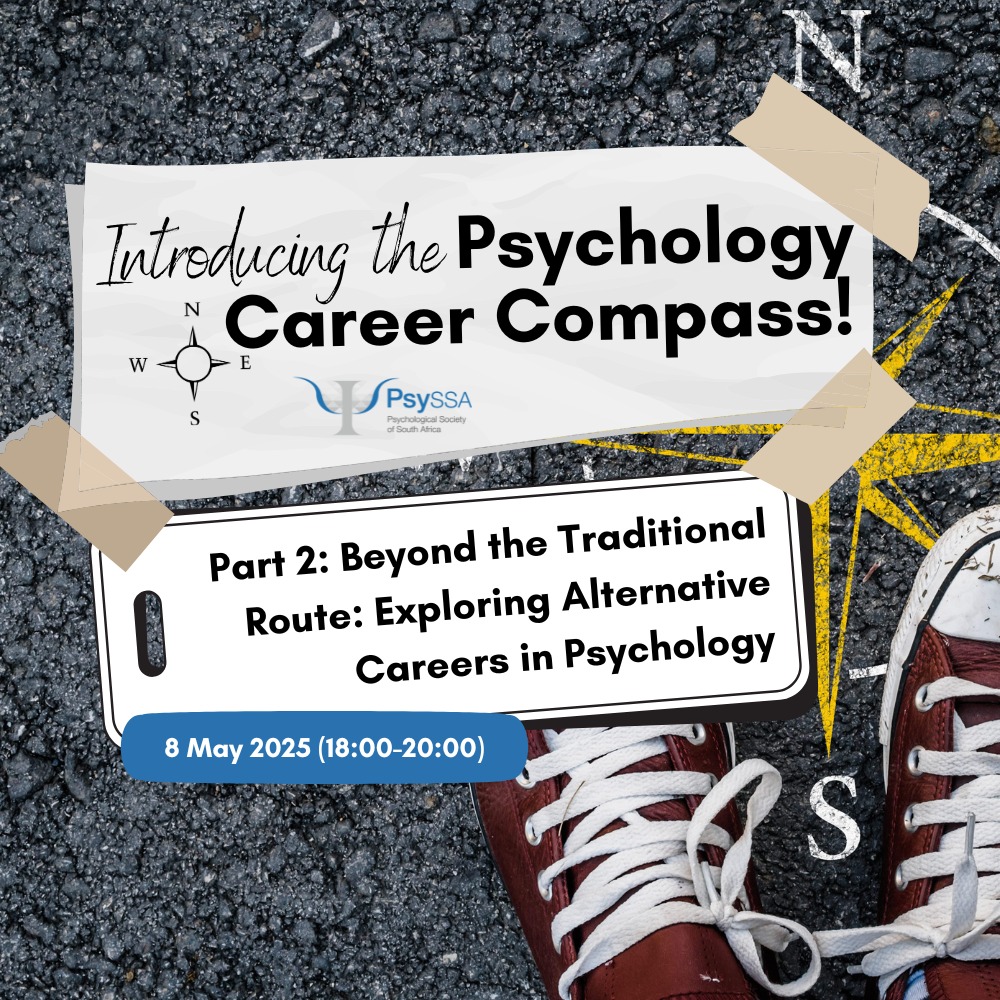
Beyond the Traditional Route: Exploring Alternative Careers in Psychology (8 May 2025)
Workshop Details

  • Date: 8 May 2025
  • Time: 18:00 – 20:00
  • Cost: Free
  • Online via Zoom

Not every journey in psychology follows a straight line—and for many, the path beyond Honours or unsuccessful programme placements can still lead to a fulfilling, impactful career. This workshop is designed for students and early-career graduates who are exploring how to apply their psychology skills in innovative and non-traditional contexts.

Join professionals who have transitioned into dynamic roles across industries such as user experience, digital marketing, behavioural science, corporate training, research, and more. Through engaging discussions, they will share how their psychology background positioned them for success, what additional skills or mindset shifts were needed, and how to leverage psychological training in fields outside of clinical or registered practice.

Meet the Presenters
Dr Avivit Cherrington

Dr Avivit Cherrington

Prof Barry Viljoen

Prof Barry Viljoen

Kgomotso Sekhute

Kgomotso Sekhute

Leonie Vorster

Leonie Vorster

Lynne Richards

Lynne Richards

Human Rights Day – 21 March 2025

Human Rights Day – 21 March 2025

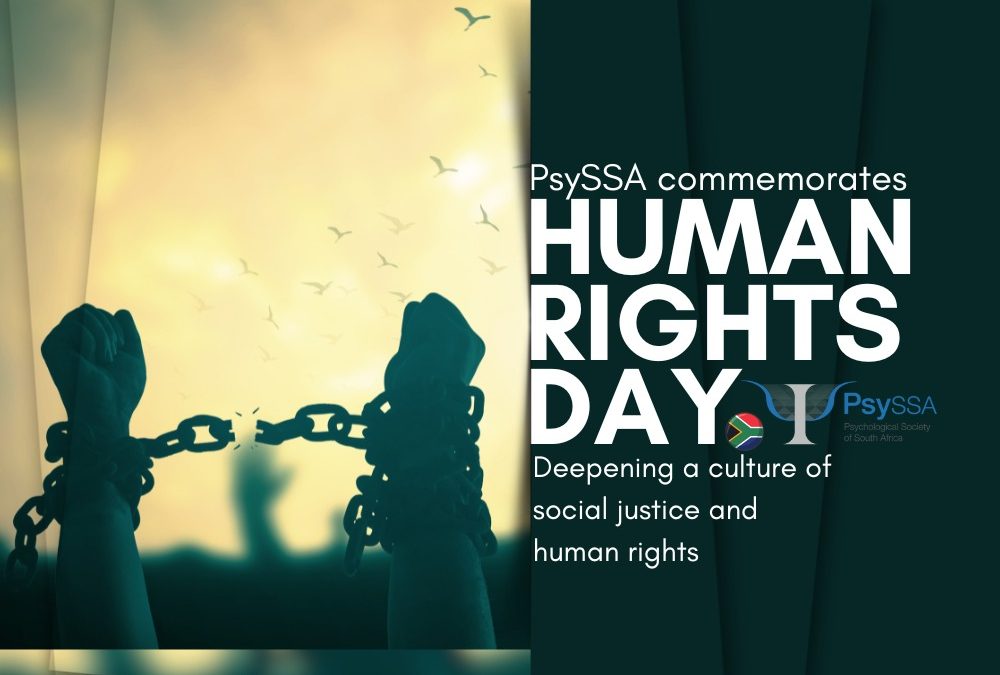
PsySSA Commemorates Human Rights Day – 21 March 2025

Beyond Commemorations: Advancing Social Justice and Human Rights

By: Justice Desk Africa and PsySSA’s Decolonising Psychology Division

 On 21 March 1960, the township of Sharpeville became the site of one of South Africa’s darkest days. A peaceful protest against the apartheid regime’s oppressive pass laws ended in tragedy as police opened fire on an unarmed crowd of 5,000 people. Sixty-nine lives were lost, and hundreds more were wounded in what would come to be known as the Sharpeville Massacre. This event was a turning point in the struggle against apartheid, exposing the brutal nature of the regime to the international community and galvanising the fight for justice and equality. Today, we commemorate this day as Human Rights Day, not only to remember those who died but also to reflect on the state of human rights in South Africa and the unfinished work of social justice.

Since the fall of apartheid in 1994, South Africa has made considerable strides in establishing a constitutional democracy rooted in human rights. The Bill of Rights enshrined in our Constitution promises dignity, freedom, and equality for all. Yet, the realities of daily life tell a different story one where the legacies of colonialism and apartheid continue to manifest in systemic injustices. Economic inequality remains one of the most pressing issues, with wealth still largely concentrated in the hands of a few, while the majority, particularly Black South Africans, remain trapped in cycles of poverty. Racial capitalism, where economic power is still racialised, further entrenches these divides, making true social justice an elusive goal.

Gender-based violence continues to plague the country, with women and LGBTQIA2S+ individuals disproportionately affected. Despite progressive laws and policies aimed at combating gender inequality and violence, the failure of the state to implement these protections effectively has left many vulnerable. Xenophobia also rears its head repeatedly, with foreign nationals scapegoated for socio-economic hardships, undermining the principles of Pan-Africanism and Ubuntu that should be guiding our democracy.

Moreover, the very institutions meant to uphold human rights often become perpetrators of systemic violence. Police brutality, reminiscent of apartheid-era repression, continues unabated, particularly in marginalised communities. Access to basic services such as quality education, healthcare, and housing remains unequal, revealing a persistent gap between constitutional ideals and lived experiences. Corruption within government structures further erodes public trust, diverting resources away from those who need them most.

In light of these ongoing struggles, deepening a culture of social justice and human rights is more than a moral imperative – it is a necessity for South Africa’s democratic survival. Symbolic recognition of human rights is not enough; there must be a concerted effort towards structural transformation. This requires not only policy reforms but active citizen engagement in dismantling systems of oppression. The Constitution must be more than a document, it must be a living, breathing force that informs legislation, governance, and social action.

Justice is not a passive ideal bestowed from above; it is a collective struggle that must be fought for and defended daily. True human rights are realised in solidarity with the most marginalised. This means standing against economic exclusion, advocating for gender justice, challenging xenophobia, and demanding accountability from those in power. Human Rights Day must serve as more than a moment of remembrance – it must be a call to action!

Organisations like Justice Desk Africa embody this commitment by working on the ground to educate, empower, and advocate for those whose rights are often disregarded. Their work highlights that real transformation begins with grassroots movements that challenge oppressive structures and foster communities grounded in dignity and equity.

As we reflect on the Sharpeville Massacre and the sacrifices made for our freedoms, we must ask ourselves: What are we doing to uphold the values that those who came before us fought for? Are we complacent in the face of injustice, or are we actively working towards a society where human rights are not a privilege, but a lived reality for all?

The path to a just and equal South Africa remains fraught with challenges, but it is a path we must walk together. Only through collective responsibility, sustained activism, and unwavering commitment to social justice can we ensure that the horrors of the past do not define our future. Let us honour the memory of Sharpeville not just in words, but in action – by building a society that truly upholds the dignity and rights of every individual.


DRM Webinar: From Science Communication to Public Engagement

DRM Webinar: From Science Communication to Public Engagement

DRM Webinar: From Science Communication to Public Engagement

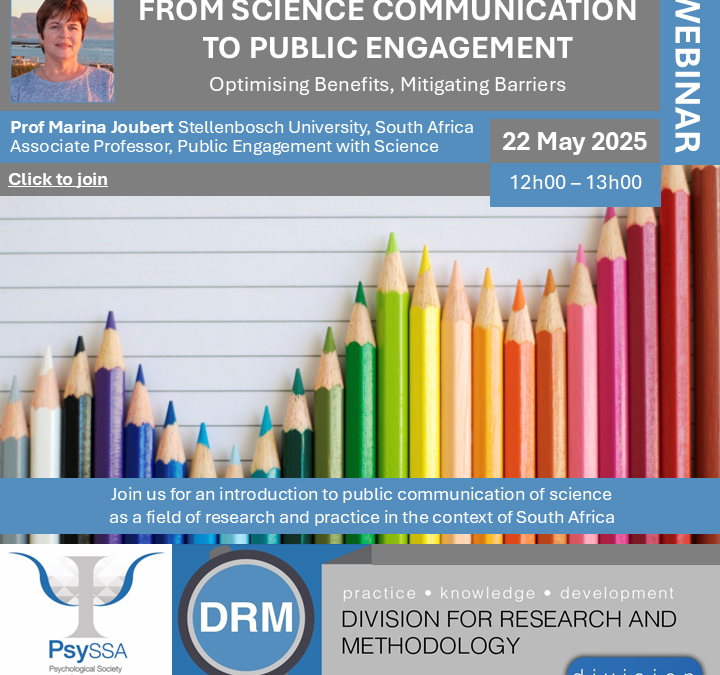
Join the PsySSA DRM and Prof Marina Joubert for an introduction to public communication of science as a field of research and practice in the context of South Africa.

From Science Communication to Public Engagement

Date: 22 May 2025

Time: 12h00 to 13h00

MS Teams Link: Click to join

About the webinar:

Professor Marina Joubert will introduce public communication of science as a field of research and practice in the context of South Africa, followed by a discussion of the rationale and drivers behind the trend from ‘public communication of science’ towards ‘public engagement with science’. She will explore the options for researchers to gain maximum benefit from public engagement while navigating the barriers and risks. Her talk will also briefly reflect on current insights from ‘the science of science communication’. She will share a curated collection of online resources with all participants.

Can’t join us live? Watch all recordings of the PsySSA DRM Webinars and Research Podcast episodes on the PsySSA DRM YouTube Channel

About the Presenter

Prof Marina Joubert

Prof Marina Joubert is an associate professor of public engagement with science at Stellenbosch University in South Africa. She leads the Public Engagement Lab, located within the Centre for Research on Evaluation, Science and Technology (CREST). Following a career of more than 20 years in science communication practice, she joined the university in 2015 to start a new teaching and research programme in public communication of science. At Stellenbosch, she is responsible for an extensive education and supervision programme and a diverse research portfolio. Her international research collaborations include the EU-funded Eco2Wine Project and the ‘Just Transitions for Anti-Microbial Resistance’ global convening funded by The British Academy. She serves as deputy editor of the Journal of Science Communication (JCOM) and is an honorary lifetime member of the global Public Communication of Science and Technology (PCST) Network. Her research focuses on scientists’ roles in public engagement with science and the motivations and challenges that shape their interactions with society. She is also interested in institutional science communication, representations of science in the mass media, the ethics of science communication, and online interfaces between science and society.

Email: marinajoubert@sun.ac.za

Online profile: https://www0.sun.ac.za/crest/staff/Joubert/

ORCID ID: orcid.org/0000-0003-0178-1796

Invitation To Private Psychiatrists and Psychologists

Invitation To Private Psychiatrists and Psychologists

Please submit your completed form and attachment by email to the Director-General: Department of Health, Dr Dudu Shiba, Director: Mental Health and Substance Abuse at Dudu.Shiba@health.gov.za; and
copy Bashu.Pule@health.gov.za.

Enquiries pertaining to submission of details may be directed to Dr Dudu Shiba at Email: dudu.shiba@health.gov.za or Mr Bashu Pule at Tel: 012 395 9533 and Email: Bashu.Pule@health.gov.za

Invitation for submission of details of private psychiatrists and psychologists (clinical, counselling and educational) who are prepared to conduct Assessments of Criminal Capacity of Children in terms of Section 11(3) of the Child Justice Act

Invitation for submission of details of private Psychiatrists and Clinical Psychologists who are prepared to conduct Forensic Psychiatric Enquiries for the Courts in terms of Section 77, 78, 79 of the Criminal Procedure Act.

HPCSA Information Session for CPD Providers 2025

HPCSA Information Session for CPD Providers 2025

HPCSA Information Session for CPD Providers 2025

Th HPCSA will be hosting an upcoming webinar for CPD service providers on 26 March 2025 from 08:00-09:00. This session will cover critical updates and provide valuable insights to help you stay informed and compliant with the latest guidelines.

Please find the webinar link attached: https://hpcsa-co-za.zoom.us/webinar/register/WN_GE3iBz0bRSSqjYyHJ3l3CQ#/registration

We strongly encourage your participation and hope you can join to ensure compliance with the latest developments.