PsySSA Commemorates SANCA Drug Awareness Week 2022

PsySSA Commemorates SANCA Drug Awareness Week 2022

While many have recognised mental health as the second pandemic resulting from the loss lives and isolation that accompanied the Covid-19 pandemic. Excessive drug use has been a major problem in South Africa even prior to the Covid-19, in particular alcohol, tobacco, and other illicit drugs such as tik, mandrix, and nyaope.  Covid-19 appears to have further exacerbated the use of drugs such as alcohol, with most people having struggled with their mental health leading to increase use in substances.

The World Health Organisation has noted not only does South Africa have one the highest prevalence rates of mental illness with 30% of all adults likely to experience a mental disorder in their lifetime. Coupled with the high rate of substance abuse in particular that of alcohol in which South Africa is ranked 6th in the world in terms of consumption, making the issue of mental health and substance abuse critically important.

As we commemorate drug awareness week it is important to keep in mind the effects that substance abuse has on lives of people. The physiological effects of substance abuse such as liver disease and has other social effects such as road accidents while also contributing to increase burden of diseases such as HIV. The impact of substance abuse on families, particularly the quality of the relationships between parents and children. In addition, substance abuse leads to increased risk of violence both within the home and at the level of communities. South Africa has seen an increase in violent crimes in particular Gender Based Violence, although no direct correlation can be drawn from the increase in substance abuse and Gender Based Violence, it is recognised as a major contributing factor in violence.

Against these factors it may be useful for us as psychologists to consider the ways in which we may intervene to reduce the impact of substance abuse in the lives of South Africans. Well awareness about the dangers of substance abuse is integral, it is also vital that we take into consideration various ways in which to intervene with individuals dealing with substance abuse. While there are resources available, as with many resources in the country these are significantly under resourced. It may be important for us as psychologists to find ways in which we can assist the various organisations that attempt to intervene with substance abuse.

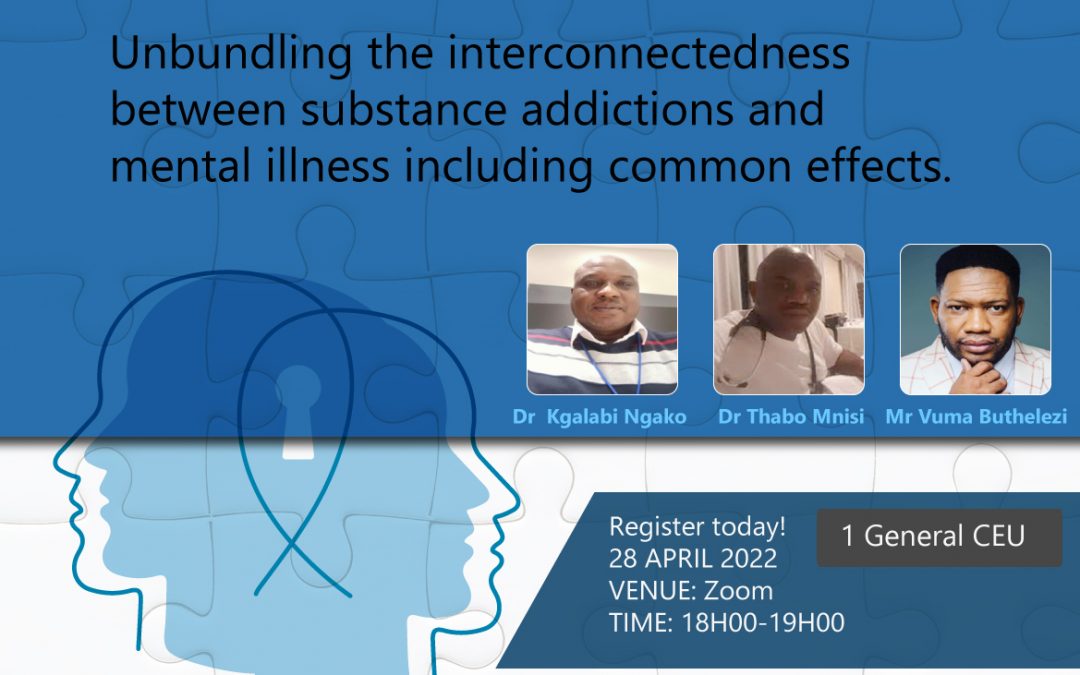
SASCP Roundtable: Unbundling the interconnectedness between substance addictions and mental illness including common effects.

SASCP Roundtable: Unbundling the interconnectedness between substance addictions and mental illness including common effects.

About this roundtable:

Purpose:  To have a roundtable discussion that explores the interrelatedness and the network effects of substance abuse and mental illness. Mental illness and addiction both result in manifestation of behavioural, psychological, or bio-neurological dysfunction in an individual. In an article by Hanna Ritchie (2018), it is estimated that around one billion people globally have a mental or substance use disorder. Mental health can incorporate a range of different but sometimes connected disorders such as depression, anxiety, bipolar, eating disorders, schizophrenia, and alcohol and drug use disorders.   

Problem Statement: The subtleties of signs and symptoms of mental illness and addiction might lead to misdiagnosis or dual diagnosis in psychotherapy as they both present with cognitive and psychoneurological impairments. A need to understand dual diagnosis and systematic review of outcomes in therapeutic settings.

Motivation for the Discussion: The dialogue seeks to create a discourse for mental health discussion on psychological, biological and neurological effects of substance abuse. The prevalent use of over the counter prescriptions/ medications to hard-core street drugs such as “woonga and nyaope” has created a dangerous ground for mental health problems in both urban and rural areas in South Africa. The effects of substance dependency have a resultant susceptibility to personality, cognitive, mood and mental health disorders including death. These addictions alter brain composition and function, genetic vulnerabilities, cause psychosocial dysfunction and exposure to stress or trauma. Furthermore an upsurge to substance excess use/abuse lead to psychological ill health, anxiety, criminal activities, violent behaviour and suicide. There is a need for contemporary clinical psychologists to raise the standard in treatment modalities. The rising epidemic and the indications of abusers getting younger and younger, makes an opportunity for clinical psychologists in South Africa to engage and bring about diverse treatment modalities. The ripple effects of substance abuse from individual to families and communities calls for an empirical focus and adaptation for practitioners to have a broader therapy focus.

Meet our Presenters!

Dr Kgalabi Ngako is a Deputy Director at National Department of Health dealing with Policy for substance abuse. Previously a deputy director responsible for monitoring and evaluation and as a project manager in South African Medical Research Council ( Alcohol , Tobacco and other drug Research Unit. He had publications on substance abuse in peer reviewed scientific journals Mr Ngako has a Doctorate in Health studies from UNISA and Certificate on media based prevention science from Claremont Graduate university

Dr Thabo Mnisi is a Specialist Family Physician at 1Military Hospital. He holds the following qualifications: MBChB, FCFP, M. Med (Fam Med). PGDDS, PSc. Med Law. MBL. Dr Mnisi is involved in research unit on HIV. He is also teaching and doing private clinical work. He has been involved with communities on mental health, substance abuse, youth development and a speaker in different forums covering diverse topics.

Mr Vuma Buthelezi has been a radio presenter and on air presenter since 2008 to date; from Durban youth Radio to Gagasi FM. He is also a lecturer at Creative Arts College Digify Africa media and a vice tutor. An artist , DJ, master of ceremonies, Magazine editor and radio presenter for diverse sessions: Breakfast; midday; sundowner; mix, urban; and eclectic drive. His interest involve engaging with listeners on topics that affects communities. He create awareness on many issues including mental illness.


PsySSA Roundtable: Suicide in South Africa: An Intersectional Dialogue – Q&A Follow Up

PsySSA Roundtable: Suicide in South Africa: An Intersectional Dialogue – Q&A Follow Up

Meet our Facilitator & Panellists!

Mr Suntosh Pillay – Facilitator 

Suntosh R. Pillay is a clinical psychologist at King Dinuzulu Hospital Complex, in Durban, where he has run individual and group psychotherapy services for over ten years. He is affiliated to the College of Health Sciences at the University of KwaZulu-Natal and is involved in a diverse range of academic projects related to psychosocial health, using a critical, decolonial, and community psychology lens. He is a researcher in the African LGBTI+ Human Rights Project and serves on the Council of the Psychological Society of South Africa (PsySSA). In 2015, he co-founded the KwaZulu-Natal Mental Health Advocacy Group, an open and collaborative space that continues to host an annual symposium, free community forums, and an anti-stigma awareness walk in the province. He is on Twitter @suntoshpillay.

Ms Cassey Chambers – Operations Director, SADAG

Cassey started at The South African Depression and Anxiety Group (SADAG) as a volunteer telephone counsellor in the call center helping to man the Suicide Crisis Helpline over 15 years ago. Later she ran the Call Center and Press, and currently is Operations Director and Board Member. Cassey represents SADAG at national and international conferences, various press and media interviews, workshops and advocacy projects to help fight for patients’ rights and destigmatize mental health across the country. Focusing on various projects including Teen Suicide Prevention School Programme, Rural Outreach Projects, Support Groups, Responsible Reporting initiatives with press and media, Mental Health in the Workplace and recent advocacy projects including the Life Esidimeni crisis and Medical Aids.

Ms Glynis HorningFreelance Writer

Glynis Horning is an award-winning freelance writer whose assignments have taken her from the townships of apartheid South Africa to the Rwandan refugee camps in Zaire, from the Amazon jungle to ice floes in Patagonia. Horning is the recipient of the Discovery Health Journalism Award for Best Health Consumer Reporting and Feature Writing, the Pfizer Mental Health Journalism Award and a Rosalynn Carter Fellowship for Mental Health Journalism. She was Galliova Health Writer of the Year in 2017, 2019, 2020 and 2021. Nothing could have prepared her for the loss of her son at 25. She lives in Durban with her husband Chris and son Ewan.

Mx Saya Pierce-JonesJournalist

Saya Pierce-Jones is an award-winning Cape Town based journalist, a queer activist and environmental campaigner. Her passion is in social justice, ending period poverty and promoting sexual and mental health awareness for all South Africans. Following nearly a decade of covering some of the most gruesome incidents of crime, sexual abuse, oppression and failures within government entitites, she has now also become a law student and hopes to one day practice in the field of social justice. Personally, she is also a survivor of GBV and has been diagnosed with clinical depression and anxiety, and is a survivor of suicidal ideation/experimentation. Saya believes in honest discourse around these issues, so as to address the shortfalls, end the stigma and promote access to life-saving health care

Dr Sebo SeapeSASOP President

Dr Seape is the first Female Black Psychiatrist in South Africa, she is currently in Private Practice in Johannesburg (Parktown), with nearly 30 years of experience; and in that time,
she has had significant contributions in the increase in mental health awareness and comprehension in both marginalised communities and the private sector. She has a passion for community education and raising cognizance surrounding mental health issues and has been an enabler of the growth observed in Soweto Private clinics; wherein hospital beds grew from accommodating 18 to 50 patients. She has also been involved in various media platforms including Media Talks, and engagements with the government and the Council of Medical Schemes; to improve the structuring of health services and benefits. She was appointed as the first Psychiatrist at Tshepo Themba Private Clinic. She is the past chair of the Psychiatry Management Group and president of the South African Society of Psychiatry (SASOP).

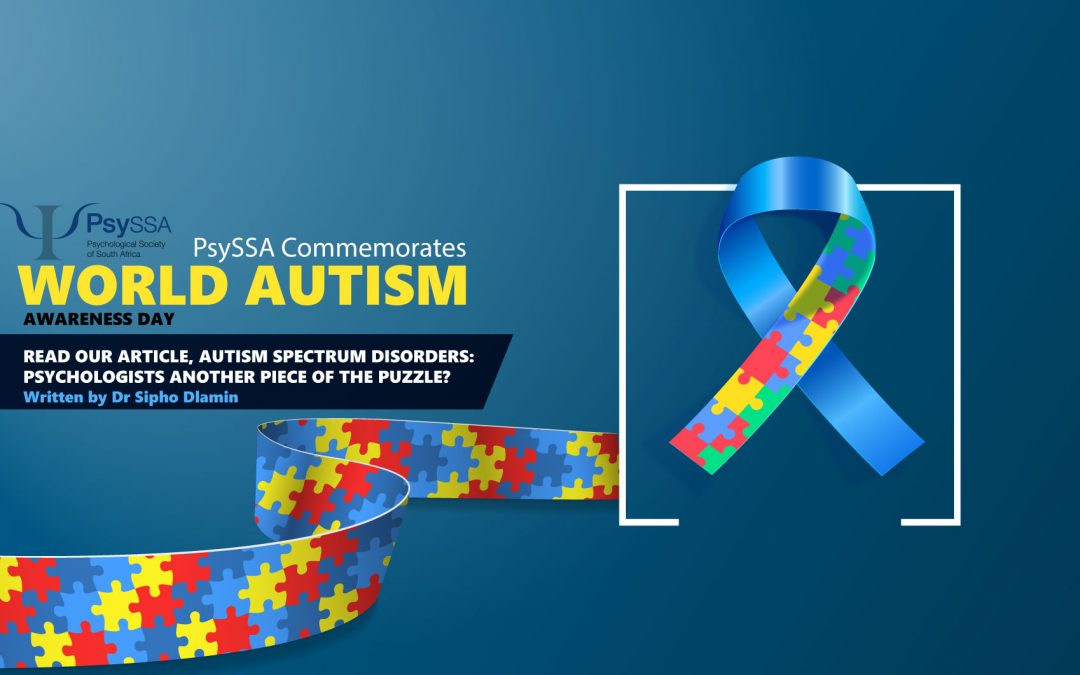
Autism Spectrum Disorders: Psychologists another Piece of the Puzzle?

Autism Spectrum Disorders: Psychologists another Piece of the Puzzle?

This year’s World Autism Day comes on the heels of changes made in the newly published Diagnostic Statistical Manual-Fifth Edition-Text Revision (DSM-5-TR), to clarify, amongst other things , that “persistent deficits in social communication and social interaction across multiple contexts, as manifested by the following: deficits in social-emotional reciprocity, in nonverbal communicative behaviors used for social interaction, and in developing, maintaining and understanding relationships” are all integral to the diagnosis of Autism Spectrum Disorders.

The use of the puzzle piece has been heavily criticised within as reinforcing negative views of people on the spectrum . These negative views of Autism Spectrum Disorders are often driven by the curative approach to Autism Spectrum Disorders , rather than focusing on increasing strengths for people who have been diagnosed with Autism Spectrum Disorders. This is historically linked with the biomedical model which focuses on ameliorating disease then psychosocial adjustment.

For many psychologists, our role is usually early in the life cycle of treatment often being that of diagnoses. However, psychologists can, and should have a role beyond the diagnostic stage, fundamentally in assisting parents adjust to ways in which they could assist their children who have been diagnosed with Autism Spectrum Disorders. This moves away from only focusing on diagnosis towards equipping parents with ways that enhance child’s skills, removes the focus on the child towards their social environment. In addition, focusing on naturing the skills of the child, rather than the curative approach that has dominated Autism Spectrum Disorder treatment.

Beyond the parental assistance and the focus on strengths for people on the spectrum, there is much misinformation about Autism Spectrum Disorders especially during the Covid-19 pandemic, with a rise in the anti-vax movements having sparked renewed anti-vax movements linked to autism. Psychologists are well positioned to mitigate the spread of misinformation and even falsehoods about the vaccines and Autism Spectrum Disorders.

On this world Autism Awareness Day, it is important that psychologists rise to the challenge of tackling misinformation that continues to cause harm to families and people on the spectrum, including the deficit discourses around people on the spectrum. The role of psychologists should be taken outside the therapy rooms to influence policy about how best to offer treatment for people on the Autism Spectrum Disorders.