PsySSA Registered Counsellors and Psychometrists (RCP’s) Meet and Greet – Cape Town

PsySSA Registered Counsellors and Psychometrists (RCP’s) Meet and Greet – Cape Town

RCP Meet and Greet – Cape Town

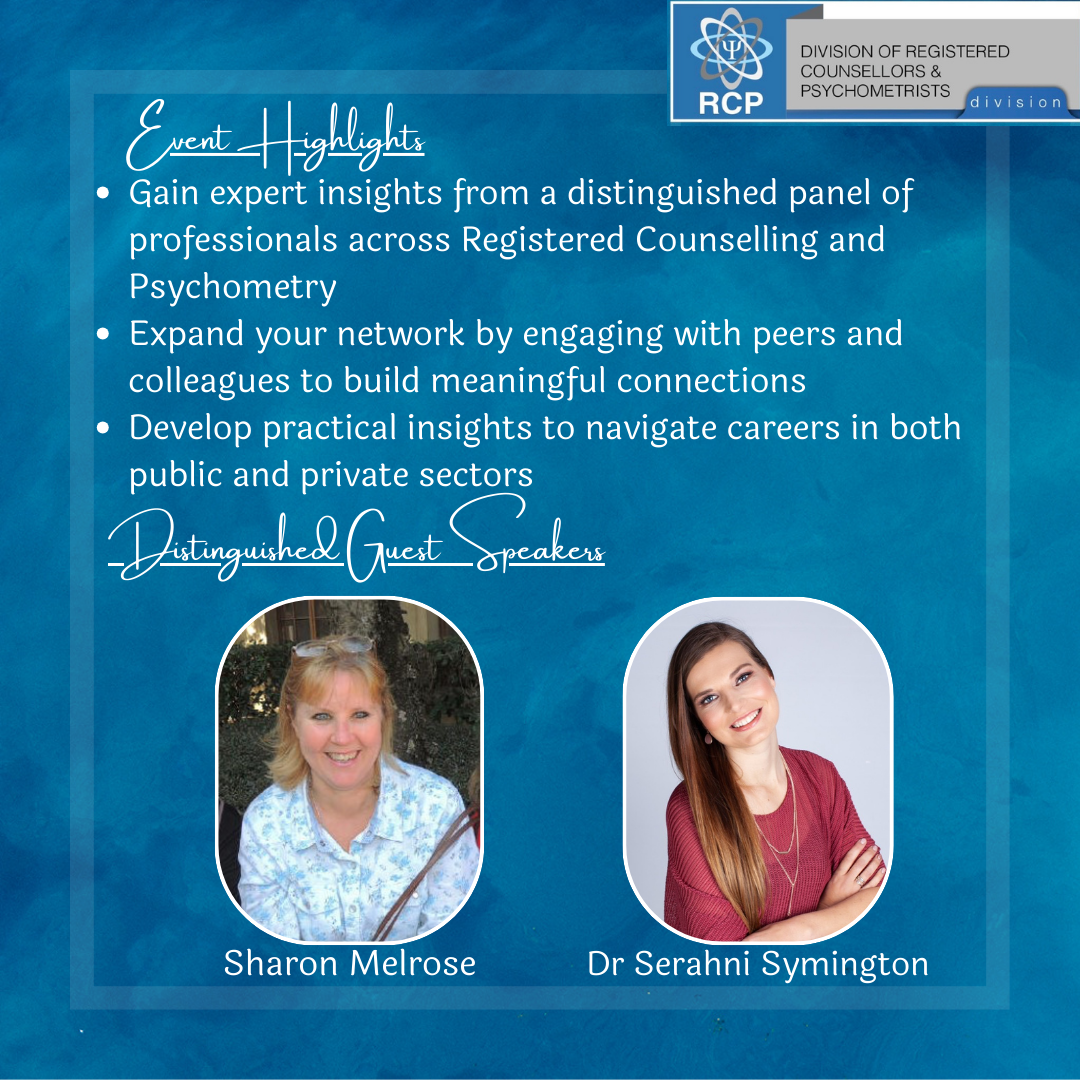
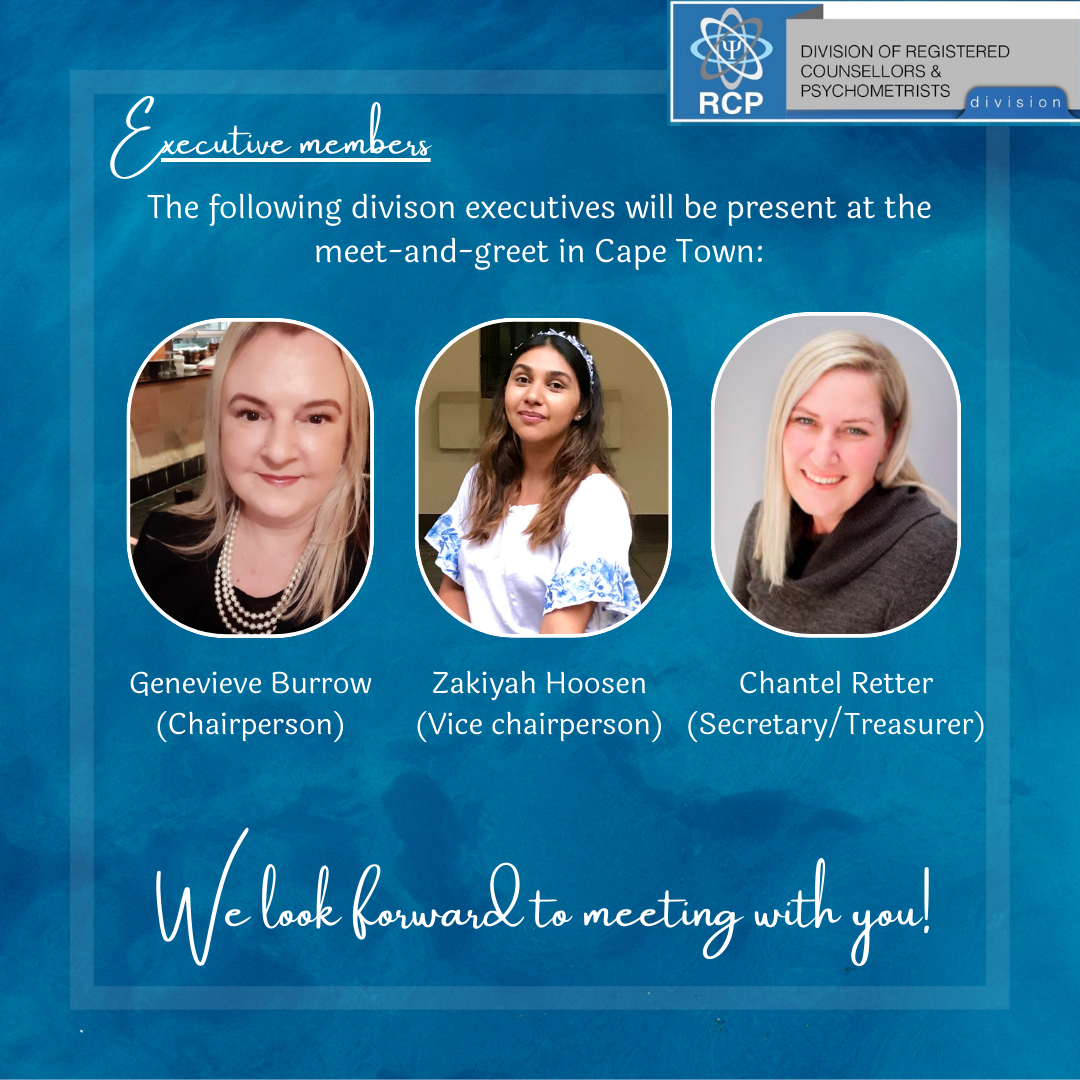
We are delighted to announce the first in-person meet-and-greet of 2024 for PsySSA Registered Counsellors and Psychometrists (RCPs), open to both members and non-members. Join us in Cape Town on 6 December 2024 for a day of connection, learning, and professional growth.

Event highlights include:
Expert Insights: Gain valuable perspectives from a distinguished panel of experts sharing their knowledge across various domains of Registered Counselling and Psychometry practice.

Networking Opportunities: Engage with peers, exchange ideas, and build meaningful connections to enhance your professional community.

Skills Development: Learn practical strategies and insights for navigating careers in both public and private sectors, with an emphasis on innovation and professional excellence. This is an unmissable opportunity to enrich your understanding of the field, celebrate shared goals, and contribute to the growing network of RCP professionals. We look forward to welcoming you to this dynamic and inspiring event!

Cost: Free for members, R70 for non-members and students

RSVP Link: https://forms.gle/RJk3vHuMy9Sy27Up6
Kindly RSVP by 29 November 2024

Guest Speakers
Dr Sehrani Symington

Dr Serahni Symington is an experienced registered counsellor, educator, and senior lecturer with a PhD in psychology. With over a decade in academia, Dr Symington has not only taught but also coordinated practicum programs, helping students bridge theory with practice in real-world settings. Her research explores innovative methods in counselling, such as using video games to foster connection with young clients, and she’s passionate about making psychological insights accessible to families. Based in Durbanville, Dr Symington is deeply committed to supporting the healthy development of children and adolescents through conscious parenting, family counselling, and educational initiatives, whilst remaining steadfast in academia.

Sharon Malrose

Sharon registered as a Counselling Psychologist in 2006 after completing her master’s degree (cum laude) at the University of Stellenbosch. Her internship provided extensive experience in both clinical and counselling settings through work with an NGO in Paarl and a psychiatric division at a local day hospital. While establishing her private practice, she offered school-based counselling services and collaborated with social workers in the winelands area. At FAMSA, Sharon specialized in family matters, qualifying as a FAMAC mediator and focusing on parenting plans and advocating for children during family transitions.
Currently, Sharon is a faculty member at Cornerstone Institute, where she lectures in Family Psychology and Psychometric Assessments. She actively supervises postgraduate psychology students, Registered Counsellors, and fellow psychologists. Her role in teaching, supervision, and private practice allows her to contribute to the growth of Registered Counsellors (RCs) and advance psychological services with over 15 years of experience.

16 Days of Activism for No Violence Against Women and Girls – 25 November-10 December 2024

16 Days of Activism for No Violence Against Women and Girls – 25 November-10 December 2024

All it takes

Written by Leonie Vorster, Trauma and Violence Division Executive Committee Member 

If you talk to just three children and three women in South Africa, you are highly likely, statistically speaking, to come face-to-face with gender-based violence (GBV). Long after the six conversations, two survivors and those close to them will be living with the impact of GBV, while the perpetrators reoffend, unchallenged and unchanged.

GBV (violence perpetrated against any person based on their gender) can lead to Post Traumatic Stress Disorder, obsessive behaviour, compulsions, anger, antisocial behaviour, anxiety, stress, depression, dissociation, self-injury, body issues, gastro-intestinal issues, somatic complaints, substance abuse, relationship issues, sexual difficulties, and a host of serious physical and psychological disorders (Vorster, 2021).

Addressing the scourge of GBV does not lie with the one in three survivors, though they are a stark, statistical reminder that we are failing to tackle GBV. Health professionals are justified in supporting GBV survivors and, understandably, that is where the focus has been. However, helping the perpetrators of GBV is the best way to prevent GBV, and we have failed at this (Vorster, 2021).

Working with perpetrators of violence against women and children can be challenging, and prevention is complex. Perpetrators often have gender role strain issues, resorting to violence to cope with feelings of inadequacy (Baugher, 2015). Furthermore, violence against women and violence against children intersect, emphasising the need for collaborative efforts to address both (UNICEF, 2024). The definition and acceptability of what constitutes GBV also varies significantly across diverse cultures and contexts, underscoring the importance of culturally sensitive approaches in research, intervention, and prevention programmes (Perrin et al., 2019). Nonetheless, exposure to various forms of violence has adverse health outcomes for victims, regardless of cultural context (Rivara et al., 2019).

Interventions based on “naming and shaming” perpetrators may not be effective in reducing violence or enhancing safety for women and children. Arguably, isolating perpetrators (as opposed to reintegrating them) can reinforce negative self-perceptions and perpetuate violent behaviour. In contrast, approaches that focus on holding perpetrators accountable in a way that encourages rehabilitation and offers alternative, non-violent models of behaviour are more promising when it comes to prevention (Camp, 2019).

What will it take to create a world free from violence towards women and children?

Effective prevention requires multi-sectoral approaches, community involvement, and long-term strategies; addressing underlying social drivers like gender inequality, harmful societal norms, and patriarchal values; psychological health interventions, parenting programmes for perpetrators, and reducing reoffending; and policy changes, systemic thinking, and system-wide interventions (Fernández-Conde et al., 2024).

The 16 Days of Activism against Gender-Based Violence annual international campaign kicks off on 25 November, the International Day for the Elimination of Violence against Women, and runs until 10 December, Human Rights Day. This year’s campaign theme is UNITE! Invest to prevent violence against women and girls. The campaign calls on citizens to show how much they care about ending violence against women and girls by sharing the actions they are taking to create a world free from violence towards women. This year’s campaign also calls on governments worldwide to share how they are investing in gender-based violence prevention.

There is #NoExcuse.

DRM Webinar: Introduction to Survey Interviewing

DRM Webinar: Introduction to Survey Interviewing

DRM Webinar: Introduction to Survey Interviewing

Join the PsySSA DRM and Leonie Vorster for the last PsySSA DRM webinar for 2024, and it’s free!

Date: 21 November 2024

Time: 12h00 to 13h00

MS Teams Link: https://tinyurl.com/3r96yj37 (no registration is needed to attend)

About the webinar:

Now more than ever, information from the Global South should be shared to ensure justice, equality, and equity for all forms of knowledge. This is especially problematic with AI models being trained and tested primarily based on information from the Global North. Collecting and sharing information that represents a plurality of bodies of knowledge is imperative. Survey research is one of the ways that researchers collect information, asking for answers to specific questions from a selection of people. Information from survey research allows researchers to understand, interpret, and even change the world. In this webinar, the focus will be on using survey interviewing to create quality data. You will learn about the role of the interviewer, how to ask great questions, how to deal with bias, a practical system to apply during survey interviews, examples of do’s and don’ts for survey interviewing, and the ethical principles to adhere to, to make sure that the credibility of your research is not compromised.

Can’t join us live? Watch all recordings of the PsySSA DRM Webinars and Research Podcast episodes on the PsySSA DRM YouTube Channel

About the Presenter

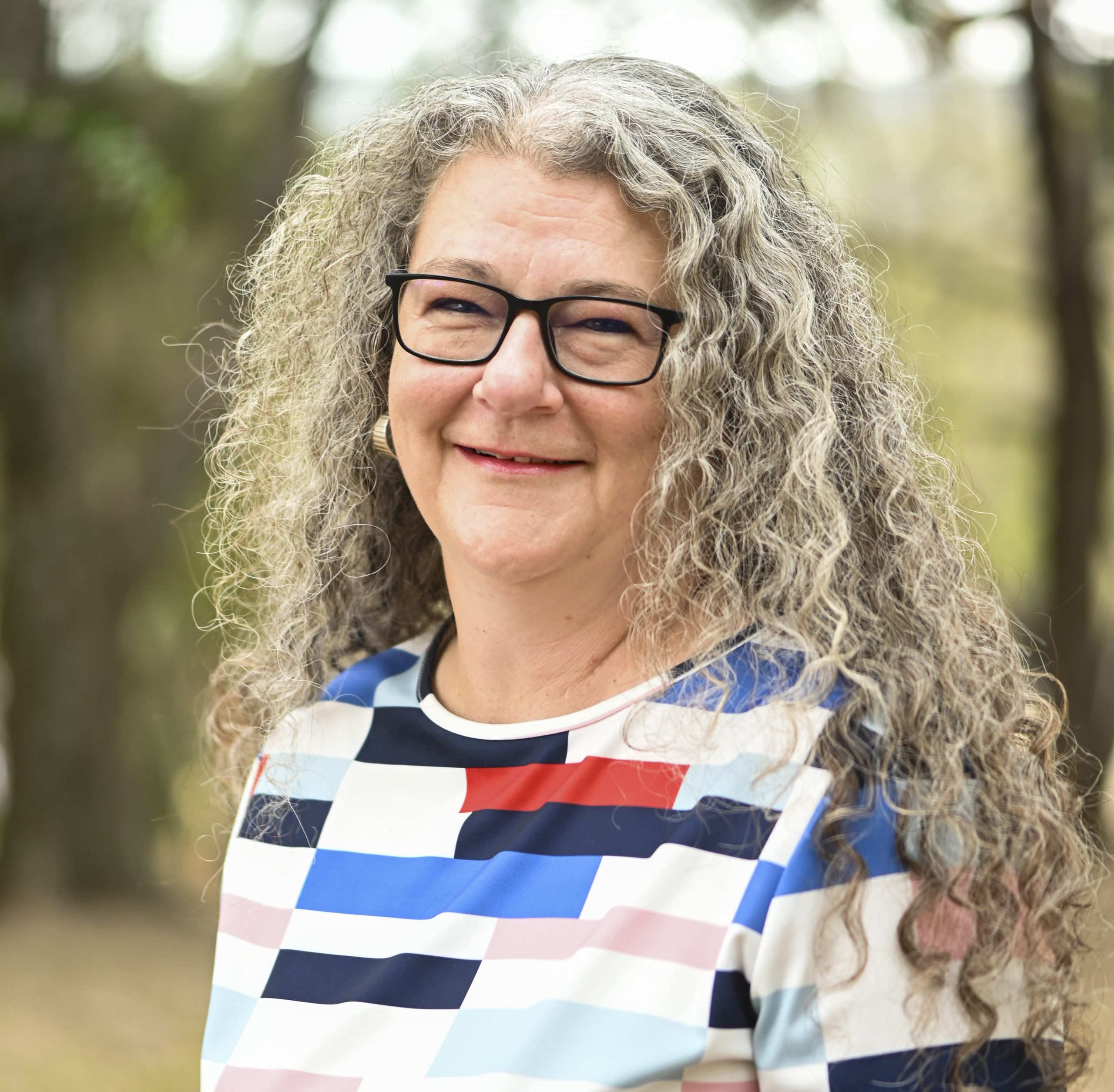
Leonie Vorster is a Research Psychologist, chairs the PsySSA Division for Research and Methodology, and is the author of Five Seats, a magical realism novel. She strives to ensure the effective and just use of decisive, ethically sourced, accessible, actionable information, and actively promotes empowerment by seeking the furthest limits of the possible and imaginative to make a positive difference, while inspiring others to do the same. Leonie has completed more than 400 research and consulting assignments for government, semi-government, private, and not-for-profit clients in more than 40 countries across the globe. She has delivered more than a hundred articles, papers, and talks for South African, African, and global audiences, and has edited more than a hundred articles for online and offline publication, including conference papers, and research articles in international academic journals. Leonie has a legendary commitment to professional excellence and an unwavering passion for quality, ethical standards, and sustainable interventions.

International Network for Hate Studies Conference 2024 – Abstract Book Out Now!

International Network for Hate Studies Conference 2024 – Abstract Book Out Now!

We are pleased to announce that the Abstract Book for the International Network for Hate Studies Conference is now available.

The Abstract Book includes detailed summaries of the presentations, keynotes, and panels scheduled for the conference, offering valuable insights into the diverse topics to be explored.