
Conversation on Being a Guerrilla Scholar With Lara Sheehi & Stephen Sheehi – Recording Out Now!
Click below to watch the recording now!


Building a Unified, Relevant, and Responsive Psychology
Click below to watch the recording now!


PsySSA thanks our 26th Annual South African Psychology Congress for their effort, dedication and service to the Society and Congress.
See below their reflections on attending the Congress as emerging practitioners!
1. Priyanka Kisten, Honours in Psychology UKZN
Absolutely amazing first experience at the conference, so informative and interesting
2. Nobanzi Dlamini, BA Counselling Psychology UNISA
The event was an insightful wealth of knowledge and learning. It provided one with much needed connections and inspiration.
3. Naseeran Vally, BCom Honours in Industrial Psychology UNISA
It was a great first experience, very informative and a good opportunity to network.
4. Noor Ahmad, MA Psychology (Coursework and Research) University of Witwatersrand
The congress was very informative and a good opportunity to learn from and connect with seasoned professionals and psychologists in the field.
5. Raeesa Mathews, MCom Industrial/Organisational Psychology University of Cape Town
My experience at congress was very insightful and I am inspired to continue in the field of psychology more broadly (and not just in IOP)!
6. Ané Van Zyl, Bachelor of Psychology, SACAP.
I was up and down but I enjoyed every second, I loved the presentations and the delegates for the most part were great to have educational discussions with
7. Nicholas Nortier BA(Business Management and Psychology) SACAP PTA.
It was a privilege and an honour to attend such an event, grew both in knowledge and personally.
8. Valencia Kgadima BA(Hons) in Psychology UNISA.
The congress was very informative and I’ve learned a lot of things in different psychology field.
9. Boitumelo Motaung BSocSc (Psychology and Criminology) University of the Free State
It was an amazing and interesting 1st experience. Learning more about the study field was very informative
10. Lynne Richards Masters of Social of Social Science in Clinical Psychology, University of KwaZulu Natal.
The PsySSA congress is a pivotal event is the psychology calendar and it is an amazing opportunity for students. I am appreciative of the staff and speakers who are willing to give of their time to engage with myself and my colleagues. The opportunity for students to volunteers is invaluable.
11. Tanya Meyer Bachelor of Social Sciences Honours (Psychology) SACAP
The experience was inspiring as well as enlightening. One of the highlights of the experience was when I got to meet the authors of the books and journal articles I have been citing since undergrad.
12. Britney bengtson, BA Honours Psychology Varsity College Durban North – PsySSA Student Division Secretary
Volunteering at the 26th annual PsySSA congress was not only an opportunity to assist PsySSA head office but in addition it was a wonderful opportunity to learn, connect, and be inspired by the great minds in psychology South Africa
13. Maryam Gangat, Psychology Honours Graduate University of KwaZulu-Natal – PsySSA Student Division Vice-Chairperson
As a first time congress volunteer, attending the 26th Annual PsySSA Congress was a phenomenal experience. I had numerous opportunities to meet phenomenal, influential and truly inspirational professionals and have interacted with psychologists who have only fueled my passion for the field of psychology.
14. Bridgette Mogoje, Student Registered Counsellor (UKZN) – PsySSA Student Division Chairperson
Volunteering at the 26th Annual South African Congress has afforded me an opportunity to truly reflect on the type of professional I would like to become and has broadened my perspective on the type of issues our communities are faced with. In between the volunteer work, we were able to interact with professionals who have done amazing work in the field and were willing to answer questions from students. I am grateful to PsySSA for affording us this opportunity to learn and be inspired!
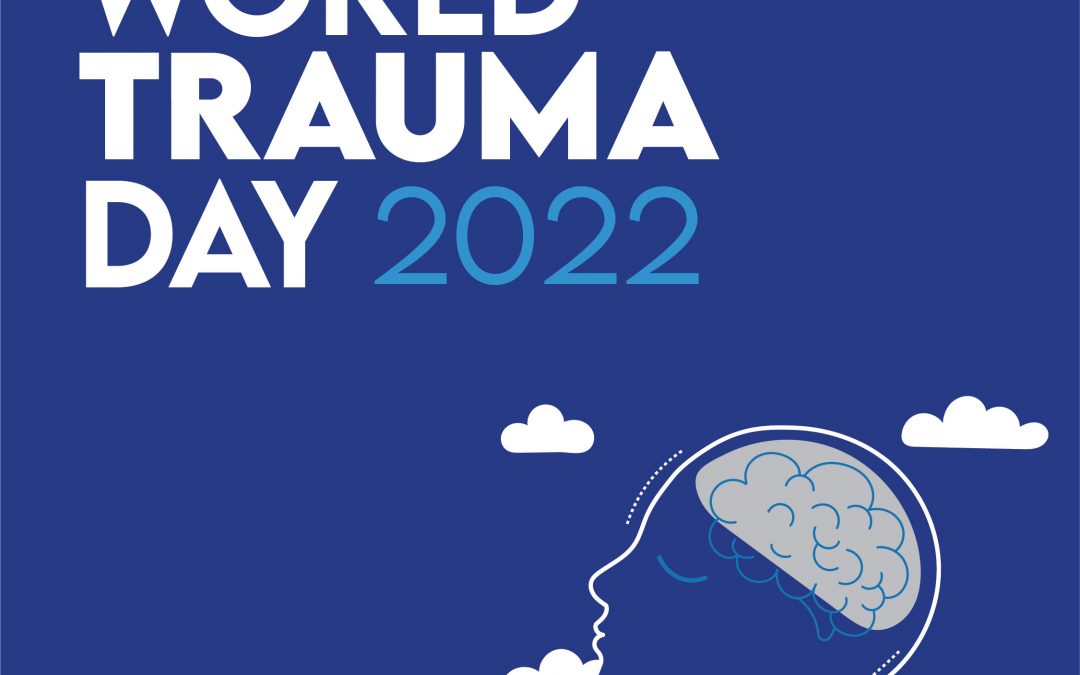
“Trauma constantly confronts us with fragility and with man’s inhumanity to man, but also with our extraordinary resilience” (van der Kolk, 2014).
World Trauma Day, observed on 17 October, emphasises the need to prevent deaths and disabilities caused by accidents or trauma. It was initiated in New Delhi in 2011 to highlight the number of deaths caused by motor vehicle accidents (Sahu, 2022). The purpose of World Trauma Day lies in generating awareness on various precautionary measures and averting deaths and disabilities caused by traumatic incidents. As per a study conducted by the World Health Organization (2021), nearly half of the trauma-related deaths occurring in developing countries could have been prevented with psychoeducation programmes and effective intervention, such as:
On commemoration of this day, we acknowledge that trauma is a major cause of preventable death and disability across the world. And whilst in the medical world, trauma is considered an event causing physical injury, we also see it pertinent to acknowledge that trauma extends beyond the notion of physical trauma to also include psychological and emotional trauma exposure.
Certainly, South Africa is one of the few countries globally that has endured protracted political violence as well as high rates of criminal violence, domestic abuse, and accidental injury. This translates into South Africans being widely and commonly confronted with primary and secondary accounts of traumatic stressors, both in their everyday lives and in the mass media. For many South Africans, the stress of living in conditions of continuous traumatisation is compounded by the chronic anxiety wrought by severe economic deprivation. The civil unrest in KwaZulu Natal and Gauteng, the COVID-19 pandemic, and the flooding in KwaZulu Natal (amongst other events) in the past year further illuminated this social inequality.
Whilst we are a traumatised nation, we are also a resilient one, with ubuntu standing as one of our nation’s strongest symbols.
My humanity is preserved though you, and yours through us.
In this sense, amidst precarious times, we encourage mutual support among community members, relatives, friends, colleagues and even strangers, Support will go a long way to bring comfort and relief to distressed individuals. Knowing that someone cares and is willing to listen to one’s experiences is a crucial feat in healing. We also call upon government to embark on meaningful efforts to address the levels of traumatisation in our country, to prioritise the safety of women and children, and to increase safety in public places – understanding social inequality and poverty as key drivers (amongst others). Further, we call on communities to normalise conversations about trauma and its effects.
As we commemorate World Trauma Day, we appeal to individuals to seek assistance if they are experiencing trauma-related symptoms for which they cannot cope. including repetitive and distressing nightmares, flashbacks and/or memories and avoidance of trauma-related thoughts. In addition, one may experience depressive symptoms including negative thoughts and assumptions about oneself or the world, guilt and blame; decreased interest in activities; feeling isolated and difficulty experiencing positive moods. Further, changes in arousal or reactivity including irritability or aggression; risky or destructive behaviour; hypervigilance; heightened startle reaction; difficulty concentrating and difficulty sleeping, may ensue.
Although it is normal to experience symptoms post trauma, if symptoms persist, or if traumatic exposure is ongoing and severely impacting your capacity to function in various domains, you may benefit from seeking professional support.
Symptoms could include repetitive and distressing nightmares, flashbacks and/or memories; avoidance of trauma-related thoughts, feelings and/or external reminders, depressive symptoms (negative thoughts and assumptions about oneself or the world; blame of self or others for causing the trauma; decreased interest in activities; feeling isolated; difficulty experiencing positive affect) as well as alterations in arousal or reactivity (irritability or aggression; risky or destructive behaviour; hypervigilance; heightened startle reaction; difficulty concentrating; difficulty sleeping). Although it is normal to experience symptoms post trauma, if symptoms persist, or if traumatic exposure is ongoing and severely impacting your capacity to function in various domains, you may benefit from seeking professional support.
Mental Health Emergency Contacts:
References
Sahu, V. (2022). World Trauma Day 2022: History, significance and theme. Retrieved 11 October 2022 from https://www.merazone.com/2022/10/world-trauma-day-2022-history.html
van der Kolk, B. A. (2014). The body keeps the score: Brain, mind, and body in the healing of trauma. Viking.
World Health Organisation. (2021). Injuries and violence. Retrieved 11 October 2022 from https://www.who.int/news-room/fact-sheets/detail/injuries-and-violence
Suntosh R. Pillay
The growth of the KwaZulu-Natal Mental Health Advocacy Walk is best captured by the infamous African saying, “If you want to go fast, go alone; but you if want to go far, go together”.
Now in our seventh year, when we began this event in 2016 we had modest expectations for a cause that isn’t perceived as ‘sexy’ or ‘newsworthy enough’ for the media. However, in three short years, the mainstream media did start paying increasing attention to us, and in 2019 we were on the evening news on SABC TV. Despite a two-year Covid-induced hiatus (where we experimented with virtual walks but had lukewarm results) we returned in full force on Sunday, for our first post-pandemic, in-person walk. Over 700 people registered!
The event is hosted by the KZN Mental Health Advocacy Group, an informal civil society network that my colleague Professor Suvira Ramlall and I started a few years ago. We also use the platform to host the annual Durban Mental Health Symposium, and since 2018 we evolved into the first satellite branch of the South African Depression and Anxiety Group (SADAG) outside of Johannesburg.
The walk is our flagship affair – but it’s more than a mere walk. It builds social capital in the province, makes it easier for people to ask for help when they are in distress or suicidal, and promotes healthy living, through Zumba, yoga, aerobics, dance, and meditation lessons. Ultimately, this walk is about allyship, solidarity and visibility – the beating heart of all activism.
As my friend and co-conspirator Prof Ramlall said at the walk: “What’s really inspiring is that we’re creating momentum, advocacy and activism from the bottom up, so that this event is community-driven. As a psychiatrist with thirty years of experience in public health, she knows mental health activism from every vantage point. I agree – lasting change, that goes further, rather than simply faster, must come from community collaborations. For this reason, we have no major corporate sponsor taking the lead in organizing this event. Quite frankly, we start our planning every year with zero budget. But somehow, always, people reach out, offer to buy, to sponsor, to donate, to volunteer, to carry, to drive, to do something. It is this spirit of togetherness, of collective ownership, that has kept this event strong, consistent, energetic, and fun. It’s hard work, but it’s worth it.
Blanche Moila, my former colleague, a retired nurse, is an 18-time Comrades runner. She joined the walk because despite her long career in psychiatry she said she still sees stigma against mental illness even though “it can effect anyone, whether you’re a professional, a labourer, whether you’re rich or you’re poor.”
I spotted Dr Sandile Kubheka at the walk, once the youngest doctor to qualify from the University of KwaZulu-Natal. He said the walk was a reminder that “taking care of ourselves is crucially important… we have to always make sure our mental health is in a good place.” As healthcare workers emerging from devastation of the Covid-19 pandemic, we must heed the good doctor’s prescription! Evidence shows that a simple walk has tangible psychological and emotional benefits.
Finally, as we commemorate October 10, World Mental Health Day, there will be many ‘big’ important-sounding conversations, such as Lancet commission launches, lofty sounding webinars, and rhetoric-infused editorials. #WMHD2022 often pivots the ‘global’ – but let’s do more to focus on the local. We must step up and be able to change our local conditions, first and foremost.
Suntosh R. Pillay is a clinical psychologist in Durban.


In honour of the conclusion of the SAJP 2013 – 2022 Editorial Board’s tenure, SAGE has granted free access to the SAJP!
Upon clicking the below free trial link it will take users to a page to Log in/create an account, as login is required to activate the token.
To access the free issues or articles users have to activate the token first, just by logging in through the free trial link. If the users are already logged into their account, they will directly come up to a page that displays “session token activated”. And then they will be able to access the journal freely on the requested dates i.e. from October 12, 2022 – November 18, 2022.