2022 PsySSA Presidents Lecture

2022 PsySSA Presidents Lecture

Engaging the Congress theme

Tending to the Seeds of Crisis: Looking to a New Horizon of African-centred Psychology

Meet our Presenter

Sisonke Msimang is an experienced public speaker and storyteller, and the author of Always Another Country: A Memoir of Exile and Home (2017) and The Resurrection of Winnie Mandela (2018). Sisonke’s work is focussed on race, gender and democracy. She has written for a range of international publications, including the New York Times, the Washington Post, The Guardian, Newsweek, Bloomberg, and Al Jazeera. Sisonke has held fellowships at Yale University, the Aspen Institute and the Bellagio Centre. She is currently a fellow at the the WISER Institute, at the University of the Witswatersrand.


26th Congress: Invited Panel:  “Each generation must, out of relative obscurity, discover its mission, fulfil it or betray it”: Building Solidarities with Psychology’s Next Generation

26th Congress: Invited Panel: “Each generation must, out of relative obscurity, discover its mission, fulfil it or betray it”: Building Solidarities with Psychology’s Next Generation

Meet our Facilitator and Panelists

Facilitator - Prof Floretta Boonzaier

Floretta Boonzaier is the President-Elect of the Psychological Society of South Africa (PsySSA), Professor of Psychology at the University of Cape Town, and co-Director of the Hub for Decolonial Feminist Psychologies in Africa. She is noted for her work in feminist, critical and postcolonial psychologies, research on subjectivity in relation to race, gender and sexuality, work on gendered and sexual violence, and decolonial research methodologies. She was Editor-in-Chief of the journal Psychology in Society (PINS) from 2018 to 2021. She is a past UCT Mandela Fellow at the Hutchins Center for African and African American Research at Harvard University and a past recipient of the runner up award in the South African Department of Science and Technology’s Women in Science awards, for the category of Distinguished Young Woman Researcher in the Social Sciences or Humanities. She serves on the Board of Mosaic Training, Service and Healing Centre for Women, in Cape Town and the African Gender Institute and Huma Institute at the University of Cape Town. She has also served as an Executive Committee Member of the Sexuality and Gender Division of PsySSA. Her recent publications include the co-edited volumes Engaging youth in activism, research and pedagogical praxis. Transnational and intersectional perspectives on gender, sex and race (Routledge, 2018), Decolonial Feminist Community Psychology (Springer, 2019), Men, Masculinities and Intimate Partner Violence (Routledge, 2020) and the co-authored book, Pan-Africanism and Psychology in Decolonial Times (Palgrave Macmillan, in press).

Haile Matutu

Haile Matutu is a queer doctoral candidate at the Hub for Decolonial Feminist Psychologies in Africa, University of Cape Town. His work on intimate partner violence among queer men aims at developing non-oppressive practices of doing psychological research with marginalized populations in South Africa. Matutu is invested in exploring how non-normative sexualities and gendered subjectivity and their interaction with violence among queer people might be theorized from an emic perspective. His interests are largely in decolonizing feminist methodologies, the constructions of identities and subjectivities, particularly how sex, race, culture, and place intersect with and influence psychological phenomena among people on the African continent. He aims to develop a body of work centred on African ethics in the field of psychological research with marginalised populations in the Global South. He aspires to be a feminist.

Ms Bridgette Mogoje

Bridgette is a Student Registered Counsellor completing her practicum at the Department of Correctional Services (Kroonstad) and Fezile Dabi District Department of Education. Bridgette is the current PsySSA Student Division Chairperson and is an established social activist with extensive work with Soul City as a Social Mobiliser. She has leadership experience in various student organisations such as Golden Key UFS Chapter and TEDxUFS.

Ms Tumi Jonas Mpofu

Tumi Jonas Mpofu was born and bred in eKapa, grappling from an early age with issues of social justice. Motivated to understand and challenge herself and those around her, she has over the past 15 years been involved in social justice work across Africa. She is involved in various spaces where she labours in thought and practice on building just caring futures for the oppressed.

Ms Nomagugu Ngwenya

Nomagugu Ngwenya is an emerging scholar at UNISA’s Institute for Social and Health Sciences (ISHS). Having completed a Master’s degree in Psychology at WITS, her interest is primarily set in critical social psychology. Through the exploration of race relations and gender dynamics, her work often aims to advocate for the inclusion of intersectional identities that are predominantly marginalised or overlooked. Within the Institute, she is currently working on projects that are aimed at understanding healing, and violence within community contexts; as well as leading on a campaign aimed at fostering social cohesion within surrounding communities of the Institute.

26th Congress: Invited Panel:  “Each generation must, out of relative obscurity, discover its mission, fulfil it or betray it”: Building Solidarities with Psychology’s Next Generation

26th Congress: Invited Panel: “I am not African because I was born in Africa but because Africa was born in me”: Psychology and the Pan-African Project

Meet our Facilitator and Panelists

Facilitator - Prof Shose Kessi

Shose Kessi is Dean of the Faculty of Humanities at the University of Cape Town; Associate Professor in the Department of Psychology; and co-director of the Hub for Decolonial Feminist Psychologies in Africa. She has published on the psychology of racism in higher education and decolonial and pan-African approaches to psychology.

Dr Divine Fuh

Divine Fuh is a social anthropologist at the University of Cape Town and Director of HUMA – Institute for Humanities in Africa at the University of Cape Town. His research is focused on the politics of suffering and smiling, particularly how people find ways of smiling in the midst of their suffering; as well as the political economy of Pan African knowledge production and publishing; and the ethical life of AI. He has undertaken research in Cameroon, Botswana, South Africa and Senegal.

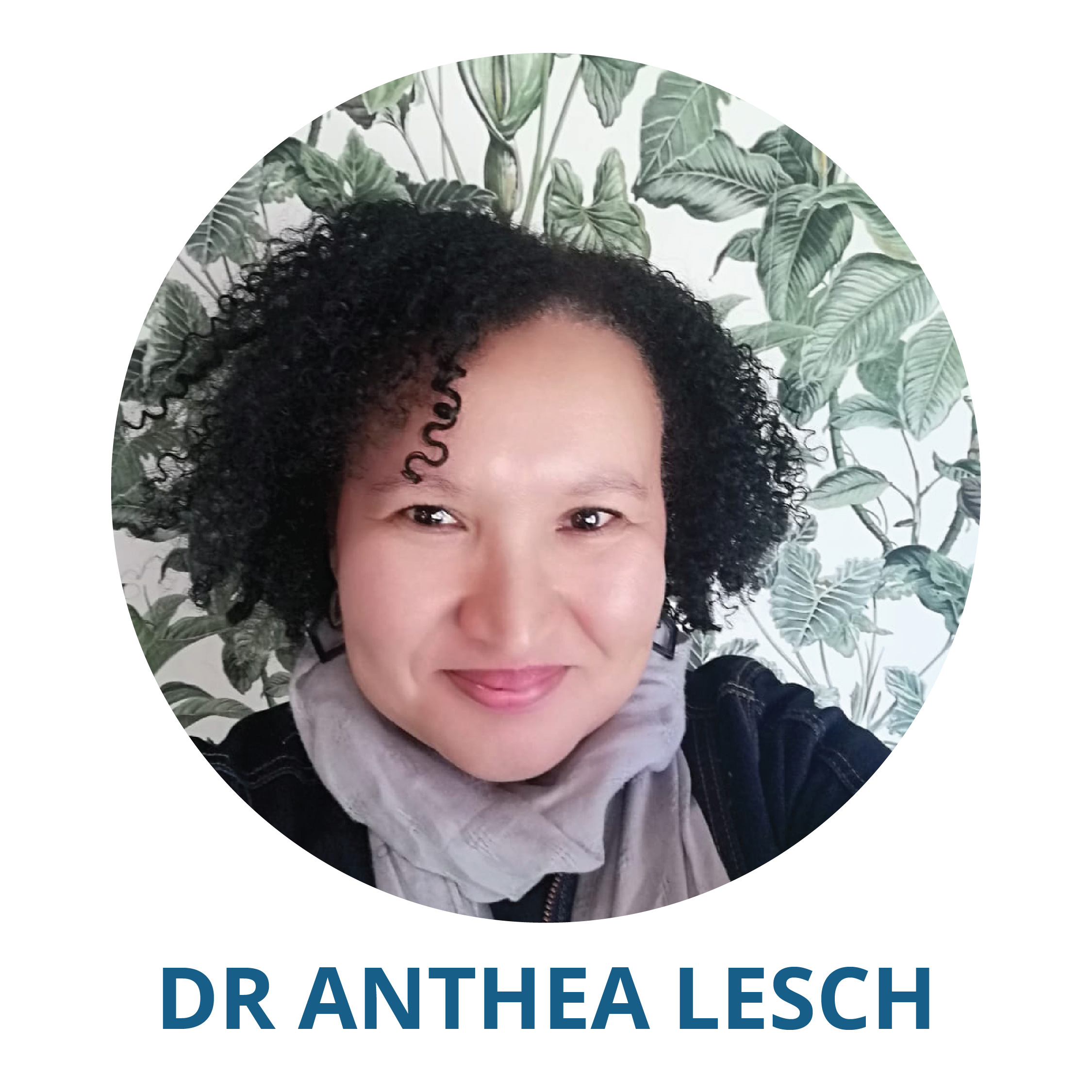
Dr Anthea Lesch

Anthea M. Lesch is a researcher, scholar, activist and lecturer. She currently works as Senior Lecturer in the Psychology Department at Stellenbosch University. Dr Lesch’s primary research interest is in exploring lived experiences of poverty and social inequality, and the ways in which structural inequalities impact the health and well-being of vulnerable and marginalised communities. She is particularly interested in interrogating societal narratives and representations of vulnerable and marginalised groups.

Prof Seth Oppong

Seth Oppong, Ph.D. is an Associate Professor at the Department of Psychology, University of Botswana, Gaborone, Botswana. He is also a Research Associate of the Department of Psychology, University of the Witwatersrand. He is viewed by many as a thinker and a theoretician in psychology in Africa. His research interests include cultural, historical, philosophical, and theoretical (CHPT) domains of psychology as well as applied psychology, public psychology, and African psychology.

Dr Ismahan Soukeyna Diop

Ismahan Soukeyna Diop holds a PhD in clinical psychology. She works as a teacher-researcher at the Cheikh Anta Diop University in Dakar. Her fields of research are femininity and maternity in African mythology and tales. Her current research focuses on the application of African traditional heritage, to clinical psychotherapy and community care, through the distribution of her psychotherapeutic tool Tampsy Optoa.

26th Congress: Invited Panel:  “Each generation must, out of relative obscurity, discover its mission, fulfil it or betray it”: Building Solidarities with Psychology’s Next Generation

26th Congress: Invited Panel: The annihilation of democracy: Psychology, institutionalised despondency, impunity, and the rise of authoritarianism

Meet our Facilitator and Panelists

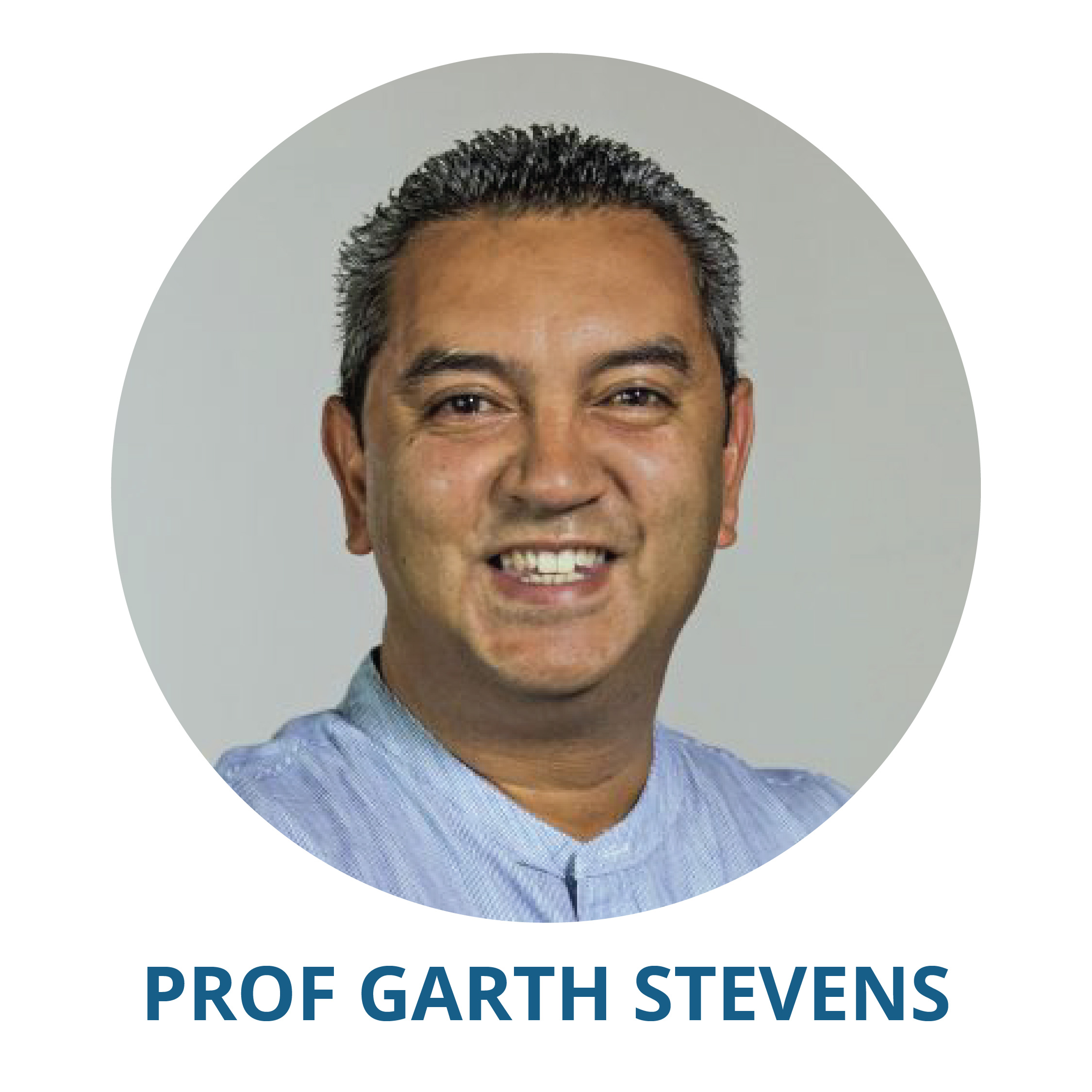
Facilitator - Prof Garth Stevens

Garth Stevens is a Full Professor in the Department of Psychology, in the School of Human and Community Development, at the University of the Witwatersrand and is the immediate Past President of PsySSA. He currently also serves as the Dean of the Faculty of Humanities. His abiding research interests have primarily been in the area of critical psychology – with an emphasis on race, racism and related social asymmetries; violence; and historical/collective trauma and memory. He has published widely in these areas, both nationally and internationally, and is also the co-lead researcher on the Apartheid Archive Project. He is a member of the Academy of Science of South Africa (ASSAf), and holds a B-rating from the NRF.

Prof Darrin Hodgetts

Darrin Hodgetts is a societally and community orientated social psychologist with interests in addressing issue of Human [In]security through the provision of indecent work and reductions in urban poverty, homelessness, food insecurity. Darrin co-facilitates the Ending Poverty and Inequality Research Cluster (EPIC) at Massey University. His scholar activism links to SDG1 No Poverty, SDG 2 Zero Hunger, SDG 3 Good Health and Wellbeing, SDG 8 Decent Work and Economic Growth, SDG 10 Reduced Inequality, SDG 11 Sustainable Cities and Communities, and SDG 16 Peace, Justice, and Strong Institutions. Key international project hubs launched by EPIC include Project SAFE (Security Assessment for Everyone and Project GLOW (Global Living Organisational Wage. Recent SDG relevant book length co-publications include Social Psychology and Everyday Life (2020, 2nd Ed Palgrave); Sage Handbook of Applied Social Psychology (2019); Asia-Pacific Perspectives on Inter-cultural Psychology (2018, Routledge); Urban Poverty and Health Inequalities (2017).

Dr Nick Malherbe

Nick Malherbe is a researcher at the Institute for Social and Health Sciences, University of South Africa and South African Medical Research Council-University of South Africa Masculinity and Health Research Unit. His research interests include violence, community-building, and visual methods.

Prof Hlonipha Mokoena

Hlonipha Mokoena received her Ph.D. from the University of Cape Town in 2005. She is currently an associate professor and researcher at WiSER (Wits Institute for Social and Economic Research) at the University of the Witwatersrand, Johannesburg. Her articles have been published in: Journal of Natal and Zulu History; Journal of Religion in Africa; Journal of Southern African Studies; Ufahamu: A Journal of African Studies; Interventions: International Journal of Postcolonial Studies; Image & Text and Critical Arts.

Prof Nadera Shalhoub-Kevorkia

Nadera Shalhoub-Kevorkia, a Palestinian feminist, is the Lawrence D. Biele Chair in Law at the Faculty of Law-Institute of Criminology and the School of Social Work and Public Welfare at the Hebrew University of Jerusalem and the Global Chair in Law- Queen Mary University of London. Her research focuses on liberation psychosocial intervention, critical trauma studies, state crimes and criminology, securitized surveillance, gender violence, law and society and genocide studies. She is the author of numerous academic articles and books among them “Militarization and Violence Against Women in Conflict Zones in the Middle East: The Palestinian Case Study” published in 2010; “Security Theology, Surveillance and the Politics of Fear”, published in 2015; “Incarcerated Childhood and the Politics of Unchilding”, published in 2019; all by Cambridge University Press. She also co-edited two books, the latest entitled: “When Politics are Sacralized: Comparative Perspectives on Religious Claims and Nationalism”, CUP 2021, and is completing an edited volume with Lila Abu-Lughod and Rema Hammami entitled: The Cunning of Gender Based Violence”, to be published with Duke University Press in 2023.