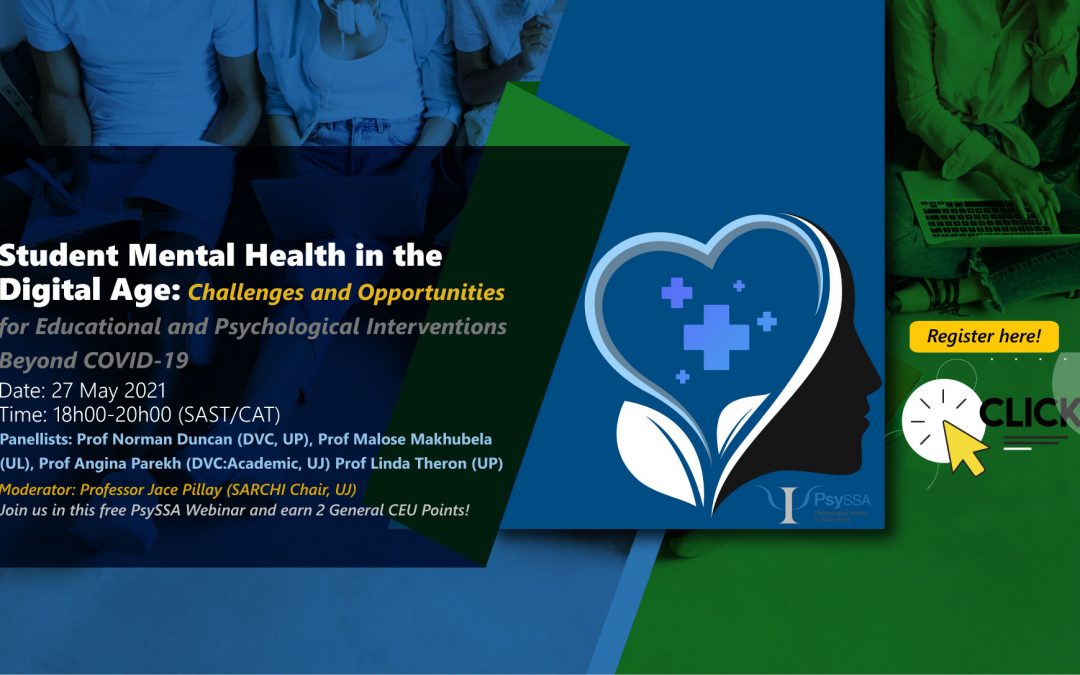
Only Hours to go! Have you registered? Student Mental Health in the Digital Age: Challenges and Opportunities for Educational and Psychological Interventions Beyond COVID-19: Meet our Panelists!

Only Hours to go! Have you registered? Student Mental Health in the Digital Age: Challenges and Opportunities for Educational and Psychological Interventions Beyond COVID-19: Meet our Panelists!

About this Webinar:

Mental health conditionsdisorders and diseases of young adults are rarely on the frontline of health regulations and local health agendas even though the World health Organisation estimates that worldwide about 10-20% of young people experience mental disorders. In fact, neuropsychiatric conditions are the leading cause of disability in young people across the globe. If untreated, these conditions severely influence their educational attainments and their potential to live fulfilling and productive lives. Students are more likely to experience higher levels of anxiety, depressive symptoms, sadness, hopelessness, loneliness, suicidal feelings, concentration difficulties, Post-Traumatic Stress Disorder, poor academic performance, low educational expectations, and demonstrate more aggressive, impulsive, and anxious behaviours. One would expect these mental health challenges to be exacerbated by the digital age as well as the COVID-19 pandemic scourge.

Taking these mental health concerns into consideration, this webinar provides strong arguments on why academics should have a deeper understanding of the mental well-being of their students and how this impact on students’ learning and academic performance. Experts in higher education and psychology will provide local and global perspectives and identify priorities on the mental well-being of university students. Specifically, panellists will share their views on student mental health, strategies employed in their very own institutions to promote mental health, and the impact of digital learning and COVID-19 on student mental. The focus will be on identifying risk and resilience factors that contribute to the mental health of students. The ultimate goal of this webinar is to promote an exchange of ideas on what could be done by academic staff and their institutions to support students experiencing mental health problems towards positive academic and personal outcomes, and enhanced coping in crisis situations like the COVID-19 pandemic.

Panelists

Moderator: Professor Jace Pillay

Professor Jace Pillay’s experiences in the last 30 years as a teacher, school counsellor, school psychologist, the head of school psychological services, HoD for educational psychology and Vice-Dean of the Faculty of Education at the University of Johannesburg (UJ) shaped his academic career. Currently, he is the South African Research Chair in Education and Care in Childhood in the Faculty of Education at UJ. His research focus is on child and youth mental health and psychosocial support for schools. Prof Pillay has supervised numerous postgraduate students, published many articles in highly reputable journals, and has several strong national and international research collaborations. He is a registered educational and counselling psychologist and currently he is the chairperson of the Education, Training, and Registration Committee for the Professional Board of Psychology in the Health Professions Council of South Africa.

Panellists

Professor Norman Duncan
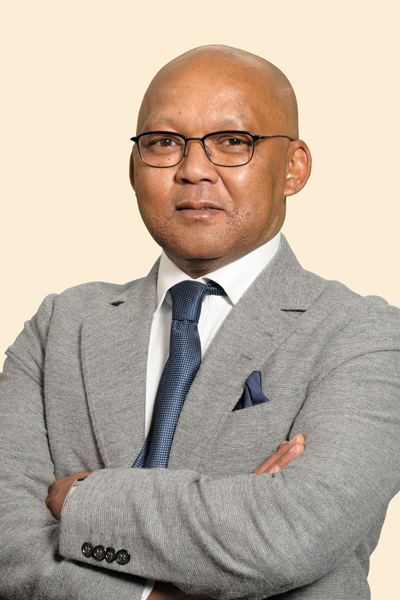
Professor Norman Duncan holds a professorship in Psychology and is the DVC: Academic at the University of Pretoria. His research and publications are primarily in the fields of racism and community psychology. He has co-edited a range of volumes, including ‘Race, Memory and the Apartheid Archive (Palgrave/WUP). His current research scholarly interests focuses on teaching and learning in higher education. He is a former President of the Psychological Society of South Africa (PsySSA).

Professor Malose Makhubela

Professor Malose Makhubela is a Clinical Psychologist in private practice and a Professor at the University of Limpopo. In addition to studying individual symptoms of mental disorders and their causal relations, he also conducts research on how to best assess and classify mental disorders in young adults.

Professor Angina Parekh

Professor Angina Parekh qualified as a Clinical Psychologist in 1980 and obtained a D.Phil. in Psychology (1988) from the former University of Durban-Westville in which she lectured for a while. She served on a number of university structures and was an executive member of the Clinical Division of PsySSA. Angina was the Chief Director for Academic Transformation and Planning in the Department of Higher Education and Training. In 2000 she was appointed Ministerial Advisor on Higher Education and a few years later she headed up the Department’s Merger Unit responsible for restructuring and transforming the country’s higher education system. She has served on several Ministerial task teams making an indelible mark on improving higher education. Currently, Prof Parekh is Deputy Vice Chancellor (Academic) at the University of Johannesburg.

Professor Linda Theron

Professor Linda Theron (D. Ed.) is an educational psychologist by training. She is also a full professor in the Department of Educational Psychology, University of Pretoria, South Africa.  Her clinical and research interest is in child and adolescent resilience and she has authored 100+ academic publications relating to that interest. The National Research Foundation of South Africa rated Linda’s resilience-focused work as internationally acclaimed and she is an elected member of the Academy of Science, South Africa (ASSAf). 

Webinar Details

Date: 27 May 2021

Time: 18:00 – 20:00

Platform: Webinarjam

Join us on Webinarjam as we unpack Student Mental Health in the Digital Age and earn 2 General CPD Points!

Only Hours to go! Have you registered? Student Mental Health in the Digital Age: Challenges and Opportunities for Educational and Psychological Interventions Beyond COVID-19: Meet our Panelists!

2 Days to Go! Student Mental Health in the Digital Age: Challenges and Opportunities for Educational and Psychological Interventions Beyond COVID-19: Meet our Panelists!

About this Webinar:

Mental health conditionsdisorders and diseases of young adults are rarely on the frontline of health regulations and local health agendas even though the World health Organisation estimates that worldwide about 10-20% of young people experience mental disorders. In fact, neuropsychiatric conditions are the leading cause of disability in young people across the globe. If untreated, these conditions severely influence their educational attainments and their potential to live fulfilling and productive lives. Students are more likely to experience higher levels of anxiety, depressive symptoms, sadness, hopelessness, loneliness, suicidal feelings, concentration difficulties, Post-Traumatic Stress Disorder, poor academic performance, low educational expectations, and demonstrate more aggressive, impulsive, and anxious behaviours. One would expect these mental health challenges to be exacerbated by the digital age as well as the COVID-19 pandemic scourge.

Taking these mental health concerns into consideration, this webinar provides strong arguments on why academics should have a deeper understanding of the mental well-being of their students and how this impact on students’ learning and academic performance. Experts in higher education and psychology will provide local and global perspectives and identify priorities on the mental well-being of university students. Specifically, panellists will share their views on student mental health, strategies employed in their very own institutions to promote mental health, and the impact of digital learning and COVID-19 on student mental. The focus will be on identifying risk and resilience factors that contribute to the mental health of students. The ultimate goal of this webinar is to promote an exchange of ideas on what could be done by academic staff and their institutions to support students experiencing mental health problems towards positive academic and personal outcomes, and enhanced coping in crisis situations like the COVID-19 pandemic.

Panelists

Moderator: Professor Jace Pillay

Professor Jace Pillay’s experiences in the last 30 years as a teacher, school counsellor, school psychologist, the head of school psychological services, HoD for educational psychology and Vice-Dean of the Faculty of Education at the University of Johannesburg (UJ) shaped his academic career. Currently, he is the South African Research Chair in Education and Care in Childhood in the Faculty of Education at UJ. His research focus is on child and youth mental health and psychosocial support for schools. Prof Pillay has supervised numerous postgraduate students, published many articles in highly reputable journals, and has several strong national and international research collaborations. He is a registered educational and counselling psychologist and currently he is the chairperson of the Education, Training, and Registration Committee for the Professional Board of Psychology in the Health Professions Council of South Africa.

Panellists

Professor Norman Duncan

Professor Norman Duncan holds a professorship in Psychology and is the DVC: Academic at the University of Pretoria. His research and publications are primarily in the fields of racism and community psychology. He has co-edited a range of volumes, including ‘Race, Memory and the Apartheid Archive (Palgrave/WUP). His current research scholarly interests focuses on teaching and learning in higher education. He is a former President of the Psychological Society of South Africa (PsySSA).

Professor Malose Makhubela

Professor Malose Makhubela is a Clinical Psychologist in private practice and a Professor at the University of Limpopo. In addition to studying individual symptoms of mental disorders and their causal relations, he also conducts research on how to best assess and classify mental disorders in young adults.

Professor Angina Parekh

Professor Angina Parekh qualified as a Clinical Psychologist in 1980 and obtained a D.Phil. in Psychology (1988) from the former University of Durban-Westville in which she lectured for a while. She served on a number of university structures and was an executive member of the Clinical Division of PsySSA. Angina was the Chief Director for Academic Transformation and Planning in the Department of Higher Education and Training. In 2000 she was appointed Ministerial Advisor on Higher Education and a few years later she headed up the Department’s Merger Unit responsible for restructuring and transforming the country’s higher education system. She has served on several Ministerial task teams making an indelible mark on improving higher education. Currently, Prof Parekh is Deputy Vice Chancellor (Academic) at the University of Johannesburg.

Professor Linda Theron

Professor Linda Theron (D. Ed.) is an educational psychologist by training. She is also a full professor in the Department of Educational Psychology, University of Pretoria, South Africa.  Her clinical and research interest is in child and adolescent resilience and she has authored 100+ academic publications relating to that interest. The National Research Foundation of South Africa rated Linda’s resilience-focused work as internationally acclaimed and she is an elected member of the Academy of Science, South Africa (ASSAf). 

Webinar Details

Date: 27 May 2021

Time: 18:00 – 20:00

Platform: Webinarjam

Join us on Webinarjam as we unpack Student Mental Health in the Digital Age and earn 2 General CPD Points!

Ethics & Human Rights in a Democratic Era -Earn 5 Ethics CEU Points in 3 Interactive Psychology Webinars with Prof Saths Cooper!

Ethics & Human Rights in a Democratic Era -Earn 5 Ethics CEU Points in 3 Interactive Psychology Webinars with Prof Saths Cooper!

About this Series:

Although the Universal Declaration of Human Rights is a global covenant that is over 72 years old, human rights in South Africa (SA) was only institutionalised with the advent of democracy 27 years ago. On 29 October 1998, Archbishop Desmond Tutu handed the Report of the TRC, which he chaired, to President Nelson Mandela. The TRC held that abundant evidence exists that the due care of patients in SA, particularly of the most vulnerable, was found wanting. Subsequent events have demonstrated that our health and human resources sectors, which psychology forms a critical part of, have been sliding into profound crisis, exacerbated by prevailing socioeconomic and political factors.

This series of three webinars will trace human rights from antiquity, indicate the relevance in underpinning the nascent culture of human rights and its inextricable nexus with our ethical codes across all categories and areas of psychological involvement. In so doing, the case will be made for us – as scarce and priority interveners in a fractured society – to be constantly vigilant in our assessment, diagnosis and treatment recommendations, especially of the worst off amongst us, as a necessary adjunct to appropriate and independent professional judgment and conductThus will we restore hope that there is an indispensable discipline which can provide a moral compass in murky and choppy seas.  

The two psychologies of the pandemic: from ‘fragile rationality’ to ‘collective resilience’

The two psychologies of the pandemic: from ‘fragile rationality’ to ‘collective resilience’

About this webinar:

As part of the ISC’s ongoing engagement with scholars and contemporary thinkers, this webinar, in partnership with the International Union of Psychological Science will consider how the pandemic is impacting on the psychological sciences.

The  webinar will address the following two questions:

  1. How have different branches of psychology provided useful insights into thinking about the pandemic and in formulating responses to the pandemic?
  2. How has the pandemic impacted on developments within psychology and on the changing relationship of psychology to other disciplines?

PsySSA Members can earn 1 General CPD Point for attending this groundbreaking webinar!

PAPU African Psychology Leadership Summit – Join Us and Earn 2 Free General CEU Points!

PAPU African Psychology Leadership Summit – Join Us and Earn 2 Free General CEU Points!

You are invited to join Global and Continental Leaders to discuss psychology in your Country, Africa and the World at the historic

African Psychology Leadership Summit 

Speakers include the Presidents of the:

  • International Union of Psychological Science (IUPsyS)
  • European Federation of Psychologists’ Association (EFPA)
  • Society of Inter-American Psychology (SIP)
  • ASEAN Regional Union of Psychological Societies (ARUPS)
  • Caribbean Alliance of Psychological Associations (CANPA)
  • Arab Union of Psychological Science (AUPsyS)
  • Asia Pacific Psychology Alliance (APPA)
  • Central American Union of Colleges and Associations of Psychology (UCCAP)
  • African country psychological associations

Join us in shaping psychology in Africa and beyond!

Tuesday 16 March 2021

18:00 – 20:00 CAT

PsySSA Members can earn 2 General CEU Points by joining this African Leadership Summit!