SANCA Drug Awareness Week 2024: 24 June – 30 June

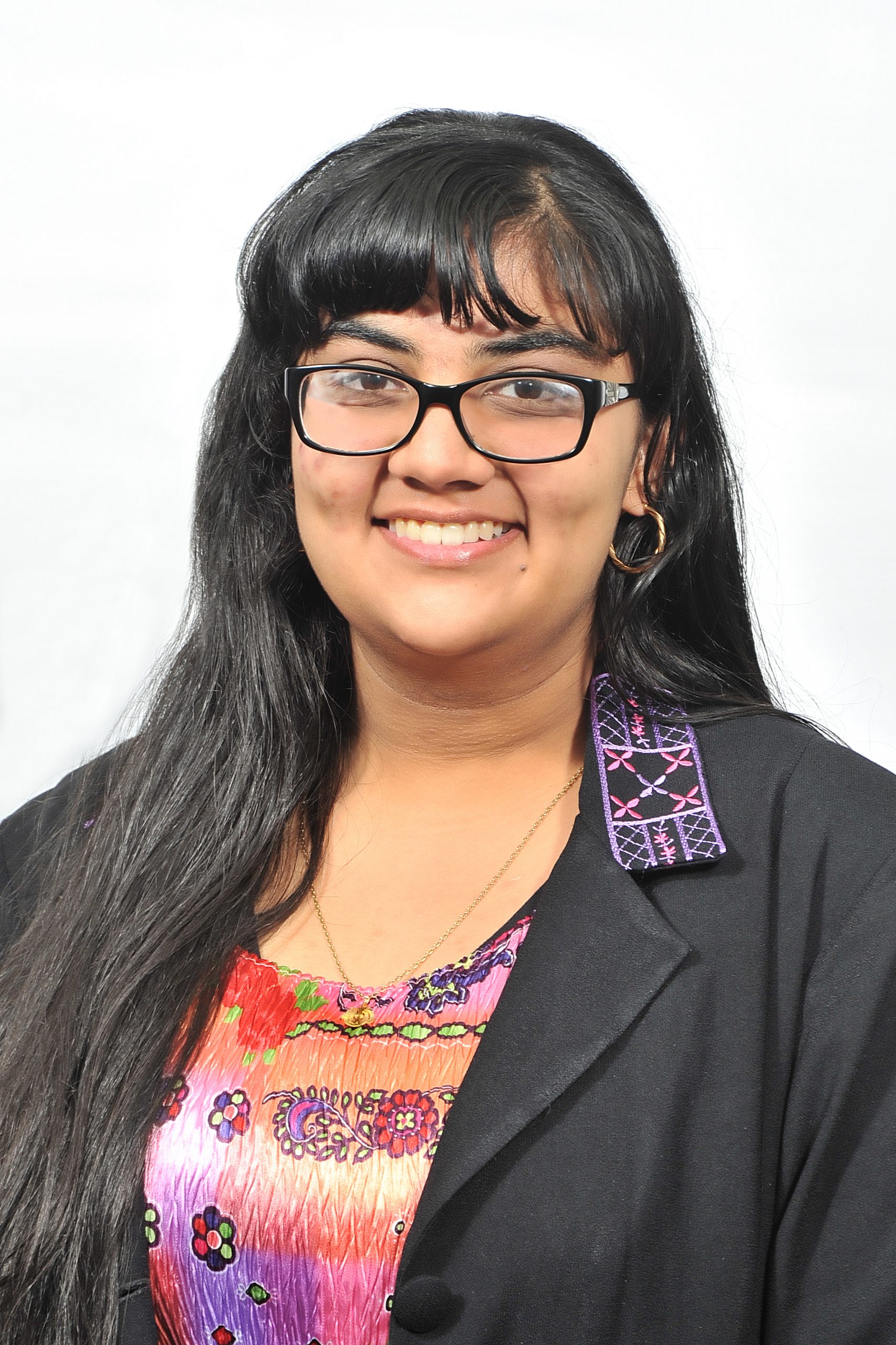
Dr Elron Fouten
Dr Elron Fouten holds a Ph.D. in Psychology from the Psychology Department at Rhodes University, where he is also a lecturer. For his PhD, he applied structural equation modelling (SEM) to test which individual, contextual, and social risk factors best predict substance abuse amongst a sample of substance abusers. Using SEM allowed him to demonstrate which paths and interactions amongst the risk factors are the most likely contributing factors making individuals susceptible to substance abuse. Dr Fouten’s other research interests are community psychology, the psychology of men and masculinities, gangsterism and violence, and complex traumatic stress disorder.
Risk Profiles and Multi-Level Predictors of Substance Abuse in South Africa
Substance abuse levels in South Africa have continued to rise, with the age of first experimentation with drugs reported as being 10 years. Several studies have shown that substance abuse has an adverse impact on users, their families and their communities, resulting in a number of social, psychological and economic struggles. Moreover, substance abuse places an increased psychological, social and financial burden on the individual and the family, as it has been related to the destabilisation of the nuclear and extended family units, permeating every area of life and affecting the very social fabric of society.
Since the South African government recognized the need for effective policies and strategies to mitigate substance abuse they established the Central Drug Authority to oversee the implementation of the National Drug Master Plan (NDMP). The NDMP focuses on a multi-pronged approach to mitigate substance abuse, including prevention, treatment, and rehabilitation. The plan also aligns with the global shift towards harm reduction and individualized care, as highlighted in the 2022 National Drug Control Strategy in the United States. The main targets of substance abuse awareness promotion and harm reduction strategies in South Africa are diverse, including the general population, the workforce, and specific groups such as Nyaope users.
A recent study, using the South African Substance Use Contextual Risk Instrument (SASUCRI), sought to determine the magnitude, strength and direction of the interaction of the individual and contextual risk factors (as measured by the SASUCRI) in predicting substance abuse. This study thus applied structural equation modelling (SEM) to data collected from 1094 individuals seeking either inpatient or outpatient treatment for substance abuse in the Eastern Cape and Western Cape.
This study identified 10 risk profiles (see figure below) that interact in the prediction of substance abuse; these are: individuals with low self-esteem (SE), who perceive their family as lacking or having low intra-family communication (IFC), who lack positive peer support (PPS), who perceive criminal behaviours as normal (AACB), who feel a strong need to fit in (FI), who are less religious (REL), who have easy access to drugs (PTD), who lack a sense of community traditions and belonging (CTB), who see public displays of substance use (PDSU) as normal, and who lack concern for the future(CFF), are at 59% greater risk of substance abuse. It is important to note that the micro level factors (low SE, PPS, IFC) and meso-level factors (AACB, FI, REL) do not significantly predict substance abuse, rather, they significantly interact with factors further from the individual that they predict substance abuse. Thus, it is only when they interact with factors located in the other systems (exosystem, macrosystem and chronosystem) that they become significant predictors of substance abuse. Conversely, exosystem (APTD), macrosystem (CTB, PDSU), and chronosystem factors (CFF), independently are significant predictors of substance abuse.
This finding highlights the need for collaboration between community stakeholders and government in engaging community residents, particularly disadvantaged groups, to identify any of the 10 risk profiles to promote health and well-being at a community level.

Warren Cornelius
As someone with lived experience, I am deeply passionate and committed to working with people who have substance use disorders and other addictions. Professionally, I lead the ITTC SA substance use prevention, advocacy, and recovery programming. Additionally, I serve as the deputy country coordinator for the South African Chapter of the International Consortium of Universities for Drug Demand Reduction (ICUDDR). During my free time, I focus on community-based projects aimed at coordinating and facilitating substance use prevention, treatment, recovery, and other social development initiatives. I am actively involved in the organizing committee for the Recovery Walk Cape Town and am advancing the Inclusive Recovery Cities (IRC) model in South Africa. I particularly enjoy mobilizing grassroots individuals and organizations and uniting people from diverse backgrounds. I hold Postgraduate Diplomas in Addictions Care and Public Mental Health from the University of Cape Town and I am currently pursuing an Mphil in Public Mental Health.
Harmful substance use is a growing problem in South Africa. It has a profound impact on almost every aspect of our society, including the social, physical, spiritual, and mental well-being of individuals, as well as on families, communities, public health, social welfare, education, and criminal justice services. To this end, Drug Awareness Week aims to raise awareness of the harmful effects of substance use. However, many of the most common strategies being used by well-meaning advocates have been shown to be ineffective. Some have even caused harm by unintentionally reinforcing pro-use attitudes, behaviours and norms by, for example, using scare tactics. Some strategies may seem like a good idea on the surface, but our obligation is to employ evidence-based effective strategies that maximize our limited resources.
The early detection of harmful substance use is key in preventing and treating substance use disorders (SUDs). Consequently, the International Technology Transfer Center South Africa (ITTC SA), has developed the World Health Organization (WHO) The Alcohol, Smoking and Substance Involvement Screening Test (ASSIST) into an online web app ASSIST version. The web app ASSIST is anonymized and asks about recent substance use over the past 3 months and assesses lifetime use risks. It provides (i) a level of risk for each substance used; (ii) information for the Brief Intervention (BI) component; (iii) information and feedback about the risks and harms associated with each substance; and (iv) feedback on physical, medical, and psychological risks of regular substance use, it also screens and provides information on injection drug use. Members of the public can use the self-screen pathway, and there is also a pathway for practitioners to screen clients. High-risk screening scores will lead to further assessment and a referral to specialized treatment. Usually, a small proportion (5%) of the using population will be at high risk. The rest of the individuals can be treated via a BI.
Whist mental health promotion and substance use prevention are fundamental along the continuum of care, accessibility and availability of evidence-based treatment services are vital. Members of the public are encouraged to only use treatment facilities that are registered with the Department of Social Development (DoSD). You may visit the Substance Use Treatment Directory at https://sudservices.uct.ac.za/, developed by the ITTC SA, to locate a treatment service provider nearest to you. For better treatment outcomes, substance use treatment providers should be trained in the latest evidence-based treatment approaches. The University of Cape Town and Stellenbosch University’s Postgraduate Diploma in Addictions Care are the only two specialized addiction science programmes offered in the country (Kader et al., 2023). These postgrad diplomas are offered online and are accessible to addiction practitioners across the country.
While addiction has been characterised as a chronic relapsing condition, multiple studies have shown that stable recovery is not only possible but that it is probable (Sheedy and Whitter, 2009). It is widely recognised that recovery is a journey that can be measured in terms of growth of recovery capital (Granfield and Cloud, 1999) which includes three primary domains – personal, social and community capital. Recovery success relies not only on personal efforts and capabilities but also on social networks and access to the resources in the community. The recovery focus should, therefore, be aimed at community facets that are capable of hindering or promoting recovery success. Essential to this are community-based events and activities led by community members consisting of people in recovery, people who are allies of recovery, and grassroots organizations, in partnership with civic leadership and addiction treatment services.
The Recovery Walk Cape Town (RWCT) is one such event, which:
- Challenges stigma and social exclusion by demonstrating the positive successes and achievements of recovery.
- Creates a visible and accessible recovery community that is inclusive and welcoming and that actively engages the general public.
- Ensures that the event is inclusive in terms of the diversity of participants including but not restricted to ethnicity, gender and gender identity.
- Creates pathways to a diverse range of community resources and builds meaningful partnerships with these resources.
- Champions and celebrates the contribution the recovery community makes to the communities and city in which it is located.
The RWCT is the start of a bigger objective of establishing Cape Town as an Inclusive Recovery City (IRC). However, the IRC model aims to have a network of linked cities across SA engaging in innovative grassroots practices to increase awareness of and acceptance of recovery in communities while engaging in a diverse range of public-facing activities that benefit the recovery community, other marginalised and vulnerable groups and communities and creates opportunities for active citizenship for people affected by drug and alcohol problems. The fundamental premise of the IRC model is about creating networks and hope through public celebration events that are open and accessible, first to increase connectedness for people affected by addictions and second to increase collective efficacy and civic participation across a wide range of excluded and marginalised groups. Please contact me if you are interested in learning more about the RWCT or the IRC model – it would be a joy to assist and support you in starting these in your communities and towns.
Links:
Web app ASSIST: https://assistscreening.uct.ac.za/
Substance Use Treatment Directory: https://sudservices.uct.ac.za/
Recovery Walk Cape Town: www.recoverywalk.co.za
References
Granfield, R., & Cloud, W. (1999). Coming clean: Overcoming addiction without treatment. NYU press.
Kader, R., Govender, R., Cornelius, W., Abrahams, L., Ashburner, F., Tisaker, N., Miovský, M., & Harker, N. (2023). Needs assessment and preparatory work for addiction science programs at universities: experiences of universities in South Africa. Journal of Substance Use, 1-6.
Sheedy, C. K., & Whitter, M. (2009). Guiding principles and elements of recovery-oriented systems of care: What do we know from the research? HHS Publication No.(SMA) 09-4439. Rockville, MD: Center for Substance Abuse Treatment. Substance Abuse and Mental Health Services Administration.