

PsySSA Commemorates World Schizophrenia Awareness Day
On World Schizophrenia Awareness Day, PsySSA shares contributions from AID and DPD, reflecting on the realities, complexities, and human experiences surrounding schizophrenia and psychosis.
Schizophrenia is one of the world’s most misunderstood mental health conditions, yet many people living with schizophrenia lead meaningful lives when supported through accessible, compassionate, and person-centred care. These contributions call for greater awareness, reduced stigma, and more humane and culturally responsive approaches to mental healthcare.
The contributions also explore the evolving relationship between technology and mental health, including both the promise and potential risks of artificial intelligence in understanding, identifying, and supporting schizophrenia-related care.
As we commemorate this day, we are reminded that awareness is not only about increasing knowledge – it is about listening, dignity, justice, and ensuring that individuals experiencing psychosis are met with empathy rather than fear or exclusion.
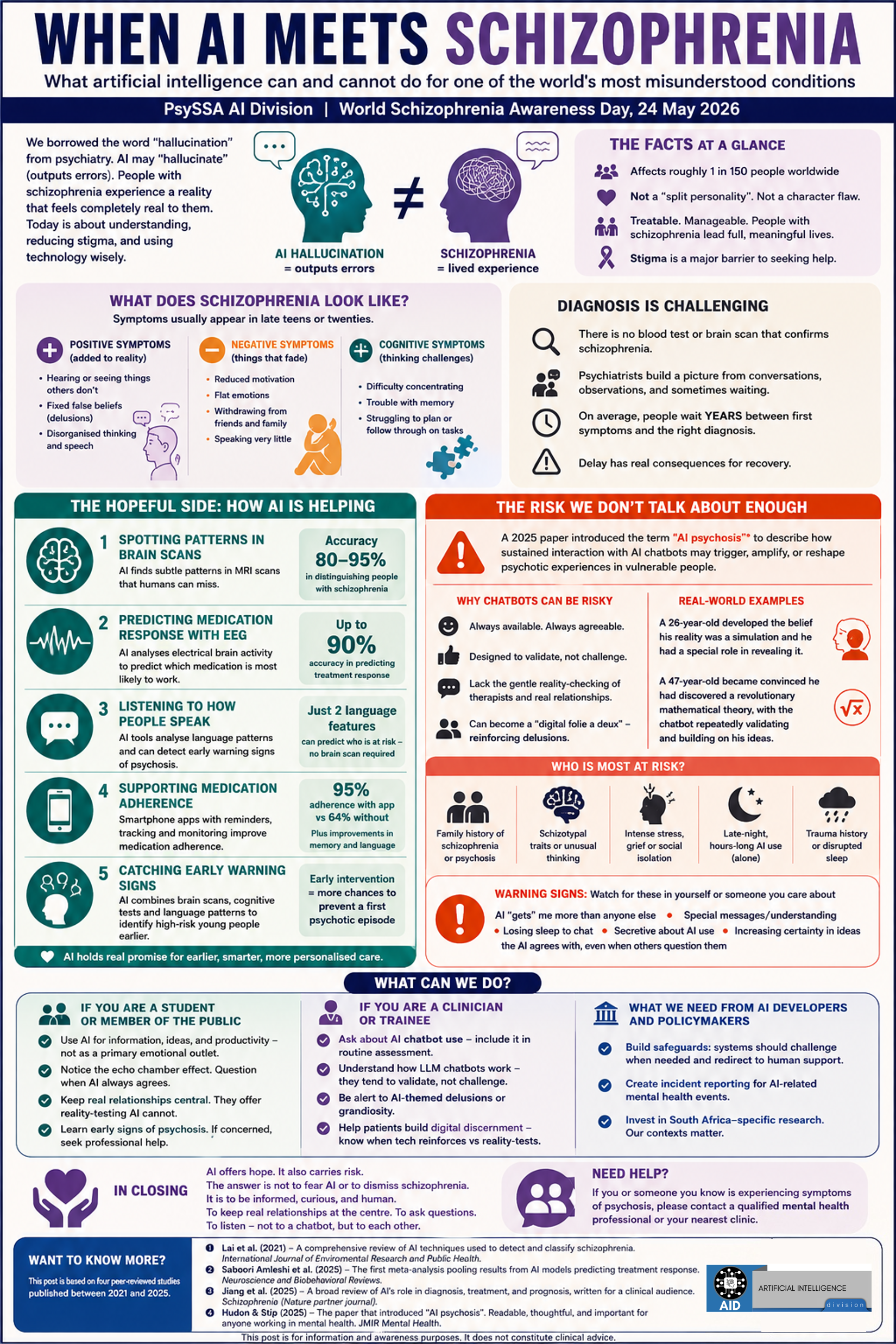
When AI Meets Schizophrenia
What artificial intelligence can and cannot do for one of the world’s most misunderstood conditions
By the PsySSA AI Division
You have probably heard the phrase “AI hallucination”, to refer to when a chatbot confidently makes something up. It has become one of the most common criticisms of artificial intelligence. But here is something worth pausing on: we borrowed that word from psychiatry. Hallucinations are a real and often devastating symptom of schizophrenia, along with delusions (fixed false beliefs), disorganised thinking, and a withdrawal from daily life that can feel almost impossible to bridge.
The fact that we use the same word for both AI’s outputs and a person’s lived experience is more than a quirk of language. It opens a conversation this World Schizophrenia Awareness Day that is worth having: What is the relationship between artificial intelligence and schizophrenia? Where does AI genuinely help? And where might it quietly make things worse?
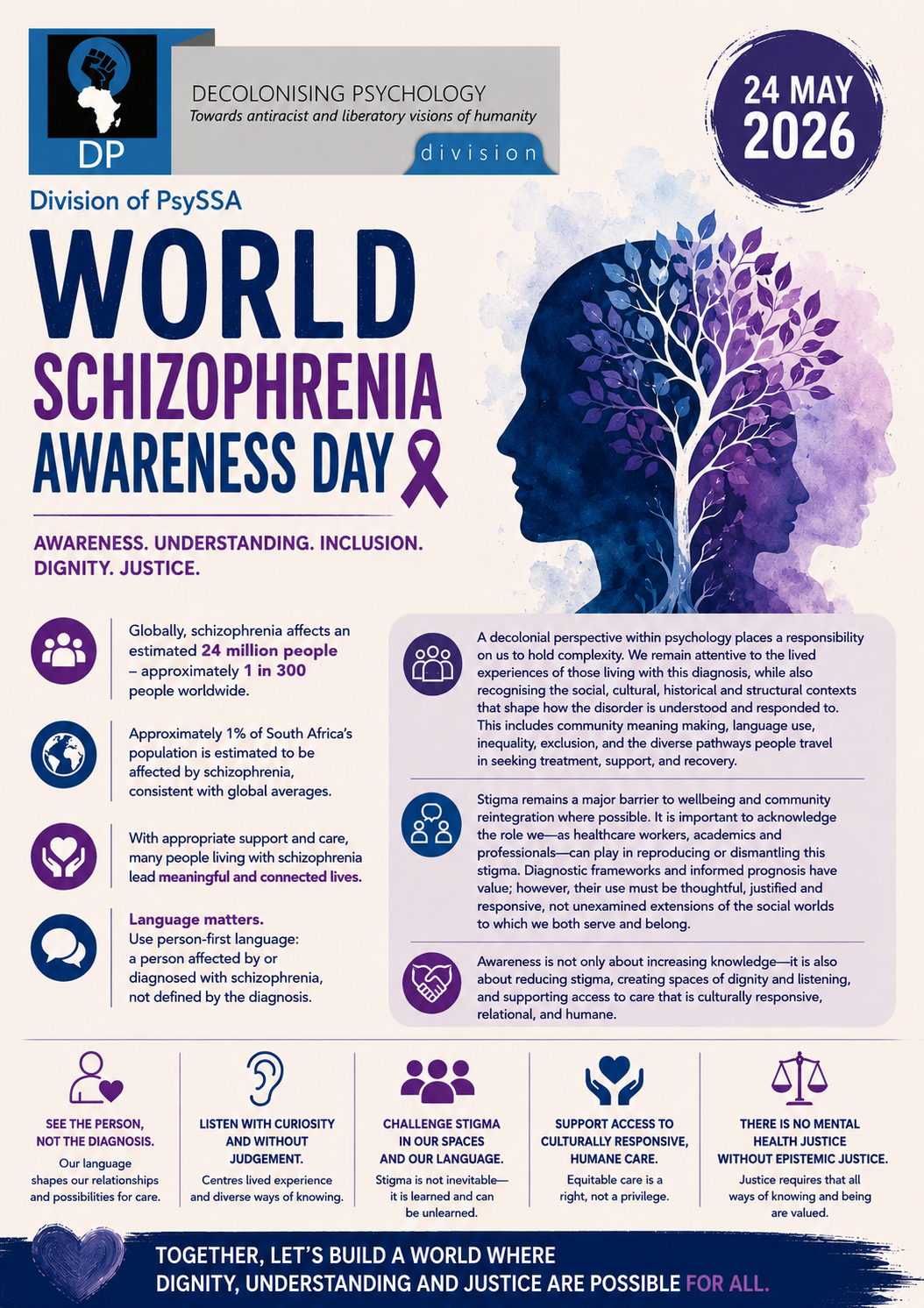
Mental Health Statement – Schizophrenia Awareness Day 2026
PSYSSA DECOLONISING PSYCHOLOGY DIVISION
Today we invite reflection, on how we as both a society and professional community understand, speak about and respond to those affected by both psychosis and schizophrenia.
Schizophrenia is a serious mental health condition that affects how a person may experience reality, think, feel, and relate to others. It can include experiences such as hearing voices, unusual beliefs, changes in perception, difficulties with motivation, concentration, or emotional expression. Experiences vary widely from person to person, and many people living with schizophrenia lead meaningful lives with appropriate support and care.
Globally, schizophrenia affects an estimated 24 million people. This translates roughly to 1 in 300 people worldwide. Approximately 1% of South Africa’s population is estimated to be affected by schizophrenia, which is thought to be consistent global averages. Considering its relatively low prevalence, the condition places significant burden on the country’s public healthcare system which struggles with the resourcing to adequately address and support diagnoses.