
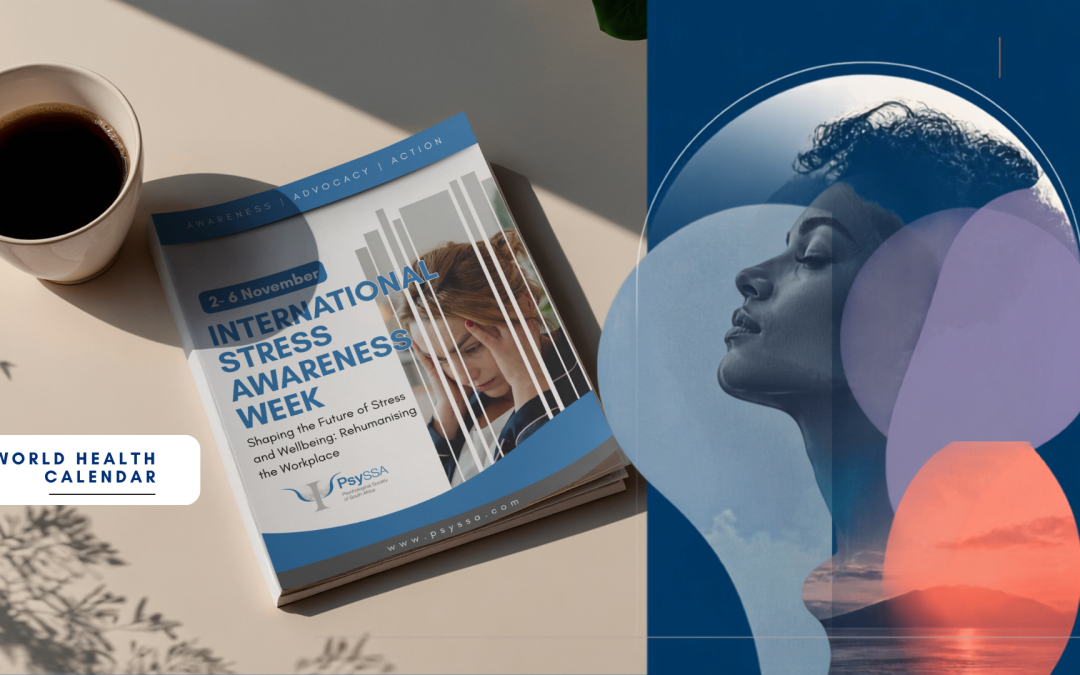
International Stress Awareness Week 2026: Rehumanising the Workplace
2–6 November 2026
Stress Awareness Day: 4 November 2026
2026 Theme
“Shaping the Future of Stress and Wellbeing:
Rehumanising the Workplace”
As workplaces navigate technological advancement, economic uncertainty and evolving professional demands, the importance of safeguarding psychological wellbeing has become increasingly evident.
International Stress Awareness Week, an initiative of the International Stress Management Association (ISMA), is observed from 2–6 November 2026, with Stress Awareness Day falling on Wednesday, 4 November. This global observance provides an opportunity to reflect on the impact of stress on individuals, organisations and communities, and to reaffirm our collective responsibility to promote healthier and more supportive working environments. This year's theme, “Shaping the Future of Stress and Wellbeing: Rehumanising the Workplace,” emphasises the importance of placing human dignity, empathy, connection and psychological wellbeing at the centre of workplace culture.Rehumanising the Workplace: Putting People First
The changing nature of work presents both opportunities and challenges. While technological innovation and new ways of working can improve efficiency and productivity, these developments must be accompanied by a commitment to protecting the wellbeing of the people who drive organisational success. Rehumanising the workplace requires recognising employees not simply through their performance or productivity, but as individuals with diverse needs, responsibilities and lived experiences. Importantly, workplace stress cannot be addressed through individual coping strategies alone. It demands organisational accountability, supportive leadership and a commitment to identifying and reducing conditions that contribute to psychological distress.Understanding Workplace Stress in South Africa
Within the South African context, workplace wellbeing must be considered alongside the broader social and economic realities that shape people's everyday lives. Financial insecurity, unemployment pressures, socioeconomic inequality, discrimination, demanding working conditions and unequal access to mental healthcare can intensify experiences of workplace stress. These challenges are particularly relevant across diverse working environments, including the public and private sectors, frontline services and workplaces characterised by economic vulnerability and job insecurity. Such realities reinforce the need for approaches to workplace wellbeing that are inclusive, equitable, culturally responsive and attentive to the diversity of South African experiences. The Psychological Society of South Africa (PsySSA) recognises the critical contribution of psychology in understanding workplace stress, informing organisational practices, advancing psychological wellbeing and advocating for environments that uphold dignity, human rights and social justice.From Awareness to Meaningful Action
Creating psychologically healthy workplaces
requires more than acknowledging the existence
of stress. It demands sustained,
evidence-informed action.
PsySSA encourages employers, organisational
leaders, employees and mental health
professionals to prioritise:
01
Psychological Safety
Creating environments where individuals feel respected, heard and able to raise concerns without fear of humiliation or retaliation.02
Compassionate Leadership
Promoting empathy, transparent communication and leadership practices that recognise the human impact of organisational decisions.03
Organisational Accountability
Identifying and addressing excessive workloads, unrealistic expectations, discrimination and other psychosocial risks.04
Equity and Inclusion
Creating environments that recognise diverse experiences and promote dignity, fairness and belonging.05
Healthy Work-Life Boundaries
Supporting reasonable expectations, opportunities for rest and sustainable working practices.06
Accessible Mental Health Support
Reducing stigma and strengthening confidential pathways to appropriate professional assistance.Beyond Awareness: A Shared Responsibility
PsySSA emphasises that promoting workplace wellbeing requires more than encouraging individuals to manage stress or develop resilience. It calls for a proactive, evidence-informed approach to identifying and addressing psychosocial risks, strengthening supportive organisational cultures and ensuring that psychological wellbeing meaningfully informs workplace policies, leadership practices and organisational decision-making. Psychological science and practice have an important role to play in understanding the relationship between working conditions and mental health, supporting organisational change and promoting environments in which individuals can thrive. In South Africa, this responsibility must also take account of structural inequalities, different forms of employment and the varying resources available to organisations and workers.A psychologically healthy workplace is not simply one that helps people cope with stress, but one that actively seeks to prevent avoidable stress and protects the dignity and wellbeing of all who work within it.
Shaping a Healthier Future of Work
International Stress Awareness Week reminds us that psychological wellbeing is not an optional organisational benefit. It is fundamental to human dignity, healthy workplaces and sustainable organisational development. PsySSA calls on organisations and leaders to move beyond awareness towards meaningful changes in workplace cultures, policies and practices.
As we observe International Stress Awareness
Week and Stress Awareness Day on
4 November, we encourage
organisations to reflect on their existing
practices and
identify at least one meaningful action
that can reduce workplace stress and
strengthen employee wellbeing.
The future of work must be one in which
technological progress and organisational
success coexist with compassion,
human connection and psychological wellbeing.