
Save the Date: Annual Consulting Psychology Conference



Building a Unified, Relevant, and Responsive Psychology



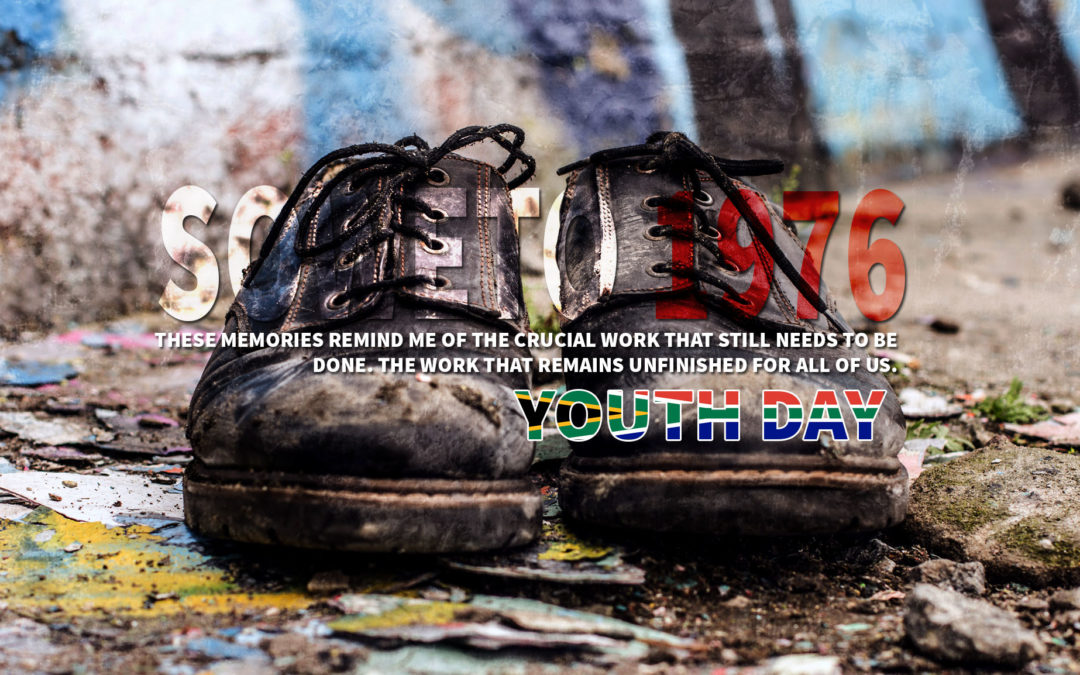
The 1976 student-led protest against apartheid education in Soweto, was met with police and army brutality and state repression, resulting in the murder of school-going children, the torture of anti-apartheid activists and the imprisonment of those opposing the systematic racism of apartheid. As Soweto suffered under curfew and state sanctioned violence, the uprising blossomed nationally, focussing on the key issues of a call for anti-racist education and for freedom.
South Africa marks 16 June as Youth Day, in commemoration of this nodal event that ignited a renewed struggle for dignity, humanity and for universal human rights. Reflecting on this moment 44 years later, two experiences come vividly to mind that still resonate with me, both psychologically and professionally.
On June 16 1976, as a high school learner, I travelled through Soweto to Lenasia, as the Apartheid education policies decreed separate education facilities, resulting in my daily hour long commute from the city, to my school in a location that was the repository of those forcibly removed from the city of Johannesburg by the Group Areas Act. That commute through Soweto and Kliptown in the days that followed was filled with the stench of teargas, and images of wounded young children bleeding and alighting on the train as they tried to escape the deadly weapons of camouflage-uniformed police. The red stained school uniform soaking up the life of the young girl remains with me.
On 16 June 1983, I attended a June 16 memorial at the Regina Mundi Church in Soweto. The roads leading up to the church were filled with Casspirs and other armoured vehicles patrolling, harassing and arresting those who wanted to go to pay their respects and remember those young who lost their lives for a just education system. The church heaved with both mournful and strident voices, calling out the horrors of apartheid, and resisting the physical and psychological oppression meted out in their daily lives. Past PsySSA President, Professor Saths Cooper, spoke to the congregants about how one’s psyche is impacted on by the pain of loss, but how one could also collectively through solidarity and collective activism resist the dehumanisation of apartheid. Teargas fired into the church by the security police and army shattered the beautiful stained-glass windows, and many of the gasping mourners were shot, beaten and arrested as they ran out of the church. Professor Saths Cooper was detained that afternoon and interrogated by the security police late into the night at the Protea Police station. I do not know what happened to the young man who was shot as he ran into the long grass next to me. I remember only the blood red stained grass that I saw through teargassed eyes.
These memories remind me of the crucial work that still needs to be done. The work that remains unfinished for all of us.
Remembering the legacy of Youth Day is important for all South Africans. This remembering is fundamentally important for all of us in the health and mental health profession. Given the inequalities in our society, the rampant poverty, and the continued struggles for humanity among the vulnerable and marginalised, it is critically urgent that the legacy of systemic oppression be addressed both within ourselves, as well as within society. Our responsibility is to understand, examine, teach, soothe and to confront and resist the overt and subtle manifestations of racism, sexism and all other oppressions. We can also continue to advocate for conditions that restore the dignity and humanity of all.
It is the best way we can honour the youth of 1976, and the youth of 2020. As PsySSA, we can do that.
Umesh Bawa
PsySSA Executive Committee Member