Call for Abstracts: 30th Annual South African Psychology Congress 2026

Call for Abstracts: 30th Annual South African Psychology Congress 2026

PsySSA invites practitioners, researchers, educators, students, and policymakers to submit abstracts for the 2026 Annual Psychology Congress, taking place from 13 to 15 October 2026 at Emperors Palace, Johannesburg.

The theme, “Psychology in Transition: Humanity, Technology, and the Future of Care,” speaks to a profession navigating inequality, trauma exposure, digital transformation, shifting expectations of care, and the growing influence of AI on human behaviour and service delivery.

Submissions open 19 January 2026. Abstracts across the full spectrum of psychological science and practice are welcome, including work focused on changing care models, digital practice, education and training, assessment, community and systems-level interventions, and applied practice in public and private sectors. The programme includes a dedicated practitioner stream with case discussions, ethics conversations, and an AI and digital practice sub-stream.

Join us in shaping the future of psychology in South Africa and the broader African region.

PsySSA Commemorates Nelson Mandela Day 2022 – It is in Our Hands

PsySSA Commemorates Nelson Mandela Day 2022 – It is in Our Hands

As we observe the United Nations’ Nelson Mandela International Day, we are reminded of how fortunate we are, as a nation, to have had such a great leader. We are also reminded of many facets in the life, teachings and wisdom of this global icon. The sacrifices that he, and other great leaders, made selflessly to ensure a democratic future for all South Africans must never be forgotten. Fifteen years ago this Nobel Laureate, and our former President, said to us “It is in your hands”, urging us to carry on the work of establishing a just society for all who live in it. Some of us may wonder whether we have failed him, especially when we look at the state of our nation, our governance, unemployment rates, the state of our economy, our failing health services, and the rates of crime and violence. Nelson Mandela was known world over for his concern about how nations treated its most vulnerable citizens, and here too we are failing. The rates of violence against women and children continue to cause concern, and we have to ask why? What can we do to prevent such atrocities?

Clearly, we have to make a dedicated start at seriously addressing the problem. This may mean we have to do what we can, with what we have, where we are – in our own homes and communities. In other words, let us start by helping those around us to identify situations of possible abuse, gender-based violence and exploitation. We have to remember that in some situations, abuse may have been going on for a while and become ‘normative’ to the point where the affected person no longer identifies it as an assault on their being. As with other health and social problems, identifying that there is a problem is an important start. Another critical responsibility for us all, is to re-examine how we raise our children, and even pay attention to how parents around us are raising their children – because those child-rearing practices will impact our broader society in future years. Let us work together to raise our children to be caring, considerate and respectful, ensuring that our boys learn to relate in a manner that is neither violent, dominating nor demeaning to others. Let us, instead, teach them how to resolve conflicts in acceptable ways. If we all take these little steps, we can make great strides in equipping our children for a better future for all. It can be done!!    

PsySSA Workshop Series 2022: Workshop 3: The Complexities of Trauma: Conceptual Considerations and Treatment Realities for Practitioners in South Africa

PsySSA Workshop Series 2022: Workshop 3: The Complexities of Trauma: Conceptual Considerations and Treatment Realities for Practitioners in South Africa

About this workshop:

Traumatic stress diagnoses like posttraumatic stress disorder (PTSD) have clinical utility, but do not always fit neatly with the complex treatment realities of the South African context. This workshop aims to assist psychologists to think about complicated forms of trauma exposure, with a particular focus on continuous traumatic stress and intergenerational and collective traumatization. It will be demonstrated that it is important to understand traumatic stress through a complex lens that takes account of the interaction of individual, relational, contextual, cultural, socio-political, and institutional features. Some proposals for intervention at individual and systemic levels will be offered, including how psychologists may work to assist in clinical, community and public health care settings. It is hoped that the workshop will provide guidelines for South African mental health care practitioners who are faced with complex trauma cases arising from the specific historical and contemporary features of South African society.

Register for this Workshop

30 June 2022
Click here

PsySSA Workshop Series 2022: Workshop 3: The Complexities of Trauma: Conceptual Considerations and Treatment Realities for Practitioners in South Africa

Meet our Presenters

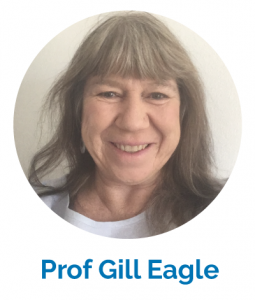
Gill Eagle is Professor Emeritus of Psychology in the School of Human and Community Development (SHCD) at the University of the Witwatersrand in Johannesburg, South Africa. She is a qualified Clinical Psychologist with many years of experience as trainer, supervisor, therapist and consultant. Professor Eagle’s research interests are framed by a focus on the inter-relationship between the socio-political and intra-individual domains of human experience. Her primary research work has been in the field of traumatic stress, with a focus on trauma of human origin, including gender related, sexual, criminal, and politically motivated forms of violence. She has published extensively in this area and in 2010 co-authored the book “Traumatic Stress in South Africa” together with Debra Kaminer. Her work in the trauma field has focused strongly on contextual factors and has included the re-elaboration of the construct of Continuous Traumatic Stress.

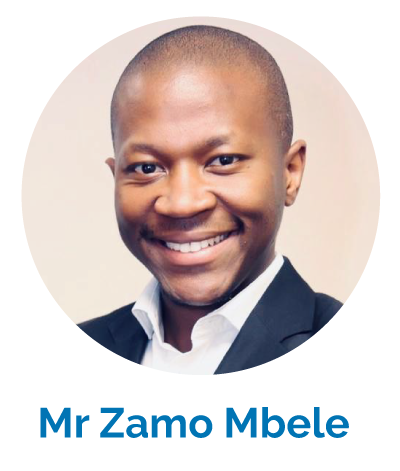
Zamo Mbele is a registered clinical psychologist in Johannesburg, South Africa. Zamo has worked in both the private and public sector of South Africa’s mental health services, and he currently practices as a senior psychotherapist and is a senior supervisor at Tara H. Moross Hospital and at the WITS Donald Gordon Medical Centre. He has presented and published internationally and locally, and has contributed opinions extensively through media collaborations. Zamo is the vice-chairperson of the South African Depression and Anxiety Group (SADAG), and a director of the Ububele Education Trust. He has also worked and consulted considerably in the not-for-profit and non-government space. Zamo is also an organisation consultant for cooperate wellness and for academic and educational institutions.
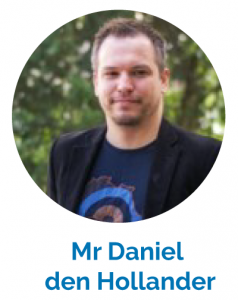
 

Daniel den Hollander is a clinical psychologist who has worked in specialised mental health care, both in the public and private sectors. His expertise lies in voluntary, involuntary, and forensic treatment care, Complex PTSD and co-occurring addiction work. He has chaired the Psychology Professionals in Public Service Division of PsySSA from 2016-2021. During his term, PiPS became an established voice within parliamentary NHI discussions and building key stakeholder relationships with other government departments (e.g. DBE, SARS). He is an activist for mental health care in South Africa. He is passionate about cultivating and promoting empowerment and change: may it be in the therapy room, on radio, at governmental stakeholder meetings, or at conferences. He is a regular feature on SAFM Living Redefined, and contributor for the Mail & Guardian.

Debbie Kaminer is a clinical psychologist, Associate Professor in the Department of Psychology at the University of Cape Town, and chair of PsySSA’s Science of Psychology Committee. Her research interests include the impact and treatment of continuous traumatic stress.

PsySSA Workshop Series 2022: Workshop 3: The Complexities of Trauma: Conceptual Considerations and Treatment Realities for Practitioners in South Africa

PsySSA Workshop Series 2022: Workshop 2: POPI for Psychology Professionals

About this workshop:

With his wife being a practising clinical psychologist, Christiaan has developed a particular expertise in the drafting of the necessary documents that psychologists use in their practices. The Protection of Personal Information Act, 4 of 2013, (POPIA) the Promotion of Access to Information Act, 2 of 200, (PAIA) and the recently introduced Cybercrimes Act, 19 of 2020, play an increasingly important role in the day-to-day practices of psychologists. It is now obligatory to have a PAIA manual, and certain information prescribed by POPIA must now be provided to clients. The Cybercrimes Act criminalises the disclosure of certain data messages and creates an obligation to report cybercrimes. The Health Professions Council, in addition, prescribes its own set of rules that pertains to client confidentiality. This workshop is aimed at guiding psychologists, in summary fashion, through this increasingly onerous regulatory framework.

Register for this Workshop

7 June 2022
Click here

PsySSA Workshop Series 2022: Workshop 2: POPI for Psychology Professionals

Meet our Presenter

Christiaan Giliomee is an experienced attorney who holds B. Comm (Law), LLB and LLM degrees from the University of Johannesburg. Chris is also a long standing admitted attorney with full right of appearance before the High Court of South Africa.
Christiaan commenced his career as an attorney when he joined the firm Webber Wentzel as an articled clerk in 1988. He practiced for 25 years as this firm, during which time he became an equity partner, and specialized in financial services with an emphasis on negotiable instruments, contracts, and commercial litigation. Christiaan has since opened his own firm, CL Giliomee Inc, and now focuses on the drafting of contracts, regulatory compliance, and civil litigation. Christiaan has a particular interest in the South African regulatory framework applicable to the medical fraternity in South Africa and is continuously assisting psychologists and other medical professionals with their respective compliance obligations.