PsySSA Commemorates World Suicide Prevention Day 2022 – Hope Campaign 2022

PsySSA Commemorates World Suicide Prevention Day 2022 – Hope Campaign 2022

HOPE CAMPAIGN 2022:

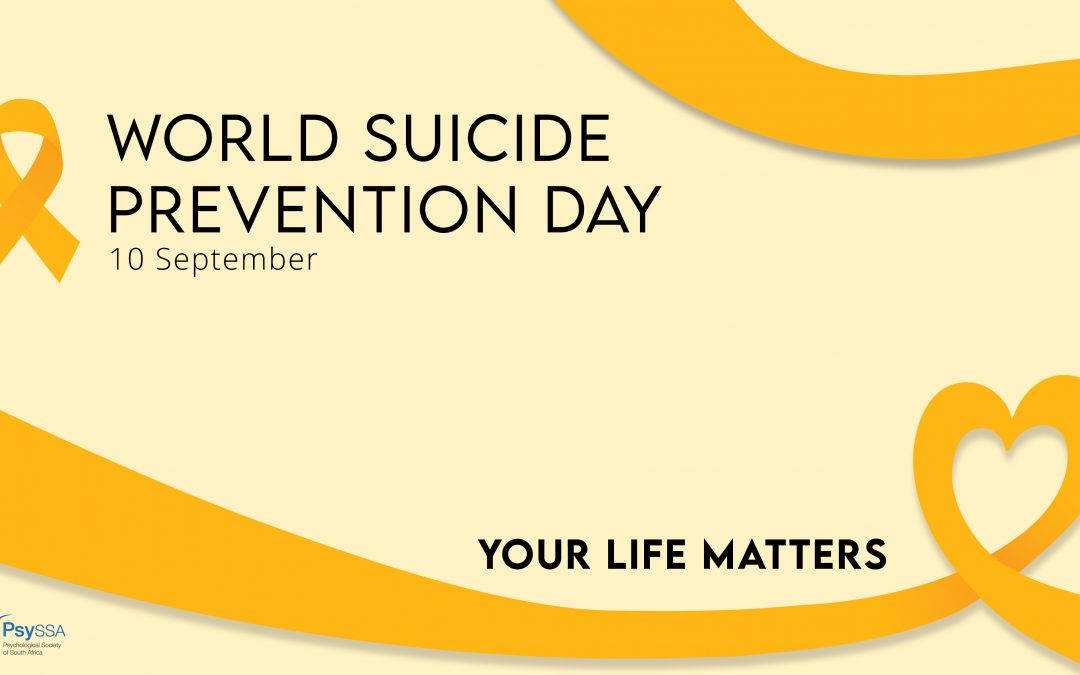
The 10th of September 2022 has been declared World Suicide Prevention Day, by the International Association for Suicide Prevention in conjunction with the World Health Organization. On this day, attention is focused on reducing stigma and raising awareness of suicide prevention among organisations and within the public sphere to inspire creating hope through action.

PsySSA is joining in this international initiative through releasing our Hope Campaign. The Hope Campaign comprises of a series of videos which will be released throughout the day on our social media channels. We encourage our community of PsySSA members to help spread these releases through sharing them on your own social media pages.

A special thank you to all the contributors of the project:

Nicky Newman Photography (https://www.nickynewmanphotography.com), Alice den Hollander Photography (insta:alice_den_hollander), Nonhlanhla Maubane, Gavaza Shingange, and the SASCP and the PiPS divisions

PsySSA will being posting media throughout the day.

Watch our social media to see this campaign, lead by Executive Member, Daniel den Hollander, develop!

#Hope #WorldSuicidePreventionDay #CreatingHope #ThroughAction



Chris McLachlan Elected to the Board of the World Professional Association for Transgender Health

Chris McLachlan Elected to the Board of the World Professional Association for Transgender Health

PsySSA would like to congratulate Chris McLachlan, Sexuality & Gender Division Chairperson, on their appointment to the World Professional Association for Transgender Health (WPATH) Board (Members-at-Large (4-year terms)).

The Board will be installed on September 20, 2022, at the 27th Scientific Symposium, being held in Montreal, Quebec, Canada.

Chris will be the first voice from the African continent on the WPATH Board!

Chris continues to make our Society Proud and we look forward to seeing what meaningful work Chris will continue to do with the WPATH

We wish Chris all the best on the WPATH Board!

Meet Chris McLachlan 

Chris McLachlan is a clinical psychologist working at Thuthuzela Care Centre (Rape crises centre) in KwaZulu-Natal and has a special interest in the fields of Sexually and Gender Diversity and Gender Affirming Healthcare. Chris has completed a Masters degree in Theology, Clinical Psychology and Biblical Studies and is a PhD candidate at UNISA. Chris is the co-chair of the team that developed the first South African Gender Affirming Healthcare Guideline and is part of the core team that developed the Practice Guidelines for Psychology Professionals Working with Sexually and Gender-Diverse People. Chris is one of the South African representatives at iPsyNet.

You’re Invited: SPSSI’s New Webinar Series on “Decolonial Approaches to the Psychological Study of Social Issues

You’re Invited: SPSSI’s New Webinar Series on “Decolonial Approaches to the Psychological Study of Social Issues

This webinar series (“Decolonial Approaches to the Psychological Study of Social Issues”) features 15 presentations (organized into 5 installments) based on contributions to a special issue of the Journal of Social Issues (JSI) devoted to decolonial perspectives in/on psychology. The first two installments feature 6 presentations that consider the psychology of colonial violence.  Decolonial approaches propose that colonial violence is not confined to the distant past (i.e., colonialism) but instead persists as coloniality: racialized ways of thinking and being that have their roots in colonial violence, are inherent in the Eurocentric modern order, and are inseparable from modern individualist development. An important implication is that colonial violence extends beyond physical space to psychological space, such that complete liberation requires forms of psychological decolonization. The last three installments feature 9 presentations that consider the coloniality of knowledge in hegemonic psychology. Researchers are not innocent bystanders observing effects of colonial violence from some neutral position. Instead, epistemic violence in psychology occurs via epistemic exclusion of racialized others from the knowledge production process, imperialist imposition of white-washed knowledge products as universal standards, pathologizing forms of explanation that construct racial others as deviants in light of white-washed standards (i.e., epistemological violence; Teo, 2010), and forms of harm (e.g., zero-point epistemology and individualist lifeways) associated with hegemonic psychology’s modern/colonial roots. An important implication is that a decolonial approach may require epistemic disobedience and refusal of the discipline of psychology.

SPSSI’s new webinar series, “Decolonial Perspectives on the Psychological Study of Social Issues,” launches in just two weeks. All webinars are free and open to SPSSI members and non-members alike. Please join the SPSSI for their first webinar in their series, entitled… 

THE PSYCHOLOGY OF COLONIAL VIOLENCE, I: Bodies and Space

Wednesday, September 14, 16:00 UTC (12:00 PM EDT, 9:00 AM PDT)

Convener/Discussant: Kopano Ratele

Presenters:

Melissa Tehee, Erika Ficklin, Devon Isaacs, Racheal Killgore, & Sallie Mack
Fighting for our sisters: Community advocacy and action for missing and murdered Indigenous women and girls

Johanna Lukate
Space, race and identity: An ethnographic study of the Black hair care and beauty landscape and Black women’s racial identity constructions in England

Anjali Dutt
Refugee experiences in Cincinnati, Ohio: A local case study in the context of global crisis