


World Bipolar Day 2026 – “Bipolar Strong”
Today, PsySSA joins the global community in commemorating World Bipolar Day under the theme “Bipolar Strong.”
Living with bipolar disorder is not a weakness – it is a journey of resilience, courage, and ongoing navigation of complex emotional, cognitive, and social realities. While often misunderstood as simple “mood swings,” bipolar disorder is a serious condition involving profound shifts in energy, sleep, and emotional regulation that can deeply affect daily life.
This year, contributions from PsySSA’s Health Psychology Division (HPD) and Decolonising Psychology Division (DPD) invite us to deepen how we think about mental health.
This World Bipolar Day, we call on all sectors of society to:
- Challenge stigma
- Strengthen systems of care
- Centre lived experiences
- Advance equitable and accessible mental health support

Bipolar Disorder and Mental Health Justice: A Decolonial Reflection for World Bipolar Day
By: Kim Gabriel-Dixon
This reflection explores bipolar disorder through a decolonial lens, inviting a broader understanding of mental health that recognises the social conditions, relationships, and structural realities shaping people’s lives. It encourages compassionate awareness while highlighting the importance of dignity, justice, and community care in supporting those living with bipolar disorder.

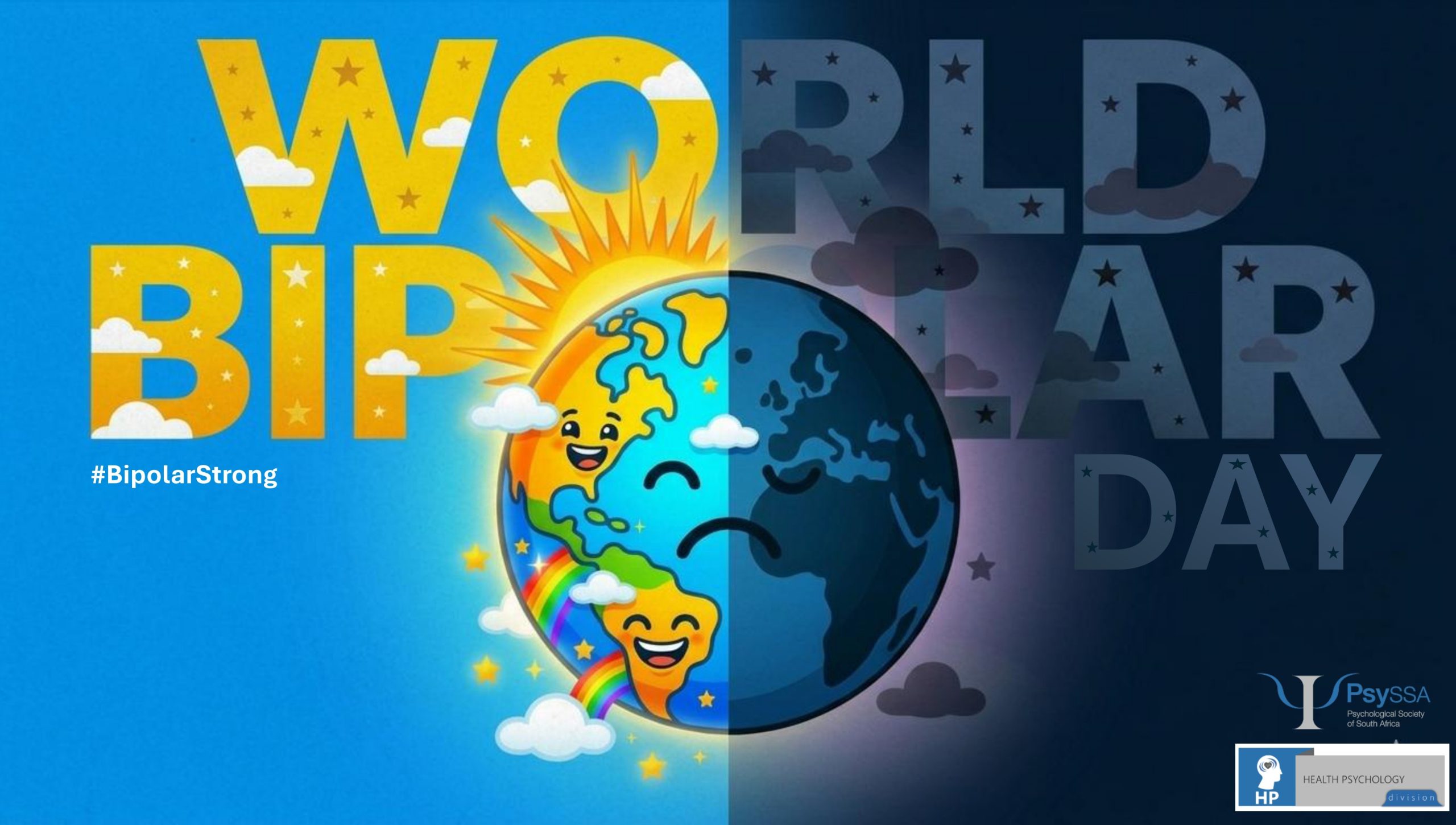
Today we commemorate World Bipolar Day under the theme: “BIPOLAR STRONG”
World Bipolar Day is a reminder that living with bipolar disorder is not a weakness, but a journey of resilience, strength, and courage. The theme ‘Bipolar Strong’ celebrates individuals who navigate the highs and lows while continuing to lead meaningful lives, challenge stigma, and advocate for better mental health support.
Every journey with bipolar disorder is different, shaped by personal, social, and structural factors. To transform mental health care, we must look beyond the diagnosis and see the person before the patient.
Here in South Africa, research continues to strengthen our understanding of bipolar disorder care by linking policy, clinical practice, and patient realities. They highlight the importance of effective medication management, multidisciplinary support, familial support, and national treatment guidelines in shaping care and realities for those living with bipolar disorder:
- The Treatment of Psychotic and Bipolar Disorders Within the South African Context: Perspectives of a Clinical Pharmacist.
- Management of bipolar disorder in South Africa: National Department of Health essential medicine selection and treatment algorithms.
- Lived Experiences of Family Members Caring for Individuals Living with Bipolar Disorder.
This World Bipolar Day, let us stand in solidarity, challenge stigma, and support those living with bipolar disorder.
Together, we are #BipolarStrong