World Mental Health Awareness Month 2025: Mental Health in Humanitarian Emergencies

World Mental Health Awareness Month 2025: Mental Health in Humanitarian Emergencies

This month, PsySSA highlights an important truth: mental health matters in every emergency. Across South Africa and the African continent, crises such as floods, droughts, community violence, and public health emergencies affect millions. The psychological impact is often invisible but lasting, for both survivors and the first responders.

The World Health Organization recognizes this focus in its 2025 calendar, emphasizing the need for strengthened mental health support and accessible services during crises and emergencies. Mental health practitioners have historically played a critical role in responding to such events. From providing immediate psychological support during disasters to guiding communities through recovery, our members have been at the forefront of care. This month is an opportunity to reflect on the work done, recognize the challenges faced, and acknowledge the essential contribution of practitioners in ensuring access to mental health services during emergencies.

Join us as we share insights, experiences, and resources to strengthen mental health support across South Africa and the continent.
 

CHR & PsySSA Head to the Constitutional Court as Amici Curiae in Landmark Case on Consent

CHR & PsySSA Head to the Constitutional Court as Amici Curiae in Landmark Case on Consent

On 25 September 2025, the Centre for Human Rights, University of Pretoria (CHR), and the Psychological Society of South Africa (PsySSA) will appear before the Constitutional Court of South Africa as amici curiae in the matter of The Embrace Project NPC and Others v Minister of Justice and Correctional Services and Others (CCT314/24) and Centre for Applied Legal Studies and Others v The Embrace Project NPC and Others (CCT315/24).

Represented by Lawyers for Human Rights, PsySSA and CHR were admitted as amici curiae earlier this year and have filed both written and oral submissions. The case follows the Pretoria High Court ruling of 30 September 2024, which declared certain sections of the Criminal Law (Sexual Offences and Related Matters Act, 32 of 2007) unconstitutional for failing to criminalise sexual violence where perpetrators unreasonably believed that a complainant had consented.

Why this case matters

The issue of consent in sexual offence cases is complex. PsySSA and CHR’s submissions highlight:

  • The hardwired nature of trauma responses (i.e., such as paralysis, numbness, and immobilisation) that may prevent survivors from expressing non-consent.

  • The impact of intersecting identity factors (age, social status, culture, orientation) that create power imbalances and limit the capacity of survivors to assert themselves.

By presenting psycho-legal perspectives, PsySSA and CHR seek to support a holistic, survivor-centred understanding of consent that reflects the lived realities of trauma.

Looking ahead

Other organisations before the Court include the Centre for Applied Legal Studies (CALS) and the Women’s Legal Centre Trust (WLCT). Each has presented distinct arguments regarding how consent should be defined in law.

PsySSA and CHR’s intervention underscores the importance of recognising psychological and social dimensions of trauma when interpreting consent in future prosecutions of sexual offences.

Click here to view the Media Statement

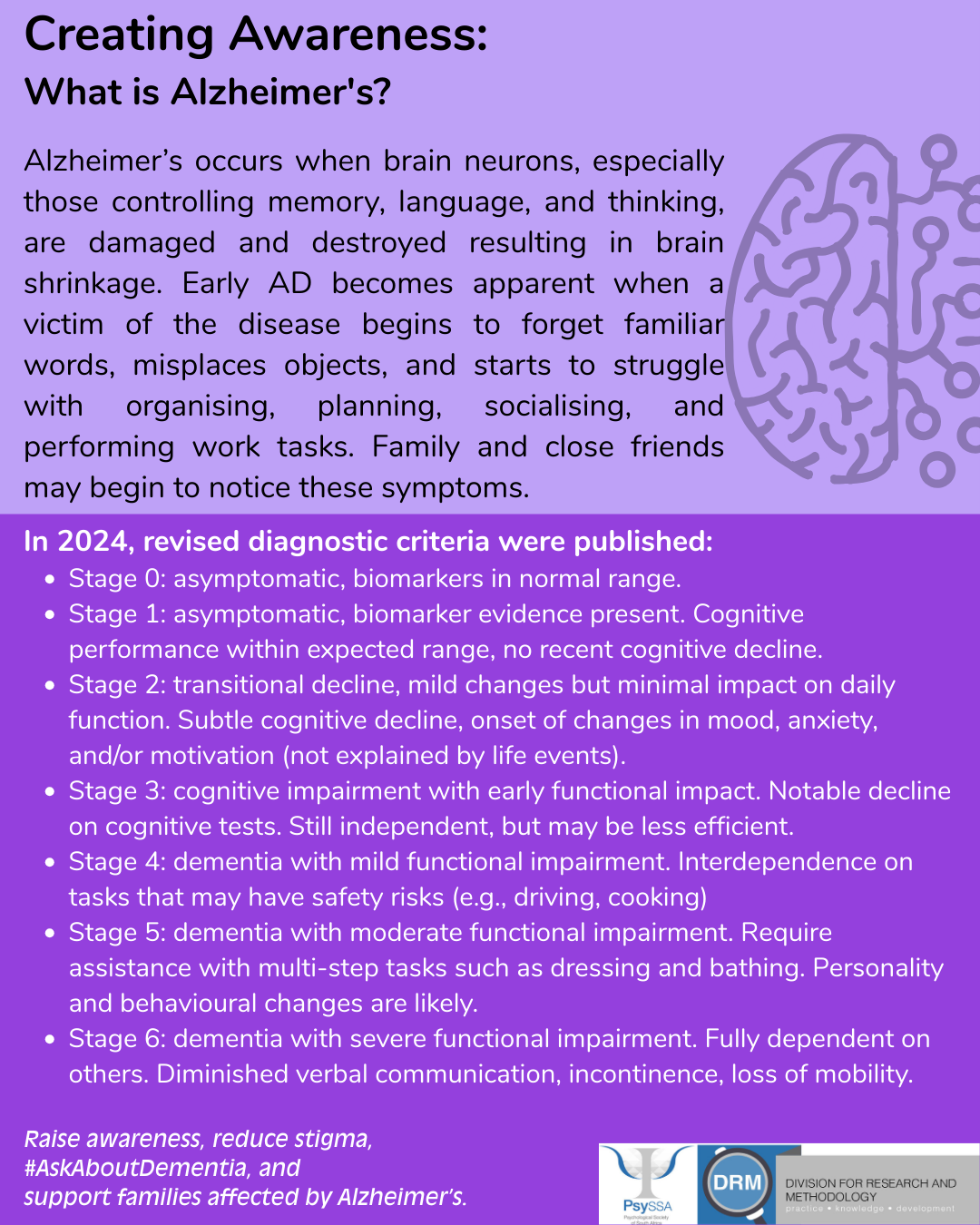
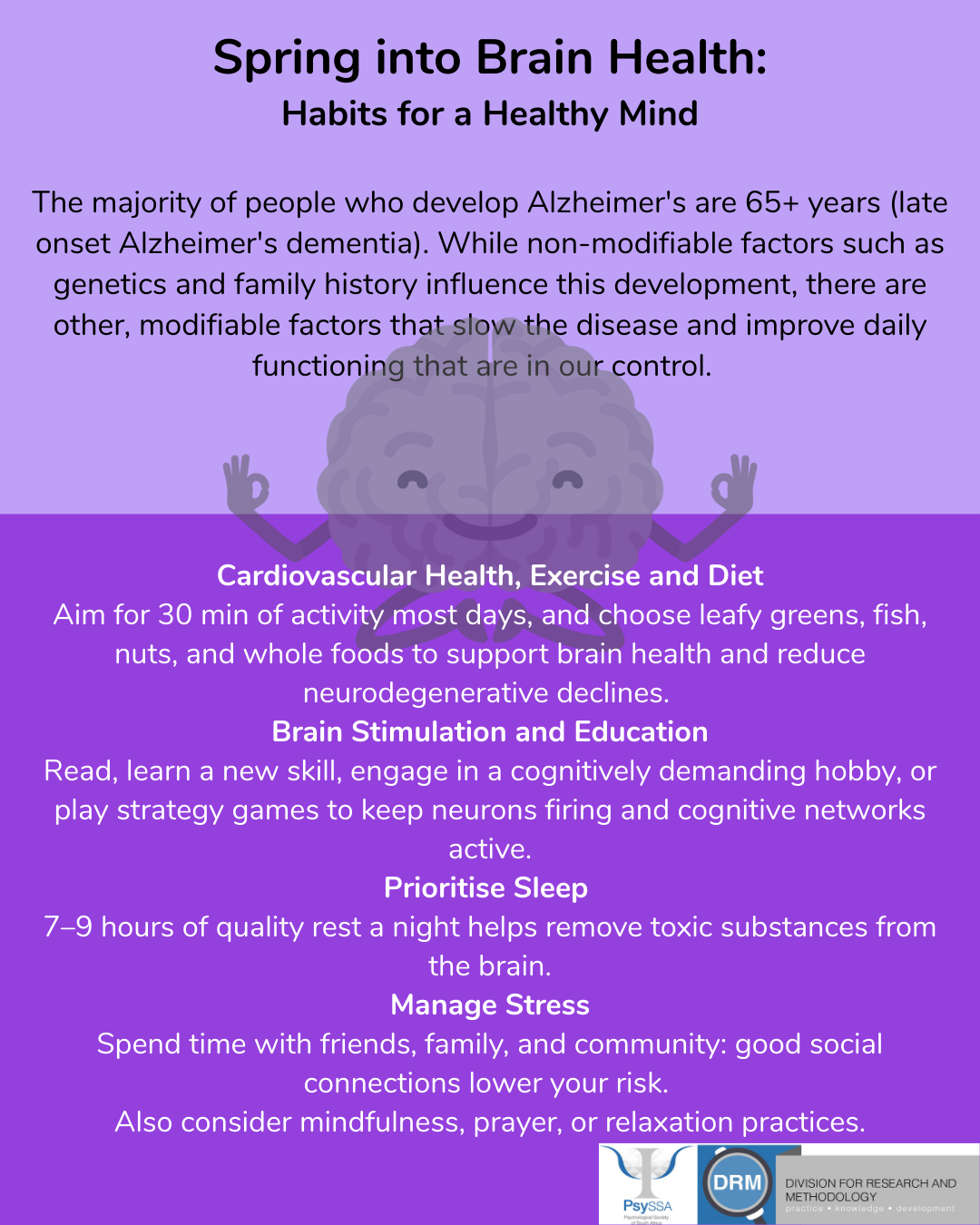
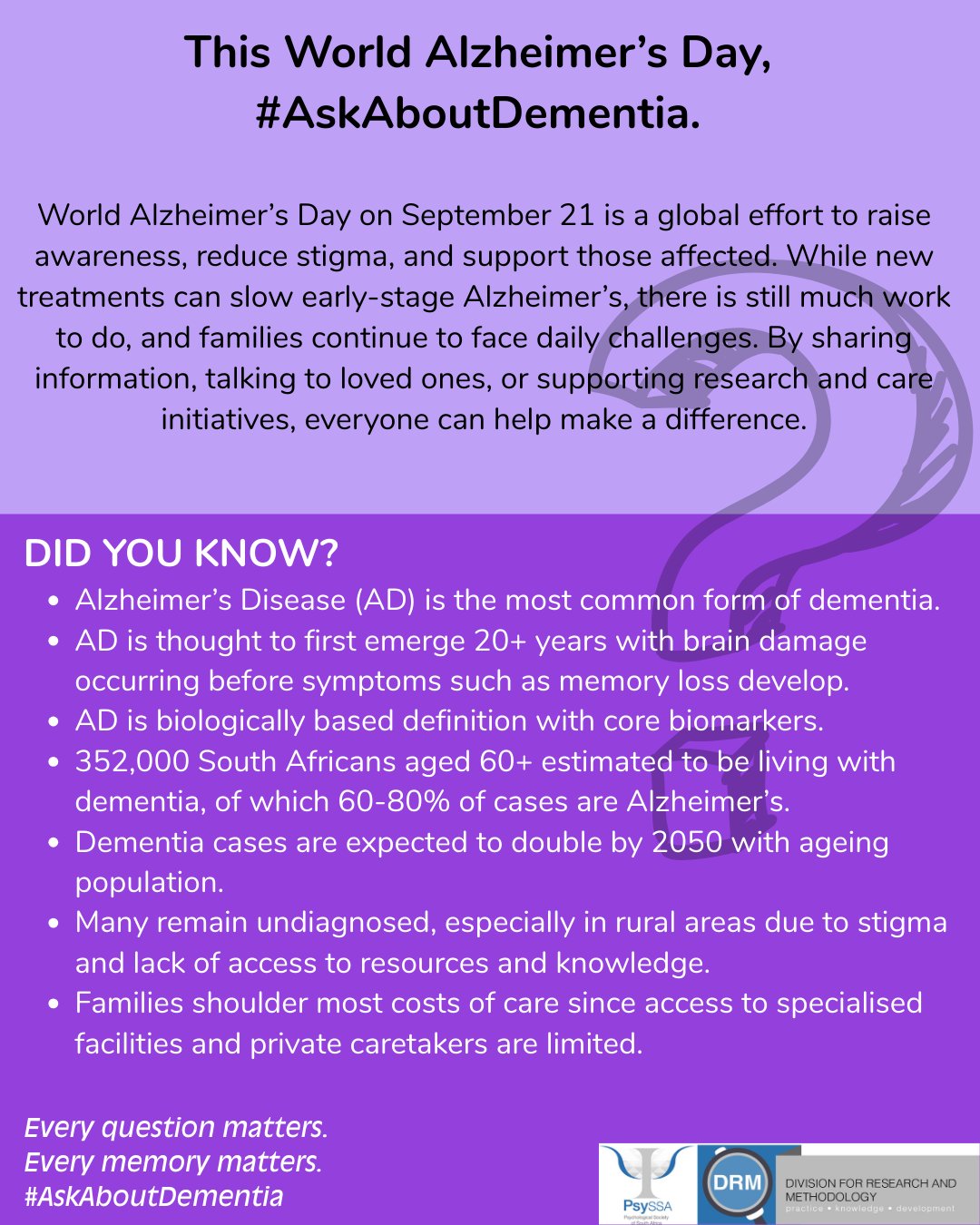
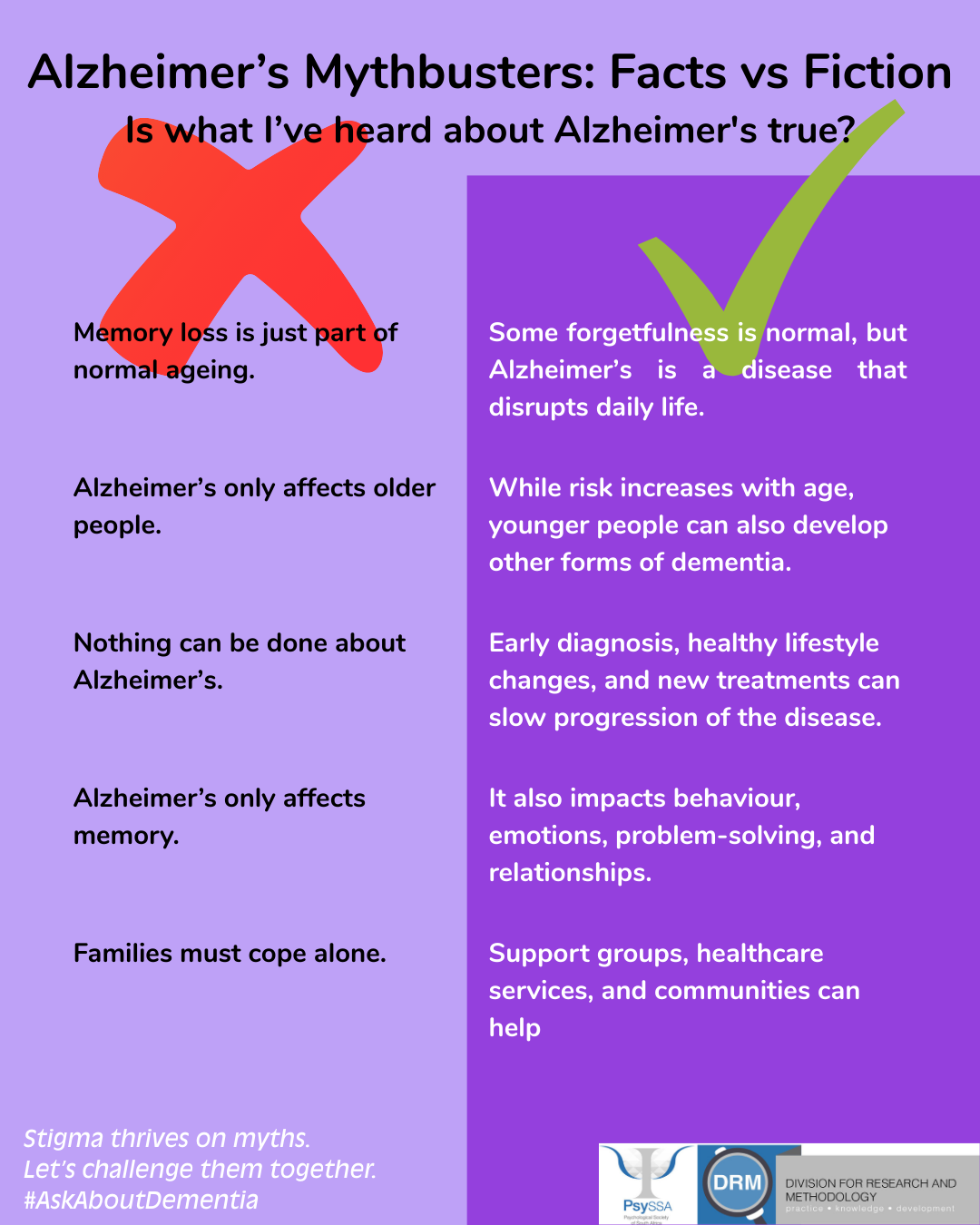
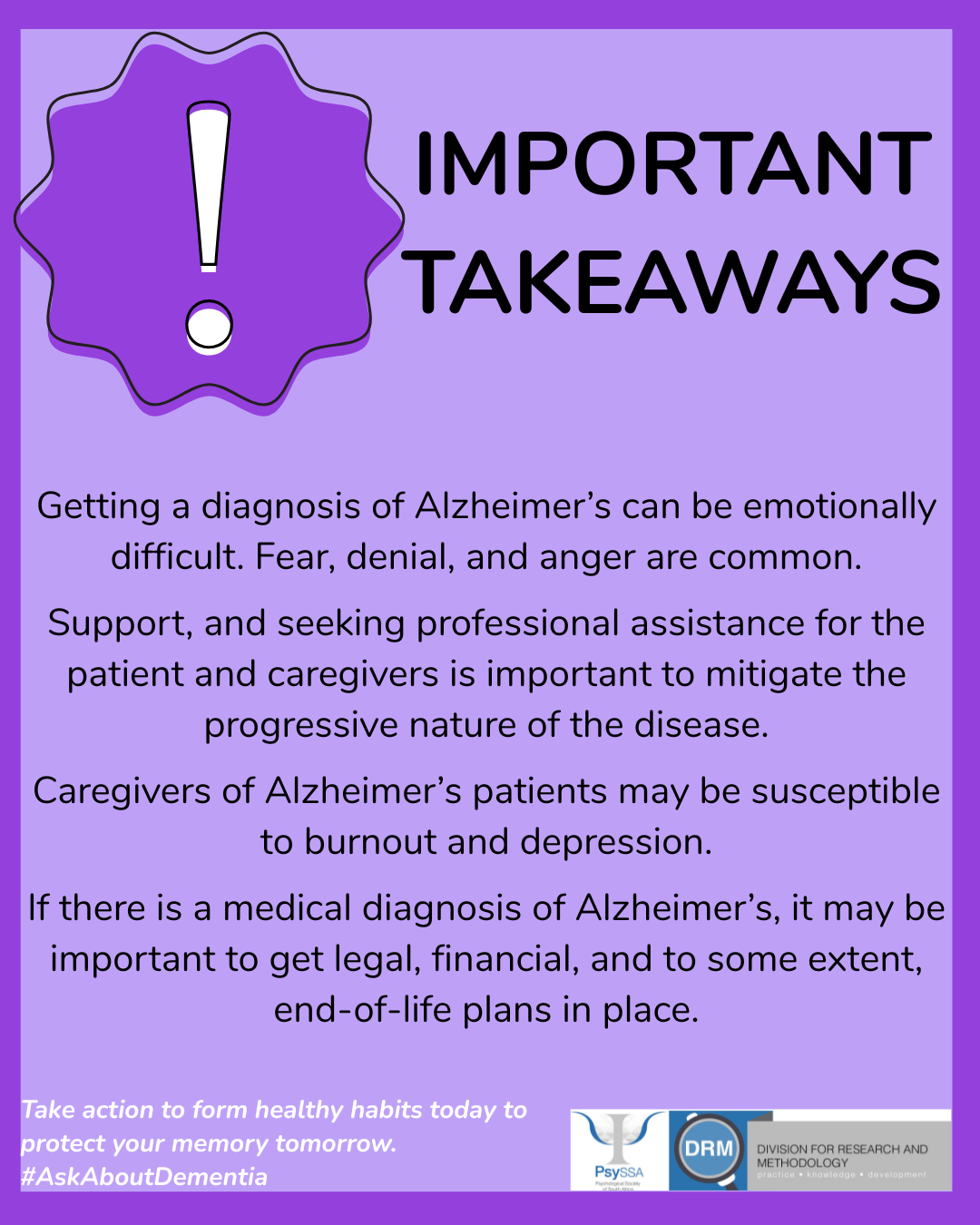
World Alzheimer’s Day 2025: Ask About Dementia

World Alzheimer’s Day 2025: ”When memories fade, let love take over.”

Memories enable us to relive the past and preserve special moments that play a defining role in who we are. Every year we commemorate those who live with Alzheimer’s disease and other forms of dementia. The world honors World Alzheimer’s Day.

World Alzheimer’s Day is an opportunity to celebrate loved ones who live with Alzheimer’s disease but it is also an opportunity to:

  • create awareness
  • initiate research and collaboration for early detection and improved treatment
  • highlight the value of support and
  • honor the caretakes, healthcare staff and professionals, researchers and family members who care for their loved ones

You can make a difference:

  • Volunteer
  • Donate
  • Educate yourself and others
  • Support

Read more about World Alzheimer’s Day and Alzheimer’s:

  • Alzheimer’s disease – Old friends and new promises: https://www.up.ac.za/research-matters/news/post_2995717-alzheimers-disease-old-friends-and-new-promises
  • Alzheimer’s Association: https://www.alz.org/about/awareness-initiatives/world-alzheimers-day
  • Mahomed A, Pretorius C. Availability and utilization of support services for South African male caregivers of people with Alzheimer’s disease in low-income communities. Dementia. 2020;20(2):633-652. doi:10.1177/1471301220909281
  • Manderson L, Brear M, Rusere F, Farrell M, Gómez-Olivé FX, Berkman L, Kahn K, Harling G. Protocol: the complexity of informal caregiving for Alzheimer’s disease and related dementias in rural South Africa. Wellcome Open Res. 2022 Aug 25;7:220. doi: 10.12688/wellcomeopenres.18078.1. PMID: 37538406; PMCID: PMC10394391.
  • orczyn, A.D., Grinberg, L.T. Is Alzheimer disease a disease?. Nat Rev Neurol 20, 245–251 (2024). https://doi.org/10.1038/s41582-024-00940-4