Pre-Booking Registration Now Open – PsySSA Annual Psychology Congress 2026

Pre-Booking Registration Now Open – PsySSA Annual Psychology Congress 2026

Congress Pre-Booking Registration Now Open!


We are delighted to inform you that registration for the PsySSA 30th Annual Psychology Congress 2026 is now open!

The future of psychology is unfolding – and PsySSA invites you to be part of it. Join us at the PsySSA 30th Annual Psychology Congress 2026, taking place from 13-15 October 2026 at Emperors Palace, Johannesburg.

Why you should register now:

  • Secure your place at one of the leading psychology gatherings in South Africa
  • Take advantage of discounted rates by registering for Pre-Booking
  • Be part of critical conversations on AI, mental health, and the future of care
  • Connect with leading professionals, researchers, and practitioners


This year’s theme, “Psychology in Transition: Humanity, Technology and the Future of Care,” brings together bold ideas, critical conversations, and forward-thinking perspectives at a time when the discipline is rapidly evolving.

As technology reshapes how we live, connect, and care, psychology stands at a pivotal crossroads. This Congress will explore how we can harness innovation while staying grounded in ethics, inclusion, and human dignity.

Register now and be part of shaping the future of care.

Pre-Booking Registration Deadline: 30 April 2026.

Please note that registration operates on a register-and-pay basis.

PsySSA Commemorates Neurodiversity Celebration Week – 16-22 March 2026

PsySSA Commemorates Neurodiversity Celebration Week – 16-22 March 2026

Neurodiversity Celebration Week 

This week, PsySSA joins the global community in recognising Neurodiversity Celebration Week – a time to affirm the value, strengths, and diverse experiences of neurodivergent people.

Neurodiversity reminds us that differences in how people think, learn, and experience the world are natural variations of the human mind. Promoting understanding, inclusion, and dignity is essential to creating environments where everyone can thrive.

Throughout the week, we will be sharing insights and reflections from PsySSA’s AI, RCP, and DNFP divisions. These contributions will highlight research, professional perspectives, and lived experiences that deepen our collective understanding of neurodiversity.

Join us as we celebrate diverse minds, challenge stigma, and continue working toward a more inclusive and supportive society.


Neurodiversity Celebration Week


Neurodiversity Theme: Inclusion, Ethics, and Psychological Practice in South Africa

Neurodiversity Week 2026 (16–22 March) offers South African psychologists an opportunity not only to raise awareness, but to deepen our ethical commitment to inclusion, dignity, culturally-sensitive, and scientifically grounded practice. As professionals registered with the Health Professions Council of South Africa (HPCSA), our celebration of neurodiversity must extend beyond recognition—it must shape how we assess, diagnose, formulate, and advocate.

Neurodiversity reminds us that differences in attention, communication, learning, sensory processing, executive functioning, and motor coordination reflect natural variation in human brain development. At the same time, diagnostic frameworks such as the Diagnostic and Statistical Manual of Mental Disorders (DSM-5-TR), published by the American Psychiatric
Association (2022), and the World Health Organization International Classification of Diseases (ICD-11) (2019) continue to identify neurodevelopmental conditions that may involve significant functional impairment requiring support. Holding both realities, difference and disability is the ethical task before us.

Neurodiversity: Different Wiring, Equal Worth

The concept of neurodiversity, introduced by Judy Singer (1999) and further articulated by Nick Walker (2021), reframes neurological differences as part of natural expected human diversity. Within this paradigm, individuals with autism spectrum disorder, ADHD, specific learning disorders (including dyslexia and dyscalculia), intellectual disability, developmental coordination disorder, tic disorders, and communication disorders are understood as having brain structural and organizational patterns that are “wired differently.”

There is emerging evidence suggesting that even within diagnostic categories, there is significant variation, for example autism is not a single condition with one root cause, but is an umbrella term for a cluster of conditions with similar, although not identical, features. There is likely to be further subgroups identified in future research, leading to more targeted interventions. There are also suggestions that there is a relative under-diagnosis of neurodivergent patterns in communities that lack financial resources, typically those from Black communities.

However, different neurological wiring must not be grounds for exclusion.

  • Exclusion arises not from neurological difference itself, but from social environments that are structured around narrow cognitive norms. When schools demand uniform learning styles, when workplaces privilege rigid executive functioning patterns, or when therapeutic spaces assume neurotypical communication styles, systemic barriers emerge.
  • As psychologists, our responsibility is to identify not only different patterns of neurological processing and impairment, but also environmental mismatch.

HPCSA Ethics and Inclusion

The HPCSA’s General Ethical Guidelines for the Health Care Professions and Scope of Practice for Psychologists provide a clear framework for Neurodiversity Week reflection. Core principles include:

  • Respect for persons and human dignity
  • Non-discrimination
  • Beneficence and non-maleficence
  • Professional competence

These are not abstract ideals. They are practical and professional obligations.

When we use stigmatizing language, overpathologising difference, conflate socioeconomic and language disadvantage with cognitive impairment, or recommend unnecessarily restrictive placements, we risk contravening these principles as set by HPCSA.

Conversely, when we provide balanced diagnostic feedback, advocate for reasonable accommodation in a workplace, and contextualize functional challenges, we actively uphold ethical practice. Celebrating Neurodiversity Week therefore means aligning our Clinical work with our ethical commitments.

Neuropsychologists: Balanced Interpretation Matters

Neuropsychological assessment carries significant consequences for educational access, occupational opportunity, and self-concept.
Contemporary research indicates that conditions such as ADHD and autism involve differences in neural connectivity and developmental timing rather than simple deficits. Reports that emphasize only weaknesses risk reinforcing low expectations. Reports that ignore impairment may limit access to support.

During Neurodiversity Week, Neuropsychologists are reminded that balanced profiling should document strengths alongside challenges, supporting inclusion while maintaining diagnostic rigor.

Workable Sound Commitments for Neurodiversity Week 2026

As we mark 16–22 March 2026, it is essential for psychologists to continuously reflect on the following commitments:

  • Update assessment practices to ensure cultural and linguistic appropriateness.
  • Review report language for unintended deficit framing.
  • Strengthen CPD in neurodevelopmental science.
  • Engage in conversations about inclusive policy within schools and organizations.
  • Validate neurodivergent identity while addressing functional challenges.

Small shifts in language formulation, recognize differences and practice inclusiveness could have a profound impacts on dignity and belonging.

Beyond Awareness: A Professional Responsibility

Neurodiversity Week is not simply a celebration of difference; it is a reminder of responsibility towards society. Diagnostic clarity remains essential. Functional impairments are real and require structured support. Yet neurological difference does not diminish worth, capacity, or the right to participation in all aspects of broader society

For all psychologists registered with HPCSA; inclusion is embedded within ethical practice. Our role is not to eliminate difference, nor to idealize it, but to ensure that difference does not lead to exclusion but to understanding and inclusion. As we celebrate Neurodiversity Week 2026, may we reaffirm that different brain wiring is part of human diversity and that ethical psychological practice demands understanding, accommodation, and inclusion in society.

The Role of Psychologists during Neurodiversity Week

During Neurodiversity Week and beyond; each category of psychologist registered with the Health Professions Council of South Africa (HPCSA) could play a meaningful role in promoting awareness, inclusion and support.

The brief reflections below highlight possible intersections between neurodiversity awareness and the various categories of psychological practice. These links are offered in a spirit of professional reflection and do not constitute determinations of scope or regulatory guidance, which remain the responsibility of the HPCSA:

  • Neuropsychologist: Neuropsychologists Specialized category focusing on neuropsychological assessment, diagnosis and rehabilitation related to brain-functioning disorders. Relevant to neurodiversity where neurological functioning impacts cognition and behavior.
    Link: https://www.hpcsa.co.za/board/psychology/regulations.
  • Clinical Psychologist: HPCSA Psychology Scope Regulations – Clinical Psychologists Section. Registered to assess, diagnose and treat psychological distress and psychopathology using evidence-based psychological interventions.
    https://www.gov.za/sites/default/files/gcis_document/201409/34581rg9582gon704.pdf
  • Counselling Psychologist: Link: HPCSA Psychology Scope Regulations of Counselling Psychologists Section. Relevant to neurodiversity when addressing adjustment, identity and related psychosocial issues.
    https://www.gov.za/sites/default/files/gcis_document/201409/34581rg9582gon704.pdf
  • Educational Psychologist: Assesses and intervenes to optimize learning, development and barriers to learning across the lifespan; includes profiles that relate to neurodiverse conditions. https://www.gov.za/sites/default/files/gcis_document/201409/34581rg9582gon704.pdf
  • Research Psychologist: Conducts psychological research often contributing to knowledge on neurodiversity, Link: HPCSA Psychology Scope Regulations Research Psychologists Section
    https://www.gov.za/sites/default/files/gcis_document/201409/34581rg9582gon704.pdf
  • Industrial Psychologist: less directly neurodiversity-focused, but may assess and advise on workplace adjustment and functioning HPCSA Psychology Scope Regulations – Industrial Psychologists Section
    https://www.gov.za/sites/default/files/gcis_document/201409/34581rg9582gon704.pdf
  • Registered Counsellor (Psychological), identify needs requiring advanced assessment (e.g., neurodevelopmental concerns), and refer appropriately. Link: HPCSA Psychology Scope Regulations – Registered Counsellors Section
    https://www.gov.za/sites/default/files/gcis_document/201409/34581rg9582gon704.pdf

AI as a prostethic or cage - AI and Neurodiversity podcast

https://drive.google.com/file/d/1deGrYRLMjD970Fqt5VXgJV015Y9kMWtL/view

Joint Position Statement of PsySSA and PAPU: Psychology’s Response: Wars on Civillians

Joint Position Statement of PsySSA and PAPU: Psychology’s Response: Wars on Civillians

Psychology’s Response: Wars on Civillians

The Psychological Society of South Africa (PsySSA), together with the Pan-African Psychology Union (PAPU), has released a joint statement titled “Psychology’s Response: Wars on Civilians.”

The statement raises urgent concern about the escalating violence, displacement, and destruction affecting civilian populations across the world, highlighting the profound and lasting psychological consequences of war on individuals, families, and communities. It calls on psychological associations and professional bodies globally to speak out against violence directed at civilians and to advocate for the protection of human dignity, life, and the conditions necessary for peace.

Read the joint Position Statement below:

PsySSA Member Sponsorship and AJOPA’s Inclusion on the DHET List

PsySSA Member Sponsorship and AJOPA’s Inclusion on the DHET List

PsySSA Member Sponsorship and AJOPA’s Inclusion in the DHET and Scopus Tabs of The DHET List


PsySSA is pleased to share two positive developments for our members and the broader psychological research community.

As part of our commitment to supporting member scholarship, PsySSA will be offering a publication discount for accepted manuscripts in the African Journal of Psychological Assessment (AJOPA) in 2026. The first author (only), if a fully paid-up PsySSA member at the time of submission and final editorial decision, will be eligible for a once-off ZAR 4,347.83 (excl. VAT) discount on Article Processing Charges (APCs). This sponsorship will apply to the first 10 qualifying manuscripts. Further details are available on the AJOPA publication fees page.

Secondly, AJOPA has been included in the DHET (row 5) and Scopus (row 1021) tabs of the 2026 DHET list of accredited journals. This recognition strengthens the journal’s standing and enhances the visibility and impact of research published in AJOPA. See AJOPA’s journal information page for a list of the DHET-approved indices in which the journal is included.

We congratulate the AJOPA editorial team and contributors on this important milestone and remain proud to support platforms that advance psychological scholarship in Africa.

From Classroom to Congress: A Student Preparation Series

From Classroom to Congress: A Student Preparation Series

From Classroom to Congress: A Student Preparation Series


Got research but not sure how to take it beyond the classroom? This dynamic three-part series is designed to help psychology students turn academic work into confident congress participation. Whether you’re preparing for the PsySSA Congress or another academic conference, the series walks you step-by-step through the journey from writing your first abstract to presenting with confidence in professional spaces.

Across the workshops, students will learn how to craft strong abstracts, navigate submission systems, and understand what happens after acceptance. The series then focuses on turning your abstract into a compelling poster or presentation, followed by practical strategies for presenting with confidence and managing nerves. Supportive, practical, and student-centred, this series aims to demystify congress participation and empower emerging scholars to share their ideas in ways that are impactful, ethical, and authentically their own.

Online | Live | Free

Part 1: Abstract Writing Made Clear

Workshop Details

  • Date: 4 March 2026
  • Time:18:00–20:00
  • Cost: Free
  • Online via Zoom

Thinking about submitting to the PsySSA Congress – or another academic conference but -unsure where to start? This workshop breaks down abstract writing into clear, manageable steps. Students will learn how to turn coursework, proposals, or mini-theses into compelling congress abstracts that are clear, concise, and aligned with submission requirements.

The session covers what makes a strong abstract, how to stay within word limits, and common mistakes to avoid. Participants will also gain practical guidance on choosing presentation formats, navigating submission platforms, and understanding ethical requirements. By the end, students will leave with the clarity and confidence needed to take that first step into academic knowledge-sharing.

Part 2: From Abstract to Confident Presentation

Workshop Details

  • Date: 2 July 2026
  • Time: 18:00–20:00
  • Cost: Free
  • Online via Zoom

So your abstract was accepted – now what? This combined workshop supports students in moving from accepted abstract to confident conference presentation. Whether preparing for the PsySSA Congress or another academic event, the session bridges both the technical and personal aspects of presenting research.

Participants will explore how to transform written work into engaging presentations, learning how to structure content clearly, design visually effective materials, and communicate ideas in accessible and ethical ways. The workshop also focuses on the experience of presenting – including managing nerves, speaking with confidence, staying within time limits, and navigating questions and academic dialogue.

With a supportive and practical approach, this workshop helps students bring their research to life while building the confidence and skills needed to share their work authentically in professional psychology spaces.

Part 3: From Presentation to Publication

Workshop Details

  • Date: 9 September 2026
  • Time: 18:00–20:00
  • Cost: Free
  • Online via Zoom

You’ve presented your research – now how do you take the next step and publish it? This workshop introduces students to the process of turning conference presentations into publishable academic work. Designed for early-career researchers and postgraduate students, the session demystifies academic publishing and supports participants in building confidence to share their work beyond the conference space.

Participants will gain an overview of how to identify suitable journals, adapt presentations into manuscripts, and understand the expectations of academic writing and peer review. The workshop also explores practical strategies for structuring articles, responding to reviewers, and navigating common challenges such as rejection and revision. With a focus on clarity, integrity, and scholarly voice, the session encourages students to view publication as an achievable and meaningful part of their research journey.

Children’s Mental Health Week – 09 February- 15 February 2026

Children’s Mental Health Week – 09 February- 15 February 2026

Children’s Mental Health Week

This Children’s Mental Health Week, PsySSA centres the voices of its Divisions to reflect on the realities facing children’s mental health in South Africa today.

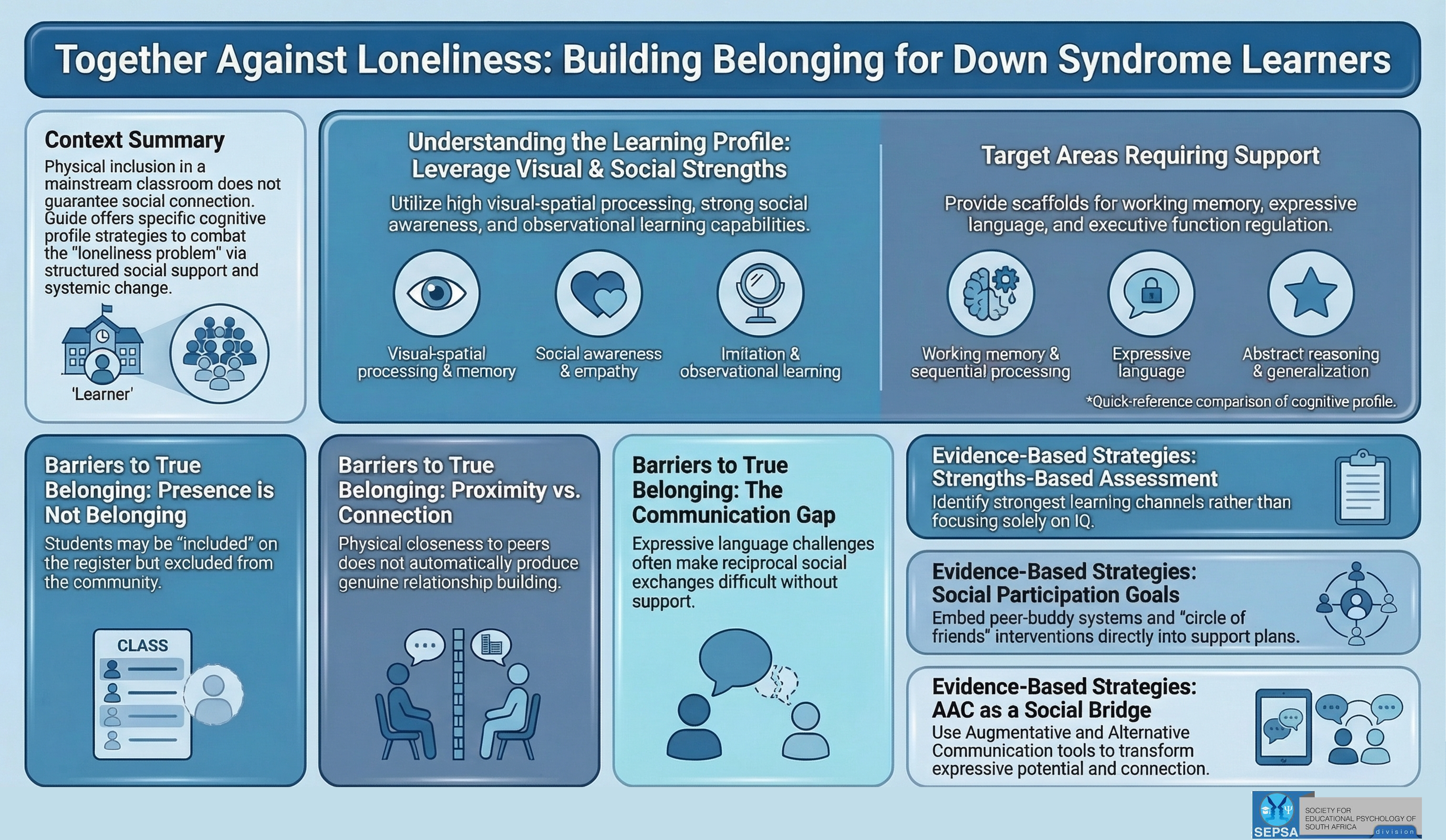
Across the week, we will be sharing contributions from the DRM, SEPSA, and SD Divisions, offering diverse perspectives on the challenges, responsibilities, and possibilities for more responsive, ethical, and just care for children.

Together, these reflections invite us to pause, listen, and consider how psychology can meaningfully respond to the complex contexts shaping children’s lives.


CHILDREN’S MENTAL HEALTH CHALLENGES

“NO END IN SIGHT”


The Children’s Mental Health Week is an appropriate time to reflect on what extent we as collegial professionals have delivered on our previous mandate which we could have eloquently articulated around this time last year. In essence during the intervening period, how relevant and responsive have we been to current needs and circumstances?

Children’s Mental Health are impinged by a multiplicity of factors. This is borne out by Bronfenbrenner (1979). His Ecological Systems Theory is wide encompassing. Space does not allow an in-depth elaboration of his valuable theory. However, his emphasis on the environmental interaction between and among family, peers and school have great significance for Children’s Mental Health. Are intersections in the Microsystem amongst these three constructs contributory factors in respect of Children’s Mental Health?

The much-desired harmonious balance is at times shattered in the home. Ordinarily a safe haven for an intact family becomes the very place that disrupts the familial bond and turns it into chaos and instability. Hostile school circumstances further diffuse mental health difficulties. Negative peer pressure also plays a vital role in mental health reduction of children.

In the meantime, according to SAMRC (2025) Mental Health concerns are growing almost unchecked at an alarming rate:
• Depressive disorder (10.1%)
• Anxiety (6.7%)
• Post-traumatic stress disorder (17.6%)
• Suicide thoughts (10.1%)
• Substance abuse (33.17%)

This is by no means exhaustive. There is a myriad of other mental conditions. However, the above merely serves to highlight the scope of the problem. Let us briefly consider the impact on education and future opportunities.

While the above are well-known, let’s posit how the school may be an indirect source of aggravating Mental Health challenges among learners. At present this is intuitive. It may possibly generate further research.

The psychological profession, no less Educational Psychologists, need to press pause and examine the inferences of TIMMS (2019) and PIRLS (2021) studies. In TIMMS (2019), South African grade five pupils ranked among the lowest. This is the group who will be writing the grade twelve examination at the end of the 2026 year. Watch this space.

In PIRLS (2021), grade four learners landed bottom of the pile. A dismal repeat performance of PIRLS (2016). Further, it was concluded that almost (80%) of the 2021 cohort were unable to comprehend the simple narrative text.

The educational repercussions and the mental health implications are far-reaching.

Back at the ranch. Department of Basic Education, 2025, records an (88%) pass rate for NSC learners. Unsuccessful learners comprised (12%) of this pool which equated to 110 520 students.

Is this something to be really proud about?

While the classrooms burn, the Officials go on ‘fiddling”.

Dr N Chetty- SEPSA- Executive Member

SPOTLIGHTING ORGANISATIONS FOR CHILDREN’S MENTAL HEALTH WEEK


PsySSA and the PsySSA Student Division stand united in support of Children’s Mental Health Week. We recognise the importance of supporting the emotional, psychological, and social wellbeing of children across South Africa, as it is both necessary and urgent. Children’s mental health does not exist in isolation, it is shaped by individual experiences, as well as the systems, communities, and forms of support that are available to them. In honour of this week, we are spotlighting some organisations that are doing vital work to support children and their psychosocial well-being. These organisations play a critical role in creating safe, supportive environments where children can thrive.

We call on students, practitioners, and community members to engage with these resources, share them, and support their work in a collaborative commitment to advance children’s mental health.

Nationwide:


Gauteng:


KwaZulu Natal:


Eastern Cape:


Western Cape:


Limpopo:

Children’s Mental Health Week


Children do not always have the words to say how they feel, but their behaviour often tells the story.

Children’s Mental Health Week reminds us that mental health matters from the very start of life. Emotional well-being shapes how children learn, relate to others, cope with stress, and see themselves in the world.

Supporting children’s mental health does not require perfect parenting or all the answers. It starts with simple, everyday actions. Listening without judgement. Making space for feelings, even the uncomfortable ones. Offering safety, consistency, and reassurance.

When children feel seen, heard, and supported, they are more likely to thrive, not just now, but throughout their lives.

This week, let us talk openly about children’s mental health. Let’s challenge stigma, encourage compassion, and remind every child that their feelings matter.

Because strong minds start with safe spaces.

#ChildrensMentalHealthWeek
#MentalHealthMatters
#EveryChildMatters
#SupportingYoungMinds


Children’s Mental Health Week provides an opportunity to raise awareness regarding the emotional and psychological well-being of children and young people.  The mental health of children is influenced by cognitive development, emotional regulation, academic and social functioning. Thus, mental health influences how children understand their emotions, cope with pressure, cope with learning, and building relationships.  Research show that early mental health promotion and prompt intervention can lower the likelihood of unfavourable consequences later in life (WHO, 2021).  

Current challenges affecting children’s mental health include but not limited to academic pressure, exposure to social media, socioeconomic equality, family dynamics, and community violence. According to UNICEF (2022), these factors are likely to increase vulnerability to depressive symptoms, anxiety, trauma related disorders, and difficulties in behavior, if not addressed in time.  Globally, one in every seven 10-19-year-olds experience a mental condition, accounting for 15% of the global burden of illness in this age group (WHO, 2025). Children’s Mental Health Week emphasises the significance of preventative measures, access to psychological and child-centred mental health services.    

In South Africa, the Teddy Bear Foundation plays an important role in the prevention of children’s mental health and offer forensic assessments, therapeutic counselling, court preparations, and advocacy services for children affected by abuse and neglect. The Teddy Bear Foundation underscores the importance of trauma-informed care by focusing on both psychological rehabilitation and child protection.

Schools, early child care centres, including families, carry shared responsibility towards the care of children in society. According to WHO (2021), safe and inclusive schooling environments, trauma-sensitive practices,  and supportive teacher-learner relations can help children feel secure and understood. 

Children’s Mental Health 2026 calls upon researchers, clinicians, educators, and policymakers to work collaboratively to strengthen child protection systems and expand access to mental health services within the communities.    

References

Department of Social Development. (2019). National child care and protection policy. Government of South Africa.

World Health Organisation. (2021). Guidelines on mental health promotive and preventive interventions for children and adolescents.

UNICEF. (2022). The state of the world’s children: On my mind-Promoting, protecting, and caring for children’s mental health.

World Health Organisation. (2025).

Compiled by: DRM Committee

Disclaimer: AI was used to research and source publications and references